Effects of Age on Treatment of
Chronic Hepatitis C with Direct Acting Antivirals
Alexandre Pariente,1 Jean-Pierre Arpurt,2 André-Jean Rémy,3 Isabelle Rosa-Hézode,4 Xavier Causse,5 Frédéric Heluwaert,6 Gilles Macaigne,7 Jean Henrion,8 Christophe Renou,9 Matthieu Schnee,10 Hatem Salloum,11 Séverine Hommel,12 Christophe Pilette,13 Ramuntxo Arotcarena,1 Georges Barjonet,14 Hortensia Lison,15 François Bourhis,16 Vincent Jouannaud,17 Arnaud Pauwels,18 Yann Le-Bricquir,19 Edmond Geagea,20 Bertrand Condat,21 Marie-Pierre Ripault,19 David Zanditenas,21 Stéphanie de Montigny-Lenhardt,22 Hélène Labadie,23 Bertrand Tissot,13 Eric Maringe,24 Jean-François Cadranel,15 Hervé Hagège,4 Bruno Lesgourgues,17 Association Nationale des Gastroentérologues des Hôpitaux (ANGH). 1 Hepatogastroenterology Unit. Centre Hospitalier de Pau, France. 2 Hepatogastroenterology Unit. Centre Hospitalier d’Avignon, France. 3 Hepatogastroenterology Unit. Centre Hospitalier de Perpignan, France. 4 Hepatogastroenterology Unit. Centre Hospitalier Intercommunal de Créteil, France. 5 Hepatogastroenterology Unit. Centre Hospitalier Régional d’Orléans, France. 6 Hepatogastroenterology Unit. Centre Hospitalier d’Annecy, France. 7 Hepatogastroenterology Unit. Centre Hospitalier de Marne-la-Vallée, France. 8 Hepatogastroenterology Unit. Centre Hospitalier d’Haine-Saint-Paul, Belgium. 9 Hepatogastroenterology Unit. Centre Hospitalier d’Hyères, France. 10 Hepatogastroenterology Unit. Centre Hospitalier de La-Roche-sur-Yon, France. 11 Hepatogastroenterology Unit. Centre Hospitalier de Meaux, France. 12 Hepatogastroenterology Unit. Centre Hospitalier d’Aix-en-Provence, France. 13 Hepatogastroenterology Unit. Centre Hospitalier du Mans, France. 14 Hepatogastroenterology Unit. Centre Hospitalier de Montélimar, France. 15 Hepatogastroenterology Unit. Centre Hospitalier de Creil, France. 16 Hepatogastroenterology Unit. Centre Hospitalier de Chambéry, France. 17 Hepatogastroenterology Unit. Centre Hospitalier de Montfermeil, France. 18 Hepatogastroenterology Unit. Centre Hospitalier de Gonesse, France. 19 Hepatogastroenterology Unit. Centre Hospitalier de Béziers, France. 20 Hepatogastroenterology Unit. Centre Hospitalier de Cholet, France. 21 Hepatogastroenterology Unit. Centre Hospitalier de Bry-sur-Marne, France. 22 Hepatogastroenterology Unit. Centre Hospitalier d’Aubagne, France. 23 Hepatogastroenterology Unit. Centre Hospitalier de Saint-Denis, France. 24 Hepatogastroenterology Unit. Centre Hospitalier de Beaune, France.
January-February, Vol. 18 No. 1, 2019: 193-202
The Official Journal of the Mexican Association of Hepatology, the Latin-American Association for Study of the Liver and
the Canadian Association for the Study of the Liver
Manuscript received: Manuscript received:Manuscript received:
Manuscript received:Manuscript received: February 09, 2018. Manuscript accepted:Manuscript accepted:Manuscript accepted:Manuscript accepted:Manuscript accepted: July 16, 2018.
DOI:10.5604/01.3001.0012.7912
A B S T R A C T A B S T R A C T A B S T R A C T A B S T R A C T A B S T R A C T
Introduction and aim. Introduction and aim. Introduction and aim. Introduction and aim.
Introduction and aim. Data on the efficacy and tolerance of interferon-free treatment in chronic hepatitis C (CHC) in elderly patients are limited in phase II-III trials. Material and methods.Material and methods.Material and methods.Material and methods.Material and methods. A prospective cohort of adult patients with CHC treated in French general hospitals. Results.Results.Results.Results. Data from 1,123 patients, distributed into four age groups, were analyzed. Of these, 278 were Results. ≥ 64 years old (fourth quartile) and 133 were ≥ 73 years old (tenth decile). Elderly patients weighed less, were more frequently treatment-experienced women infected with genotype 1b or 2, while they less frequently had genotype 3 or HIV coinfection, but had more frequent comorbidities and drug consumption. Half of the patients had cirrhosis, whatever their ages. The main treatment regimens were sofosbuvir/ledipasvir (37.8%), sofosbuvir/daclatasvir (31.8%), sofosbuvir/simeprevir (16.9%), sofosbuvir/ribavirin (7.8%); ribavirin was given to 24% of patients. The overall sustained virological response (SVR) rate was 91.0 % (95% CI: 89.2-92.5%) with no difference according to age. Logistic regression of the independent predictors of SVR were albumin, hepatocellular carcinoma and treatment regimen, but not age. The rate of severe adverse events (66 in 59/1062 [5.6%] patients) tended to be greater in patients older than 64 years of age (21/261, 8.1%), but the only independent predictors of SAE by logistic regression were cirrhosis and baseline hemoglobin. Patient-reported overall tolerance was excellent in all age groups, and patient-reported fatigue decreased during and after treatment, independent of age. Conclusions.Conclusions.Conclusions.Conclusions.Conclusions. The high efficacy and tolerance of interferon-free regimens is confirmed in elderly patients in real-life conditions.
Key words. Key words.Key words. Key words.
Key words. Sustained Virological Response. Hospitals. General. Comorbidities. Prospective. Patients-reported outcomes.
INTRODUCTION AND AIM
In patients with chronic hepatitis C (CHC), numerous studies have shown that advancing age is generally associated
dura-Written informed consent was obtained from all patients before beginning the study.
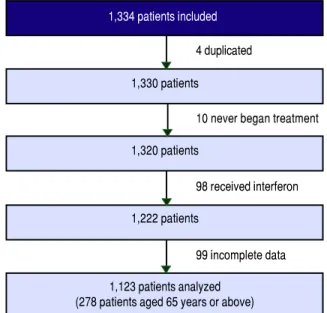
Between March 1, 2014 and January 1, 2016, 1,334 pa-tients were included in the cohort. Four of these were du-plicates, 10 never began treatment, 98 received interferon, and 99 had incomplete data due to incomplete records or because their physician left the study.
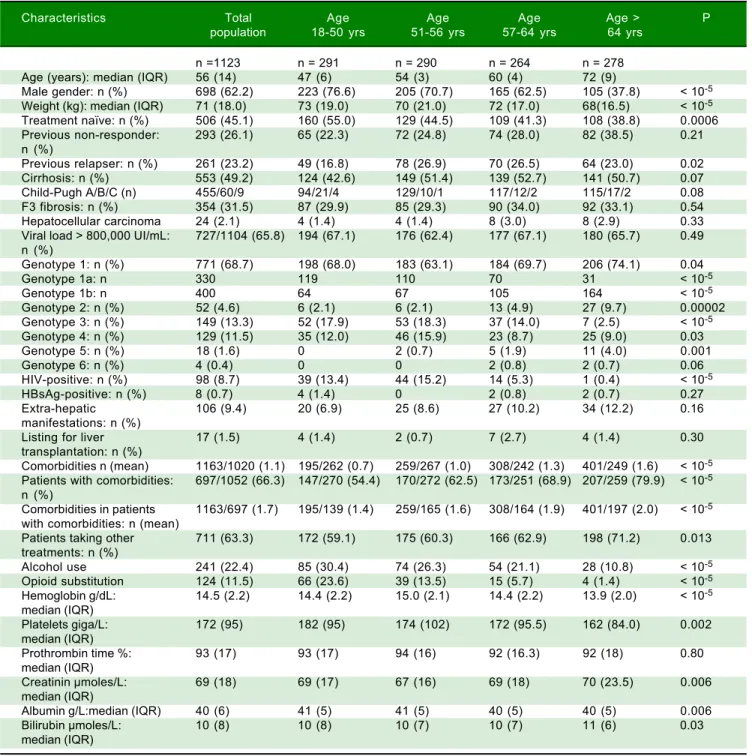
Finally, 1,123 patients were evaluated (Figure 1). The main patient characteristics are reported in table I.
The main patient characteristics, their treatment and follow-up results were recorded by investigators on an electronic CRF.
The diagnosis of cirrhosis was made by liver biopsy or non-invasive tests including the Fibrotest®, Fibroscan®
or Fibrometer® according to the investigator’s preference
and French recommendations.24
Patients’ concomitant baseline comorbidities and med-ications were recorded.
Standard laboratory tests (including hematological and routine biochemical tests) were performed locally.
Blood HCV-RNA was determined by COBAS Am-pliPrep®/COBAS TaqMan® (Roche Molecular Systems,
Pleasanton, California, USA), or Abbott Real Time HCV Assay (Abbott Molecular, Des Moines, Illinois, USA), with a lower limit of detection of 15 IU/mL and 12 IU/mL, respectively. A SVR was defined as undetectable HCV RNA at least 12 weeks after the end of treatment. Virolog-ical relapse was defined as detectable HCV RNA follow-ing undetectable HCV RNA at the end of treatment. A virological breakthrough was defined as an increase from the nadir of HCV RNA of at least one log IU/mL or recurrent HCV RNA.
Figure 1. Figure 1.Figure 1.
Figure 1.Figure 1. Flow chart of patient recruitment.
1,334 patients included
1,330 patients
1,320 patients
1,222 patients
1,123 patients analyzed (278 patients aged 65 years or above)
99 incomplete data 4 duplicated
10 never began treatment
98 received interferon
tion of infection, more severe disease, and reduced access to interferon-based regimens.3 Furthermore, the results of
real-life studies of interferon-containing treatments are of-ten worse than phase II-III studies, partly because treated patients are older and have more severe liver disease.4,5
Major progress has been made in the treatment of CHC with new direct acting antiviral (DAAs) and, in large trials, age does not seem to modify SVR rates. However, in these phase II and III trials, patients older than 70-75 and those with severe comorbidities were usually excluded. In a
post-hoc analysis of four phase III studies in 2,293 patients
treated with sofosbuvir (SOF)-ledipasvir (LDV), only 12% were older than 65 and only 1% of these were older than 75.6 Since new DAAs have only been available since
2015, real-life results are very recent.7-19 In France, a large
number of elderly patients will probably need to be treat-ed because nearly 40% of undiagnostreat-ed patients with hepa-titis C belong to the 70-80 year-old age group (around 25,000 people) and could be recruited with optimized screening strategies.20 If the efficacy and tolerance of
DAA’s is confirmed in elderly people, then both the age range of treatment and screening should be kept as broad as in recent recommendations.21-23
The aim of this paper was to report the results of CHC treatment with DAAs in a large cohort of patients in real-life conditions in French general hospitals and to analyze the efficacy and tolerance of treatment according to age.
MATERIAL AND METHODS
APROVVIE is a multicenter, observational study per-formed by the Association Nationale des Gastroentéro-logues des Hôpitaux généraux (ANGH) in French general hospitals. This study included consecutive adult patients (≥ 18 years old) treated for chronic hepatitis C (CHC) to evaluate the efficacy of and tolerance to treatment in real-life conditions. This study began on October 10, 2012. Af-ter July 4, 2014, investigators could include patients treated with new DAAs, first for early access programs, and then in daily practice.
Inclusion and exclusion criteria
Eligible patients were treatment-naïve or -experi-enced adults (at least 18 years-old) with CHC and de-tectable HCV-RNA treated with an interferon-free regimen. There were no exclusion criteria except patient refusal.
Tolerance,
adverse effects and fatigue
Only adverse effects > grade 2, according to Common Terminology Criteria for Adverse Events, version 4.1, were recorded.25 Overall tolerance was assessed by the
visual analog scale for each patient at the beginning and the end of treatment. Fatigue was also assessed by the visual analog scale for each patient at the beginning and end of treatment and 3-6 months after the end of treatment.
Treatment
Drugs were prescribed according to the investigator’s preference. Investigators were advised to use treatment schedules proposed by the Association Française pour l’ Etude du Foie, which are regularly updated on its web-site.23
Statistical analysis
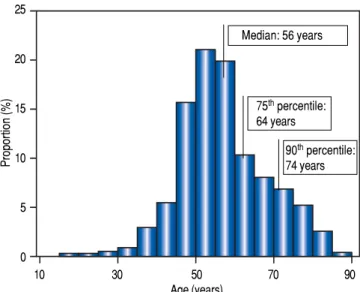
To ensure the intrinsic validity of our age categories, the quartiles and deciles of our population were defined. Elderly patients were older than 64 years of age and ex-tremely-old were older than 74 (Figure 2). By chance these thresholds were identical to those used in tradition-al demographic studies.
Quantitative data were expressed as medians with IQR or means ±SD, according to their distribution, and qua-litative data were expressed as numbers and percentages.
Continuous variables were compared using the t-test or Mann-Whitney U test for paired variables when indicated. The Fisher’s exact test or the χ2 test was used to analyze
categorical variables, and the Armitage test to test trends. Linear regression analysis was used to study the relation-ship between quantitative variables. To predict the achievement of a SVR, all variables reaching P < 0.10 in univariate analysis were entered into multiple logistic re-gression analysis. Calculations were made using NCSS 9 statistical software (Kaysville, Utah, USA, www.ncss.com).
Investigators consecutively included all patients treated during the study period. STROBE statements were re-spected.26
RESULTS
Description of the population
Age distribution is shown in figure 2. At the beginning of treatment, the median age was 56 years old (IQR: 14, range18-89). The population was divided into four groups according to age (Table 1, Figure 2).
With advancing age, the sex ratio, the proportion of treatment-naïve patients, of patients with genotypes 1a and 3 and of HIV-positive patients decreased while the preva-lence of cirrhosis, fibrosis F3, and high viral load were similar (Table 1). Hemoglobin, platelets and albumin tended to be lower with increasing age, but prothrombin time was similar, and blood creatinine and bilirubin high-er (Table 1). In the 553 patients with cirrhosis (approxi-mately half of the total population), very few (69, 12.4%) of the patients were decompensated and the distribution of Child-Pugh stages was similar among the classes of age.
The proportion of patients with comorbidities and the number of comorbid conditions increased with age (Ta-ble 2). Medication use increased from 59% in patients younger than 51 years old to 71% after age 64 (P = 0.001).
Alcohol consumption: 241 (22.4%) patients consumed alcohol at the onset of treatment. The proportion of pa-tients abstinent increased regularly with age (from 69% to 89% in patients younger than 51 and those older than 64 years of age, respectively, P < 10-5). The proportion of
ex-cess alcohol consumption (> 20 g/d in women, > 30 g/d in men) decreased with age (P = 0.006).
Persistent hard drug abuse was very rare (8 patients, 6 younger than 51 years of age); opioid substitution was infrequent in patients older than 65 (1.4% vs. 14% in pa-tients younger than 65).
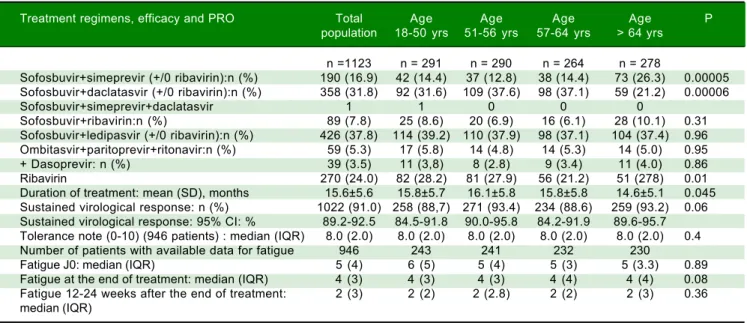
New DAAs combinations (Table 2) varied according to genotype and the study period. The less frequent use of so-fosbuvir-daclatasvir (DCV) in the oldest patients was due to the low frequency of genotype 3-infected patients com-pensated by the increased use of sofosbuvir-simeprevir (SIM), which was the most frequently used combination in genotype 1 patients when new DAAs were first used.
Figure 2. Figure 2.Figure 2. Figure 2.
Figure 2. Distribution of age in the studied population.
Proportion (%)
25
20
15
10
5
0
10 30 50 70 90
Age (years)
Median: 56 years
75th percentile:
64 years
90th percentile:
Table 1. Main characteristics of 1,123 patients with chronic hepatitis C according to age.
Characteristics Total Age Age Age Age > P
population 18-50 yrs 51-56 yrs 57-64 yrs 64 yrs
n =1123 n = 291 n = 290 n = 264 n = 278 Age (years): median (IQR) 56 (14) 47 (6) 54 (3) 60 (4) 72 (9)
Male gender: n (%) 698 (62.2) 223 (76.6) 205 (70.7) 165 (62.5) 105 (37.8) < 10-5
Weight (kg): median (IQR) 71 (18.0) 73 (19.0) 70 (21.0) 72 (17.0) 68(16.5) < 10-5
Treatment naïve: n (%) 506 (45.1) 160 (55.0) 129 (44.5) 109 (41.3) 108 (38.8) 0.0006 Previous non-responder: 293 (26.1) 65 (22.3) 72 (24.8) 74 (28.0) 82 (38.5) 0.21 n (%)
Previous relapser: n (%) 261 (23.2) 49 (16.8) 78 (26.9) 70 (26.5) 64 (23.0) 0.02 Cirrhosis: n (%) 553 (49.2) 124 (42.6) 149 (51.4) 139 (52.7) 141 (50.7) 0.07 Child-Pugh A/B/C (n) 455/60/9 94/21/4 129/10/1 117/12/2 115/17/2 0.08 F3 fibrosis: n (%) 354 (31.5) 87 (29.9) 85 (29.3) 90 (34.0) 92 (33.1) 0.54 Hepatocellular carcinoma 24 (2.1) 4 (1.4) 4 (1.4) 8 (3.0) 8 (2.9) 0.33 Viral load > 800,000 UI/mL: 727/1104 (65.8) 194 (67.1) 176 (62.4) 177 (67.1) 180 (65.7) 0.49 n (%)
Genotype 1: n (%) 771 (68.7) 198 (68.0) 183 (63.1) 184 (69.7) 206 (74.1) 0.04
Genotype 1a: n 330 119 110 70 31 < 10-5
Genotype 1b: n 400 64 67 105 164 < 10-5
Genotype 2: n (%) 52 (4.6) 6 (2.1) 6 (2.1) 13 (4.9) 27 (9.7) 0.00002 Genotype 3: n (%) 149 (13.3) 52 (17.9) 53 (18.3) 37 (14.0) 7 (2.5) < 10-5
Genotype 4: n (%) 129 (11.5) 35 (12.0) 46 (15.9) 23 (8.7) 25 (9.0) 0.03 Genotype 5: n (%) 18 (1.6) 0 2 (0.7) 5 (1.9) 11 (4.0) 0.001 Genotype 6: n (%) 4 (0.4) 0 0 2 (0.8) 2 (0.7) 0.06 HIV-positive: n (%) 98 (8.7) 39 (13.4) 44 (15.2) 14 (5.3) 1 (0.4) < 10-5
HBsAg-positive: n (%) 8 (0.7) 4 (1.4) 0 2 (0.8) 2 (0.7) 0.27 Extra-hepatic 106 (9.4) 20 (6.9) 25 (8.6) 27 (10.2) 34 (12.2) 0.16 manifestations: n (%)
Listing for liver 17 (1.5) 4 (1.4) 2 (0.7) 7 (2.7) 4 (1.4) 0.30 transplantation: n (%)
Comorbidities n (mean) 1163/1020 (1.1) 195/262 (0.7) 259/267 (1.0) 308/242 (1.3) 401/249 (1.6) < 10-5
Patients with comorbidities: 697/1052 (66.3) 147/270 (54.4) 170/272 (62.5) 173/251 (68.9) 207/259 (79.9) < 10-5
n (%)
Comorbidities in patients 1163/697 (1.7) 195/139 (1.4) 259/165 (1.6) 308/164 (1.9) 401/197 (2.0) < 10-5
with comorbidities: n (mean)
Patients taking other 711 (63.3) 172 (59.1) 175 (60.3) 166 (62.9) 198 (71.2) 0.013 treatments: n (%)
Alcohol use 241 (22.4) 85 (30.4) 74 (26.3) 54 (21.1) 28 (10.8) < 10-5
Opioid substitution 124 (11.5) 66 (23.6) 39 (13.5) 15 (5.7) 4 (1.4) < 10-5
Hemoglobin g/dL: 14.5 (2.2) 14.4 (2.2) 15.0 (2.1) 14.4 (2.2) 13.9 (2.0) < 10-5
median (IQR)
Platelets giga/L: 172 (95) 182 (95) 174 (102) 172 (95.5) 162 (84.0) 0.002 median (IQR)
Prothrombin time %: 93 (17) 93 (17) 94 (16) 92 (16.3) 92 (18) 0.80 median (IQR)
Creatinin μmoles/L: 69 (18) 69 (17) 67 (16) 69 (18) 70 (23.5) 0.006 median (IQR)
Albumin g/L:median (IQR) 40 (6) 41 (5) 41 (5) 40 (5) 40 (5) 0.006 Bilirubin μmoles/L: 10 (8) 10 (8) 10 (7) 10 (7) 11 (6) 0.03 median (IQR)
Ribavirin (RIB) was less often administered to elderly compared to younger patients (Table 2). The mean dura-tion of treatment was shorter in patients older than 65.
Sustained virological response (SVR)
The SVR rate 12-24 weeks after the end of treatment (SVR12-24) was 91.0% (95% CI:89.2-92.5 %). Failures
were due to a viral breakthrough (n = 1), relapse after the end of treatment (n = 24) or a severe adverse effect (SAE) (n = 8). One patient was lost to follow-up.
Figure 3). The χ2 test was at the limit of significance. A
subgroup analysis showed that the first and third age groups had a lower SVR12-24 rate than the second and fourth age groups (P = 0.04).
Univariate analysis showed that the factors significantly associated with SVR12-24 were cirrhosis (88.3% vs. 93.6%, P = 0.02), the presence of hepatocellular carcinoma (62.5% vs. 91.7%, (P < 10-5), treatment combination
(P < 10-5), body weight (P = 0.04), hemoglobin (P = 0 .01),
platelets (P = 0.05), prothrombin time (P = 0.005), and albumin (P = 0.00005).
Logistic regression analysis showed that the independ-ent predictive factors of SVR12-24 were albumin
(OR:1.05; CI 95%: 1.00-1.10, P = 0.03), hepatocellular car-cinoma (OR:0.195 ; CI95%: 0.07-0.52), P = 0.001); body weight (OR:0.97; 95%CI: 0.96-0.99, P = 0.0006); SOF/ SIM (OR:2.84, CI95%: 1.17-6.89, P = 0.02), SOF/ DCV(OR 7.67; CI95%: 3.51-16.78, P < 10-5), SOF/LDV
(OR 4.69; CI95%: 2.18-11.29, P = 10-4) (the reference for
treatment was SOF/RIBA). When age was retained as a continuous variable this did not change the results. Age set as a categorical variable (4 classes) lead to a significantly independent predictor of success with age greater than 64 years (OR:2.02; IC95%1.02-4.02, P = 0.045), the reference age class being 18-51 years-old one, without substantial variation in the significance of other associated factors.
Tolerance
(Table 2, Table 3 and Figure 4)
Self-assessed global tolerance was excellent (median 8/ 10, IQR 2.0) and identical in all ages. Self-assessed fatigue was similar at the beginning of treatment and decreased during and after the end of treatment in all classes of age.
Sixty-six adverse events > grade 2 were observed in 59 (5.6%) patients, with no significant variation for age (Table 3). There were 9 deaths, all in patients with cirrhosis (3 from hepatocellular carcinoma, 2 from decompensation and 1 from metastatic undifferentiated carcinoma, cardiac failure, renal failure, and septic shock, respectively). There was no significant difference among age groups for minimum hemoglobin, neutrophils or maximum creati-nine during treatment. However, severe anemia (Hb < 10 g/dL) was observed in 7.5% of patients aged of 65 years or more vs. 4.3% in patients < 65 years (P = 0.06) The median
Table 2. DAAs regimens, SVR rates, patients-reported fatigue and tolerance according to age.
Treatment regimens, efficacy and PRO Total Age Age Age Age P
population 18-50 yrs 51-56 yrs 57-64 yrs > 64 yrs
n =1123 n = 291 n = 290 n = 264 n = 278
Sofosbuvir+simeprevir (+/0 ribavirin):n (%) 190 (16.9) 42 (14.4) 37 (12.8) 38 (14.4) 73 (26.3) 0.00005 Sofosbuvir+daclatasvir (+/0 ribavirin):n (%) 358 (31.8) 92 (31.6) 109 (37.6) 98 (37.1) 59 (21.2) 0.00006
Sofosbuvir+simeprevir+daclatasvir 1 1 0 0 0
Sofosbuvir+ribavirin:n (%) 89 (7.8) 25 (8.6) 20 (6.9) 16 (6.1) 28 (10.1) 0.31 Sofosbuvir+ledipasvir (+/0 ribavirin):n (%) 426 (37.8) 114 (39.2) 110 (37.9) 98 (37.1) 104 (37.4) 0.96 Ombitasvir+paritoprevir+ritonavir:n (%) 59 (5.3) 17 (5.8) 14 (4.8) 14 (5.3) 14 (5.0) 0.95 + Dasoprevir: n (%) 39 (3.5) 11 (3,8) 8 (2.8) 9 (3.4) 11 (4.0) 0.86 Ribavirin 270 (24.0) 82 (28.2) 81 (27.9) 56 (21.2) 51 (278) 0.01 Duration of treatment: mean (SD), months 15.6±5.6 15.8±5.7 16.1±5.8 15.8±5.8 14.6±5.1 0.045 Sustained virological response: n (%) 1022 (91.0) 258 (88,7) 271 (93.4) 234 (88.6) 259 (93.2) 0.06 Sustained virological response: 95% CI: % 89.2-92.5 84.5-91.8 90.0-95.8 84.2-91.9 89.6-95.7 Tolerance note (0-10) (946 patients) : median (IQR) 8.0 (2.0) 8.0 (2.0) 8.0 (2.0) 8.0 (2.0) 8.0 (2.0) 0.4 Number of patients with available data for fatigue 946 243 241 232 230
Fatigue J0: median (IQR) 5 (4) 6 (5) 5 (4) 5 (3) 5 (3.3) 0.89 Fatigue at the end of treatment: median (IQR) 4 (3) 4 (3) 4 (3) 4 (4) 4 (4) 0.08 Fatigue 12-24 weeks after the end of treatment: 2 (3) 2 (2) 2 (2.8) 2 (2) 2 (3) 0.36 median (IQR)
Figure 3. Figure 3.Figure 3.
Figure 3.Figure 3. Sustained virological response according to age (bars indicate 95% CI).
Sustained virological response rate (%)
100
80
60
40
20
0
18-50 51-56 57-64 > 64
decrease in hemoglobin was greater in patients receiving ribavirin (2.2 g/dL, IQR 2.5) than those not receiving this drug (0.6 g/dL, IQR 1.2)(P < 10-5). Logistic regression analysis identified ribavirin (OR:8.90, 95% CI:4.12-19.34, P < 10-5), baseline Hemoglobin (OR:0.35; 95%CI:0.27-0.45, P < 10-5), age ≥ 65 years being borderline significant (OR 2.63; 95%CI: 0.96-7.23, P = 0.06) Minimum platelets tended to be lower in the oldest age group.
Univariate analysis showed that the factors significantly associated with the occurrence of adverse events greater than grade 2 were cirrhosis (9.2% vs. 1.9%, P = 0.00002), hepatocellular carcinoma (25.0% vs. 5 %, P = 0.00002), the presence of comorbidities (6.8% vs. 3.5%, P = 0.03), the use of ribavirin (8.5% vs. 4.2%, P = 0.007), the type of combination therapy (P = 0.06), baseline hemoglobin (13.3 vs. 14.4 g/dL, P = 10-5), neutrophils (P = 0.05),
Table 3. Adverse events according to age.
Patients and events Total Age Age Age Age P
population 18-50 yrs 51-56 yrs 57-64 yrs > 64 yrs
n = 1,123 n = 291 n = 290 n = 264 n = 278
Patients with grade >2 59/1062 (5.6) 14/270 (5.2) 9/278 (3.2) 15/253 (5.9) 21/261 (8.1) 0.12 adverse events: n (%)
Number of grade >2 adverse events: n 66 14 9 17 26
Deaths: n (%) 9 (0.8) 3 (1) 0 4 (1.5) 2 (0.7)
Hb minimum (g/dL): median (IQR) 13.4 (2.7) 13.3 (2.7) 13.6 (2.8) 13.6 (2.8) 13.2 (2.2) 0.12 Hb < 10 g/L: n(%) 47 (5.1) 11 (4.8) 10 (4.1) 9 (4.1) 17 (7.5) 0.31 Hb < 8 g/L: n(%) 7 (0.75) 0 1 (0.4) 2 (0.9) 4 (1.7) 0.16 Minimum neutrophils (μL) 2603 (1566) 2694 (1793) 2642 (1503) 2570 (1758) 2579 (1296) 0.14 Minimum platelets (Giga/L) 162.5 (84) 174 (83) 162.5 (89.5) 163.5 (86.3) 157 (78) 0.06 Maximum creatinine (mmol/L) 73 (21) 72 (16) 73 (17) 74.5 (23) 75 (27) 0.28
Figure 4. Figure 4. Figure 4. Figure 4.
Figure 4. Patient evaluation of fatigue (before, at the end, and 3 to 6 months after the end of treatment), and global tolerance to treatment.
10
8
6
4
2
0
18-50 51-56 57-64 > 64
Age (years)
Fatigue JO Fatigue end of treatment Fatigue 3-6 months after the end of treatment Tolerance
platelets (P = 0.0002), albumin (P = 0.0001) and bilirubin (P = 0.0007).
The independent predictive factors for adverse events greater than grade 2 were the presence of cirrhosis (OR 3.23; 95% CI : 1.41-7.38, P = 0.005) and baseline hemo-globin (0R 0.81; 95% CI: 0.69-0.97, P = 0.01). Using age as either a continuous variable or as a dichotomous categori-cal variable (patients aged of 65 years or more vs. patients aged less than 65 years) did not change the results of logis-tic regression).
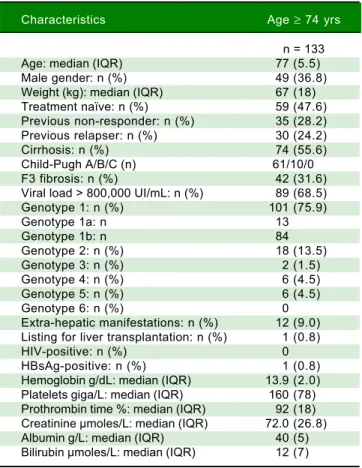
Subgroup of patients over 73 years-old (Tables 4 and 5)
There were 133 patients over 73 years-old (oldest age group). They were more often treatment-naïve with
geno-Patients’ auto-evaluated
Table 4. Main characteristics of patients aged ≥ 74 years.
Characteristics Age ≥ 74 yrs
n = 133 Age: median (IQR) 77 (5.5) Male gender: n (%) 49 (36.8) Weight (kg): median (IQR) 67 (18) Treatment naïve: n (%) 59 (47.6) Previous non-responder: n (%) 35 (28.2) Previous relapser: n (%) 30 (24.2) Cirrhosis: n (%) 74 (55.6) Child-Pugh A/B/C (n) 61/10/0 F3 fibrosis: n (%) 42 (31.6) Viral load > 800,000 UI/mL: n (%) 89 (68.5) Genotype 1: n (%) 101 (75.9)
Genotype 1a: n 13
Genotype 1b: n 84
Genotype 2: n (%) 18 (13.5) Genotype 3: n (%) 2 (1.5) Genotype 4: n (%) 6 (4.5) Genotype 5: n (%) 6 (4.5) Genotype 6: n (%) 0 Extra-hepatic manifestations: n (%) 12 (9.0) Listing for liver transplantation: n (%) 1 (0.8) HIV-positive: n (%) 0 HBsAg-positive: n (%) 1 (0.8) Hemoglobin g/dL: median (IQR) 13.9 (2.0) Platelets giga/L: median (IQR) 160 (78) Prothrombin time %: median (IQR) 92 (18) Creatinine μmoles/L: median (IQR) 72.0 (26.8) Albumin g/L: median (IQR) 40 (5) Bilirubin μmoles/L: median (IQR) 12 (7)
type 1 infection, more frequently had cirrhosis, and lower baseline albumin and bilirubin. Their overall SVR12-24 rate (91.7 %), and the occurrence of adverse events were similar to the 65-73 year-old group.
DISCUSSION
The availability of new DAAs represents major progress in the treatment of hepatitis C. The overall SVR rate in this large unselected population of patients treated in general hospitals was 90% independent of age, with a va-riety of –even suboptimal– drug combinations.
The age groups used in this study were based on the distribution of age in our population. The fourth quartile (≥ 64 years-old) corresponds well to the definition of eld-erly patients (≥ 65 years), and the upper tenth decile to “extremely-old” patients [≥ 75 years). The distribution of age in our population could have been shifted to the right by the restriction by health authorities of using DAA’s in patients with severe liver lesions.
The effect of age alone is difficult to estimate because chronic hepatitis C is different at different ages, depending on sex-ratios, body weight, genotype, severity of liver le-sions and comorbidities. Age could also increase the expo-sure to and efficacy of SOF due to decreased glomerular filtration rate.
Thirteen studies on the effect of age on the efficacy and tolerance of interferon-free treatments were published in 2016-2017 from Japan, Germany, USA, Italy and Spain based on “real-world” data.7-19 These studies differ in their
design (prospective or retrospective), the nature of data (directly from investigators or administrative,9 the
number of registered “elderly” (≥ 65 years old) patients (from 84 to 4,787), HCV genotype, the proportion of pa-tients with cirrhosis, and the combination of drugs used. However, age did not appear to be a predictive factor for SVR overall or in the various subgroups (genotype, cirrho-sis, treatment combinations), in any7-16,18,19 but one17 of
these studies. Multivariate analysis was performed in a mi-nority of these studies.9,16,18 Independent predictors of
SVR, as in our study, were related to the severity of cirrho-sis: albuminemia18 or MELD score.16
Moreover, tolerance did not decrease with age and the prevalence of adverse effects above grade 2, which oc-curred almost always in patients with cirrhosis, was not different among the classes of age, except in the detailed study of Lens et al. wherein SAE markedly increased when age was > 75 years in univariate analysis (8.8% among those aged 65-74 years compared with 13% and 14% among those aged 75-79 and ≥ 80 years, respectively), and death was independently predicted by albuminemia < 35 g/L and age ≥ 75 years (in multivariate analysis).18
Severe anemia was more frequent in elderly patients
when ribavirin was used, and dosage reduction or discon-tinuation was indicated, usually with no loss of effica-cy.7,12,14
This combination of virological efficacy and excellent tolerance probably explains why the age differences ob-served with interferon-based treatments were strikingly reduced or abolished as well as the differences between the phase III and “real-world” study results.1,2,27
As expected, the proportion of patients with comor-bidities and taking concomitant medications increased with age. The number of medications taken probably also increased as in other studies8,11,18 making the risk of
clini-cally significant drug-drug interactions more frequent in older patients.8,18 In observational studies, the treated
pa-tients are obviously selected, even if there is no imposed limit on age. Unfortunately, we have no data on the number and characteristics of elderly patients who were not treated in the participating centers during the study period.
Table 5. Comorbidities, treatment, DAAs regimens, sustained virological rates, patient-reported fatigue and tolerance in patients ≥ 74 years old.
Characteristics Age ≥ 74 yrs Characteristics Age ≥ 74 yrs
n = 133 n = 133
Comorbidities n (mean) 202/125 (1.6) Fatigue J0: median (IQR) 5.0 (4.3) Patients with comorbidities: n (%) 102/125 (81.6) Fatigue at the end of treatment median (IQR) 4.0 (4.0) Comorbidities in patients with 202/102 (2.0) Fatigue 12-24 weeks after the end
comorbidities: n (mean) of treatment: median (IQR) 2.0 (3.3) Patients taking other treatments: n (%) 95 (71.4) Coffee use 56 (50.5)
Alcohol use 11 (8.9) Active drug abuse 0
Tobacco use 9 (7.3) Opioid substitution 0
Coffee use 56 (50.5) Sofosbuvir+simeprevir (+/0 ribavirin):n (%) 31 (23.3 Active drug abuse 0 Sofosbuvir+daclatasvir (+/0 ribavirin):n (%) 28 (21.0) Opioid substitution 0 Sofosbuvir+simeprevir+daclatasvir 0 Sofosbuvir+simeprevir (+/0 ribavirin): n(%) 31 (23.3 Sofosbuvir+ribavirin:n (%) 19 (14.3) Sofosbuvir+daclatasvir (+/0 ribavirin): n(%) 28 (21.0) Sofosbuvir+ledipasvir (+/0 ribavirin):n (%) 45 (33.8) Sofosbuvir+simeprevir+daclatasvir 0 Ombitasvir+paritoprevir+ritonavir: n (%)
Sofosbuvir+ribavirin:n (%) 19 (14.3) + Dasoprevir: n (%) 9 (6.7) Sofosbuvir+ledipasvir (+/0 ribavirin):n (%) 45 (33.8) Ribavirin 23 (17.3) Ombitasvir+paritoprevir+ritonavir:n (%) 10 (7.5) Duration of treatment: mean (SD), months 14.7 (5.2)
+ Dasoprevir: n (%) 9 (6.7) Sustained Virological Response: n (%) 122 (91.7)
Ribavirin 23 (17.3) Sustained Virological Response: 95% CI: % 85.8-95.3 Duration of treatment: mean (SD), months 14.7 (5.2) Tolerance note (0-10) (946 patients): 8.0 (2.0)
median (IQR)
Sustained Virological Response: n (%) 122 (91.7) Number of patients with available data for fatigue 111 Sustained Virological
Response95% CI: % 85.8-95.3 Fatigue J0: median (IQR) 5.0 (4.3) Tolerance note (0-10) (946 patients): 8.0 (2.0) Fatigue at the end of treatment: median (IQR) 4.0 (4.0) median (IQR)
Number of patients with available data 111 Fatigue 12-24 weeks after the end 2.0 (3.3) for fatigue of treatment: median (IQR)
Table 6. Adverse events in patients ≥ 74 years old
Characteristics Age ≥ 74 yrs
n = 133
Patients with grade n >2 adverse events: (%) 10/133 (7.9)
Number of grade >2 adverse events: n 11
Deaths: n (%) 1 (0.8)
Hb minimum (g/dL): median (IQR) 13.2 (2.4)
Hb < 10 g/L: n(%) 8 (7.3)
Hb < 8 g/L: n(%) 1 (0.9)
Neutrophils minimum (μL) 2,601 (1,630)
Platelets minimum (Giga/L) 151 (75)
decreased in a similar manner during and after treatment whatever the age.
Although the cost-effectiveness ratio of DAAs in-creased with age, cost-effectiveness was good in elderly patients with advanced fibrosis in an Italian modelling study. Frailty was a major determinant of cost-effective-ness29 and it appears to be essential in the clinical
indica-tions for treatment.
Our study contains several strengths and inherent limita-tions. The main limitations of this study are its observation-al design and electronic data collection which may result in a potential physician prescribing bias, incomplete records, local practice discrepancies, data entry errors, missing data and the absence of information on untreated patients during the same period. Furthermore, we did not routinely assess frailty status in our elderly patients. Finally, we do not have any data on the proportion of elderly patients who were not treated during the same period.
The main strength of this study is that it includes a large, unselected population with no specific exclusion criteria, studied under real-life conditions, outside of Uni-versity hospitals, including all genotypes and various drug combinations to provide objective results on efficacy and tolerance as well as patient-reported outcomes on the pro-gression of fatigue and overall tolerance.
CONCLUSIONS
In conclusion this prospective, observational, multi-center study performed in French general hospitals confirms that age does not result in a decrease in the sustained virological response rate or safety with new DAAs in patients with chronic hepatitis C while fatigue decreases in a similar manner as younger patients. This study suggests that age per se should not be considered a contraindication to antiviral treatment, however frailty, comorbidities and associated treatments should be care-fully evaluated. The efficacy of treatment in preventing liver-related complications and survival must be con-firmed in further studies. Finally, these results must be confirmed in therapeutic regimens with restricted du-rations or new molecules.
ABBREVIATIONS
• ANGH: Association Nationale des Gastroentéro-logues des Hôpitaux Généraux.
• CHC: chronic hepatitis C.
• DAA: Direct-acting antiviral.
• DCV: daclatasvir.
• LDV: ledipasvir.
• RIBA: ribavirin.
• SAE: severe adverse effect.
• SIM: simeprevir.
• SOF: sofosbuvir.
• SVR: sustained virological response.
ACKNOWLEDGEMENTS
We thank Ms Dale Roche-Lebrec who assisted with language review, and Pr Dermot O’Toole for his friendly ultimate review.
GRANTS AND
FINANCIAL SUPPORTS
Janssen and then Gilead funded the APROVVIE ob-servatory, but had no role in analysis, interpretation of data and redaction, neither in the decision to submit this arti-cle for publication.
CONFLICTS OF INTEREST
Alexandre Pariente : Intercept, Mayoly-Spindler, Gile-ad, Abbvie. Jean-Pierre Arpurt: GileGile-ad, Abbvie, Intercept. André-Jean Rémy: Abbvie, Gilead, MSD, Janssen, BMS. Isabelle Rosa-Hézode: Abbvie, Gilead, BMS, MSD, Jans-sen. Xavier Causse: AbbVie, Gilead, Intercept, MSD, Ro-che. Christophe Renou: AbbVie, Gilead, Intercept, MSD. Christophe Pilette: Abbvie Ramuntxo Arotçarena: Gilead, MSD, Abbvie, Intercept.
Georges Barjonet. Janssen, BMS, Abbvie, MSD, Gile-ad. François Bourhis: Gilead Abbvie. Arnaud Pauwels: Gilead, Abvvie et MSD. Yann Le Bricquir: Gilead, Abvv-ie et MSD. StéphanAbvv-ie De Montigny-Lenhart: AbbvAbvv-ie, Gilead, MSD, Roche Jean-François Cadranel: BMS, MSD, Gilead. Hervé Hagège: Abbvie, Gilead, BMS, MSD, Janssen. Frédéric Heluwaert, Gilles Macaigne, Jean Henrion, Matthieu Schnee, Hatem Salloum, Séver-ine Hommel, Hortensia Lison, Vincent Jouannaud, Ed-mond Geagea, Bertrand Condat, Marie-Pierre Ripault, David Zanditenas, Hélène Labadie, Bertrand Tissot, Eric Maringe and Bruno Lesgourgues did not disclose any conflict of interest.
REFERENCES
1. Vespasiani-Gentilucci U, Galati G, Gallo P, de Vincentis A, Riva E, Picardi A. Hepatitis C treatment in the elderly : new possibilities and controversies towards interferon-free regi-mens. World J Gastroenterol 2015; 21: 7412-26.
2. Yang Z, Zhuang L, Yang L, Liu C, Xu Q, Chen X, Chen L. Ef-ficacy and safety of peginterferon plus ribavirin for patients aged ≥ 65 years with chronic hepatitis C: a systematic re-view and meta-analysis. Clin Res Hepatol Gastroenterol
3. Thabut D, Le Calvez S, Thibault V, Massard J, Munteanu M, Di Martino V, Ratziu V, et al. Hepatitis C in 6865 patients 65 yr or older: a severe and negleted curable disease. Am J Gastroenterol 2006; 101:1260-7.
4. Pariente A, Djilloul A, Cadranel JF, ANGH. Treatment of chronic hepatitis C with interferon alpha and ribavirin. Re-sults in real life. Gastroenterol Clin Biol 2003; 27: 590-5. 5. Pariente A, Lahmek P, Duprat C, Denis J, Faroux R, Renou C,
Nalet B, et al. Treatment of chronic hepatitis C with pegylat-ed interferon and ribavirin in treatment-naive patients in true life: a plea in favor of independent postmarketing evalua-tions. Eur J Gastroenterol Hepatol 2010; 22: 1297-302. 6. Saab S, Park SH, Mizokami M, Omata M, Mangia A, Eggleton
A, Zhu Y, et al. Safety and efficiency of ledipasvir/sofosbu-vir for the treatment of genotype 1 hepatitis C in subjects aged 65 years or older. Hepatology 2016; 63: 1112-9
7. Ogawa E, Furusyo N, Nomura H, Takahashi K, Higashi N, Ka-wano A, Dohmen K, et al. Effectiveness and safety of so-fosbuvir plus ribavirin for HCV genotype 2 patients 65 and over with or without cirrhosis. Antivir Res 2016; 136: 37-44. 8. Vermehren J, Peiffer K-H, Welsch G, Grammatikos G, Welker M-W, Weiler N, Zeuzem S, et al. The efficacy and safety of direct acting antiviral treatment and clinical significance of drug-drug interactions in elderly patients with chronic hepa-titis C virus infection. Aliment Pharmacol Ther 2016; 44: 856-65.
9. Su F, Beste LA, Green PK, Berry K, Ioannou GN. Direct-act-ing antivirals are effective for chronic hepatitis C in elderly patients : a real world study of 17 487 patients. Eur J Gas-troenterol Hepatol 2017; 29: 686-93.
10. Morio R, Imamura M, Kawakami Y, Morio K, Kobayashi T, Yokoyama S, Kimura Y, et al. Safety and efficacy of dual therapy with daclatasvir and sunaprevir for older patients with chronic hepayitis C. J Gastroenterol Hepatol 2017; 52: 504-11.
11. Rodriguez-Osorio I, Cid P, Morano L, Castro A, Suarez M, Delgado M, Margusino L, et al. Real life experience with di-rect-acting antivirals agents against hepatitis C infection in elderly patients. J Clin Virology 2017; 88: 58-61.
12. Sherigar JM, Gayam V, Khan A, Mukhtar O, Arefiev Y, Khalid M, Siddiqui I, et al. Clinical efficacy and tolerability of direct-acting antivirals in elderly patients with chronic hepatitis C.
Eur J Gastroenterol Hepatol 2017; 29: 767-76.
13. Pellicelli A, Pace Palitti V, Vignally P, Ceccherini-Silbertsein F, Siciliano M, Giannelli V, Moretti A, et al. Efficacy and safety of sofosbuvir/simeprevir plus flat dose ribavirin in genotype 1 elderly cirrhotic patients: a real-life study. Liver Intern
2017; 37: 653-61.
14. Atsukawa M, Tsubota A, Kondo C, Shimada N, Abe H, Kato K, Okubo T, et al. Effectiveness and safety of community-based treatment with sofosbuvir plus ribavirin for elderly pa-tients with genotype 2 chronic hepatitis C. Dig Liver Dis
2017; 49: 1029-35.
15. Akuta N, Sezaki H, Suzuki F, Kawamura Y, Hosaka T, Koba-yashi M, KobaKoba-yashi M, et al. Favorable efficacy of da-clatasvir plus asunaprevir in treatment of elderly japanese patients infected with HCV genotype 1b aged 70 and older. J Med Virol 2017; 89: 91-8.
16. Conti F, Brillanti S, Buonfiglioli F, Vukotic R, Morelli MC, La-lanne C, Massari M, et al. Safety and efficacy of direct-act-ing antivirals for the treatment of chronic hepatitis C in
real-world population aged 65 and older. J Viral Hep 2017;
24: 454-63.
17. Ogawa E, Furusyo N, Yamashita N, Kawano A, Takahashi K, Dohmen K, Nakamuta M, et al. Effectiveness and safety of daclatasvir plus asunaprevir for patients with hepatitis C virus genotype 1b aged 75 years and over with or without cirrhosis. Hepatol Res 2017; 47: E120-31.
18. Lens S, Fernandez I, Rodriguez-Tajes S, Hontangas V, Ve-gara M, Forné M, Calleja JL, et al. Interferon-free therapy in elderly patients with advanced liver disease. Am J Gastro-enterol 2017; 112:1400-9.
19. Patel A, Backstedt DW, Abidali H, Choi M, Pedersen M, Seetharam A. Effectiveness and tolerability of direct acting antiviral therapy for hepatitis C in a real world elderly co-horts. Clin Gastroenterol Hepatol 2017; 15: 603-4.
20. Brouard C, Le Trat Y, Larsen C, Jauffret-Roustide M, Lot F, Pillonel J. The undiagnosed chronically-infected HCV popula-tion in France. Implicapopula-tions for expanded testing recommen-dations in 2014. PLoS ONE 2015: 10: e0126920.
21. AASLD/IDSA HCV Guidance Panel. Hepatitis C guidance: AASLD-IDSA recommendations for testing, managing, and treating adults infected with hepatitis C virus. Hepatology
2015; 62: 932-54.
22. EASL Recommendations on treatment of hepatitis C 2016. J Hepatol 2017; 66: 153-94.
23. AFEF. http://www.afef.asso.fr/RECOMMANDATIONS/re-commandations_1
24. Fontaine H, Petitprez K, Roudot-Thoraval F, Trinchet JC. Guidelines for the diagnosis of uncomplicated cirrhosis.
Gastroenterol Clin Biol 2007; 31: 504-9.
25. Common Terminology Criteria for Adverse events (CTCAE). V 4.03: june 14, 2010. https://ctep.cancer.gov/protocolde-velopment/electronic_applications/ctc.htm.
26. Vandenbroucke JP, Von Elm E, Altman DG, Gotzsche PC, Mulrow CD, Pocock SJ, Poole C, et al. Strengthening the Re-porting of Observational Studies in Epidemiology (STROBE): explanation and elaboration. Plos Med 2007; 4: e297. 27. Calleja JL, Crespo J, Rincón D, Ruiz-Antorán, Fernandez I,
Perelló C, Gea F, et al. Effectiveness, safety and clinical out-comes of direct-acting antiviral therapy in HCV genotype 1 infection/results from a Spanish real-world cohort. J Hepatol
2017; 66: 1138-48.
28. Younossi Z, Stepanova M, Nader F, Henry L. Patients-re-ported outcomes of elderly adults with chronic hepatitis C treated with interferon- and ribavirin-free regimens. J Am Geriatr Soc 2016; 64: 386-93.
29. Ciaccio A, Cortesi PA, Bellelli G, Rota M, Conti S, Okolicsanyi S, Rota M, et al. Direct-acting antivirals combination for elder-ly patients with chronic hepatitis C: a cost-effectiveness analysis. Liver Int 2017: 37: 982-4.
Correspondence and reprint request: Alexandre Pariente, M.D.
Calotis, 40240 Mauvezin d’ Armagnac, France Tel.: +33 628 345 945