PLANIFICANDO Y DESARROLLANDO UN
DISPLAY PARA PROMOVER UN
APRENDIZAJE ACTIVO.
PLANNING AND DEVELOPING A DISPLAY
TO PROMOTE ACTIVE LEARNING
TRABAJO FIN DE GRADO EN EDUCACIÓN PRIMARIA
MENCIÓN DE LENGUA EXTRANJERA: INGLÉS
AUTOR: PABLO ANTOLÍN BLANCO
TUTORA: MARÍA DEL ROSARIO SANZ URBÓN
RESUMEN
Una responsabilidad docente es crear un ambiente positivo de aprendizaje para que todos los alumnos sin excepción puedan progresar cómodamente. En este sentido, los displays son una herramienta educativa que pueden favorecer esta idea, ya que permiten fomentar numerosos tipos de aprendizajes. Sin embargo, llevar a cabo buenos displays que produzcan un impacto efectivo fuera del aula, no es una tarea sencilla. Los maestros y las maestras deben partir de un análisis de su propio contexto educativo para posteriormente diseñar y desarrollar una propuesta de display acorde a su realidad y objetivos docentes. Este TFG presenta una propuesta de display que se realizó en una escuela pública bilingüe incluida dentro del Programa Convenio del Ministerio de Educación - British Council. El desarrollo de esta propuesta generó conclusiones significativas relacionadas con el alcance pedagógico de los displays para promover un aprendizaje activo.
PALABRAS CLAVES:
displays, escuela bilingüe, Programa Convenio delMinisterio de Educación - British Council, aprendizaje activo.
ABSTRACT
One teachers’ responsibility is to create a positive learning environment, in which all
the students feel comfortable and confident so that they can keep progressing. Without any doubt, can classroom displays be used as an educational tool to develop this idea Programme. Its development helped to achieved significant conclusions about how displays can be used creatively in view of promoting active learning.
INDEX
1. INTRODUCTION
... 5
2. OBJECTIVES
... 6
3
. JUSTIFICATION
... 7
3.1. EDUCATIONAL ... 7
3.2. LEGAL ... 7
3.2.1. General objectives ... 8
3.2.2. Specific competences ... 8
3.2.2.1. Basic training module... 8
3.2.2.2. Practicum and Final Degree Project module ... 8
3.2.2.3. Optional Module ... 8
3. 3. PERSONAL ... 9
4. THEORETICAL FOUNDATION
... 104.1. EDUCATIONAL AND LINGUISTIC THEORIES ... 10
4.1.1. Natural approach ... 10
4.1.2. Multiple intelligences ... 11
4.1.3. Cognitivism ... 12
4.1.4. Vygotsky’s social cognitivism ... 12
4.1.5. Cognitive apprenticeship ... 15
4.1.6. Discovery learning ... 16
4.2. DISPLAY THEORY ... 18
4.2.2. Procedure to plan and develop educational displays ... 19
5. METHODOLOGY AND DESIGN
... 305.2. THE GROUPS ... 32
5.4. GROUPS’ GENERAL FEATURES ... 32
5.5. LITERACY ... 33
5.6. THE UNIT: A PERSONAL DIARY ... 34
5.7. DISPLAY DESIGN ... 35
5.7.1. General objectives, resources and materials. ... 35
5.7.2. Step1: Choosing the correct type of display... 36
5.7.3. Step 2: Choosing the display surface ... 37
5.7.4. Step 3: Choosing the correct place to build the display up ... 37
5.7.5. Step 4: Choosing the topic of the display ... 38
5.7.6. Step 5: Choosing the type of text and visuals ... 38
5.7.7. Step 6: Choosing principle elements of design ... 39
5.7.8. Step 7: Assemblage ... 43
5.7.9. Step 8: Using the display as an educational tool ... 45
6. RESULTS
... 486.1. RESULTS ON THE FOLLOW-UP GROUPS ... 48
6.2. RESULTS ON CHILDREN FROM DIFFERENT LEVELS ... 52
6.3. RESULTS FROM DESIGN ELEMENTS ... 54
7. ANALYSIS OF THE SCOPE
... 557.1. EXPECTED RESULTS ... 55
7.2. UNEXPECTED RESULTS ... 56
7.3. OPPORTUNITIES AND LIMITATIONS OF THE CONTEXT ... 56
8. FINAL CONSIDERATIONS
... 581. INTRODUCTION
In order to carry out this study, firstly the main objectives are presented in order to show the lines of investigation which are expected to be researched through the development of this proposal. Afterwards, this training teacher provides educational, legal and personal reasons with the purpose of justifying this work from different perspectives.
Then, the theoretical foundation supplies the necessary information in which this proposal acquires sense. This part of the study is divided in two sections: on the one hand, classroom displays are included in learning units which are based on linguistic theories. This corpus of knowledge needs to be explained in order to understand the theoretical framework which supports the display proposal. On the other hand, classroom displays have to be planned in detail; therefore, the second section of the theoretical foundation provides the procedure which guides the development of effective classroom displays.
After it, the methodology of this work is described to illustrate the school and human context which was taken into account by this training teacher to carry out the design proposal. This TFG presents an educational experience related to displays which was developed in a Spanish school which follows the MECD - British council programme. Namely, the display proposal included in this work was part of a unit about diaries in the subject of literacy which was carried out with two different year five groups.
Once the contextual framework was taken into consideration, a display design was proposed and developed in order to achieve a list of educational results. Some of these learning effects were expected but other ones were spontaneous. Afterwards, the scope of this study is analyzed so as to reflect on the opportunities and limitations which defined the development of this work.
2. OBJECTIVES
As a future English Language teacher, the author of this present work aims to fulfil various professional objectives in order to achieve the necessary competences to carry out an efficient educational work.
Consequently, the present work purposes the following objectives:
- To study the importance of classroom displays as a tool to extend and celebrate children’s learning and achievements, to stimulate and encourage children to interact
with their environment as well as to inform the rest of the school community.
- To find out how displays can be introduced and adapted by the Training Teacher to his specific context during his internship.
- To design and create a display linked to the implemented unit in order to highlight children’s achievements and to encourage interaction.
- To assess the Training Teacher’s ability to convey ideas and concepts to elaborate attractive and effective displays.
3. JUSTIFICATION
This training teacher has already got a previous degree as a Physical Education teacher which was an advantage in the learning process of becoming an English language teacher. Thanks to this fact, he had spent a year working as a Spanish language assistant in an American elementary school where displays attracted his attention due to their didactic potential. However, it was obvious that there was a lack of knowledge in this topic so this work was the opportunity to research on this new aspect which is one of the many distinguishing features of this degree as an English Language teacher.
3.1. EDUCATIONAL
One of the teachers’ duties is to create a positive learning environment, in which all the
students feel comfortable and confident so that they can keep progressing. On the one hand, displays can increase children’s motivation due the fact that they promote
interaction between school members. As Smawfield (2006), pointed out: “classroom displays are an important part of the development and setting of a positive learning environment. Not only do displays make classrooms brighter and more interesting they can have a direct impact on student learning and motivation” (p.1). On the other hand, class work acquires more value when it is shared with the rest of the educational community. Therefore, it is in this frame of work that displays achieve sense as motivational and interactive visuals which transmit meaningful information to all pupils among the different levels of school, among teachers, families, when attending meetings and interviews, and even visitors.
3.2. LEGAL
The Primary Education Degree’s aim is to train professionals with the capacity to attend
3.2.1. General objectives
- To recognize, plan, carry out and value proper learning-teaching processes.
- To interpret data from observations in educational contexts in order to value its relevance in learning processes.
- To reflect on the sense and objectives of Education.
- To initiate research activities and demonstrate an attitude of innovation and creativity.
- To be able to use efficient procedures to search for information resorting to both primary and secondary sources, including tools.
3.2.2. Specific competences 3.2.2.1. Basic training module
- To recognize, plan and develop teaching-learning practices that attend to the diversity of students.
- To know and apply innovative educational experiences in Primary Education.
- To dominate active and participatory methodologies with special emphasis on teamwork, a variety of resources, collaborative learning and appropriate use of space, time and groupings.
- To design and regulate learning spaces in contexts of diversity which attend gender equality, equity and respect for human rights.
3.2.2.2. Practicum and Final Degree Project module
- To apply processes of interaction and communication in the classroom. To dominate necessary social skills in order to promote a positive environment that facilitates learning and coexistence.
- To relate theory and practice to the reality of the classroom and the school.
- To participate in the teaching activity and to learn how to do, acting and reflecting from the practice, with the perspective of innovating and improving the teaching work.
3.2.2.3. Optional Module
- To carry out techniques of corporal expression, dramatization and communicative resources in the corresponding foreign language.
- To plan learning processes of a foreign language, selecting, conceiving and elaborating teaching strategies, types of activities and materials depending on the diversity of the students.
3. 3. PERSONAL
Thanks to the experience in the American school, the training teacher carried out some display to share in view of sharing diversity in cultures. In this context, it was evident how displays facilitated the communication and interaction among people from different nationalities. It was obvious how displays could enhanced a multi-cultural education. The way language teachers organised their classrooms helped students to access to several cultural manifestations. As a result, displays were the best way to develop one of the main objectives included in the Common European Framework working diversity as a tool for learning.
That the rich heritage of diverse languages and cultures in Europe is a valuable common resource to be protected and developed, and that a major educational effort is needed to convert that diversity from a barrier to communication into a source of mutual enrichment and understanding (CEF,2002, p.2).
4. THEORETICAL FOUNDATION
The display proposal included in this study was framed within a unit of the subject of literacy. As a result, this section needed to be divided in two parts: first of all, developing a literacy learning process about diaries is totally based on educational as well as linguistic theories. This theoretical knowledge lets create a coherent foundation which supports our work. Secondly, carrying out efficient displays in Primary Education implies following specific academic introductions so as to achieve amazing results.
4.1. EDUCATIONAL AND LINGUISTIC THEORIES
4.1.1. Natural approach
All the learning processes in the subject of literacy, as well as the unit included in this study, follow the theory of natural approach. According to Krashen and Terrell (1995):
The central hypothesis of the theory is that language acquisition occurs in only one way: by understanding messages. We acquire language when we obtain comprehensible input, when we understand what we hear or read in another language. This means that acquisition is based primarily on what we hear and understand, not what we say. The goal, then, of elementary language classes, according to this view, is to supply comprehensible input, the crucial ingredient in language acquisition, and to bring the student to the point where he or she can understand language outside the classroom.
2. Comprehension goes before production because of the fact that communicative ability is based on acquired knowledge. Therefore, students have to learn to comprehend first.
4. In order to develop communication skills, activities, which provide input for acquisition, have to fill most of the class time.
5. Improve motivation and self-confidence as well as lowing personal anxiety are key to success in order to acquire a second language.
4.1.2. Multiple intelligences
The theory of multiple intelligences was introduced in 1983 by Dr. Howard Gardner, professor of education at Harvard University. It outlined that the tradition concept of intelligence based on the linguistic and logical-mathematical abilities was too limited due to the fact that human being posses more type of capacities. Since this theory came to light, the amount of human abilities has increased. Nowadays, there are nine intelligences and the chance of others might eventually extend the list. Therefore, lessons need to be presented in a wide variety of ways taking into account all kind of intelligences in order to supply an adapted educational response in which all children can be reinforced.
The display which is in this proposal was designed as compilation of a learning process in the subject of literacy. Through the development of the unit about diaries described in this study the following intelligences according to Gardner were considered:
o Linguistic intelligence to use a second language as a communicative tool
through all the process being able to understand and express messages in English adequately.
o Body-Kinaesthetic intelligence to control one’s body movements and to handle
objects with dexterity.
o Interpersonal intelligence to detect and respond appropriately to the moods,
motivations and desires of others through the development of group subtasks in which children learn how to accept their mate’s opinions and recommendations. o Intrapersonal intelligence to be self-aware and in accordance with internal
4.1.3. Cognitivism
Learning theories are important for efficient teaching so as to clarify different aspect of the learning process. Although the range of learning theories can be organized in three main areas (behaviorism, cognitivism and constructivism), this proposal is within the spectrum of cognitivism.
According to Good and Brophy, Merriam, Caffarella and Simon (cited by Yilmaz 2011):
The cognitive school views learning as an active process involving the acquisition or reorganization of the cognitive structures through which humans process and store information and the learner as an active participant in the process of knowledge acquisition and integration (p.205).
Cognitivism defines knowledge acquisition as a mental activity in which internal coding and structuring is involved by the learner (Derry, Spiro et al., 1992 quoted by Yilmaz, 2011, 205). Learning occurs adequately when it is related to human cognitive architecture (Sobel, 2001 cited by Yilmaz, 2011, 205).
The cognitive approach expects to make knowledge significant assisting students to organize and relate new information to previous leaning in memory and it is a theory which emphasizes more what learners know and how they achieve knowledge than what they truly do (Ertmer and Newby, 1993).
Namely, this project is based on Vygotsky’s Social Cognitivism, cognitive
apprenticeship and discovery learning as teaching methods which derived from this educational perspective.
4.1.4. Vygotsky’s social cognitivism
Lev Vygotsky explained learning as a consequence of a dialogue among individuals and society. Children are able to develop language through interacting among peers and teachers who provide them assistance affecting the development of cognition (Foston, 1996).
individual attributes and its way to interact with others (Stoll and Tharp, 2002, p.181). In line with these authors, “in teaching/learning interactions, development and learning proceed best when assistance is provided that permits a learner to perform at a level higher than would be possible” (p.1). Vygotsky explained this principle as a zone of
proximal development (ZPD). According to this author (1978) this concept is described as “the distance between the actual developmental level as determined by independent
problem solving and the level of potential development as determined through problem solving under adult guidance or in collaboration with more capable peers” (p.86).
As a result, teachers need to work as expert mates with the purpose of helping students in specific moments through the learning process. The ZPD allow educators to realise where teaching and learning are necessary. Following Tharp and Gallimore (cited by Stoll and Tharp, 2002):
We can therefore derive this general definition of teaching: Teaching consists of assisting performance through the [Zone of Proximal Development (ZPD)]. Teaching can be said to occur when assistance is offered at points in the [zone] at which performance requires assistance (p.181).
Despite the elapse time, the Vygotsky’s impact in education is strikingly new. New theorists have kept developing Vygotsky’s ideas and they have realised that social organization of classrooms is significantly implicated in children’s level of achievement
(Stoll and Tharp, 2002, p.182). Consequently, in order to create learning environments whose social contexts could benefit all the students, classrooms need to be organized around these following five standards (Tharp, 2000):
o The second principle states that “language proficiency in speaking, reading and writing is the key to academic achievement” (Stoll and Tharp, 2002, p.185).
Developing language and literacy across the curriculum is a requirement for teachers in order to promote learning by interaction among/with students through informal social contexts. Teachers have to listen to students talking about common themes such as home and community encouraging comments among them. During these conversations, teachers have to regulate the communicative process by modeling, eliciting, probing, restating, clarifying, questioning and praising in order to develop purposeful spoken dialogues. In addition, in these informal talks in which teachers can know more about their students’ lives, explicit connections between children language and literacy and
academic contents have to be made. As a result, in relation to the first principle, joint activities provide incredible chances to carry out the development of the language because of the fact that interconnections of language, thinking, values, culture and dialogue help children’s academic accomplishment and their
affective development.
o The third principle recommends connecting school to students’ lives to improve
the learning process. In view of developing this standard, the design of instructional and significant activities need to be based on children’s previous knowledge; students have to connect and apply learning to their own local context; families need to participate in classroom instructional activities and subtasks need to be vary from collective and cooperative to individual and competitive with the purpose of facing student’s preferences.
o The fourth principle suggests that best is a consequence of a cognitive challenge tasks. In order to carry out this standard efficiently, teachers have to: insure that students achieve a mental image of the whole so as to understand the parts of the learning process; supply designs which advance progressively until more complex level; relate students’ live experiences to the activity in order to assist
understanding; provide clear feedbacks to learners comparing their result with the challenging standard.
o The fifth principle suggests that teaching through instructional conversation
In these communicative processes, teachers need to guide conversations in order that all learners could participate assisting them by questioning, restating, modeling, etc. (Dalton, 1998 cited in Tharp, Estrada, Dalton and Yamauchi, 2000, p.20).
4.1.5. Cognitive apprenticeship
Cognitive apprenticeship is supposed to make thinking visible among teachers and students in a classroom context in which learning is completely situated. Learners are totally aware of the meaning of the learning process because of the fact that they have seen the expert’s model of the finished product; as a result, they have understood the
sense of the necessary steps which they must follow in view of completing the task. In addition, a cognitive apprenticeship implies that students can transfer knowledge once they have realised in which contexts skills are useful (Collins, Seely, Holum, 1991, p.3).
According to these authors, there are six teaching methods in order to carry out a cognitive apprenticeship:
The first three (modeling, coaching and scaffolding) are the core of cognitive apprenticeship, designed to help students acquire an integrated set of skills through processes of observation and guided practice. The next two (articulation and reflection) are methods designed to help students both to focus their observations of experts problem solving and to gain conscious access to their own problems solving strategies. The final method exploration is aimed at encouraging learner autonomy, not only in carrying out expert problem solving processes but also in defining or formulation the problem to be solved (p.13).
The first three methods are directly related to the design proposal presented in this work. In line with the previous authors:
Modeling suggests that teachers have to show the students a finished task product in order that they could achieve a conceptual model of the process to accomplish it.
Scaffolding “refers to the support the teacher provides to help the student carry out the task” (p.14). When scaffolding is supplied by educators, it implies to provide help in
those parts of the learning process which students cannot manage.
The unit described in this work illustrates adequately this three cognitive steps. Firstly, a diary model is provided to students in order to show a clear picture of the final task; secondly, teaching assistance is given to learners through the development of group subtasks; thirdly, the learning process was divided in different small phases with the purpose of learning the diverse parts of a diary progressively until children’s final tasks were done and ready to be placed on a display.
4.1.6. Discovery learning
Ormrod (1995) explained discovery learning as “an approach to instruction through which students interact with their environment by exploring and manipulating objects, wrestling with questions and controversies, or performing experiments” (p. 442).
Discovery learning happens when teachers provide all the necessary tools in order that students could discovery by themselves what they want to learn (Baro, 2011, p.5).
According to Gillani (cited by Yilmaz, 2003):
They way students manipulate and process information is more important than the outcome or the product students produce, such as finding a specific answer to the question. Implementing discovery learning involves identifying a problem, formulating a hypothesis, gathering and analyzing data, and making a conclusion (p.210).
Therefore, learners acquire responsibility for their own learning finding concepts by themselves rather than being told by the educator. As a result, knowledge stays solidly in memory and it can be activated easily later if it is needed (Ormrod, 1995)
Jansen and Culpepper (cited by Yilmaz, 2003, p.210) suggested some questions so as to developed discovery learning projects:
o What needs to be done?
o What can I use to find what I need; o Where can I find what I need? o What information can I use?
o How can I know if I did my job well?
The display included in this proposal recapitulated students’ final tasks from a learning
process based on this theory. Throughout the development of it, children followed the next procedure based on Jansen and Culpepper’ questions:
o First of all, they had to realise what they needed. Namely, as soon as the unit was introduced, an expert massive model of the final task was provided in view of showing the final target of the unit: Children will be able to write a diary. o Secondly, they had to find resources so as to find what was required.
Specifically, the pages of the diary model were analyzed by groups with the purpose of working the text level. Children read and commented diverse diaries which express emotion in order to elaborate a definition of diary.
o Thirdly, children had to recognize necessary information so as to start writing
diaries. In other words, analyzing different diary extracts children were able to detect parts of a diary: title, date, first person, past tense, emotions, link words, pictures, drawings, farewells.
o Once the diary elements were discovered by students, the sentence level could
be worked. As a result, different subtasks were developed in order that learners could create knowledge related to punctuation, nouns and pronouns, adjectives, adverbs, verbs and connectives.
o Afterwards, both groups were coached by this training teacher who helped them to put all this information together in order to start writing the final task. Consequently, learners began to develop the word level in which dictionaries were handled, new vocabulary was created and spelling was checked with the purpose of making diaries as good as possible.
o The last step was related to supply tools which clarified the quality of children’s works. As a consequence, different evaluating strategies such as critiquing, evaluating peer-work, self assessing and self questioning were developed throughout the unit.
4.2. DISPLAY THEORY
4.2.1. Definition of educational display
According to Oregon State University (2009):
A display is a visual presentation of information which is concentrated on one central idea or concept. (…) A good display will catch the viewer’s attention, arouse interest,
stimulate thought, and motivate the viewer to learn more about the subject (p.1).
Bergeson (2015) affirms that: for many pedagogical purposes. Within all the objectives which can be associated with school displays (Thorn, 2010), in particular, the displays which define this project are related to:
o Record and share pupil and class progress in which all children’s works are
showed without exclusion if they have made effort.
o Create a stimulating and quality environment in order to develop a learning
space which makes children more likely to want to learn.
o Use displays as a tool to learn in view of encouraging children to interact with
their environment promoting active learning.
o Involve students in the development of creating a display with the purpose of increasing children’s sense of ownership and pride in it.
o Apply design guidelines to build an effective, colourful, attractive and engaging
display.
o Develop a display as a consequence of a learning process in which children
recognise the purpose of their work.
design section, this project includes a display experience which is based on the following procedure.
4.2.2. Procedure to plan and develop educational displays Step 1: Choosing the correct type of display
In line with Yelarbon State School (2017), there can be different kinds of displays depending on the school context. These are some examples of displays which can be found at schools:
o School wide expectations: each school has wide expectations which must be
acquired by their students. These educational aspirations could be displayed in each classroom space through the use of posters.
o You can do it key/posters: in agreement with the school culture, there could be displays which expected to carry out social-emotional purposes. Let’s say that inspirational quotes that support keys to success such as confidence, getting along, organization, resilience or persistence could be displayed around the classroom in isolated posters.
and strategies on a particular topic and are posted in the classroom for reference by students. In addition, they are made with students and they can be used to register children’s suggestion.
o Bookwork/Presentation guidelines are types of displays which show students
their expectations in view of developing works.
o Student Attendance Chart and Does Attendance Really Matter? Poster which are used to record students’ attendance.
WALT, WILF or TIB which really means: ‘We are learning to’, ‘What I am looking for’ and ‘This is because’.
o Data walls and individual Goals: they are charts or posters which serve to ensure that goals and progress are transparent for everybody. They help students to develop intrinsic desires to achieve school targets.
Nevertheless, teachers can invent and name their own kinds of displays taking into account their personal educational realities and necessities.
Furthermore, although there are different kind of displays and display formats, the author must choose reflectively one which exemplifies the topic and the display targets suitably. Let’s say that a poster is more appropriate to illustrate a short educational
message than a chart, which could be used to examine the parts of something. In short, choosing the right format will allow achieving a better result.
Step 2: The display of pupils’ work
Choosing the correct type of display implies also to decide if children are going to participate through the process. As it can be seen in the design section, the display proposal presented in this work was a project in which students were involved. According to Smawfield (2006, p. 4), the display of pupils’ work requires special
consideration due to the following pedagogical reasons:
o It is a powerful way of demonstrating students that their work is valued
o It creates a sense of achievement because effort is recognised; as a result, they
feel more motivated.
o It let create inclusive displays in which any students feel excluded because their
work is not displayed.
o Students can appreciate other classmates’ projects and they can take ideas for
future projects.
o A sense of ownership and pride in the display is created.
Step 3: Choosing the display surface
In accordance with the last cited author, even though displays are usually placed on classroom notice boards, other school superficies can also be used in order to acquire more creative effects. All the following are possible display surfaces:
o Walls
Step 4: Choosing the place where displays can be made
o Some other public place
o It may be benefit for students if their display is published in a local newspaper or in the school web page.
Step 5: Choosing a topic
An educational subject, which is not related to any religious or political view, needs to be selected. In addition, this subject has to be summarized into a short and simple title which must encourage the viewer to read more.
Moreover, the display’s author should pick a topic in which is interested with the
purpose of providing a significant and rewarding amount of effort.
This topic must be specific enough so that the audience can learn about it rapidly. The amount of information which is provided by the display needs to be close in order not to leave any important fact.
In addition, display subjects must be in accordance with the audience’s level; therefore,
the author has to adjust the topic as much as possible to transmit adequately the message in order that the public could understand it correctly. This message must be accurate in view of achieving the best result.
In relation to this last idea, if the display is aimed at a young public, more hands-on learning is suggested. The display has to supply specific instructions to the audience so as to make it interactive. Furthermore, these instructions to perform have to be written in simple sentences.
Step 6: Choosing the type of text
Displays include text which has to transmit a main idea following an accurate presentation. On the one hand, the display text must be in accordance with the author’s
learning objective. In other words, it must be clear what the public is expected to learn from the display text. On the other hand, this message must be organized into subheading which can be placed on diverse parts of the display. In addition, as well as the title, the text must be kept simple and short.
style. Namely, all the text must be written in the same font style. More than one font style in the same display may be confusing and the message could be misunderstood.
If titles and labels are prepared by computer, the audience’s age has to be taken into
consideration in view of choosing the appropriate kind of font. According to Smawfield (2006) “Comic Sans MSis better for young children than Arial” (p.9).
Other fancy or decorative letters can only be used in order to highlight a specific part of the display such as the title. In addition, although enough space between is necessary, unconnected letters need to be avoided in view of making the display readable.
Step 7: Choosing the type of visuals
Visuals are elements such as photographs, drawings, clip arts and cartoons which help to make the display more attractive and interesting.
For safety reasons, the following possible visuals are not allowed as visuals.
o Living organisms (plants or animals) o Any liquids
o Aerosol bottles or other pressurized gases o Glass
o Hazardous substances
o Sharp items (such as knives or scissors)
Step 8: Elements and Principles of Design
In order to develop a great display, the following elements of design have to be taken into account.
- Flow/Focus
A good display needs to have a central area which must catch the viewer’s attention. Public usually read from the top to the bottom or from left to right, consequently, this fact must be taken into account in order that the message could flow in a logical order and the information of the display can be transmitted properly.
visuals, informative posters, arrows or other display design components need to organize adequately the public’s reading.
- Space
A well-designed display needs a lot of open space among its elements. There must be approximately five centimeters on all edges and enough space between visuals and text. As a result, if a display is provided by components which are satisfactorily organized through the space, an uniform display will be created.
Moreover, a display which is uniform shows also unity and balance. On the one hand, unity means all the parts belong to the same whole. On the other hand, balance signifies all the elements are regularly distributed across the entire space. Moreover, frames helps to supply more unity and balance. If these concepts are taken into consideration, without doubt, will an appealing display be done.
With the purpose of developing a display which is uniform and has unity and balance, the same header, font style and color pattern have to be respected through all the composition.
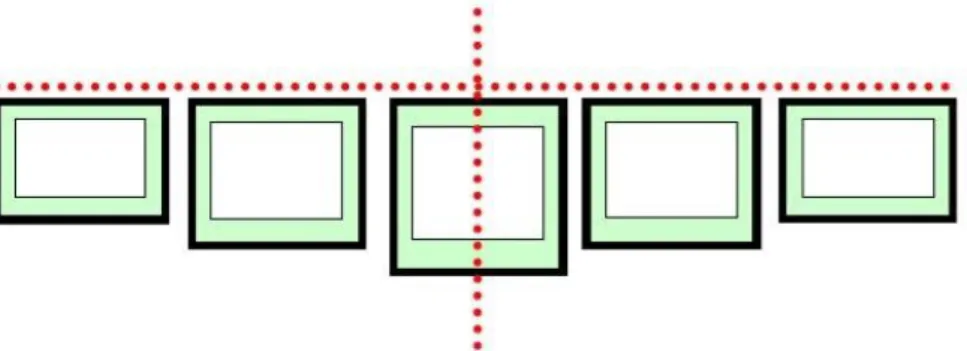
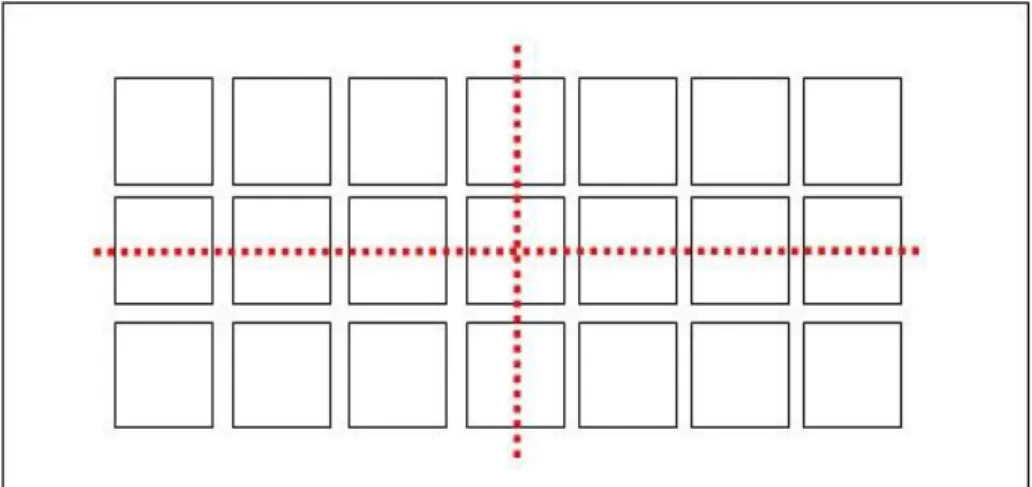
In addition, display elements should follow a line of symmetry which organize them attractively across the entire display. Symmetrical arrangements are often efficient in order to provide visual impact. The following pictures supply a few examples:
Figure 2. In this case, a vertical and a horizontal line of symmetry make the display up. Source: Smawfield (2006, p. 12)
Figure 3. Display can also be organized follow another symmetrical organization as this one. Source: Smawfield (2006, p. 12)
- Colour
The colours, which define a display, are one of the most essential designed components due to the fact that they can emphasize important points, add interest, attract viewer’s
attention and produce an emotional response.
The information which is placed on the display could be sourced and excellent organized, nevertheless, it might not have the desired effect in the public because of its poor colour scheme. As a result, in order to achieve a great visual effect, the colour designed has to be thoughtfully planned.
First of all, backgrounds should to be made by soft or solid colours. Let’s say that a
Secondly, it is not suggested using more than one colour pattern per display. Namely, experts would rather apply one colour across the entire composition following the theme of the display topic. In order to illustrate this idea, the first display proposal of this project follows a colourful schema because of the fact that it was related to students’ diary covers which had the same colour pattern than the display.
Thirdly, colour designs need to show harmony or contrast. As a result, in view of creating a pleasing display to the eye, the colour design process has to be guided by a colour wheel. This resource is a useful reference tool for elaborating colour schemes.
Figure 4. Colour wheel Source: Smawfield (2006, p. 11)
Using a colour wheel through a display development, a variety list of combinations can be suggested. In accordance with Oregon State University (2009, p.7), the following table shows thirty possible colour alternatives:
Table 1
Examples of possible colour alternatives
1. Black on yellow 16. Navy blue on orange
2. Black on orange 17. Yellow on black
3. Yellow-orange on navy blue 18. Scarlet-red on yellow
4. Green on white 19. Yellow on navy blue
6. Black on white 21. Purple on orange
7. Navy blue on white 22. White on emerald green
8. White on navy blue 23. Green on yellow
9. Yellow-orange on black 24. Scarlet-red on orange
10. White on black 25. Emerald green on white
11. White on green 26. Yellow on purple
12-White on scarlet-red 27. Orange on purple
13. White on purple 28. Green on orange
14. Purple on white 29. Green on yellow
15. Navy blue on yellow 30. Orange on yellow
In addition, displays can concretely be based on three different colour designs:
o Monochromatic: monochromatic displays are based on one colour which can
change in intensity and value (lightness or darkness).
o Analogous: analogous displays are based on colours which are next to each
other on the colour wheel. These types of designs transmit harmony.
o Complementary: complementary displays are based on colours which are
directly opposite each other on the colour wheel. These kinds of compositions show contrast. Namely, the first display proposal of this document follows a complementary colour design.
- Creativity
Despite the fact that this step is placed nearly at the end of the planning process, creativity is a component which accompanied the procedure throughout all its development.
The following are some ideas to develop creative displays:
o Workmates can help participating in a brainstorming in order to make the
display brighter.
o Titles can be made in different shapes and using varied textures such as grass or rope.
o The space can be taken up in all its dimensions in view of making three
dimensional displays which can originate incredible visual effects.
o Interactive activities, in which public have the opportunity to answer questions
or to hang display elements, may be included.
o Visuals could be dynamic instead of static. Namely, visuals which include
movement make attractive displays for viewers.
o Students can bring pictures and personal objects which can be placed on the
display.
o Visit other schools and classrooms helps teachers to gain new display ideas. o Search bibliography in which other authors showed creative displays. For
instance, Liz Webster and Sue Reed in Hand on a School Year (2013) provide a wide range of excellent display examples; in addition, web sites such as Pinterest or Instagram can supply amazing ideas too.
With the purpose of making an original display, this training teacher carried creative decisions which took place in different moments of the display development.
Step 8: Assemblage
Once previous elements and decisions are taken into account, all the design elements are brought together in order to build the display up.
In this final step, all the display parts need to be firmly attached to the background through materials such as tape, glue and rubber cement. In consonance with the previous cited author, materials which can deteriorate walls such as blue tack are not recommended. Independently of what material is used to affix the background, these attached items should not distract from the display.
Experts recommend changing displays regularly in view of preserving public’s interest.
To sum up, the amount of effort given by the display’s author is the key to develop
amazing final products. Displays have to be a consequence of enjoyable processes which need to be shared with others once the process is finally done (Oregon State University 2009, p.9).
Step 9: Using displays as an educational tool
According to Smawfield (2006, p.3), some of the reasons for making displays in Primary Education are the following:
o Displays can make the classroom a brighter and more interesting and stimulating place. They can have a direct impact on pupil motivation and on pupil learning. o Displays can help to make the teacher more effective.
o Display materials can include supplementary teaching aids which enrich and reinforce what is being taught, helping to bring the subject to life.
o Displays can acquire the form of reference material to support students’
learning.
o Display material can provide information that it is important for students to
memorise.
o Displays can set the scene for a new teaching topic. Teachers can put some
absorbing material on display to encourage pupil interest in a topic that is going to be learnt.
o Displays can report and record class progress. o Displays can show some ongoing work.
o Displays can stimulate and create pupil interest. o Displays can be used to promote class management.
5. METHODOLOGY AND DESIGN
5.1. SCHOOL CONTEXT
The school where this work is based on is defined by the following basic targets:
o To develop an inclusive culture in which everybody can be valued in order that
they could reach greatest achievements. o To promote all the key competences.
o To create a positive learning environment in the school community in which
teachers show proactive attitudes.
o To make students aware of the importance of interest, effort and responsibilities
as key to success in order to achieve high expectations.
o To foment ICT and permanent teacher training in view of offering a quality
education.
o To consolidate the Common European Framework, the intercultural education, the emotional education and the innovation by creating links with scientific institutions and European schools.
o To involve families in the learning process.
o To assist families through the early arrivers programme, the dining room service, and extracurricular activities.
o To compensate inequalities by providing scholarships and grants. o To promote cooperative relationships with immediate surroundings.
5.2. THE MECD - BRITISH COUNCIL PROGRAMME
In 1996, The Ministry of Education and the British Council signed a convention with the purpose of developing a bilingual curriculum in Spanish state primary schools. With this project, two different languages and cultures were expected to be integrated in the curriculum in view of offering students a bilingual education since the age of three.
These are the basic targets of the Bilingual Programme (BP henceforth):
o Promote the acquisition and learning of both languages through an integrated
curriculum based on the contents.
o Make students conscious about the diversity of both cultures. o Facilitate exchanges among teachers and students.
o Promote the use of technologies for the learning of foreign languages.
The BP has different connotations to other bilingual programmes developed by diverse Autonomous regions. These are its key characteristics:
o It works just in state schools and it starts at the age of three.
o This school is based on an integrated approach in which all the groups receive
the same bilingual education.
o It is based on the Spanish-English Infants Integrated Curriculum (2013), the
Guidance for the development of a Spanish-English Primary Integrated
Curriculum (2012) and the Spanish/English Primary integrated curriculum. Language and Literacy (2015).
o This programme dedicates a significant percentage of the curricular time in
teaching English. Approximately, among ten and eleven sessions are carried out per week.
o Early literary skills are introduced by this programme with the purpose of
complementing oral comprehension skills, promoting an adequate linguistic competence.
o Students face the target of learning English at the same time they are learning contents of essential subjects which are included in the Primary Curriculum. o The teaching staff of the school is complemented with linguistic counselors who
can never be tutors. In Primary Education they work in teams along with the English Language teachers, and on some occasions they deal with the group on their own or as a part of it.
o This programme is based on a methodology called Content and Language
5.2. THE GROUPS
This proposal is aimed to two different year five’s groups for the subject of literacy.
There are four literacy sessions per week. The following table shows the distribution of sessions per week for both groups.
TIME MONDAY TUESDAY WEDNESDAY THURSDAY FRIDAY
9,00 to 10,00
LITERACY 5B LITERACY 5A LITERACY 5A
12,30 to 13,15 LITERACY 5B LITERACY 5B
13,15 to 14,00 LITERACY 5A
As it can be observed in this chart, although Y5A had 3 hours and 45 minutes of literacy peer week, Y5B had 3 hours and 30 minutes. Due to the fact that every Monday children had to do show and tells, there were 2h and 45 minutes with 5A and 2h and 30 minutes with 5B per week in order to develop the unit.
5.4. GROUPS’ GENERAL FEATURES
These are 5A’s general features as a group:
o Age: children are 10-11 years old. o Number of students: 20 students.
o Level of participation: It is a quiet group which does not participate very much. Sometimes, it is hard to make them to interact because they prefer receiving answers. They also show little curiosity. However, it is a really competitive group who enjoys a lot tasks in which there are winners at the end. Although there are some students who carry out tasks in class independently, most of them have a lot of support at home preferring doing homework with their parents. In short, they are self-sufficient.
o Relationships: When they work in groups, there are clear differences among
respect their own roles in order to do the task, the rest of them are able to work cooperatively.
o Learning: They need to be supported. Although there are some students in the third band of attainment, most of them are in the second band. In addition, there are four students who are usually in the first band.
o Specific cases: There is an ethnic minority student who has a dysfunctional
family. This student does not also shows very little interest for learning.
These are 5B’s general features as a group:
o Age: children are 10-11 years old. o Number of students: 23 students.
o Level of participation: This group enjoy interacting which makes it difficult to
keep them in silence.
o Relationships: They enjoy working in teams. Most of the groups take into
account internal roles in order to do a task.
o Learning: they show good skills and they are independent learners.
o Specific cases: On the one hand, there is a student who suffers autism. This
student has a curricular adaptation. This pupil is integrated in class but doing other kinds of activities with a supporting teacher.
5.5. LITERACY
This proposal is linked with literacy subject. According to the curriculum, this subject is different from other bilingual programmes:
Literacy is much more than just the teaching of the mechanics of reading. Literacy involves the all skills of language: listening, understanding, speaking, reading and writing/composition. A balance of these provides the child with a greater chance of survival in English and encourages self-esteem, self-identity and emotional development. Literacy enables access to both fiction and nonfiction materials that will shape and develop the child intellectually. In addition, bi-literacy gives children access to different social and cultural worlds. Furthermore, as children become more confident and literate, their knowledge of, and control over the language become more individual
To ensure students are developing reading and writing skills, children need:
o To be exposed to a variety of text types for different purposes.
o To be given opportunities in guided reading analyses and identify the purpose of a text, to recognize the key features.
o To be provided with the tools to develop creative text for a specific purpose.
These three steps organise literacy learning processes in this school context.
Literacy targets included in the BP curriculum are structured in three levels. These are the specific ones for year 5 level at which this study is aimed:
o In Text Level, children work progressively with a wide range of fiction and
nonfiction texts. There is an assortment of texts which can be worked by students. Their main purpose is to entertain, to express, to persuade, to explain, to instruct, to recount or to inform.
o In Sentence Level, children start studying grammar structures which have been
worked in previous years unconsciously. As a consequence, students begin to be aware of them showing greater knowledge and command of the language. After a type of text has been introduced, pupils learn linguistic aspects related to punctuation, nouns, pronouns, adjectives, adverbs, verbs, questions, negatives, connectives and sentence openers.
o In Word Level, children start to use dictionaries in order to improve their own
writing. They begin to create glossaries, to build words from other words and to pay attention to the spelling and pronunciation.
As a result, this work is defined by a specific methodology in which targets are not developed in isolation. Language and literacy are learnt through a natural and progressive process due to text, sentence and word levels are interlinked.
5.6. THE UNIT: A PERSONAL DIARY
The display included in this proposal belonged to a literacy unit about diaries which took place from April 23th to May 16th. It was designed as a recapitulation of a learning process which expected to achieve the following learning objectives:
o Read diary entries which express emotion. For example, “The Diary of Anne Frank”.
In sentence level, children will be able to:
o Identify different parts of speech in sentences from a reading text: nouns, pronouns, adjectives, verbs and prepositions.
o Recognise and use possessive adjectives (my, our) with accuracy.
o Use adverbs and time phrases in guided writing to indicate the passing of time
(the next day).
o Use right tenses independently and consistently according to what is expected. o Be able to apply rules for regular irregular verbs in past tense.
o Create complex sentences by using a range of connectives: after, then, because,
later. Alternatively, use time words and phrases to sequence events: in the morning, in the afternoon, at night.
In word level, children will be able to:
o Use dictionaries to check spellings and find definitions to words.
o Select from a given list the correct adjectives to describe speaking and writing. o Apply personal pronouns (I, we) and possessive pronouns (my, our) accurately. o Revise regular past tense suffix.
o Classify irregular verbs in past tense according to a similar pattern (suffix).
5.7. DISPLAY DESIGN
5.7.1. General objectives, resources and materials.
The following display design was included in a literacy unit about diaries and it was expected to achieve these basic targets:
1. To report, record and share the work which was undertaken in class through the development of a literacy unit about diaries.
2. To enrich and reinforce what was being taught in class.
3. To stimulate and create pupil’s interest encouraging them to read and to handle display components.
5. To encourage interaction among students of the same level, different level, elaborate an effective and creative display which could meet previous basic targets. As a result, a procedure made by eight different steps was begun in view of building the display up:
5.7.2. Step1: Choosing the correct type of display
A book/work presentation guideline was selected as an appropriate type of display for this design due to the fact that it was going to show final students’ works as well as the standards which guided the learning process. Likewise, this display design can be considered as a poster because of the same reason.
With the purpose of making an original display, a brainstorming was done in view of achieving different drafts before starting building the display up. In line with theory, some displays from the Internet were selected in order to start making a personal one. Particularly, the following display was chosen as a model because of the fact that it included clothes pegs as a mechanism to hold possible works.
5.7.3. Step 2: Choosing the display surface
A large bulletin board and a table were chosen as adequate surfaces so as to support future display components.
5.7.4. Step 3: Choosing the correct place to build the display up
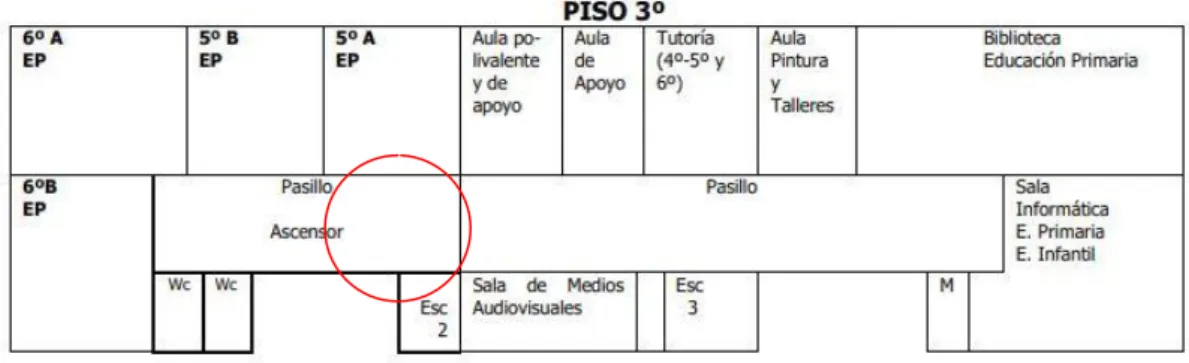
Due to the fact that a spacious area was needed to start setting the display, those available school spaces were analyzed in order to start working. As a result, the entrance of year 5’s and 6’s floor was chosen as the best option because it was an open area
which could have a direct impact on the audience.
Figure 5 Display example in Pinterest.
Source:
Figure 6: School map which shows the place in which the display was set.
5.7.5. Step 4: Choosing the topic of the display
The topic for this display design was personal diaries. This theme was the next type of text which children were learning, however, it was also an appropriate display topic because it could motivate students. Diaries are interesting readings which tell personal experiences, therefore, making a display related to this theme may attract mates’ attention who would like to take a look at what other classmates have written.
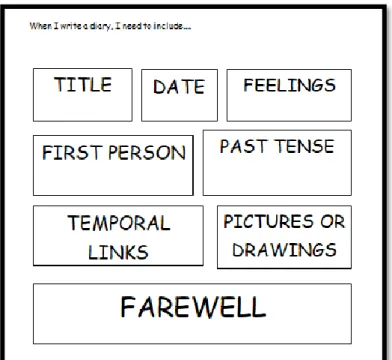
Moreover, this topic was specific enough so the public could learn about it easily. The parts of a diary (title, date, first person, temporal links, past tense, picture, farewell and feelings) could be presented as informative labels in view of showing rapidly the specific information to enrich and reinforce these contents.
5.7.6. Step 5: Choosing the type of text and visuals
First of all, the title of the display has to be short and simple, as a result, our diaries was selected as an appropriate one because it transmitted adequately the display topic. Moreover, it was also necessary to communicate more information related to the topic such as display components and an informative section about Anna Frank. Consequently, these messages were organised on subheading across the display.
5.7.7. Step 6: Choosing principle elements of design
- Flow/Focus
A central section was created in order to accomplish objective number 1 – to report, record and share the work which was undertaken in class through the development of a literacy unit about diaries. As a result, most of the bulletin board was aimed to show future children’s diaries.
Taking into account that people usually read from the top to the bottom, the informative labels about the parts of a diary were placed on the top of the display and below them children put diary examples of that specific diary part. However, another common way of reading by audience is from left to right, for this reason, the area of the bulletin board which was used to place the diaries was the left side and the central part.
As a consequence, the right side of the display was available to produce other subareas such as Anne Frank informative section and new interactive activities. This organization was developed to let the display messages flow in a logical order clarifying the main area from other subareas.
- Space
In line with the last idea, creating a central section with a title and other subareas provided unity to the display because all the parts belonged to the same whole: the information included in the display was under the topic of diaries and it was organized in headings and subheadings. Moreover, the display was bordered with a frame in order to emphasise this idea of unity. In addition, across the space it supplied balance thanks to a regular distribution of elements.
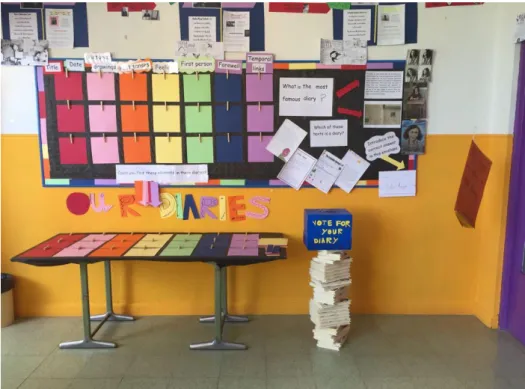
As it can be appreciated in the picture, cardboards were classified in columns following a specific vertical and horizontal order which provided a suitable visual organization
- Colours
Display colours are an essential aspect to attract children’s attention. In view of producing a colourful impact, the background was black and the cardboards followed the next colour scheme: red, pink, orange, yellow, green, blue and purple. Moreover, this sequence represented the colour pattern used across the entire display. For instance, the frame followed this colour design too.
It must be said that this colour scheme was made by different tones due to the fact that children placed on the cardboards diaries whose covers had different hues. In short, the colour pattern was related to the display theme. In addition, because of the fact that a complementary display was expected to be done, the students’ diary covers had to show an opposite coloured organization than the cardboards so as to obtain contrast. For this reason, this part of the process was guided by a colour wheel. As a result, taking into account the number of students in both groups (forty three):
o Six red cardboards were placed for six students who had green diary covers. o Six orange cardboards were place for six students who had blue diary covers. o Seven pink cardboards and six purple cardboards were placed for thirteen
students who had yellow diary covers.
o Six yellow cardboard were place for six students who had purple diary covers. o Six green cardboards were placed for six students who had red diary covers. o Six blue cardboards were placed for six students who had orange diary covers.
- Introducing creative elements
This step was related to introduce interactive elements to the display. Namely, the following components were included:
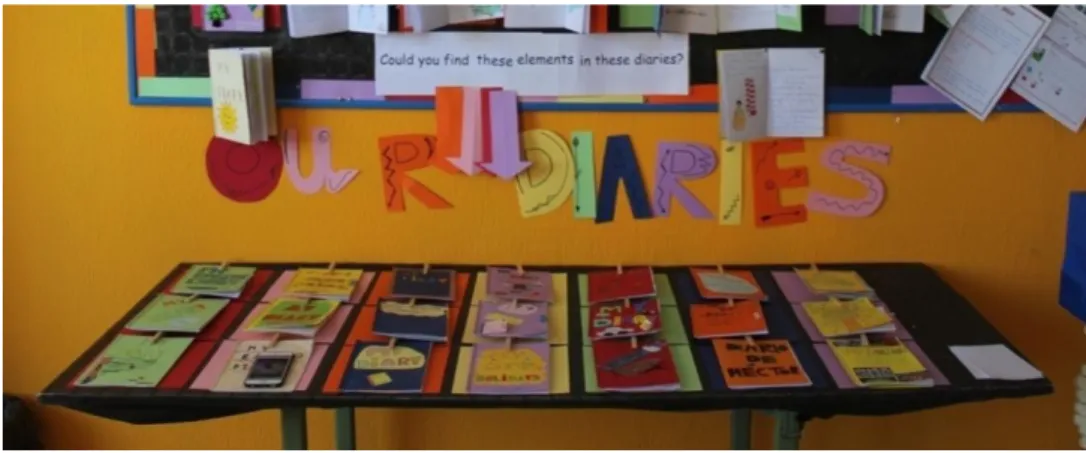
o Due to the fact that there was not enough space in the bulletin board to place all students’ diaries, a table was set under the left side of it to provide extra surface.
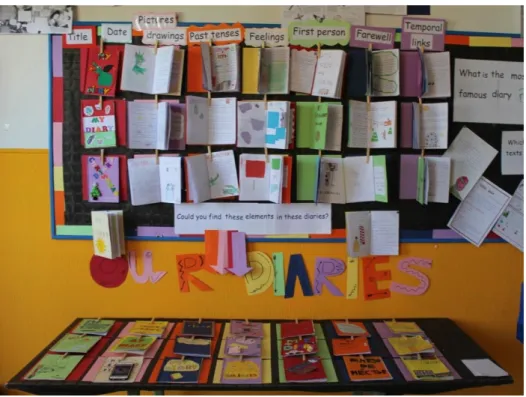
This table was covered following the same colour design than the display and it was used to carry out an interactive activity: all the students’ diaries on the table were closed and children had to open them in order to find more examples of diary components. For this reason, a poster which said Can you find these elements in these diaries? was arranged under the left side.
o Under Anne Frank section, three different texts made by learners were showed (a poem, a recipe and a diary). Children had to take into consideration the elements of a diary in order to guess which of these three types of texts a diary was. Then, they had to introduce their answer in an envelope which was pasted next to it.
o A ballot box was placed on top of a pile of books and next to the table. It was
used for different purposes which will be explained afterwards.
o A dig diary, bigger than students’ ones , was made to create a reading corner at the right side of the display. This model was hanged from the ceiling using string. As a result, a new dimension of the space was taken up making a three dimensional display.
Figure 9. Interactive activity to guess what text a diary was
5.7.8. Step 7: Assemblage
As a result, the display was built up and it had the following appearance:
Once the unit was completely carried out, children were able to make amazing diaries. Then, it was time to arrange them in the display.
On the notice board twenty one diaries were opened up, not randomly, but showing parts of students’ diaries order that the public could watch them carefully. As it can be appreciated in the following picture, diaries were in accordance with the column labels showing examples of that specific diary part. The rest of the diaries were placed on the table without being opened following the coloured pattern previously mention.
As a consequence, after all the students’ diaries were placed on the notice board and on
the table, the display was finally completed:
Figure 12. Diaries placed on the notice board and on the table following a specific organization.
5.7.9. Step 8: Using the display as an educational tool
Four activities were planned in order to use the display as an useful educational tool:
Same level interactive activity.
After the display was totally placed, an activity was designed in order that students could read other classmates’ diaries. To encourage stimulating interaction among children of the same level, firstly, pupils from the same group had to share their diary stories with their classmates. Secondly, they had to read diaries from the other class’s mates.
Once students read a mate’s diary, aspects which they had liked the most from the reading were expected to be written on ballots. Children had to write as many opinions as diaries they had read expressing their ideas in the following way: I liked your diary because… Afterwards, the ballots had to be introduced on the ballot box of the display.
Assessment activity
An activity to encourage a peer assessment was carried out. Firstly, children had the criterion, which was used to guide their final task throughout the unit, pasted on the back covers of their diaries. In addition this criterion was the same as the informative labels pasted on the top of the display. Once diaries were done, children used these criteria in order to find in their classmates’ works all the diary components. On the one hand, students had to circle in green the elements which had been included in their classmates’ texts; on the other hand, they had to circle in red those diary parts which
After students had done a peer assessment, they had to assess themselves following the same criteria. In order to do a self assessment, children valued the effort they had put in their diaries and the number of diary elements included in their works. To sum up, they had to write a personal mark and a brief comment reasoning their grade at the back cover of their diary.
These peer and self assessments were two evaluation techniques which had a specific mark percentage in the teacher’s assessment, so the display was an evaluating tool for the teacher.
The last day of this training teacher at school, this ballot box was opened with the purpose of collecting the positive comments from the first activity proposal and the final marks of the entire learning process.
Different level interactive activity
The second part of the activity would include year four’s student who would come to see the display. Each year four pupil would be assigned to a year 5’s mate who would work as a guide.
Before developing this activity, students prepared their presentation at home. In order to plan their discourse, they followed a template which was organized in the following sections: firstly, they would give a diary definition; secondly, they had to summarize the different days of their diary; thirdly, they would describe the diary elements showing examples included in their works; then, they would say what their favour dairy part was; finally, they would provide a personal conclusion.
This template was filled in by students in order to be checked afterwards by the teacher. Once corrections were done, learners were able to practice their discourse at home to achieve a successful learning experience as guides the following day. Moreover, soon as guides had finished their show and tell, their little mates could find examples of the diary parts on those works which were without opening on the table.
In addition, children would explain to their mates the other subareas of the display: the informative panel about Anne Frank and the interactive activity related to texts.
First of all, they would tell them a little summary about Anna Frank’s life and the importance of her diary. The visuals included in this part of the display were needed by students as illustrators.
Secondly, once year 4’s students had listened to their guides talking about diaries, its elements and Anne Frank’s biography, they might be able to guess what texts presented
on the display were a diary. Year 4’s learners would pick a ballot so as to write the answer introducing it on the envelope afterwards.
Interactive activity with parents
An activity, which would have similar design as the last one, was planned to promote interaction among parents. It would be developed following the previous proposal. Namely, part of tutoring time may be dedicated in order that children could share their diaries with their parents.