AUTONÓMA DE PUEBLA
FACULTAD DE LENGUAS Thesis:
A multimodal interaction analysis of rapport in elementary schools from central Mexico
A thesis submitted to the School of Languages for the Degree of MAESTRÍA EN LA ENSEÑANZA DEL INGLÉS (MEI)
WANDA ALEJANDRA HUERTA ROJAS
Director
DRA. TERESA AURORA CASTINEIRA BENÍTEZ
Puebla, Pue. September 2021
A dissertation entitled
A multimodal interaction analysis of rapport in elementary schools from central Mexico
By
Wanda Alejandra Huerta Rojas
Submitted to the Facultad de Lenguas As a partial fulfillment of the requirements for the
degree of Maestría en la Enseñanza del Inglés
________________________________________________
Teresa Aurora Castineira Benítez, Ph.D., Thesis Director
________________________________________________
Michael Thomas Witten Ulrich Ph.D., Committee Member
________________________________________________
Elizabeth Flores Salgado Ph.D., Committee Member
________________________________________________
Leonor Juárez García, Master, Committee Member
Table of contents
Tables ... 6
Figures... 6
Abstract ... 7
Acknowledgements ... 8
Dedications ... 9
Chapter 1: Introduction ... 10
1.1 Introduction ... 10
1.2 Purpose of the study ... 11
1.3 Rationale ... 12
1.4 Context ... 13
1.5 Research Questions ... 14
1.6 Conclusion ... 14
Chapter 2: Literature Review ... 16
2.1 Chapter Introduction ... 16
2.2 Primary school educational system in Mexico ... 16
2.3 Rapport ... 17
2.4 Rapport in Elementary School ... 19
2.5 Rapport Establishment ... 20
2.6 Rapport’s Body Language ... 22
2.7 Multimodality ... 23
2.7.1 Modes ... 25
2.7.2 Embodiment, mediated and frozen actions ... 28
2.8 Classroom Organization... 29
2.9 Classroom Management... 31
2.10 Conclusion ... 33
Chapter 3: Methodology ... 34
3.1 Introduction ... 34
3.2 Methodology ... 34
3.3 Research Context ... 35
3.4 Instruments ... 36
3.5 Data Collection Process and Analysis ... 39
3.5.1 Ethical implications ... 39
3.5.2 Data collection process ... 39
3.6 Conclusion ... 40
Chapter 4 ... 41
4.1. Introduction ... 41
4.2 Class 1 ... 42
4.2.1 Classroom organization ... 42
4.2.2 Rapport and body language ... 45
4.2.3 Modes ... 46
4.3 Class 2 ... 49
4.3.1 Classroom organization ... 49
4.3.2 Rapport and body language ... 52
4.3.3 Modes ... 54
4.4 Private school comparison of T1 and T2 ... 55
4.5 Class 3 ... 56
4.5.1 Classroom organization ... 56
4.5.2 Rapport and body language ... 58
2.5.3 Modes ... 60
4.6 Class 4 ... 62
4.6.1 Classroom organization ... 63
4.6.2 Rapport and body language ... 64
2.6.3 Modes ... 66
4.7 Public school comparison of T3 and T4 ... 69
4.8 Conclusions ... 70
Chapter 5 Conclusions ... 71
5.1 Introduction ... 71
5.2 Rapport Interactions ... 71
5.3 Multimodal gestures... 73
5.4 Student’s behavior ... 74
5.5 Limitations of the study ... 76
5.6 Directions for further research ... 77
5.7 Implications... 77
5.8 Conclusions ... 78
References ... 80
Tables
Table 3.1 Rapport Observation Sheet ………...37
Table 4.1. Permission………...42
Table 4.2 Recess………...………...48
Table 4.3 Absences . ………...………. 50
Table 4.4 Settle Down .. ………...……… 60
Figures Figure 2.1 Classroom Layout (Stronge et al., 2004).. ………..………..…….... 30
Figure 2.2 “Panopticon Event” (Scollon & Scollon, 2004, p. 40).. ………..……….… 32
Figure 4.1 Private School Classroom Layout ……….…..42
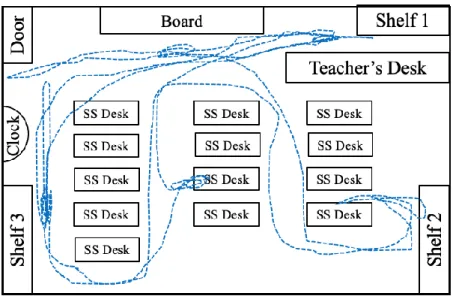
Figure 4.2 T1 Movement ………...45
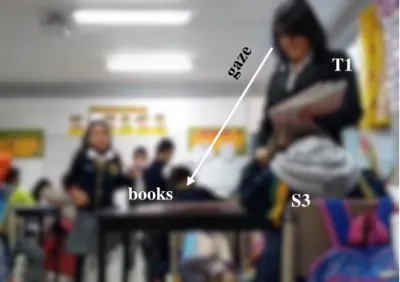
Figure 4.3 T1 Book Distribution. ………... 48
Figure 4.4 T2’s Movement. ………...51
Figure 4.5 T2 Hug.. ………...………..……..52
Figure 4.6 Present and secret .. ………...……..… 53
Figure 4.7 Public School Classroom Layout..………...………...56
Figure 4.8 T3 Movement . ………..………... 58
Figure 4.9 T3’s Posture .. ………...………..… 61
Figure 4.10 Take one, and pass around the rest……… 62
Figure 4.11 T4’s Movement ………..………....……64
Figure 4.12 Student tripping .. ………... 65
Figure 4.13 T4 asking a question . ………... 67
Figure 4.14 T4’ Excuse me gesture .., ………... 68
Appendixes Appendix A – Observation Sheets……… 87
Appendix B – Observation Sheets……… 89
Abstract
Rapport is a positive mutual relationship that is marked by affinity and harmony (Nadler, 2007).
This paper aims to understand the way teachers from public and private elementary schools establish rapport with their students by exploring which and how gestures, influence the students’
behavior.
This is a case study that uses an approach proposed by Norris (2004, 2011, 2016, 2019) named Multimodal Interaction Analysis. This research takes place in Central Mexico and four teachers from private and public schools were observed using a Rapport Observation Sheet that is a modified version of Pianta’s (1999) Teacher-Student Relationship Scale, and recordings were analyzed. Extracts and screenshots were taken from the recordings where the interactions show the establishment of rapport or the lack of it. Results show that the establishment of rapport increases students’ participation and engagement towards the class and their learning process. On the contrary, the lack of rapport establishment causes low class participation, decreases communication between teachers and students, and does not allow an enjoyable classroom atmosphere, neither for teachers nor for students. This project targets to shed some light on the importance of rapport building inside the student-teacher interactions in the primary school classroom.
Acknowledgements
I would like to thank Dr. Teresa Aurora Castineira Benitez for her infinite wisdom and generosity.
Thank you for all the support throughout my academic and personal life. For working with me once again and believing in the importance of this topic.
Special thanks to Elizabeth Flores Salgado Ph.D. and to Leonor Juárez García M.A. for your valuable classes, for your time and dedication. And to Dr. Michael for your support during the program.
Finally, I am grateful for the support provided by Consejo Nacional de Ciencia y Tecnología (CONACYT) because its work helps strengthening the scientific development in Mexico.
Dedications
This one is for me.
Chapter 1: Introduction 1.1 Introduction
Children can develop, learn, and thrive when they have healthy relationships with their educators (Gordon & Bayrami, 2018). Lim, Tang, and Tan (2013) define rapport as a “harmonious relationship that can be built by creating emotional connections between teacher and student and between student and subject matter” (p. 2). The following thesis explores the establishment of rapport inside elementary schools in central Mexico through a qualitative research methodology as this kind of research is used to “understand and explore behaviors, opinions, and experiences from the participants’ perspective” (Pickering , Phibbs , Kenney , & O'Sullivan , 2020, p. 383).
The approaches selected were a case study to develop an in-depth understanding of the interactions (Pickering et.al., 2020) inside the previously metioned context and multimodal interaction analysis, which is an approach proposed by Norris (2004; 2016). The data collection methods used were observations, observation sheets, field notes and recordings of the classes.
Multimodal interaction analysis allows the researcher to investigate language as well as other nonverbal channels of communication that individuals perform with other people, the environment and the objects within it (Norris, 2004; 2016). According to Kress and van Leeuwen (1998) messages are articulated not only by words but through “speech-sounds, rhythm, intonation; accompanied by facial expression, gesture, and posture” (p. 186). Norris (2004) also points out that all interactions are multimodal, multimodality studies
“Nonverbal channels such as gesture, posture, or the distance between people because it can – and does – carry meaning in any face-to-face interaction. All movements, all noises,
and all material objects carry interactional meaning as soon as they are perceived by a person” (p. 2)
And while a person is trying to understand the content of what is being spoken, they have already missed the messages that are simultaneously being sent by the speaker through other modes (Norris, 2004 p.12). Multimodality is used in this paper to explore which modes are employed in the establishment of rapport because rapport is built through a variety of verbal and nonverbal behaviors (Webb & Barret, 2014, p. 12). Individuals respond to events by glances, looks, postural shifts that carry meaning (Goffman, 1981); therefore, modes such as gesture, gaze, posture, music, layout, and proxemics are considered inside this analysis of rapport establishment between teachers and their students.
1.2 Purpose of the study
The purpose of this study is to gather insights into the establishment of rapport between teachers and children from elementary schools in central Mexico to determine whether this relationship variable has any influence on the behavioral outcomes of the students. This paper also aims to shed some light on rapport establishment to observe its effects on students’ behavioral outcomes, because children display comfort or discomfort to specific situations through behavior (Gordon &
Bayrami, 2018, p. 2). Multimodality provides the tools to analyze the interactions that take place inside a classroom. According to Kress (2000), to understand language, all modes of communication should be considered. Norris (2016) states that modes are constructed by actions and actions take place during interactions, modes are systems by which psychological, physical, and sociocultural dimensions are mediated by social actors and the objects within it (p. 49).
The actions mentioned above can be classified as lower-level, higher-level, and frozen actions which will be categorized by the analysis of six elementary school classes. These classes were observed and recorded in February of 2020 before the global pandemic had broken out. A rapport observation sheet was used to gather insights into the establishment of rapport, this sheet used a modified version of Pianta’s (1999) Student-Teacher Relationship Scale (STRS) where some multimodal elements were included to enable richer analysis. Field notes were also taken that included the classroom layout and teacher’s movement. These data collection artifacts facilitated further analysis of the recordings, especially because inside these settings interactions are abundant due to the number of students public and private institutions have in Mexico.
1.3 Rationale
Rapport is a topic studied in several disciplines such as psychology, medicine, and marketing;
relationships such as customer-employee, psychotherapist-client, interviewee-job applicant, and roommates have been examined (Gremler & Gwinner, Costumer-Employee Rapport in Service Relationships, 2010). In education, authors have studied rapport in universities (Burke-Smalley, 2018; Covarrubias-Papahiu & Piña-Robledo, 2004; Hussain, Nawaz, Nasir , Kiani , & Hussain, 2013) and high schools (Grahe & Bernieri, 1999; García-Rangel, García-Rangel, & Reyes-Angulo, 2014; Kahlori, 2014; Košir & Tement, 2013). There are papers of rapport in elementary schools in Malaysia (Lim, et. al., 2013), Australia (Leitão & Waugh, 2007), and the United States of America (Nathan, 2018).
A study in elementary Latin American schools was carried out by Ramírez and Viteri (2016) where one of the variables analyzed was if the students had an environment that supported learning through healthy teacher-student relationship. In this study, questionnaires were applied
to teachers from Mexico (among other seventeen countries) to verify the influence this relationship had on results in mathematics. Nonetheless, inside the Mexican context rapport studies mainly focus on the learning process from university students (Escobar-Medina, 2015; García-Rangel et.al, 2014; García-Rangel, & Reyes-Angulo, 2014). Teachers can benefit from a study inside the elementary educational level because according to the National Institute To Evaluate the Mexican Education (INEE, 2019) in 2018 there were over 14 million students in elementary school. This paper may help primary school teachers and educators in general to understand how interactions are carried out inside their classes through a multimodal perspective and if rapport plays a role in the students’ behavior.
Multimodal interaction analysis has been used to comprehend the way participants behave in household settings (Norris, 2004; 2016). Nevertheless, it has not been used to analyze classrooms environments which have a plethora of interactions. Multimodal interaction analysis is a theoretical framework to understand all the elements that take part inside interactions.
Therefore, this paper can also contribute to the study of multimodality inside the school setting, espefically in two primary schools in Latinamerica.
1.4 Context
This research was carried out in two elementary schools in Central Mexico; the first one was a private school, where a third-grade class was observed. Within this setting, one tenure teacher and one English teacher were observed and recorded with the written consent of the school principal and the learners’ parents who authorized the collection of data. The second school is a public one, where a sixth-grade class was observed after written authorization was given by the principal of the school, a supervisor from the Mexican Secretariat of Public Education (in Spanish Secretaría
de Educación Pública, SEP), both teachers, and the children’s parents. Two teachers were observed as well, the English teacher and the teacher who has tenure and is responsible for teaching the rest of the subjects.
1.5 Research Questions
These are the research questions that guide this study:
1. How do elementary school teachers from private and public schools establish multimodal rapport interactions in institutions from central Mexico?
2. What multimodal gestures are found in the establishment of rapport inside the previously mentioned context?
3. How do multimodal rapport interactions from elementary school teachers influence their students’ behavior in private and public schools in central Mexico?
1.6 Conclusion
In chapter 1, this paper presented the aims and context of this research, it also provided a brief introduction to rapport and multimodal interaction analysis as well as information about the context of the research. Chapter 2 presents a critical review of the literature that sets the theoretical framework this study follows. Chapter 3 deals with a thorough description of the methodological procedures used, as well as the instruments that were chosen to select, gather, and analyze data.
Chapter 4 is where the results of the observations and the recordings are presented in addition to some transcripts that illustrate rapport interactions. Chapter 5 states the discussion and the implications this research had in this specific context, as well as some of the limitations this work
encountered, and suggestions for further research. The following chapter presents the theoretical framework that supports this research.
Chapter 2: Literature Review 2.1 Chapter Introduction
This chapter presents the theoretical foundations upon which this study is founded. First, a brief overview of the Mexican educational system will be provided. Second, general definitions of rapport will be discussed, as well its characteristics in elementary school, how it is established, and the body language strategies used to do so. Finally, this chapter also discusses multimodality, including modes and embodiment, classroom organization and management.
2.2 Primary school educational system in Mexico
The Mexican educational system is ruled by the Secretary of Public Education (SEP) which is in control of the school calendars, enrolments, designing and distributing free textbooks, and teacher training for public schools. In Mexico elementary school lasts six years, children usually start elementary school when they are six years old in first grade and finish when they turn twelve in sixth grade. SEP sets the curricula for public and private institutions; however, private schools are free to add more subjects if they cover the ones established by SEP (Monroy & Trines, 2019).
SEP’s curriculum includes subjects such as Spanish, Mathematics, Social Studies, Physical Education (P.E.), Natural Sciences, Civics, and Arts and English after third grade. Inside public schools one teacher is responsible to teach all the subjects except for English and P.E. The main teacher has tenure and is sometimes responsible for the same group of students two years in a row.
Private schools can work similarly; however, in some cases there is a teacher for each subject.
There are also bilingual schools where students learn several subjects in English such as Natural Science or History. Private schools are responsible for hiring their own teachers as opposed to the
SEP scenario where teachers are hired by the secretary by doing an opposition exam where they get their tenure. (Educación Primaria, 2020)
2.3 Rapport
For many years, rapport was not taken seriously (DePaulo & Bell, 2009), perhaps that is why literature tends to ignore it (Buskis & Saville, 2001). Nevertheless, rapport is a familiar concept that can be perceived as easy to identify but trying to provide a precise definition can be difficult (Gremler and Gwinner, 2000). These authors also argue that rapport is “the quality in a relationship” (p. 82) which includes a certain level of ‘chemistry’ between the participants, but this relationship is marked by “harmony, accord, conform and affinity” (p. 82)., They also suggest that rapport has two dimensions, the first one is a personal connection and the second one is an enjoyable interaction. Rapport is “an overall feeling between two people encompassing mutual trust and prosocial bond” (Faranda & Clarke, 2004).
Rapport is defined by Capella (1990) as a feeling experienced in an interaction with another person, this feeling has positivity and coordination or balance, where it is necessary that both participants are equally interested in one another to be able to achieve the feeling of being “in sync” that requires a high level of behavioral coordination. And according to DePaulo and Bell (2009) it is “a genuinely interactive phenomenon” (p. 305), because it refers to something done by two or more people.
However, rapport’s quality changes depending on the people that are establishing the relationship. For example, for roommates, quality means being able to communicate and understand each other mutually, for a customer-salesperson quality rapport is to be able to show empathy and sympathy. While inside a therapist and a patient relationship, it might refer to an
emotional tie and good chemistry. Inside the literature of therapy rapport is located on the patient, and Freud suggested that the intervention of the therapist should only be done until the patient trusts the therapist (DePaulo & Bell, 2009). Therefore, the definitions vary depending on the setting that is being analyzed but this paper focuses on rapport inside the educational context (Gremler & Gwinner, 2000).
Rapport in education was defined by Kahlori (2014) as the interpersonal side of teaching.
Haynes and Backell (2011) state that rapport is about relationships and that one of the most important goals of a teacher is to build a positive classroom atmosphere where the students are willing and comfortable enough to learn, which can be achieved by building positive rapport.
Authors such as Frisby and Martin (2010) suggest that the term rapport is “relationship-centered”
(p. 147) because it captures what is experienced inside an interpersonal relationship; however, inside a classroom the teacher establishes a plethora of relationships that should also be considered.
In education, rapport has been analyzed within different settings. Several papers focused on education inside the university context, which examined this variable as the relationship between teachers and students (Burke-Smalley, 2018; Covarrubias-Papahiu & Piña-Robledo, 2004; Dyrenfort, 2017; Frisby & Martin, 2010; Webb & Barret, 2014). Hussain et.al (2013) found that university students believe that when their teachers learn about who they are as individuals this can help them achieve success in their learning process which benefits both teachers and learners.
Košir and Tement (2013) found that high school students with “higher perceptions of teacher personal support at the beginning of the school year have better achievements at the end of the school year” (p. 17). Authors such as García-Rangel et.al. (2014), Grahe and Bernieri (1999) and Kahlori (2014) have also studied rapport at this level. As for secondary school there is a study
carried out by Capern and Hammond (2014) where students stated that they valued when teachers
“respect them, promote cordial and friendly interactions, display warmth, understanding and patience; and support their learning” (p. 46). The following section explores rapport within elementary schools, which is the main focus of this paper.
2.4 Rapport in Elementary School
Within elementary school settings there have been studies such as the one done by Nathan (2018) where elementary school students in the USA answered a questionnaire and stated that they did not have good rapport with their educators, while teachers affirmed that they were establishing good rapport. Leitão and Waugh (2007) performed a study in Australia and identified that primary schools students would like to get along well with their teachers, and wished their teachers could care about them. Learners also expressed that it was difficult to approach their teachers when they were busy (p. 20).
Another study was done by Lim et. al. (2013) in Malaysia where awards to “excellent teachers” are given every year, these researchers analyzed six of these teachers through recordings, interviews and focus groups. Three of the teachers established great rapport and some of the characteristics drawn from this study were that teacher who took good care of their learners, also seemed to know their students background and the difficulties they had with the subject being learnt. Inside this harmonious relationship that was based on mutual trust and a high level of respect, learners felt confident to participate because the teachers displayed a positive attitude when solving doubts and misunderstandings.
According to Gordon and Bayrami (2018) “when children feel safe and supported, they are freed up to engage, focus, learn, grow, and feel happy” (p. 3). Pianta (1999) noticed many effects
after having established a positive relationship with his students, no classroom management issues arose, high motivation, good performance. “In other words, adult-child relationships are critical regulators of development; they form and shape.” (Pianta, 1999, p. 17). We now move on to discussing how rapport is established.
2.5 Rapport Establishment
According to Lim et.al, (2013, p.1096), rapport starts being established before the class starts, these authors suggest that teachers should welcome their students warmly to invite them into their learning community. Nathan (2018) claims that the first minutes of the class should be used to talk to students about topics that are not related to the class, since these minutes are valuable for getting to know learners based on the questions that are asked and answered. Lim et.al. (2013) point out that there are qualities that can enhance the establishment of rapport. For example, when the teacher shows genuine interest for the learners’ progress and when teachers respect pupils as learners and individuals.
One criterion for the students to establish a healthy relationship with the teachers is trust because learners need to feel that their teachers are trustable which augments motivation and connectedness, this is done by sharing personality treats and experiences. Teachers should also aim to achieve an enjoyable atmosphere where students feel confident and relaxed by having positive emotional response towards the students’ feelings and needs (Buskist & Saville, 2001;
Lim et.al., 2013). Three elements were identified by Leitão and Waugh (2007) as key aspects inside a good teacher-student relationship, the first one is connectedness with students where the teacher shows personal knowledge of the students, genuine care and interest in their lives, sensitivity to the learners’ emotions and needs, and supportive attitude towards them. The second
element is availability that refers to being easily approached by students concerning emotional, academic and social issues. The third element is communication where teachers demonstrate good verbal, non-verbal and listening skills (p. 5).
Lim et. al. (2013) found that in elementary school, rapport can be established when the teacher acts as a playmate and a partner of the pupils because when the teacher engages in the same activities as the students, they can also experience if their own class is fun and interesting.
Children like to be cared and loved; therefore, by showing concern and caring for students’
teachers are able to relate well to their students, but this attention needs to be adequate for the students’ personalities (Lim et al., 2013). Teacher can also avoid scolding learners when they fail to do homework or an assignment inside the classroom, instead the learner can be asked to determine the reason why this happened (Durden, 2011). Time also needs to be invested in understanding the pupil’s background to recognize why students behave the way they do in the classroom. Keeping promises is also very important for children, Durden (2011) proposes the idea of emotional piggy bank in which a person can make deposits when one avoids criticizing a kid, uses positive feedback, and acknowledges efforts.
Another way to strengthen positive and healthy relationship is by identifying the difference between misbehavior and stress behavior. Reducing students’ stress in children can help them have better social connections (Gordon & Bayrami, 2018). Gordon and Bayrami (2018) also suggest that respectfully listening to children provides the classroom with new and unique perspectives, but it also makes it easier for the learner to respond to the interactions shared with the students.
Teachers can also establish rapport when they stay after the class for the students that need extra help and if they attend extra-curricular activities (Nathan, 2018). Even when literature states that rapport can be built through verbal cues, there are also several non-verbal prompts that contribute
to its establishment. The next section explores the way rapport can be established by using body- language.
2.6 Rapport’s Body Language
“It would be better to think of our actions in ongoing social interaction as deriving from our senses of who we are more than from any conscious process of inferential interpretation” (Scollon, Scollon, & Jones, 2012, p. 16). Grahe and Bernieri (1999) found that in the theory of rapport there are visual and non-verbal features that are perceived by the participants in the interaction. Non- verbal gestures were also observed by Lim et.al. (2013) in the establishment of rapport, these gestures included smiling, engaging in eye contact and gentle pats on the shoulder, high fiving or giving learners thumbs up.
Rapport is also built through nonverbal behaviors such as facing the other person, leaning forward, making eye contact, and mimicry of the other person through posture, facial expressions, tone of voice and mannerisms (Nadler, 2007). Some other techniques to improve rapport building include “matching the body language, such as eye blinks, head nods and finger movement, eye contact and matching breathing rhythm” (Lim, et.al., 2013, p. 1094)
“The qualities of or the way information is exchanged (tone of voice, posture or proximity, timing of behavior, contingency or reciprocity of behavior), as noted earlier, may be even more important than what is actually performed behaviorally; it has been suggested that these qualities carry more information in the context of a relationship than does behavioral content.” (Pianta, 1999, p. 76)
Therefore, it is fundamental to pay attention to rapport’s body language traits in order to identify if it has been established at all. Some of the cues mentioned above are a good way to
identify if the participants are having good rapport. Pianta (1999) mentions posture because can express whether a person is paying attention to his/her interlocutor or not. Inside a classroom if most of the students are leaning forward, it means rapport has been established and learners are listening; however,, if the learners are leaning backward it means there is a lack of rapport and attention (Shafer, 2016).
As for reciprocity of behavior, mirroring is a technique where rapport is established by adopting the same posture that one’s interlocutor has, one can also assume a posture and if the other person follows it, rapport has been established. There are certain open and closed body positions that can indicate the level of threat perceived, a person with uncrossed legs and arms is experiencing positive rapport and does not feel threatened, while a person who does not feel comfortable tends to assume a posture to “protect themselves” (Shafer, 2016). In order to analyze the many conducts rapport uses for its establishment, multimodality was selected. The section below expands on this topic.
2.7 Multimodality
Multimodality bases itself on the assumption that meaning is made through many means, which are called modes such as gaze, posture, gestures, music, prints, clothes, and language, that a culture has shaped for the purpose of communicating a certain meaning or message (Kress et al., 2005, p.21). “Multi refers to the fact that modes never occur by themselves, but always with others in ensembles. Multimodality is characterized therefore by the presence and use of multiple modes (Kress et al., 2005). Hence the importance of the multimodal analysis given the fact that inside any classroom there are several modes working simultaneously.
Multimodality allows to investigate language as well as other modes more accurately as part of the interactions that individuals perform with other people, the environment and the objects within communication (Norris, 2004), because “communication is inherently multimodal”
(O'Halloran, 2011, p. 6). Jewitt (2008) states that multimodality covers a tradition of psychological and linguistic foundations that first analyzed print literacy from an anthropological and sociological theory to later analyze discourse theory (Goffman, 1964; 1981). Kress (2000) and van Leewen (1998) provided the foundations of multimodal research through “an approach to language model of meaning in potential words and structures” derived from Halliday’s systemic functional model (O'Halloran, 2011, p. 3). The multimodal mediated theory comes from the work of scholars such as Scollon and Scollon (2004; 2012) and the concepts of this theory were used to develop multimodal interaction analysis (Norris S. , 2019).
Multimodal inter(action) analysis is a framework where philosophical, theoretical and analytical outlines meet to ensure reliability in the research (Norris S. , 2019). Multimodality is defined as the study of non-verbal channels of communications such as gestures, posture or the distance between people. All movements, all noises, and all material objects carry interactional meaning as soon as they are perceived by a person because “actors perceive the world, objects and others through their bodies as they are acting and interacting” (Norris, 2019, p. 28). Therefore, multimodal discourse analysis is the study of all interactions that include verbal and non-verbal interactions taking into account the context in which they occur (Norris, 2004, p. 2) because as Scollon et al. (2012) suggested “our actions in ongoing social interaction as deriving from our senses of who we are more than from any conscious process of inferential interpretation” (p. 16).
Norris (2004, p. 2) points out that all interactions are multimodal and that multimodal interactions are not concerned with the perceptions, thoughts and feelings that people are
experiencing, but with the perceptions, thoughts and feelings that people are expressing. People move their bodies, hands, arms, and heads, and while the observer may try to understand the content of what is being spoken, they have already missed many important messages which each speaker is sending, intentionally or not, and the other speaker is reacting to through various modes.
(Norris, 2004, p. 14). Jewitt (2008) states that “Multimodality attends to meaning as it is made through the situated configurations across image, gesture, gaze, body posture, sound, writing, music, speech, and so on.” (p. 248) these elements are called modes and will be discussed in the next section.
2.7.1 Modes
Norris (2016, p. 149) defines modes as a “system of mediated actions that incorporates psychological, physical and sociocultural dimensions, and these are learnt by social actors, the environment and the objects within.” Meaning that the social actions that an actor performs comes to reinforce this system of mediated actions to “embed the social actor and the mediational means/cultural tools in the definition of mode” (Norris, 2019, p. 203) and they are never used alone. Modes can be classified in two categories, embodied modes, and disembodied modes. The embodied modes are gestures as well as language, the modes are of equal value and some examples of them are gesture, gaze, and posture. Some examples of disembodied modes are music, print, clothes, and layout, they can at times overrule embodied modes. Norris (2019) defines layout as
“a mode that tells us about the distance that is taken up between objects and the environment and the people (inter)acting” (p. 231).
Proxemics is another mode considered to analyze the distance. It refers to the space relation between two people, it is also the study of the ways in which individuals arrange and utilize their space. The distance between two individuals can suggests many aspects of the relationship they
have with each other (Norris, 2004). The interpersonal distance in Hall’s work presents four crucial distances that separate people in face-to-face communications and their meanings. Intimate distance (touch to 47.5 cm.), personal distance (47.5 cm - 1.2 m), social distance (1.2 m - 3.65 m), public distance (3.65 m - 7.62 m.) (Scollon & Wong Scollon, 2003, p. 53).
According to Norris (2004, p. 24) posture is the way someone positions their body. “The two most important aspects are the form of the body position and the postural direction that the individual takes towards others.” Posture analyzes the body like open-closed arms, legs, knees, and hands, bending and straightened torso, lifting/lowering of the head and the position of the feet which may give insight into the person’s directional position. Attention must be paid to all the interactions because they are not definite. Body can be facing a direction, but attention can still be paid into something else. Proxemics is concerned with knowing how internal social, psychological, or cultural states are displayed on the body, how they become ‘semiotized’ so that they can be
‘read’ by others as a resource of the production of the interaction order (Scollon & Scollon, 2003).
Gesture is a deliberately expressive movement that has a sharp boundary of onset that is seen as an excursion, rather than as a result in any sustained change of position. There are two main groups of gestures hand/arm gestures, and positions of the head gestures. Norris (2004, p.
25) exposes that the hand/arm gestures include iconic (a), which is composed by three movement phases, preparation, stroke, and retraction phase which mimics what the individual communicates verbally. Metaphoric (b), that is a three-movement phase gesture, the movements are preparation, stroke, and retraction phase.
Another gesture that represents pictorial content as well as abstract ideas is deictic (c), a three-movement phase gesture composed by preparation, stroke and retraction phase too, it is basically pointing to people, objects, or events in the past or future, as well as ideas as if they had
physical location in the world. The beat (d) has two movement phases, up/down or back/fort, it is performed by fingers, hands or arms and it looks as if the performer is beating musical time in quick succession. The positions of the head include the gestures such as “rotational” which is shacking the head “lateral” is tilting the head to the right or to the left and “sagittal” is nodding.
Gaze is the mode that indicates the way individuals look at something or someone (Norris, 2019), gaze also deals with the organization, direction, and intention of looking, it is more structured when the interaction is more structured. Gaze is subordinate to language, and it can fluctuate from sequential to arbitrary; one can never be certain to what a person is looking at.
Nevertheless, it can be interpreted by the reactions others have to it (Norris, 2004, p. 33).
According to Scollon and Scollon (2004) “eye-gaze is so crucial for the sighted in managing turn exchanges and the social structures of showing attention, participants who are given open access to the gazes of others are positioned as more active and engaged participants.”Norris (2019) states that the head movement is a mode that refers to the way a person holds or moves its head, and it can occur without the gaze changing its direction, head movement is usually linked to the posture and will often overlap.
Norris (2019) proposes the analysis of facial expressions as a mode and it refers to the way individuals maintain or change the expressions on their faces because at times, when they are interacting, they use elaborate facial expressions, or their expression can stay relatively even through an interaction. This mode can also be connected to gaze or head movement. Another mode is object handling, and it describes the way individuals use objects, this mode is intertwined with the mode of touching, because it is impossible to handle objects without touching them. Usually hand-finger movement are subtle, and recordings can help analyze these kind of modes (Norris, 2019, p.251)
Music as a mode is embodied when people use their body or voice to express a feeling and they can use tools or artefacts to write and express themselves; music is disembodied when people react to either the voice or the artifacts. Disembodied modes can also include people pointing out at artifacts such as pictures from a printed tool and uses gaze, writing, painting, and drawing (Norris, 2004). Jewitt (2014, p. 179) defines multimodal artefacts as objects or a text in which more than once semiotic mode combines as resources for meaning making. The artefacts that can influence the interactions inside the classroom can be markers, board, books, or printed information because all these can transform an interaction.
2.7.2 Embodiment, mediated and frozen actions
Embodiment refers to the interconnection between a body and the world and others. Its importance does not fall into verbalized thoughts that are either written or spoken, but rather in the bodies and the way they are situated in an environment; our bodies are parts in actions, and they interact with each other and by themselves, so do our brains. However, these interactions take place in environments that have objects within, which should be considered too. These actions and interactions are understood by the individual’s perception called mediated actions (Norris S. , 2019).
Rhymes (2009) suggests that as these units are understood and perceived as independent, they should be analyzed independently as well. Norris (2004; 2019) proposed a way to theorize mediated actions, that are the units of analysis inside multimodality, which divide them into lower- level mediated actions, higher-level mediated actions, and frozen actions; this was done to assure that all the elements inside an interaction are considered such as the interconnectedness of people, the environment, and the objects within. Lower-level actions are fluidly performed by individuals in an interaction, they are mediated by a system of representation such as lips-spoken language,
hands-gesture, higher-level actions are the sum of fluidly performed chains of lower-level actions.
and frozen actions are actions embedded within an object.
Lower-level mediated actions is also known as the “smallest pragmatic meaning unit of a mode” (Norris, 2019, p. 41) mediated actions are perceived easily in actions and interactions they could be a pointing gesture or taking a step; nevertheless, they are almost never produced alone, they appear as a chain of actions that interlinked, they should be mediated and need a person performing the action and a person perceiving it. The “multitude of chains of lower-level mediated actions” (Norris, 2019, p. 41) or higher-level mediated actions are produced when many utterances are spoken or several posture changes are made and they usually are accompanied by lower-level mediated actions, these actions also need to be embodied and mediated in several ways.
Frozen-mediated actions will tell that actions have been previously performed, such as an object being left in a specific place to later be used. Mediated actions are assigned to an object frozen within and it is quite easy to read the mediated actions off of them. Frozen actions are embodied because it is a person who performs and perceives these actions and has also learned to react to them through history of experience, which is also embedded in practice (Norris, 2019).
Scollon (2001) states that this practice is an action with a story, and there is no practice without embodiment. The following section discusses classroom organization which is the environment in which the mediated actions take place.
2.8 Classroom Organization
Nathan (2018, p. 4) proposes that everything inside a classroom has a significant impact on the student’s way of connecting to the teacher, from the color of the walls to the placement of the desks. While Kress et al. (2005) propose that layout needs to be considered, layout is the way
furniture is displayed in a classroom. Classroom organization “focuses on the physical environment where teachers strategically place furniture, learning centers and materials to optimize students’ learning” (Stronge, Tucker, & Hindman, 2004), Stronge et al. (2004) also argue that the organization of the classroom affects the behavior of the students, a classroom that is organized results in a smoothly operating class, and “an efficiently organized and managed classroom eliminates many potential behavior” (Shalaway, 1998, p. 12). Therefore, it is important to understand the way classroom organization affects the students’ behavioral outcomes.
The arrangement of the furniture and the materials are part of the organization. Furniture can enhance interactions and participation, but it should also allow free movement from the learners and the teacher to monitor the process. Inside elementary school the arrangement of desks, tables and chairs should foster learning, this arrangement needs to allow the teacher to see all the students and the whole class needs to be able to see the presentation (Rowan, 2012).
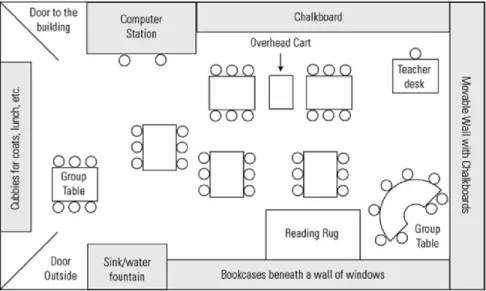
Figure 2.1 Classroom Layout (Stronge et al., 2004)
Stronge et al. (2004) suggest that teachers need a desk free of clutter and areas designated for materials and specific activities. Layout also deals with the way desks and chairs are organized (see Figure 2.1 as an example). And all the elements that exist inside a classroom such as bookcases, cubbies, computer station, board, doors, speakers, projectors, and screens. Shalaway (1998) proposes that layout can also reflect the teaching style and the way tables and desks are organized can influence the learners’ behavior, for example for students to collaborate in small groups one should organize them around tables, but for whole group discussions, U-shape or circles of desks works better and points out that arranging desks in rows is outdated.
Kress et al. (2005) state that “the manner in which tables, chairs and desks are arranged distributes students and teacher into particular places, and into a frame of social relations with each other.” (p.23). This represents the way a teacher feels about the relationship with their students in a social and pedagogical approach, it reinforces the teacher beliefs on how the learners will be working with each other and with the teacher as well. When four students are sitting in a group of tables, a participatory pedagogy is suggested and presents a shift from the traditional rows arrangement (Kress et al., 2005).
2.9 Classroom Management
Kress et al. (2005) suggest that inside a classroom there are many discourses and communicative practices at play that need to be understood and analyzed, they also state that teacher’s talk represents an authoritative and participatory principle because the teacher uses constant affirmation. Pianta, Hamre and Allen (2001) argue that “Classrooms are complex social systems, and student-teacher relationships and interactions are also complex, multicomponent systems.” (p.
365). Classroom management can be easily described as the ability of the teacher to establish and
maintain order inside a classroom (Zein, 2019). However, this perspective can result quite limited.
Classroom management is also defined by Oliver and Reschly (2007) as “the ability of teachers to organize classrooms and the behavior of their students”, they propose that these skills play a critical role into the learners’ outcomes. Zein (2019) differentiated two dimensions of classroom management, the first one is the instructional which refers to regulating grouping, seating, routines, timing, sequential tasks, instructions and feedback. While the behavior management dimension includes preventing, correcting, and redirecting students’ inappropriate behavior to develop self- regulation.
Scollon and Scollon (2004) introduced the idea that a traditional classroom is a panopticon event (see Figure 2.2) an idea suggested by Foucault, where the teacher remains the main monitor of the classroom who controls all the interactions as well as all the exchanger that have to go through the learner either by responding or raising a hand to gain the floor, but only when this is authorized by the teacher.
Figure 2.2 “Panopticon Event” (Scollon & Scollon, 2004, p. 40)
Inside this kind of classroom, “The teacher is perceived as the owner of the space” (Scollon
& Scollon, 2004, p. 40). The teacher stands or sits in a large space that is usually located in front of the classroom, sometimes behind a table or a desk that functions as a symbolic barrier between teacher and students. Students are on the other side of the classroom in smaller chairs, and they are inside the intimate space, commonly shoulder to shoulder, whereas their distance with the teacher is usually at social distance. Teacher also make free use of the board and electronic devices, such as computers, screens, projectors, and speakers. Teachers can ask students to come to the board to solve an exercise of present a topic in front of the class; but even then, they are in full control of the interactions.
Movement has meaning too, Kress et al. (2005) state that the meaning movement inside a classroom is connected to three factors, the first one refers to the teacher’s movement itself, the second one is related to the space in which the teacher moves, for example at the front or at back of the classroom and between desks. The third one refers to the way students move, how and where they do it. There are some classrooms where there is no front nor back, the space is used by teachers and students equally. There are also several moves performed by teachers, such as one named a
“patrol” because teachers create an effect of surveillance while moving around desks. Another one is when teacher sits behind the desk but has eyes on the students “invigilating” rather than teaching.
2.10 Conclusion
This chapter presented the literature related to rapport, multimodality and classroom organization and management. Chapter 3 introduces the methodology used in this research.
Chapter 3: Methodology 3.1 Introduction
This chapter discusses the methodology used in this study. First, the theoretical fundaments and the method chosen to develop this research are discussed. Then, a thorough description of the context and the participants will be provided. The instruments and the data analysis procedures are elaborately presented for the reader to understand better the process of the data gathering and the manner of analysis. Finally, the conclusions of the chapter are presented.
3.2 Methodology
A case study, according to Zainal (2007), is the qualitative research approach that “investigates contemporary real-life phenomenon through detailed contextual analysis of a limited number of events or conditions, and their relationships.” (p. 1). On the one hand, Richards (2003) states that a case study can reach the level of a paradigm when it is considered more than a method. He also maintains that the focus of the case study should be on a unit or a set of units such as institutions, programs, and events to provide a clear and detailed description of such unit. The collection of data that this method uses are interviews, observations, or recordings, but it may vary depending on the unit analyzed to describe a rich picture of experiences inside the selected group. Creswell (2003) proposes that a case study is also an in-depth exploration of activities and processes bounded by time or activity. This study fits into qualitative research paradigm since it explores the way participants experience a phenomenon and it draws meaning out of this experience (Pickering et al., 2020; Sammut-Bonnici & McGee, 2015). Due to the nature of this investigation, this qualitative approach was chosen because it enables the researcher to document the unique characteristics and differences of the participants by observing them.
As rapport is established by verbal and non-verbal cues, a Multimodal Interaction Analysis (Norris, 2004; 2016;2019) was selected to study the interactions inside the classroom considering that “human beings always perform social actions” (Scollon & Scollon, 2004, p. 32) which can include several modes because communication inside a classroom goes far beyond the spoken or written language (Kress et al., 2005). The embodied modes explored in this paper are gesture, gaze, posture, facial expressions, and touching because these are some means by which rapport can be established. The disembodied modes analyzed are proxemics, writing, painting, drawing, and the artifacts used inside the classroom such as books, desks, the board, and shelves, as well as classroom management and organization.
3.3 Research Context
This research was carried out in two elementary schools from central Mexico. The first school observed was a private one, where parents pay a monthly fee. This institute has a big yard that is used for the flag ceremony every monday and students’ assembly meetings. The yard is surrounded by four three-story classroom buildings because this school offers education from kindergarten to high school. The elementary school has a building with restrooms and a small shop where students can purchase food. Each grade is assigned a classroom where pupils stay for most of their classes.
However, they have a special classroom for dance lessons, a computer lab, and a soccer field a block away where they have physical education classes. Computer, dance, and some workshops such as chess, volleyball, and track are some of the extra benefits this institute offers. This school allowed the observation and recording of two hours which included two one-hour classes.
Specifically, a third-grade class of 11 boys and 11 girls between 8 and 9 years of age. The first teacher (T1) observed was a female teacher in her 40’s. She is the English teacher and meets with the students for an hour every day. The second teacher (T2) was a female too but in her 50’s, she
is the tenured teacher who is responsible for teaching children most of the subjects such as Math, Art, Natural Sciences, and Civics. However, learners have different English, Physical Education, Computer Science, and Dance teachers.
The second school is the public one. This school has two two-story classroom building from first to sixth grades, there are restrooms in only one building. This school has a yard where ceremonies and school assemblies are carried, it also has a soccer field and a basketball court, a computer lab, benches outside the classroom, and a small stand where students can purchase food.
As this school follows SEP’s program students have Physical Education and English classes twice a week. However, the principal has implemented after-school programs such as basketball, soccer, and band. Inside this school, a sixth-grade class was observed and recorded. This class had 8 boys and 20 girls whose ages ranged between 11 and 12 years old. The school allowed the recording of two hours of class. The third teacher (T3) observed and recorded was female, she is in her 50’s, and has tenure. She is responsible for teaching most of the subjects which include Spanish, Mathematics, Social Studies, and Geography. The fourth teacher (T4) is the English teacher, also female and in her 40’s. She has classes with the students twice a week.
3.4 Instruments
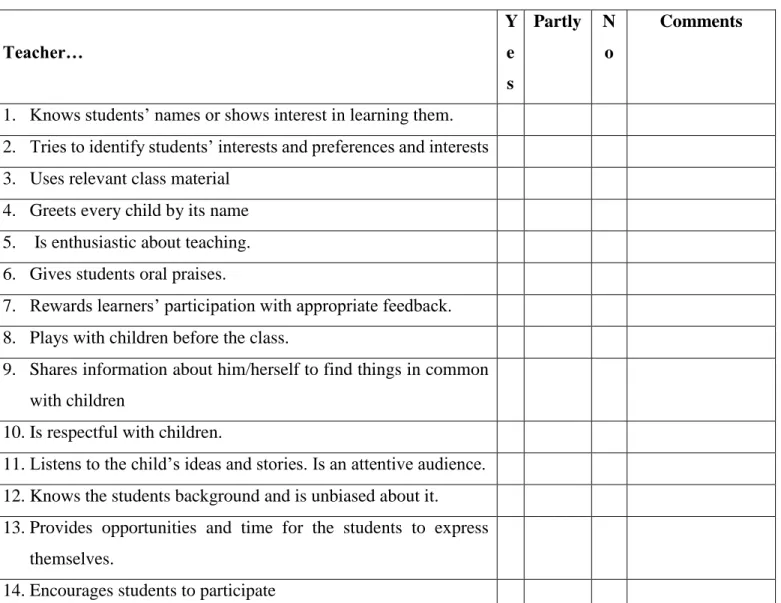
Observation was the first strategy to try to identify the establishment of rapport. Therefore, an observation sheet derived from Pianta’s (1999; 2001) Student-Teacher Relationship Scale (STRS) (See Table 3.1) was used because it considered emotional aspects inside the Teacher-Student relationship and an observation sheet provides a systematic, trustworthy, and valid record of the behaviors (Sampieri, Collado, & Lucio, 2010). The observation sheet is divided into two sections.
The first one has 22 statements that focus on the teacher and provides statements with verbs such
as “Teacher… rewards learners’ participation with appropriate feedback”. The statements include topics such as feedback, attendance, participation, classroom activities, attention, and listening skills. The second section provides statements that provide treats of body language by which rapport can be established. These statements were modified to connect the literature reviewed in Chapter 2 (Buskis, W., & Saville, B. K., 2001; Durden, 2011; Faranda & Clarke, 2004; Frisby &
Martin, 2010; Grahe & Bernieri, 1999; Haynes, L. & Backell, B., 2011; Leitão, N. & Waugh, R., 2007; Lim, Tang, & Tan, 2013; Pianta, 1999; Pianta, R., Hamre, B., & Allen J., 2001)
Table 3.1 Rapport Observation Sheet
Teacher…
Y e s
Partly N o
Comments
1. Knows students’ names or shows interest in learning them.
2. Tries to identify students’ interests and preferences and interests 3. Uses relevant class material
4. Greets every child by its name 5. Is enthusiastic about teaching.
6. Gives students oral praises.
7. Rewards learners’ participation with appropriate feedback.
8. Plays with children before the class.
9. Shares information about him/herself to find things in common with children
10. Is respectful with children.
11. Listens to the child’s ideas and stories. Is an attentive audience.
12. Knows the students background and is unbiased about it.
13. Provides opportunities and time for the students to express themselves.
14. Encourages students to participate
15. Seems comfortable in class.
16. Is willing to participate in classroom activities with students.
17. Pays attention to every student in an equal form 18. Recognizes and reduces student’s stress
19. Gives students opportunities to plan, organize, collaborate, negotiate, solve problems and make decisions.
20. Shows sensitivity for student’s emotions and needs
21. Lets students approach her/him regarding academic issues 22. Allows students approach her/him about emotional concerns Body language
23. Makes eye contact
24. Leans forward to students 25. Smiles to the students
26. Hugs, high fives, or gives a thumbs up to students.
27. Tilts head in a similar position as the students 28. Shows discomfort towards bad behaviors
The second strategy was field notes because they allow a flexible record of the setting and the context including important contextual factors (Pickering et al., 2020) such as the layout, the classroom organization, and the teacher movement. However, these notes permitted the creation of a timeline of the class that facilitated the analysis (See Appendix A) including a first multimodal analysis of the interactions while observed. Inside the field notes the number of students was written and divided into boys and girls. A drawing of the classroom layout was also made including the teacher movement that was going to be later digitalized. Another element included in the field notes was a schedule in the order of the activities e.g., “8:14 a.m. Confrontation in Spanish” and
other positive and negative highlights such as, teacher ignores two students who ask her to close the door because they are cold.
Video recording was the third instrument used to perform detailed Multimodal Interaction Analysis because, according to Norris (2004), these recordings provide the option to revisit the same interaction again and again and to focus upon one mode at a time to either confirm or refuse the first analysis made. “Video recordings give us an amazing and realistic account of actions and interactions that we can watch, re‐watch, and analyze in great detail (Norris S. , 2019, p. 73).
Therefore, the extracts where teachers performed either a positive or a negative interaction were selected and used as screenshots.
3.5 Data Collection Process and Analysis 3.5.1 Ethical implications
Before the recording, permission had to be sought by the researcher. In the public elementary school written permission was given by the principal of the school, a SEP supervisor, the teachers, and the parents of the children a week before the observation. Inside the private school written permission was given by the school principal, the teachers, and the parents of the students. All participants were assured the data collected would be used for the study purposes only and anonymity would be kept.
3.5.2 Data collection process
The four lessons were recorded while the observation sheet was filled, and notes were taken. Both teachers were recorded in the time they shared with the group, each class lasted 50 minutes. The footage includes some minutes before and after the class because the analysis of this time is important inside the study of rapport. The observer did not have any participation in any of the
classes. In the private school, the observer got to the school at 7:50 a.m. but she was not allowed inside the classroom until 8:05 a.m. until the principal arrived. She arrived at the classroom when the students were already inside, she sat in the right corner of the classroom and set the camera on a desk that was given to her while the class was starting, the teacher introduced the observer to the students and stayed there until 10:00 a.m. even when the students had to rehearse for a festival.
Inside the public school, the observer was able to get to the classroom before the students came back from their break, she arrived at 10:55 a.m., sat in the left corner of the classroom, and set the camera on a shelf, but she was not introduced to students. She moved during the English class outside because the teacher took out some students to work in a hall. The observer remained there until 12:05 p.m.
Screenshots were taken from specific interactions in the videos where the establishment or the lack of rapport was observed. As confidentiality was assured to all the participants these images are presented blurred. Transcriptions were carried out to analyze the interactions between teachers and their students. And for each class, a layout image was developed including the movement of the teacher and the position of the students to provide the reader with a complete overview of the context and the interactions within.
3.6 Conclusion
This chapter drew on the elements considered to carry out this research. It presented the methodology as well as the research instruments, the participants, and the data collection process and analysis. The next chapter will deal with the data analysis and findings.
Chapter 4
4.1. Introduction
This study presents the findings of the data obtained from the observation sheet, the classroom observation, field notes and recordings. Analysis was made to look for the interactions where rapport establishment, or the lack of it, were observed. The results follow the next organization:
Each class is presented individually because each was taught by a different teacher. Therefore, the reader can find Class 1, 2, 3 and 4 in this order which follows the same order in which they were observed and recorded. Each class follows the subsequent order: First, the classroom organization for the reader to get a clearer view of the way the furniture was set with the use of an illustration of the classroom layout, examples of the teachers’ organizing skills and an illustration of the teachers’ movement around the classroom throughout the class. Then, elements of the rapport’s observation sheet are illustrated, as well as some examples of the teachers’ body language through which they either established or not rapport interactions. Lastly, modes are exemplified including embodied modes such as gesture, gaze, posture, language, facial expressions, and touching.
Examples of disembodied modes like proxemics, writing, painting, drawing and the artifacts used to do so (Norris, 2019; 2016; 2004) are also presented.
Each teacher is presented as T1 (Teacher 1), T2 (Teacher 2), T3 (Teacher 3), and T4 (Teacher 4). Not all of the students were given similar names to avoid confusion. Only the students that had significant interactions with the teachers were given a number. In Class 1, three third grade girls had major interactions with T1, therefore the reader will find Student 1 (S1), Student 2 (S2), Student 3 (S3), and so on. The names of both, students and teachers are not shown to preserve their anonymity.
4.2 Class 1
4.2.1 Classroom organization
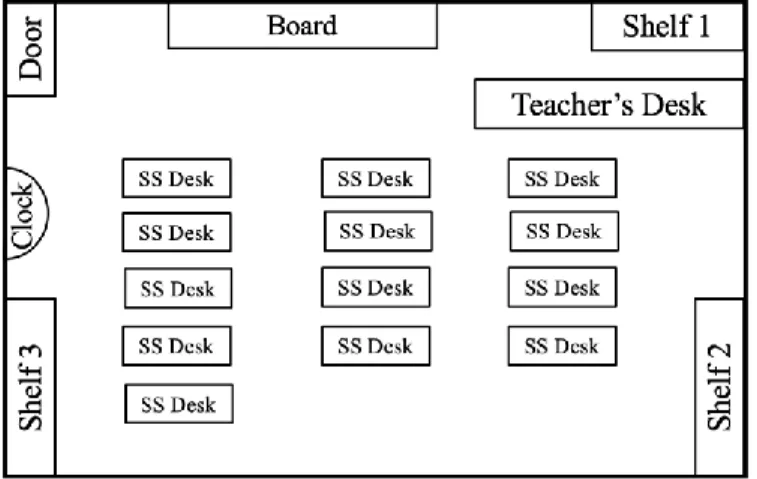
Class 1 belongs to T1, she is the English teacher from the private school, this was the first class the students had in the morning at eight am. The classroom had a whiteboard, desks for two students, a desk for the teacher, three shelves a clock. The walls were white, but several posters decorated the classroom, which included topics such as birthdays, days of the week, maps, and announcements. The students were seated in rows (See Figure 4.1) with limited space between the rows and their desks. Each desk seated two students, for some students it was difficult to have a clear view of the board throughout the class, especially for the students at the back of the classroom in the last desk of the row. All the students hung their backpacks behind their chairs which made mobility complicated. Shelves 2 and 3 had the learners’ books, while Shelf 1 kept the teacher’s useful things due to its proximity to the desk.
Figure 4.1 Private School Classroom Layout
Teacher 1 (T1) is the English teacher, she arrived at the classroom and the class started with her doing a drill with the students about the topic they were reviewing “wild animals”. T1 was in front of the class writing on the board scrambled names of animals and other exercise for students to copy, which the students started doing almost automatically and without receiving the instruction to do so. She remained writing on the board turning her back on the students, T1 briefly answered some of the questions or comments the students made without looking directly at them.
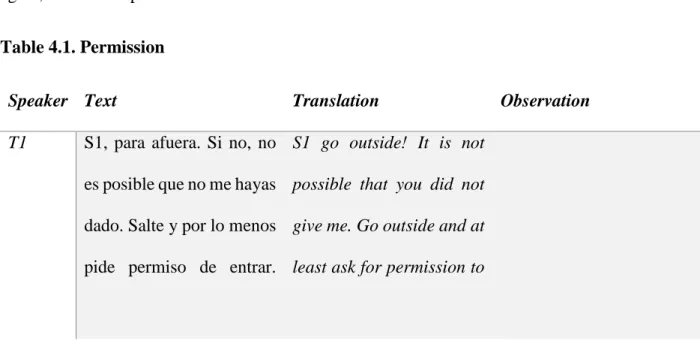
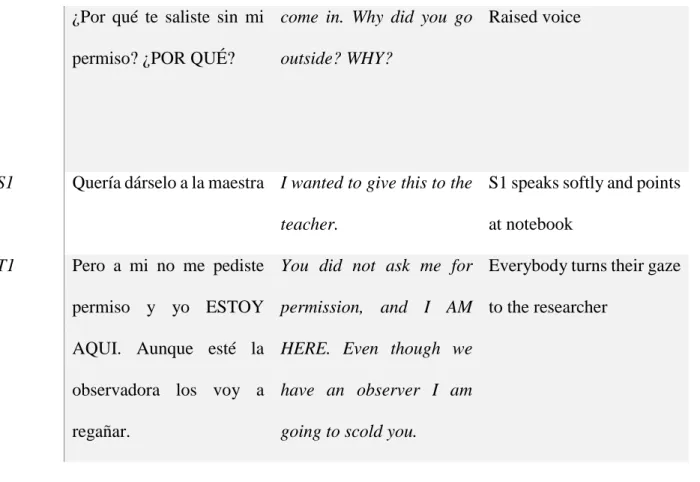
Her eyes stayed on the board. After a few minutes, one student (S1) left the classroom for a couple of seconds after T1 had denied permission for her to do so. In Mexican schools, it is common and almost mandatory for the students to ask for permission before leaving the classroom, especially in primary school. When S1 returned the exchange in Table 4.1 took place, this was the first confrontation between the teacher and one of her students, in this case S1. After S1 returned T1 asked her to leave the classroom, and that she had at least to ask for permission to get back in. T1 raised her voice which caused the rest of the students to become quiet and observe both participants of this interaction. S1 ended up sitting back on her seat and she did not have to leave the classroom again, nor ask for permission to come inside.
Table 4.1. Permission
Speaker Text Translation Observation
T1 S1, para afuera. Si no, no es posible que no me hayas dado. Salte y por lo menos pide permiso de entrar.
S1 go outside! It is not possible that you did not give me. Go outside and at least ask for permission to
¿Por qué te saliste sin mi permiso? ¿POR QUÉ?
come in. Why did you go outside? WHY?
Raised voice
S1 Quería dárselo a la maestra I wanted to give this to the teacher.
S1 speaks softly and points at notebook
T1 Pero a mi no me pediste permiso y yo ESTOY AQUI. Aunque esté la observadora los voy a regañar.
You did not ask me for permission, and I AM HERE. Even though we have an observer I am going to scold you.
Everybody turns their gaze to the researcher
Table 4.1 demonstrated of a panopticon event (Scollon & Scollon, 2004), with T1 having full control of the classroom. T1 made sure S1 and the rest of the class understood that they were going to get scolded with an observer in the class or without one. This was a strategy used by the teacher to set an example for the rest of the class, which worked because the rest of the class looked between surprised and scared. Panopticon events also involve T1’s movement around the classroom monitoring the students’ work. At a moment in class T1 sat among students and started discussing some topics related to the task. T1 also sat behind her desk to grade more work. She used a movement defined by Kress et.al (2005) as “patrolling” and even when she constantly walked around the classroom very few meaningful interactions took place (See Figure 4.2)