SEFO
SPANISH AND INTERNATIONAL ECONOMIC & FINANCIAL OUTLOOK
VOLUME 9 | number 3, May 2020
Spain and the EU:
Assessment of policy responses to COVID-19
The Great Lockdown of the Spanish economy
Official financing aid in response to COVID-19:
Timeliness and sufficiency Capital and liquidity relief in response to COVID-19:
Implications for the Spanish banks
Assessing the range of government guarantees:
State support for the MARF Spanish banks’ preparedness
for the COVID-19 crisis:A European comparison
Spanish fiscal support measures: Boosting corporate liquidity in response to COVID-19 COVID-19: A tsunami for
WHAT MATTERS
SEFO
Spanish and International Economic & Financial OutlookVOLUME 9 | number 3, May 2020Orders or claims:
Funcas
Caballero de Gracia, 28 28013 Madrid (España) Teléfono: 91 596 54 81 Fax: 91 596 57 96 [email protected] www.funcas.es
ISSN: 2254 - 3880 9772254388005
9772254389002
SEFO is a bi-monthly Economic Journal published by Funcas and written by its experts, on the most pressing issues facing the Spanish and international economy / financial system today.
Readers can find this and archived issues of SEFO at www.funcas.es. Please contact us to request permission to republish an article at [email protected]
Electronic Edition
An electronic edition of this Journal is available at
http://www.funcas.es/Publicaciones
Board of Editors Carlos Ocaña Santiago Carbó José Félix Sanz Raymond Torres
Managing Editors Alice B. Faibishenko Juan Núñez
Board of Trustees Isidro Fainé Casas (President) José María Méndez Álvarez-Cedrón (Vice president)
Fernando Conlledo Lantero (Secretary) Carlos Egea Krauel
Miguel Ángel Escotet Álvarez Amado Franco Lahoz Manuel Menéndez Menéndez Pedro Antonio Merino García Antonio Pulido Gutiérrez Victorio Valle Sánchez Gregorio Villalabeitia Galarraga
Contact [email protected]
Web Site www.funcas.es Orders or Claims:
Funcas, publications
Tel.; +34-91-5965481, Fax: +34-91- 5965796, e-mail: [email protected] Printed in Spain
Editorial and Production Funcas
Caballero de Gracia, 28. 28013 Madrid (Spain)
Ownership and Copyright:
© Funcas 2012
ISSN print edition 2254-3899 ISSN electronic edition 2254-3880 Depósito Legal: M-10678-2012 Prints: Cecabank.
SEFO
SPANISH AND INTERNATIONAL ECONOMIC & FINANCIAL OUTLOOK
Letter from the Editors
n response to being one of the European countries hardest hit by COVID-19, Spain has implemented some of the strictest confinement measures not only in the EU, but in the world.
Therefore, while forecasting must be made with a caveat given the dynamic nature of the pandemic, the country is expected to experience one of the most severe recessions this year within the EU, with equally negative consequences for jobs and public finances. Within this context, the May issue of Spanish and International Economic &
Financial Outlook (SEFO) sets out to assess the myriad of recent public policy responses to COVID-19 –at the international, EU and national levels– aimed at supporting the real economy through channelling liquidity to households and businesses. We also provide a snapshot of how these measures may impact Spain’s economic outlook, financial sector, and fiscal balances.
We start off this issue by analysing the impact of the lockdown measures on Spain’s real economy.
Economic restrictions imposed on March 13th, as well as broader global dynamics, will have a material impact on previously published forecasts. For this reason, Funcas has updated its economic projections. Our baseline scenario now predicts GDP will contract by 8.4% in 2020, with the public deficit and debt levels reaching over 10% and nearly 114% of GDP, respectively.
Data indicate that retail, accommodation, food services, cultural and sports activities, and personal services sectors are the most directly affected by lockdown measures. The only sectors expected to end the year with a similar level of GDP prior to the COVID-19 crisis are the
primary sector, the mining and energy industries, healthcare and education. As expected, employment levels have also deteriorated, though much less than in earlier crises thanks to short-time work arrangements. Indeed, 3.3 million employees are registered as part of a government sponsored furlough scheme.
Although the external sector is expected to make a small positive contribution to GDP, tourism receipts and exports have fallen significantly.
Importantly, the Spanish economy’s ability to rebound will largely depend on the maintenance of jobs at sustainable enterprises, the rapid implementation of government programmes, and the Spanish Treasury’s ability to capture financing at reasonable terms.
We then examine the numerous policy responses, the objective of which is to provide liquidity to Spanish corporates and households in the midst of the crisis: (i) through financial support measures (liquidity enhancement, state- guarantees, and supervisory relief); and, (ii) fiscal support mainly in the form of tax deferral schemes. Lastly, we take a look at the anticipated fiscal implications these measures will have for Spain’s public finances.
First, we look at the timeliness and sufficiency of EU and Spanish financial support measures, as well as possible implications for banks. Financing policies are essential in the context of a public health pandemic that results in the paralysis of economic activity. However, the effectiveness of these policies will hinge on the duration of
I
lockdown measures as well as the timely and effective disbursement of funds to the real economy.
At present, the forcefulness and direct nature of US policy contrasts with the uneven and issue-ridden nature of the European response to the COVID-19 crisis, which could lead to greater divergence within Europe. EU member states have issued aid primarily in the form of state guarantees for loans provided by banks to companies facing difficulties.
In Spain, 200 billion euros has been earmarked for public-private financing schemes, but the roll out has been gradual. While state guarantees are expected to cushion the effect of a rise in NPLs, there will be a time lag. In the EU, aid has also been mostly directed at stimulating bank lending, with the ECB having stepped up its buyback programme.
Having rejected the idea of ‘coronabonds’, the EU is expected to announce a new reconstruction fund later this year. However, looking forward, it is possible that the bloc’s uneven response will result in an asymmetric recovery across the EU.
Drilling down on financial support measures, first we focus on regulatory and supervisory relief for the banking sector in an efforts to achieve the effective transmission of these liquidity support measures to corporates. Regulatory and supervisory authorities have adopted temporary measures to shore up banks’ in advance of the expected rise in defaults and in recognition of their key role in the transmission mechanism for financial aid. Banks will be able to operate below the capital conservation buffer (CCB), the Pillar 2 Guidance, and liquidity coverage ratio.
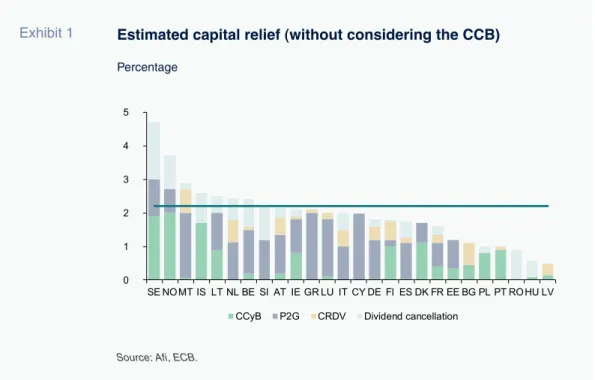
In Spain, the sum of the CCB and average Pillar 2 Guidance would release around 58 billion euros for the Spanish banking system. Regulators have also relaxed collateral measures, such as lowering the minimum size threshold for domestic credit claims from 25,000 euros to zero. This will provide liquidity to support additional measures, such as public guarantees used to ensure credit flows to SMEs and the self-employed, which is especially important in Spain given that SMEs account for over 99.9% of all companies. Additionally, the ECB’s decision to accept less than investment grade debt is significant given the potential for ratings downgrades and the fact that sovereign debt accounts for approximately 10% of the Spanish banks’ total assets. However, since Spanish banks are predominately retail focused, regulatory loosening that targets market
risk and volatility in financial markets will have less of an effect on the industry.
Apart from the supervisory support, we look at the state guarantee structures. The Spanish government has introduced a 100 billion euro guarantee scheme, dispersed across successive tranches that are being adjusted based on the experiences of previous disbursements. The first tranche (20 billion euros) was allocated evenly between SMEs (including the self-employed) and large enterprises, while the scheme’s second tranche was earmarked in full to the SME segment (including self-employed individuals). Of the total guarantees extended as of early May, 66% had secured SME loans, while 34%
supported large enterprise loans. A key novelty of the third tranche is the addition of 4 billion euros to underwrite fixed-income securities (commercial paper) issued by companies listed on Spain’s alternative fixed-income exchange, the MARF. This initiative will be applicable to commercial paper with terms of maturity of up to 24 months. The guarantees provided for commercial paper issued on the MARF have a maximum size of 70%, implying a leverage effect of 143%, such that 4 billion euros of guarantees could drive total commercial paper issuance of around 5.7 billion euros.
To determine the ultimate efficacy of these measures and how they may impact the Spanish financial sector, as reference, we include a snapshot of Spanish banks’ performance alongside EU peers on key metrics. With a capital adequacy level 4.2 percentage points higher than in 2008, Spanish banks appear better positioned to withstand the economic fallout from COVID-19 than during the previous financial crisis. Notably, Spanish banks boast above-average profitability and efficiency compared to their eurozone peers, their loan-to- deposit gap has improved, and they have a healthy buffer of liquid assets. That said, the IMF and the European Commission are forecasting a bigger contraction in GDP in Spain (8%-9.4%) than in the eurozone (7.5%-7.7%). Although government- backed guarantees, the aid rolled out to prop up business and household income and the easing of bank regulations may help cushion the impact of the crisis on the banks, a GDP contraction of that magnitude will drive non-performance higher and require the recognition of provisions. Moreover, although the Spanish banking sector’s solvency ratio
is significantly above regulatory requirements, it is 2.3 percentage points below the eurozone average.
Furthermore, even though a deep restructuring effort has left Spanish banks among the most efficient in Europe, efficiency has deteriorated in recent years. As a result, Spain’s banks will need to continue with their cost-cutting efforts and reduce their capacity even further in order to weather the COVID-19 crisis.
Next, we focus on a comparative assessment of fiscal support measures, essentially tax deferral schemes, across the EU to help boost liquidity for Spanish individuals and businesses. As stated previously, current forecasts for the Spanish economy suggest that the COVID-19 pandemic will result in a significant economic contraction in 2020. Faced with that scenario, the government has passed a raft of employment, fiscal and financial measures to mitigate the destruction of jobs and businesses. One of the most significant initiatives is the deferred payment of state taxes and social security contributions by six months. That deferral option is longer than the two to four months granted in some other European countries. However, the scale and reach of the initiative in Spain are significantly smaller than its equivalent in Germany, France, Italy, Denmark and Belgium, for example.
In addition, these countries have offered direct grants or subsidies to firms, not just tax deferrals.
One of the reasons for that difference is the fact that in Spain, taxes can only be deferred by companies with revenue of less than six million euros in 2019.
For this reason, the authors of this article believe that the government may want to consider a more decisive commitment to prop up corporate liquidity and pre-empt job losses. While this would inevitably result in a higher deficit over the short-term, it could pay off in the long-run by providing the economy with a stronger foundation upon which to stage a recovery after the health crisis has abated.
Lastly, we close this SEFO exploring how the recently approved fiscal support measures may impact government finances. Economic figures published in April by Eurostat suggest that Spain’s fiscal consolidation has experienced a setback.
Unfortunately, this setback may become even greater given the economic paralysis caused by COVID-19. The uncertainty surrounding the COVID-19 crisis makes forecasting both growth and
the deficit extremely difficult and has contributed to a wide range of forecasts published by the Bank of Spain, the IMF, BBVA and Funcas. These institutions have forecasted a GDP contraction of between 6.8% and 12.4% with the public deficit ranging from 7.2% to 11.0%. Though much of the deficit reflects the impact of the recession and the costs of one- off fiscal measures, there remains an important structural component. Indeed, Spain’s structural deficit is among the highest in the European Union, with the EU Commission calculating a cyclically- adjusted budget deficit for Spain at slightly over 3%
in 2020.
This page was left blank intentionally.
What´s Ahead (Next Month)
Month Day Indicator / Event
June 2 Social Security registrants and official unemployment (May) 4 ECB monetary policy meeting
5 Industrial production index (April) 11 Eurogroup meeting
12 CPI (May)
18 Foreign trade report (April) 18-19 European Council meeting
24 Balance of payments quarterly (1st quarter 2020) 26 Retail trade (May)
29 Preliminary CPI (June)
30 Non-financial accounts, State (May)
30 Non-financial accounts, Regional Governments and Social Security (April) 30 Non-financial accounts, General Government (1st quarter 2020)
30 Balance of payments monthly (April)
30 Quarterly Non-financial Sector Accounts (1st quarter 2020) 30 Quarterly National Accounts (1st quarter 2020, 2nd release) July 2 Social Security registrants and official unemployment (June)
6 Industrial production index (May) 14 CPI (June)
15 Quarterly Financial Accounts (1st quarter 2020) 16 ECB monetary policy meeting
17 Foreign trade report (May)
28 Labour Force Survey (2nd quarter 2020) 29 Retail trade (June)
30 Preliminary CPI (July)
30 Non-financial accounts, State (June)
30 Non-financial accounts, Regional Governments and Social Security (May) 31 Preliminary Quarterly National Accounts (2nd quarter 2020)
31 Balance of payments monthly (May)
This page was left blank intentionally.
What Matters
The Great Lockdown of the Spanish economy In view of the depth of the global crisis, and taking into
consideration key domestic imbalances that predate it, Funcas has revised its economic forecasts for Spain. Our baseline scenario now predicts an economic contraction of 8.4%, with adverse effects on unemployment, the deficit, public debt levels, and GDP remaining below pre-crisis levels until 2023.
Raymond Torres and María Jesús Fernández
Official financing aid in response to COVID-19: Timeliness and sufficiency
In contrast with the US, the state support measures adopted in Spain and the EU have mainly taken the form of credit guarantees and liquidity support rather than direct aid. While there is still scope to expand these support mechanisms, there is a growing sense that the EU’s uneven response will result in an asymmetric recovery across member states.
Santiago Carbó Valverde and Francisco Rodríguez Fernández
5
19
Capital and liquidity relief in response to COVID-19: Implications for the Spanish banks The economic constraints associated with the COVID-19 crisis have prompted regulatory and supervisory authorities to provide Spanish banks with ‘relief’. In particular, the temporary release of capital and liquidity buffers, flexibility regarding asset impairment losses, and the expansion of eligible assets as collateral for liquidity auctions will have varying implication for the Spanish banking sector.
Marta Alberni, María Rodríguez and Fernando Rojas, A.F.I.
29
Spanish fiscal support measures: Boosting corporate liquidity in response to COVID-19 Although the Spanish government has introduced significant deferrals of state taxes and social security contributions, the scale and reach of these deferrals is smaller relative to some other EU-15 countries. Consequently, the government could consider expanding its commitments to provide a stronger foundation for Spain’s future economic recovery.
Desiderio Romero-Jordán and José Félix Sanz-Sanz
55
Spanish banks’ preparedness for the COVID-19 crisis: A European comparison Spanish banks’ key metrics, such as capital adequacy levels and liquidity buffers, have improved since the last crisis; however, the economic fallout from COVID-19 is projected to have an adverse impact on the sector. Therefore, it is essential that Spain’s banks continue their cost-cutting efforts and reduce their capacity, given the expected increase in provisions needed in the coming months to cover the anticipated rise in NPL ratios.
Joaquín Maudos
45
Assessing the range of government guarantees: State support for the MARF The third tranche of Spain’s government-backed guarantee scheme in response to COVID-19 will include the allocation of 4 billion euros to secure commercial paper issued on the alternative fixed-income market (MARF for its acronym in Spanish). The idea is to provide new stimulus for tapping the capital markets, helping to close the long-standing gap between Spain and the main European, as well as Anglo- Saxon, economies.
Angel Berges and Irene Peña, A.F.I.
37
Regulation and Economic Outlook
Recent key developments in the area of Spanish financial regulation
73
Prepared by the Regulation and Research Department of the Spanish Confederation of Savings Banks
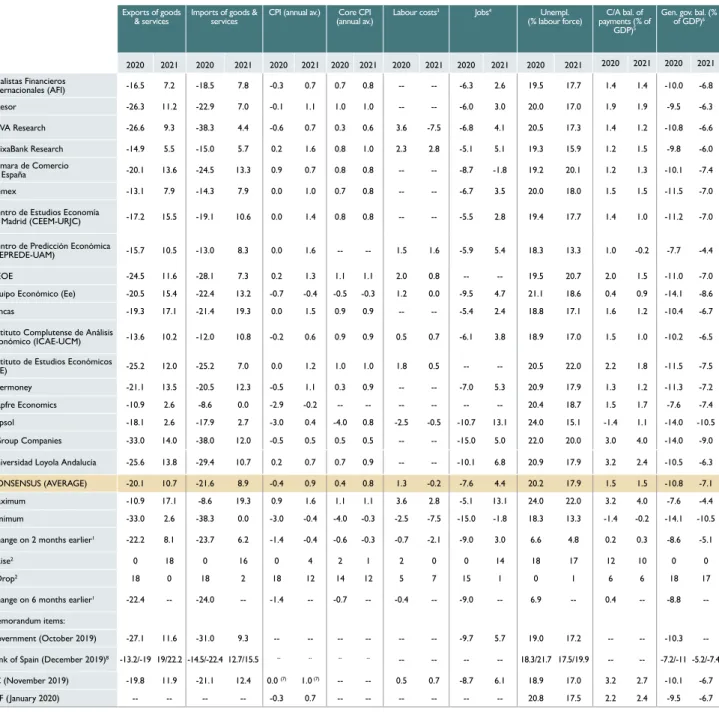
Spanish economic forecasts panel: May 2020
79
Funcas Economic Trends and Statistics Department
Key Facts
Economic Indicators
87
Financial System Indicators
125
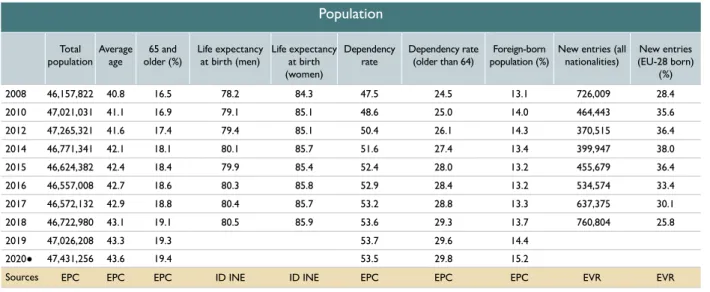
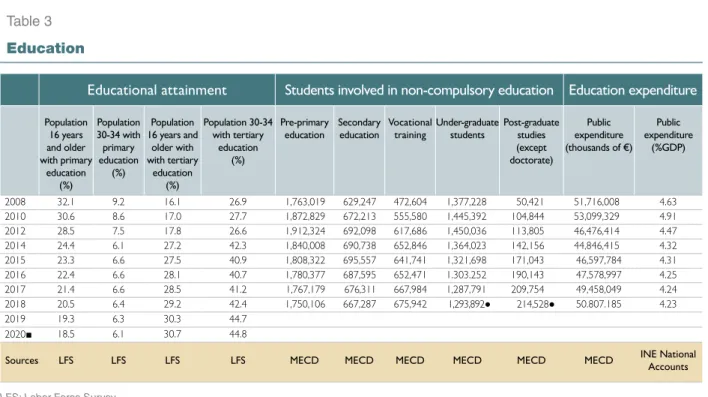
Social Indicators
131
COVID-19: A tsunami for public finances COVID-19 has placed considerable pressure on Spain’s public finances, further complicating the outlook for the country’s fiscal consolidation. Though much of the deficit reflects the impact of the recession and the costs of one-off fiscal measures, there remains an important structural component.
Santiago Lago Peñas
65
This page was left blank intentionally.
The Great Lockdown of the Spanish economy
In view of the depth of the global crisis, and taking into consideration key domestic imbalances that predate it, Funcas has revised its economic forecasts for Spain. Our baseline scenario now predicts an economic contraction of 8.4%, with adverse effects on unemployment, the deficit, public debt levels, and GDP remaining below pre-crisis levels until 2023.
Abstract: Economic restrictions imposed on March 13th, as well as broader global dynamics, will have a material impact on previously published forecasts. For this reason, Funcas has updated its economic projections. Our baseline scenario now predicts GDP will contract by 8.4% in 2020, with the public deficit and debt levels reaching over 10%
and nearly 114% of GDP, respectively. Data indicate that retail, accommodation, food services, cultural and sports activities, and personal services sectors are the most
directly affected by lockdown measures. The only sectors expected to end the year with a similar level of GDP prior to the COVID-19 crisis are the primary sector, the mining and energy industries, healthcare and education.
As expected, employment levels have also deteriorated, though much less than in earlier crises thanks to short-time work arrangements.
Indeed, 3.3 million employees are registered as part of a government sponsored furlough scheme. Although the external sector is expected to make a small positive Raymond Torres and María Jesús Fernández
SPANISH LOCKDOWN
contribution to GDP, tourism receipts and exports have fallen significantly. Importantly, the Spanish economy’s ability to rebound will largely depend on the maintenance of jobs at sustainable enterprises, the rapid implementation of government programmes, and the Spanish Treasury’s ability to capture financing at reasonable terms.
Introduction
According to the IMF, the COVID-19 crisis poses the biggest challenge for the global economy since the Second World War (IMF, 2020). The dual supply and demand shocks triggered by the pandemic and lockdown measures, coupled with the collapse in international trade, have caused an economic paralysis across continents.
The crisis began its extension in Spain in early March due to a slowdown in demand from the countries hit by the first wave of COVID-19. Alongside the declaration of a state of emergency, the Spanish government introduced restrictions on economic activity and individual mobility, which have further expanded the impact of the crisis.
Funcas conducted preliminary estimates of those impacts in March, assuming a more limited state of emergency than ultimately implemented, as wells as a V-shaped recovery of the global economy, which was in line with the international organisations’ forecasts at the time (Torres and Fernández, 2020). This paper updates this early assessment, layering in more recent predictions for the global economy and key imbalances in the Spanish economy that predate the pandemic.
Performance since the onset of the pandemic
The economic indicators for the first two months of the year pointed to a continuation of
the expansion at a similar pace to that observed in the previous quarters, with GDP growth of around 0.4% and job creation even rising in February. By March, however, the indicators exhibited sharp contractions, attributable to economic restrictions imposed on March 13th to contain COVID-19. Data from April, the first full month affected by the lockdown measures, showed an even more pronounced decline.
Recall that the sectors most directly affected by the closures –retail, accommodation, food services, cultural and sports activities, and personal services– represent nearly 15% of GDP and have a knock-on effect for the rest of the economy, equivalent to about 6% of GDP.
On the consumption front, retail sales have plummeted abruptly, falling below levels not seen since 2013. In April, car registrations were a fraction of normal levels, even though the consumer confidence index remains above its historic low.
Although the April manufacturing PMI and confidence readings were also above the lows observed during the last recession (Exhibit 1), available data points to a collapse in manufacturing activity. The service sector is even more affected by the pandemic containment measures. The services PMI reading dropped to unprecedented levels in April, with overnight stays and passenger air traffic in March alone falling by 46% and 60%, compared to January-February levels, respectively (Exhibit 2).
The impact on the construction sector has also been sizeable, as revealed by the sharp drop apparent in cement consumption and Social Security contributor numbers in the sector.
Note that the construction and real estate activities were already showing clear signs of cooling before the pandemic.
“ Retail, accommodation, food services, cultural and sports activities, and personal services represent nearly 15% of GDP and have a knock-on effect for the rest of the economy equivalent to around 6%
of GDP. ”
The Great Lockdown of the Spanish economy
The Social Security contributor numbers provide a more accurate picture of how COVID-19 is affecting employment (Exhibit 4).
Contributor numbers fell by almost 900,000 during the second half of March (from when the state of emergency was declared),
stabilising somewhat in April, with a net loss of 47,000 contributors over the course of the month. The daily increase in the number of official jobseekers also eased in April compared to the second half of March. At the end of April, the number of employees under
0 10 20 30 40 50 60
-50 -40 -30 -20 -10 0 10 20
08 09 10 11 12 13 14 15 16 17 18 19 20
Industrial confidence (LH axis) PMI (RH axis)
Exhibit 1 Industrial activity
Indexed
Sources: European Commission and Markit Economics.
0 20 40 60 80 100 120 140
40 60 80 100 120 140 160
08 09 10 11 12 13 14 15 16 17 18 19 20
Passenger air traffic (2008 = 100, LH axis) PMI (LH axis)
Overnight stays (2008 = 100, RH axis)
Exhibit 2 Services activity
Indexed
Sources: INE, AENA and Markit Economics.
the government sponsored furlough scheme (ERTEs for its acronym in Spanish) amounted to 3.3 million. There is no doubt that this scheme has proved most helpful in containing job losses, for now.
The national accounts for the first quarter of the year, while still provisional and subject to potentially significant revision, evidence the scale of the impact of COVID-19, even though the pandemic only affected the last three
0 10 20 30 40 50 60 70
60 70 80 90 100 110 120
08 09 10 11 12 13 14 15 16 17 18 19 20
Economic sentiment Composite PMI (RH axis)
Exhibit 3 Overall economic activity
Indexed
Sources: European Commission and Markit Economics.
-800 -700 -600 -500 -400 -300 -200 -100 0 100 200
08 09 10 11 12 13 14 15 16 17 18 19 20
Exhibit 4 Social Security contributors
Monthly increase in ‘000 (SCA data)
Source: Spanish Ministry of Inclusion, Social Security and Migration.
The Great Lockdown of the Spanish economy
weeks of the reporting period. GDP contracted by 5.2% compared to the previous quarter, the biggest drop in the series (Exhibit 5).
This was marked by unprecedented declines in all components of demand, with the exception of public expenditure, the only item to register growth. On the supply side, the worst hit sectors were retail, hospitality and transportation, the arts and leisure activities, followed by construction and, lastly, manufacturing. Nevertheless, the full economic impact of the health crisis will not be apparent until the second-quarter figures are released.
The global economy is also reeling from the effects of COVID-19. China’s GDP contracted by 6.8% in the first quarter. Preliminary estimates for the eurozone put the first- quarter decline in GDP at 3.8%. In the US,
the contraction was less pronounced –at 1.2%– as widespread transmission and the corresponding shelter-in-place measures came somewhat later than in Europe;
however, leading indicators, such as jobless claims have risen to unprecedented levels, foreshadowing an economic impact as severe as other developed economies.
Commodity prices have collapsed and stress has returned to the financial markets. In terms of the latter, a sharp correction in share prices has occurred, volatility is on the rise, risk premiums are spiking and capital is being withdrawn from emerging markets.
Nearly every country has imposed lockdown measures, border closures and economic restrictions. Governmental economic policy responses have generally been targeted at propping up the income of affected workers
“ The external environment is strongly unfavourable, with preliminary estimates for the eurozone pointing to a first-quarter decline in GDP of 3.8%. ”
-6 -5 -4 -3 -2 -1 0 1 2
2008 2009 2010 2011 2012 2013 2014 2015 2016 2017 2018 2019 2020
Exhibit 5 GDP
Quarter-on-quarter rate of growth
Source: INE.
“ Spain’s economy is expected to contract by 8.4% this year and is not expected to return to pre-crisis GDP levels until 2023. ”
and providing businesses with liquidity, while the central banks have been rolling out liquidity measures in sizeable quantities.
Estimated impact by sector and for the Spanish economy as a whole Our forecasts are underpinned by these trends and assume that the lockdown will last until mid-May, a few weeks longer than our March estimates. In addition, the easing of the lockdown measures will be slower than initially anticipated, which will have a particularly adverse impact on the sectors more dependent on mobility. The numbers also factor in the emergency measures announced by the Spanish government in March, since expanded to include new initiatives designed to keep businesses afloat until the lockdown is over. Lastly, we assume that the recession will not spill over to the financial sector;
specifically, we assume that the ECB’s efforts to contain sovereign risk premiums will be
successful (if these assumptions do not hold, the impact would be much worse, as we will outline later).
With those assumptions in mind, we estimate that the Spanish economy will sustain an unprecedented contraction during the first half of the year and embark on a recovery from the third quarter, as the lockdown measures are gradually rolled back (Exhibit 6). Despite a rebound in the second half of the year, the economy will contract by 8.4% in 2020 as a whole. The recovery is expected to last for all of 2021, although by the end of that year the economy will not have made up all the ground lost as a result of the Great Lockdown. We forecast that Spain will not return to pre-crisis GDP levels until 2023.
These estimates are based on a simulation of the possible impact of the economic
75 80 85 90 95 100 105
4Q19 1Q20 2Q20 3Q20 4Q20 1Q21 2Q21 3Q21 4Q21
Pre-coronavirus trend Current trend
-5.3% -2.8%
-20.3%
Exhibit 6 GDP
4Q19 = 100
Source: Spanish Ministry of Inclusion, Social Security and Migration.
The Great Lockdown of the Spanish economy
restrictions on each sector of the economy, and their performance once the restrictions are eased. The assumptions regarding the impact of the lockdown on each sector during the state of emergency and, including each sector’s subsequent performance, are necessarily arbitrary; however, they are deemed plausible in light of observations in the Asian economies that were hit by the coronavirus earlier. The results, aggregated into seven major sector categories, are provided in Exhibit 7. [1]
The only sectors expected to end the year with a similar level of GDP prior to the COVID-19 crisis are the primary sector, the mining and energy industries, healthcare and education.
Accommodation and food services will be the hardest hit: GDP in those sectors is expected to be 29% lower year-on-year at the end of 2020.
The shock will also be severe on the demand side. Households will cut back on spending due to the lockdown restrictions, erosion of their disposable income and an increase in precautionary savings, a phenomenon also observed during the 2009 crisis. [2] We estimate that the household savings rate will rise to 14.3% of gross disposable income, topping the peak reached during the financial crisis.
The impact on investment will be even more significant. This is due to the paralysis of economic activity, a downturn in business expectations, and an environment of tremendous uncertainty.
The purchase of capital goods is expected to suffer disproportionately, registering an unparalleled contraction. In total, domestic demand is expected to subtract over seven percentage points from GDP.
-1.0 -8.0
-16.6 -15.7
-70.8
5.0
-25.6 0.0
-2.0 -5.0 -5.0
-29.0
2.0
-5.0
-80 -70 -60 -50 -40 -30 -20 -10 0 10
Primary sector Mining and
energy Manufacturing Construction Accommodation and food services
Govt. and defence, education, healthcare
Other services
2Q20 4Q20
Exhibit 7 Change in GVA post-coronavirus, by sector
GVA in the second and fourth quarters of 2020, compared to the fourth quarter of 2019, in %
Source: Funcas’ forecasts.
“ The household savings rate is expected to rise to 14.3% of gross
disposable income, topping the peak reached during the financial
crisis. ”
Exports, meanwhile, will suffer from the collapse in the global economy. According to the WTO, global trade will contract by 13%
this year (a figure that could be multiplied by a factor of almost three depending on the duration of the pandemic and the persistence of trade barriers). Sales of Spanish goods overseas may fare a little better. However, tourism receipts are on course to register an unprecedented plunge, offsetting the less adverse trend in exports in other sectors.
Imports are also set to fall, in line with the forecast for internal demand. However, the external sector as a whole is expected to make a small positive contribution to GDP.
The positive contribution by foreign trade will be tangible in the country’s net lending position, which will remain in significant surplus, higher than that recorded in 2019.
The drop in the energy bill as a result of the collapse in oil prices will be a contributing factor. The forecasts assume that oil prices (per barrel of Brent) will firm from $30 in March to $45 by the end of the year.
The drop in energy prices, coupled with the recession, is expected to lead to stagnation in consumer prices and a decline in the GDP
deflator. The terms of trade will thus improve, one of the few bright spots in this set of projections.
We estimate that job losses will reach 900,000 on average in 2020. If we layer in the jobs affected by the government-sponsored furlough scheme (ERTE), the impact on average annual employment rises to 2.3 million (in terms of full-time equivalents).
For the purposes of Spain’s official records (national accounts and the labour force survey), the people affected by the scheme are considered occupied and are not included in the unemployment rate. Unemployment is expected to rise to close to 19% on average in 2020 and fall back to 17% in 2021. If the employees affected by the furlough schemes were recorded as unemployed, the unemployment rate would rise to 24.4%
(Exhibit 8).
The public deficit is set to widen significantly as a result of the recession and the mitigation measures rolled out in response to the coronavirus. Tax revenue could fall by 58.2 billion euros compared to 2019, while spending is expected to increase by 25.9 billion euros, putting the public deficit at 119.3 billion
14.7
19.9 20.4 20.5
17.2
34.0
23.8 22.4
0 5 10 15 20 25 30 35 40
1Q20 2Q20 3Q20 4Q20
Unemployment rate - official Unemployment rate - including furloughs
Exhibit 8 Unemployment rate with and without furloughed employees
Percentage
Source: Funcas’ forecasts.
The Great Lockdown of the Spanish economy
euros (compared to 32.9 billion euros in 2019), or over 10% of GDP. Driven by the subsequent recovery, the deficit could ease to 6.7% in 2021, which would leave debt at close to 115% of GDP, 20 percentage points above the pre-crisis level (Exhibit 9).
Key role of economic policy
These estimates are framed by an uncommon degree of uncertainty, most notably on account of the fact that we do not know how long the pandemic and its international transmission will last. Furthermore, it is unclear how effective the economic policy response will prove.
Firstly, the Spanish economy’s ability to rebound will depend largely on the success of the measures aimed at curtailing the closure of businesses. The reduction in the number of
businesses registered with the Social Security Administration in March –almost 100,000 (7.4% of total existing firms)– shows that this is one of the biggest risks facing Spain.
The creation of a soft credit and government guarantee line totalling 100 billion euros is a step in the right direction, although small by comparison with the measures being rolled out in neighbouring economies (Exhibit 10).
The loan guarantees and moratoriums, while substantial, similarly fall in the bottom half of the ranking. Moreover, the aid being extended to SMEs and the self-employed consists primarily of guarantees and soft loans, whereas other countries are also providing direct subsidies or grants. Denmark, notably, is compensating its SMEs in proportion to the income lost as a result of COVID-19.
Elsewhere, the financial crisis has taught us that the maintenance of jobs at sustainable
“ Driven by the subsequent recovery, the deficit could ease from over 10% in 2020 to 6.7% in 2021, which would leave public debt at close to 115% of GDP, 20 points above the pre-crisis level. ”
-2.8
-10.4 95.5 -6.7
114.0 115.5
80 85 90 95 100 105 110 115 120
-12 -10 -8 -6 -4 -2 0
2019 2020 2021
Deficit (LH axis) Public debt (RH axis)
Exhibit 9 Deficit and public debt
% of GDP
Source: Funcas’ forecasts and Bank of Spain.
enterprises can play an essential role as an automatic stabiliser. Against that backdrop, the sharp increase in the number of employees covered by the furlough schemes is a positive development in cushioning the impact of the crisis on employment. However, the Spanish job market is characterised by a high percentage of employees on short-term contracts who do not usually benefit from these schemes. In other countries, like Germany, the employment measures specifically cover
these vulnerable groups, reducing the risk of long-term unemployment.
Lastly, policy effectiveness depends on the institutional capacity to implement the programmes in a rapid and well-targeted manner. The emergence of bottlenecks in the management of the measures, such as the loan guarantees and employment policies, could impede the flow of funds and trigger a slew of bankruptcies. Public servant job
1.4 1.6
2.4
4.4 4.5
5.5
0 1 2 3 4 5 6
Italy Spain France Germany UK US
Exhibit 10 Funds earmarked to fiscal and liquidity measures
10.1. Fiscal stimulus (furloughs, subsidies for self-employed, etc.)
% of GDP
Source: Funcas’ forecast based on national sources.
12.1 12.4 13.0 14.9 17.5
39.2
0 5 10 15 20 25 30 35 40 45
Spain France US UK Germany Italy
10.2. Liquidity measures (loans, guarantees and moratoriums)
% of GDP
The Great Lockdown of the Spanish economy
mobility, a common practice in the UK and South Korea, for example, can help alleviate such situations. In Spain, we are seeing the temporary redeployment of public servants in some sectors, such as healthcare, but not in others.
Importantly, the intensity of the recovery will also depend on the terms on which the Spanish Treasury can capture financing. According to its pre-crisis schedule, the Treasury was planning to issue around 10 billion euros a month in 2020 (to refinance and fund the public deficit, which was moderate at the time). However, issuance volumes need to be scaled up considerably to cover the deficit generated by the crisis and the private debt which the state will indirectly inherit as a result of its assumption of private sector liabilities.
For now, that financing has been locked-in thanks to several exceptional bond issues,
covering the Treasury’s needs for the next few months. Moreover, the ECB has expanded its government bond repurchase activity, via its special pandemic programme (PEPP), while easing country issuer limits. Thus, although the country risk premium has widened by close to 150 basis points, it remains at a manageable level.
However, if policy is not successful in propping up the real economy and the risk premium were to soar, the scenario would shift significantly. An increase in the risk premium of over 400 basis points (to put it close to the level reached in 2011) coupled with a sharp increase in bankruptcies would drive an economic contraction of 12.5% and push unemployment to 24%, 4.1 and 5.2 percentage points higher than our baseline scenario for 2020, respectively. In 2021, the gap would widen even further (Exhibit 11).
That scenario of heightened uncertainty
“ Although Spain’s risk premium has widened, it remains at a manageable level thanks notably to the asset purchase programmes of the ECB. ”
-8.4
6.0
-12.5
5.0
-15 -10 -5 0 5 10
2020 2021
Baseline scenario Risk scenario
Exhibit 11 Baseline scenario compared to risk scenario
11.1. GDP growth
would also imply a considerable risk of financial sector contagion.
In short, current circumstances mean Spanish economic policy faces a dual challenge. Firstly, it needs to take decisive action, underpinned by well-designed policies, to position the economy for a rebound as the lockdown
is rolled back. Secondly, it needs to secure financing on reasonable terms in order to limit the risk of financial crisis. Unfortunately, the first initiative puts strong upward pressure on the public deficit, complicating the second task, which is financing the deficit, while keeping the risk premium under control.
A tension which will have to be managed carefully over the coming months.
18.8 17.1
24.0 22.0
0 5 10 15 20 25 30
2020 2021
Baseline scenario Risk scenario
Exhibit 11 Baseline scenario compared to risk scenario
11.2. Unemployment rate (Continued)
Source: Funcas’ forecasts.
114.0 115.5
123.2
128.1
105 110 115 120 125 130
2020 2021
Baseline scenario Risk scenario 11.3. Public debt
% of GDP
The Great Lockdown of the Spanish economy
Notes
[1] For the purpose of these estimates, the various sectors’ activity is measured in terms of gross value added (GVA), which is a very close proxy for GDP.
[2] As for household consumption, we conducted a similar simulation exercise to project the trend in expenditure on each of the categories included in the Household Budget Survey, using the contraction sustained in each expenditure category during the 2009 recession as our reference for the likely trend after the lockdown.
References
IMF (2020). World Economic Outlook. April.
Torres, R. and Fernández, M. J. (2020). Spanish economic policy in response to Covid-19. SEFO.
March.
WTO. (2020). Methodology for the WTO trade forescast of April 8 2020. Economic Research and Statistics Division. Retrievable from:
https://www.wto.org/english/news_e/
pres20_e/methodpr855_e.pdf
Raymond Torres and María Jesús Fernández. Economic Perspectives and International Economy Division, Funcas
This page was left blank intentionally.
Official financing aid in response to COVID-19: Timeliness and sufficiency
In contrast with the US, the state support measures adopted in Spain and the EU have mainly taken the form of credit guarantees and liquidity support rather than direct aid.
While there is still scope to expand these support mechanisms, there is a growing sense that the EU’s uneven response will result in an asymmetric recovery across member states.
Abstract: Financing policies are essential in the context of a public health pandemic that results in the paralysis of economic activity.
However, the effectiveness of these policies will hinge on the duration of lockdown measures as well as the timely and effective disbursement of funds to the real economy.
At present, the forcefulness and direct nature of US policy contrasts with the uneven and issue-ridden nature of the European response
to the COVID-19 crisis, which could lead to greater divergence within Europe. EU member states have issued aid primarily in the form of state guarantees for loans provided by banks to companies facing difficulties. In Spain, 200 billion euros has been earmarked for public-private financing schemes, but the roll out has been gradual. While state guarantees are expected to cushion the effect of a rise in NPLs, there will be a time lag. In the EU, aid Santiago Carbó Valverde and Francisco Rodríguez Fernández
COVID-19 SUPPORT
has also been mostly directed at stimulating bank lending, with the ECB having stepped up its buyback programme. Having rejected the idea of ‘coronabonds’, the EU is expected to announce a new reconstruction fund later this year. However, looking forward, it is possible that the bloc’s uneven response will result in an asymmetric recovery across the EU.
Introduction: Tackling a ‘COVID- crunch’
Although it is hard to compare the COVID-19 crisis with the financial crisis of just over a decade ago, the transmission effect is common to both. In a globalised market, the transmission of risks is swift; a short circuit in one place can have highly adverse ripple effects in others. Nevertheless, the COVID-19 crisis is a new phenomenon, without precedent in terms of its scale and the constraints it imposes on the broader economy. The measures required to deal with the health problems imply major economic restrictions such as lockdowns and social distancing. The international experience to date shows that the extent of those constraints depends on how quickly a country responds and its technological readiness. COVID-19 infection and mortality rates have been far more limited in those countries where higher volumes of resources were put to work to detect and control outbreaks. However, most governments still adopted varying degrees of lockdown measures. The effects of these measures will largely depend on those financial policies introduced to mitigate and overcome the effects of this crisis, with specific focus on actions that prevent a credit crunch, or in this instance, a ‘COVID-crunch’.
Lockdown is equivalent to a heart attack or induced coma for the economy. If it lasts too long, the aftereffects could be significant.
In a country like Spain, there are numerous businesses and households unable to carry out their normal activities remotely or online.
As a result, many have lost their jobs or been placed on furlough. It is vital that the economy receives the financing it needs to transition from the pre-COVID-19 situation to the post- COVID-19 paradigm. The effectiveness of any such financing is conditional upon two factors:
1) The duration of the lockdown measures;
and,
2) The timely and effective disbursement of financing to the real economy.
In the US, the reaction has been somewhat comparable to the policy response during the last financial crisis. Although the effectiveness of US measures to contain the virus has been and remains a matter of debate, the economic policy reaction was swift. The initial injection of $2.2 trillion in March, a programme which the federal government subsequently increased to $3 trillion at the end of April, is equivalent to 13.6% of US GDP. The money has been earmarked to help companies, provide funds to overwhelmed medical service providers and aid for families in need.
Specific measures include the provision of
$350 billion in loans for small companies and
$250 billion to supplement unemployment insurance. Every household with an annual income of under $75,000 has received $1,200 directly, plus $500 for every minor under the age of 17 in their care. Those measures were supported by a new expansionary shift in the Federal Reserve’s monetary policy, which included benchmark rate cuts to between 0%- 0.25% and the roll out a $700 billion asset buyback plan.
The forcefulness and direct nature of the US intervention contrasts with the uneven and issue-ridden nature of the European response to the crisis. The European limitations have constrained the intervention of member state governments and, to a lesser degree, the ECB’s response. In this article, we provide
“ The US government has injected the equivalent of 13.6% of US
GDP into the economy. ”
Official financing aid in response to COVID-19: Timeliness and sufficiency
an overview of the financial aid measures rolled out in Spain and in the EU and analyse their effectiveness. Note, however, that the unprecedented nature of this crisis means there is no established framework for this form of analytical assessment. The IMF has compared the economic policies in response to COVID-19 with those of a war economy (see Dell’Ariccia et al., 2020). The IMF flags two dimensions for framing the financing issue:
■The distinction between liquidity and solvency. Economic policy should not be limited to liquidity measures that enable companies to service their payment obligations. Instead, it should also aim to reinforce, via public-private schemes, the solvency of businesses, regardless of their size. That is the only way to ensure businesses retain their ability to invest and fund themselves going forward. In short, economic policy should encourage a virtuous circle that cannot be broken.
■Identifying the role of financing, liquidity and solvency for households, businesses of differing sizes and financial institutions.
For households, the most commonly deployed liquidity measures are the deferral of taxes and suspension of rent payments, while solvency measures include the expansion of unemployment insurance and benefits. For businesses, liquidity measures may include the deferral of loan or tax payments. They can also take the form of debt repurchases by central banks or the securitisation of their debt under public-
private schemes. Policymakers can boost businesses’ solvency through subsidies that support employment or offset the loss of sales. That being said, the most effective and direct measure is to inject equity, often in the form of profit-participating loans. As for the financial sector, liquidity initiatives tend to be restricted to central bank intervention, while on the solvency front, the supervisory authorities can consider easing capital requirements.
Importantly, the banks have an active role to play in this crisis by extending financing to alleviate the pressure COVID-19 places on businesses and households. The banks are far more solvent than they were at the onset of the 2008 crisis. The Spanish banks have decided that the best course of action is to recognise upfront the losses they expect to accrue as a result of COVID-19. Spain’s six largest banks have already recognized loan-loss provisions related to COVID-19 of around 6 billion euros, resulting in an aggregate first-quarter loss of 1.05 billion euros. That strategy should allow them to move through this crisis in a realistic manner and with sufficient loss-absorbing buffers.
Measures approved in Spain and neighbouring European economies Table 1 summarises the key actions taken by the governments of Spain, France, Germany and Italy to mitigate the financial effects of COVID-19. In most instances, the bulk of the aid consists of the provision of state guarantees for loans provided by banks to companies
“ Spain’s Royal Decree-Law 8/2020 contemplates a guarantee scheme of up to 100 billion euros as collateral for loans by banks to businesses and self-employed individuals. ”
“ Spain’s six largest banks have already recognized loan-loss
provisions related to COVID-19 of around 6 billion euros, resulting
in an aggregate first-quarter loss of 1.05 billion euros. ”
facing difficulties. In those countries hit the hardest –Spain and Italy– the governments have also approved the suspension of mortgage payments for the most vulnerable households.
In Germany, however, the government has opted to provide businesses with direct aid of as much as 100 billion euros to reinforce their solvency. Germany has also made bankruptcy laws more flexible and provided direct transfers to the self-employed and SMEs.
Spain’s financing policies are primarily framed by Royal Decree-Law 8/2020 (March 17th,
2020) on urgent and extraordinary measures for combating the economic and social fallout from COVID-19. In its preamble, the legislation itemises a series of decisions designed to maintain financing flows as well as working capital and liquidity at normal levels “so that businesses and the self-employed can continue to pay their employees and suppliers”. The legislation contemplates a guarantee scheme of up to 100 billion euros as collateral for loans by banks to businesses and self-employed individuals. The idea is that the banks, on the Table 1 Financial aid in Spain, France, Germany and Italy in response
to COVID-19
Spain France Germany Italy
Mortgage relief Yes, by law
No, but the Bank of France
is pushing for private initiatives
No Yes, by law
Public investment banking or equity
investments No No
Yes, with 100 billion euros
for direct recapitalisations
Not in general but Alitalia has been bailed out
Public guarantees for private credit
Yes, up to 100 billion euros
via Spain's official credit institute, the ICO (with the banks expected to extend up to another 100 billion euros of
credit)
Yes, up to 300 billion euros via the public vehicle BpiFrance
Yes, up to 400 billion euros, via the public vehicle KfW
Yes, up to 5 million euros per business (no overall cap)
Deferral of taxes Yes Yes, and some tax cuts
Yes, and easing of bankruptcy
laws
Yes Direct support
scheme for businesses
No No Direct aid for the
self-employed and SMEs
No
Unemployment benefits
Unemployment benefits and
furlough scheme
Unemployment benefits
Unemployment benefits
Unemployment benefits
Notes: (1) The table emphasises the measures with a financial impact; there may be others of a social nature and additional coverage; and, (2) The table does not include aid in the form of recapitalisation measures authorised by the EU under the Temporary Framework for State Aid, which is analysed in the last section.
Source: Authors’ own elaboration from central government announcements across the EU and the European Commission’s public aid scoreboard.
Official financing aid in response to COVID-19: Timeliness and sufficiency
basis of those guarantees, will extend up to 100 billion euros of additional financing. The measures also include 17 billion euros of
“direct aid for the most vulnerable groups”.
Most of that direct aid has to be articulated as a function of the needs of each line of action.
Much of this aid will cover direct support for businesses to be borne by the Social Security Administration, Treasury and the State Employment Service. More specifically, it will cover a large part of the costs of the new furlough scheme, known as ERTE for its acronym in Spanish, and the expansion of unemployment benefits.
With respect to public-private support for financing, the legislation states that the
“state credit scheme will cover the renewal of loans and new financing extended by credit institutions, specialised lending institutions, electronic money institutions and payment institutions to service [the recipients’] needs deriving, among other things, from invoice management, working capital requirements or other liquidity needs, including financial and tax payments that fall due, to facilitate the maintenance of jobs and mitigate the economic effects of COVID-19”.
Other measures that complement the business liquidity and solvency measures include the deferral for six months of Social Security payments, an extraordinary benefit for self-employed individuals unable to continue to work and ‘compulsory paid furlough’ for sectors whose activities were frozen or interrupted. Spain has also extended the deadlines for filing and paying quarterly tax returns (VAT, personal income tax and corporate tax instalments) for the self-employed and SMEs. As for households, utilities have been banned from cutting off water, electricity or gas supplies and social utility vouchers have been extended. In addition, employees who lose their jobs or a substantial portion of their income (at least 40%) and business owners whose sales
collapse (falling more than 40%) are entitled to defer mortgage payments. Lastly, the legislation contemplates providing assistance with rent and evictions have been suspended for six months.
Measures approved by the EU and the ECB
The financial measures adopted in Spain reveal the budget restrictions imposed by the fiscal deficit and government debt. These restrictions make united action by the EU key.
However, similar to last crisis, EU intervention has been haphazard. EU action can be divided into three categories: ECB measures; EU aid and financing for the present problems generated by COVID-19; and, the European post-pandemic reconstruction programme (and its financing), which includes economic revitalisation and structural reforms.
With very little room for additional rate cuts at the ECB, early March saw stock market valuations and sentiment collapse.
The ECB’s initial reactions were somewhat contradictory and tentative. The central bank expanded its liquidity-injecting asset repurchasing programme by just 120 billion euros. However, on March 19th, it boosted those repurchases to 750 billion euros and introduced the necessary flexibility for their extension (as needed) until at least the end of 2020. The ECB dubbed its plan the Pandemic Emergency Purchase Programme, or PEPP.
Adding in the previously contemplated repurchases, the ECB will buy back 1.1 trillion euros of assets by the end of this year and has said if warranted, it could further expand the programme.
It is also worth highlighting the decisions taken by the supervisory authorities to ease certain bank solvency standards. The Bank of Spain published new criteria for loans backed by public support measures on March
“ The financial measures adopted in Spain reveal the budget
restrictions imposed by the fiscal deficit and government debt. ”
20th, increasing flexibility with respect to the classification of certain exposures as non-performing. The European Banking Authority (EBA) and the European Securities and Markets Authority (ESMA) made announcements in March and April easing certain accounting and provisioning criteria in relation to late payments. Significantly, regulators have provided banks with greater flexibility in terms of capital usage. Banks will be permitted to use existing reserves of 120 billion euros to absorb losses or to finance as much as 1.8 trillion euros. The authorities are giving full flexibility for loans backed by state guarantees. The Basel Committee on Banking Supervision issued recommendations for the temporary easing of the expected credit loss accounting criteria on April 2nd, while on April 6th the ECB temporarily relaxed the capital requirement for market risk. Spain’s securities market regulator, the CNMV, had banned short selling until May 18th to prevent speculative trades that could further destabilise volatile stock markets.
Other more procedural measures have been taken to facilitate trading during lockdown, particularly in relation to payments. With the aim of reducing friction on payments of limited amounts, the EBA has given permission to ease identification standards for such transactions, temporarily eliminating the need for two-factor authentication (double ID check) on such payments.
Regarding EU measures to cushion the impact of COVID-19, the Eurogroup approved a 500 billion euro rescue package on April 10th. Firstly, governments can apply for a credit line of up to 240 billion euros under the European Stability Mechanism (ESM) mainly to support domestic financing of healthcare costs. Under the ‘safety net for companies’, SMEs stand to benefit from a 200 billion euro loan guarantee scheme with the support of the European Investment Bank (EIB). Lastly, the EU is
setting up a 100 million euro fund for workers and the self-employed, which will deploy loans to those governments hardest hit by the COVID-19 crisis to help fund short-term work scheme