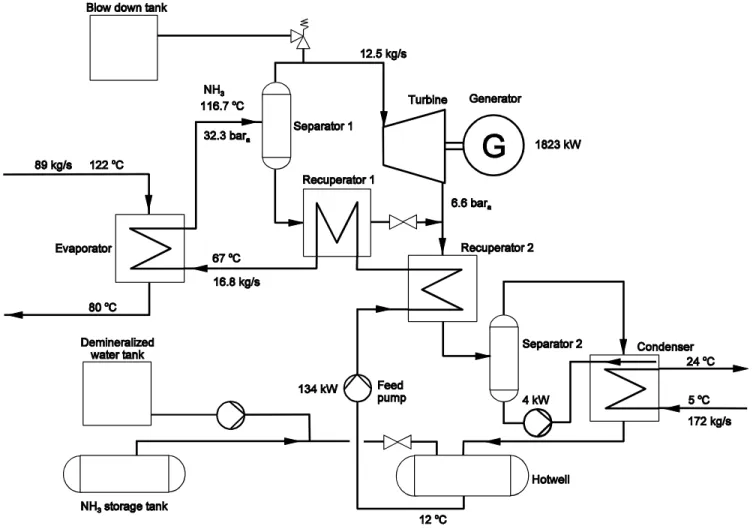
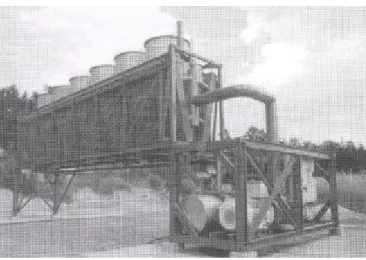
Cover: Modified schematic of the Neustadt-Glewe combined heat and power plant, Germany (courtesy of Geotermische Vereinigun). Two plants, one in Australia at Birdsville and one in Germany at Neustadt-Glewe, both reported in this issue of the Quarterly Bulletin, use such low temperatures – the lowest currently operating in the world!. Hatchobaru, Japan using 106oC or 223oF from Hatchobaru power plant condenser (2x55 MWe) to heat a demonstration greenhouse (see article by P.
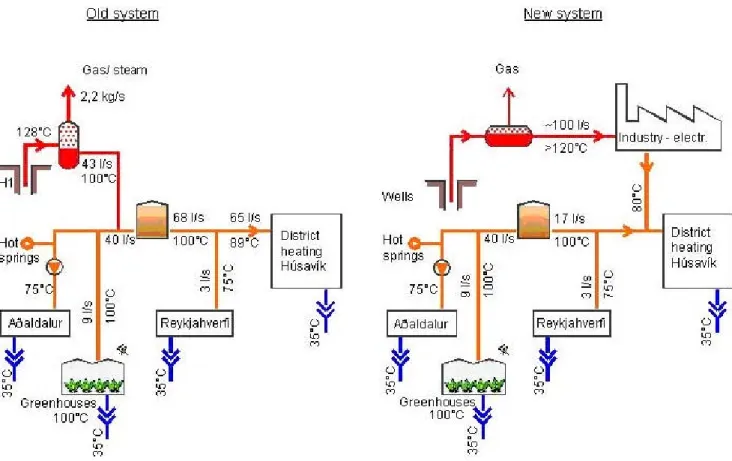
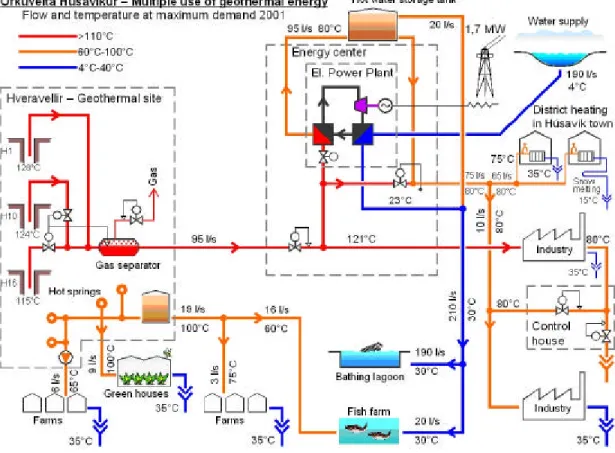
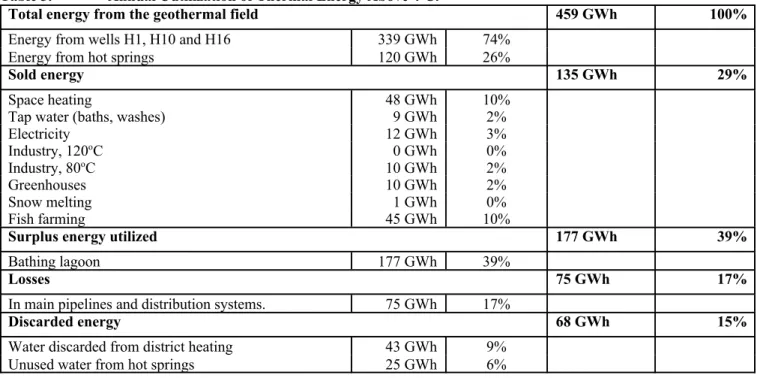
Casimiro-Espinoza – “Direct use of the geothermal energy at Los Azufres Geothermal field, Mexico” – pp. The outlet temperature of the geothermal fluid from the unit is 70oC (158oF) and is used to provide heat to the Altheim district heating system. Orkuveita Húsavíkur (Húsavík Energy) has applied for a grant from the fourth framework program of the European Union.
Currently, the district heating services it provides and electricity production are the mainstays of the operation.
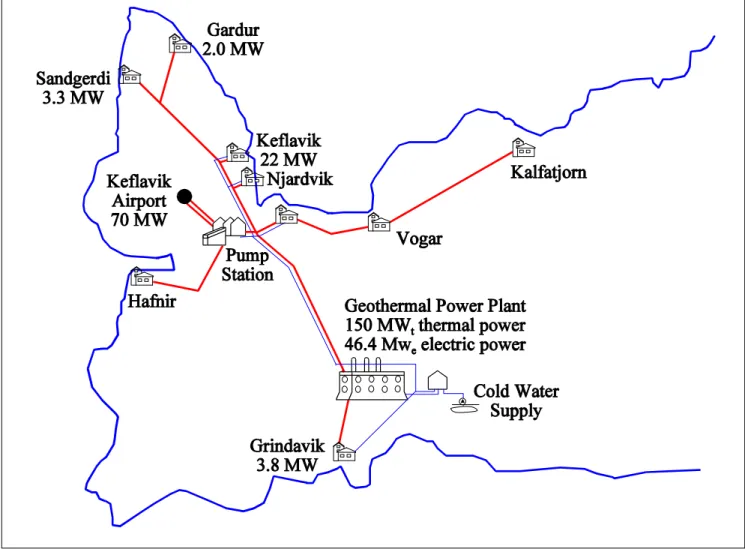
SUDURNES REGIONAL HEATING CORPORATION SVARTSENGI, ICELAND
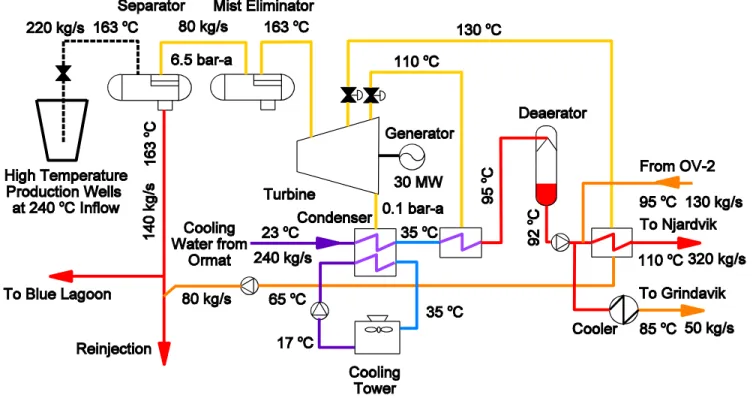
In the world it was the first geothermal power plant to use a high-temperature geothermal system for the simultaneous production of hot water for district heating and electricity. Power plant 1 commissioned in 1977/78: The installed heat exchange capacity was 150 l/s for the district heating system, corresponding to 50 MJ/s (MWth) thermal power. Power plant 2 commissioned in 1981: The installed heat exchange capacity is 225 l/s for district heating, which corresponds to 75 MJ/s (MWth) thermal power.
The first part of Power Station 4 was commissioned in September 1989, with three 1.2-MWe ORMAT ORC units. The production capacity of Power Station 1 was not enough to sustain the hot water consumption of the district heating system during even the hottest summer days. This made all major overhauls of Power Station 2 difficult and affected overall operational reliability.
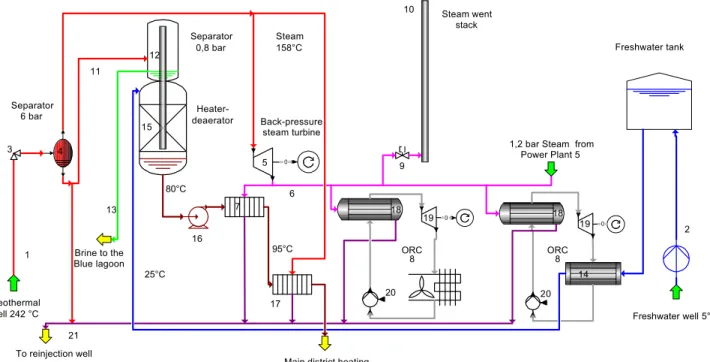
At Power Plant 5, a 30-MWe Fuji Electric condensing-exhaust steam turbine was commissioned in November 1999, and in April 2000, a 75-MJ/s (MWth) thermal output district heating unit was commissioned. Cold water 5oC (2) is pumped from shallow wells and cracks about 5 km north of the power plant. The new power plant in Svartsengi (OV-5) is designed for the production of 3 MWe electricity and 70 MWt heating power (Figure 4).
The total performance of the new geothermal cogeneration plant at Svartsengi has been improved by using turbine exhaust, instead of high pressure steam, to heat fresh water to 110oC in the heat exchangers. Energy balance calculations show that the utilization efficiency of the OV-5 power plant is improved by 15% with this type of operation and by 14-22% at different thermal loads. This paper is an edited summary of two papers presented at the World Geothermal Congress 2000 (WGC2000) and 2005 (WGC2005): "Simulation and Performance Analysis of the New Geothermal Co-Generation Power Plant (OV-5) at Svartsengi" by Soltoni - Hosseini, Masud; Sigurdsson, Hallgrimur G.
HITAVEITA REYKJAVIKUR
AND THE NESJAVELLIR GEOTHERMAL CO-GENERATION POWER PLANT
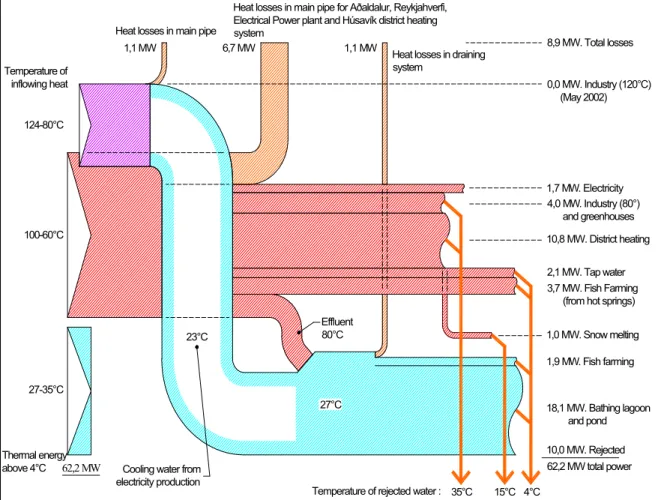
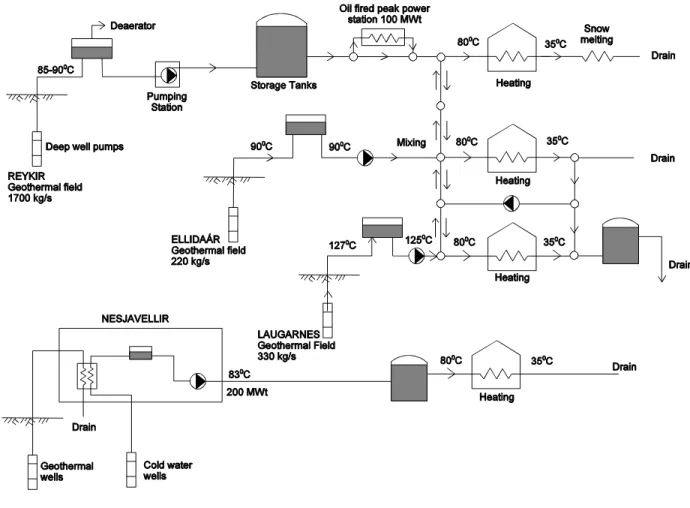
The price of thermal water in Reykjavik is about a third of the price of heating with oil. Initially, only four geothermal wells were connected to the power plant, but as the capacity of the power plant increased, more wells were gradually connected. The modular development of the Nesjavellir power plant is a good example of the development of a geothermal resource.
Initially, the reservoir was tested with relatively low discharge/production, but an intensive monitoring program and revisions to a numerical resource model has allowed production to increase in line with the known potential of the field. During the first phase of the project, its flow was about 560 liters per second; where, the water took seven hours to travel the length of the pipe and cooled by 2oC along the way. This is one of the main benefits of using geothermal energy for space heating.
Other advantages of using geothermal energy for district heating are that the energy is indigenous, is relatively cheap and promotes cascading applications such as swimming pools, greenhouses, heated greenhouses and snow melting. Over the life of the Nesjavellir project, a program has been developed to monitor the response of the Nesjavellir geothermal system and to record the impact of its use on the environment. Since drilling began in the 1980s, downhole measurements and flow testing have been part of the monitoring program, as well as chemical sampling.
During the drilling and testing period in the 1980s, flow measurements were frequent, but after production started, these measurements are limited to short test periods, usually during the plant's few maintenance shutdowns. Finally, the water is treated in deaerators so that it suits the requirements of the distribution system. District heating in Reykjavik and electrical generation using geothermal energy,” Proceedings of the International Geothermal Conference 2003, Reykjavik, Iceland.
HOT ARTESIAN WATER POWERS AN OUTBACK TOWN IN AUSTRALIA
Conversion of the previously used chlorofluorocarbon R114 working fluid to isopentane, which is more volatile and produces a larger volume of vapor. Installation of a new plate heat exchanger, a new multi-stage fluid pump and larger diameter pipes and fittings to accept larger quantities of the new working fluid. The Birdsville Geothermal Power Station is located on a free-flowing borehole about a mile outside the city (Australian Broadcasting Corporation).
Some of the 81oC water from the power plant is routed to Birdsville to meet the city's limited water supply needs. The rest is flowed into a channel (Figure 5); where it is used to water animals once it has traveled far enough to cool down. The Birdsville geothermal power plant now produces 120 kW net power after parasitic losses of 30 kW.
With a capacity factor of >95%, the geothermal power system is so reliable that it supplies all of the city's electricity needs at night and during the cooler winter months when air conditioning is not required (Queensland EPA, 2002). An automatic control system and radio telemetry link the geothermal system to the town's LPG and diesel power station 1½ miles away. The power plant is shut down when the geothermal system is able to satisfy the city's demand for electricity.
The output water from the power plant flows through a canal until it is cooled enough for use on animals (Australian Broadcasting Corporation). The geothermal plant is currently closed for A$100,000 (US$75,600) upgrades to improve the building's ventilation and install isopentane gas detectors for improved plant safety.

BAD BLUMAU (STYRIA, AUSTRIA)
THE SUCCESS STORY OF COMBINED USE OF GEOTHERMAL ENERGY
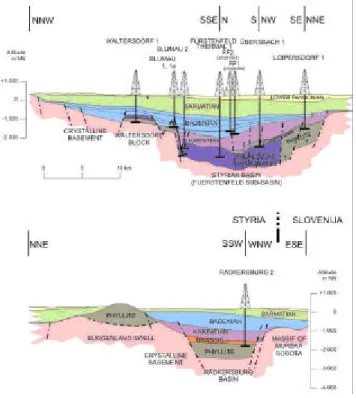
The latter had to tap water with a mineralization much lower than from the well Blumau 1 without post-volcanic CO2 (Goldbrunner, 1993). Through single tests of perforated intervals of the cemented casing, productive intervals (sand gravel) were determined in the Sarmatian in the section between 960 and 630 m. The hydrochemistry and the stable isotope content of the tested intervals differ only slightly, thus proving a uniform hydraulic system over a section of more than 300 m.
The 250-kW geothermal project at Bad Blumau is the first geothermal project developed in Austria by the private sector after the deregulation of the electricity industry in this country. What makes the project unique in addition to its private ownership structure is its ability to generate electric power and district heating for the Rogner Bad Blumau Hotel. Leaving the OEC unit at a temperature of ~85oC, the brine is then fed into the district heating system, providing heat for the Rogner Bad Blumau Hotel & Spa.
Hydrochemical and isotopic composition of the thermal water of the Bad Blumau 3 and Blumau 2 wells (ion concentration in mg/l). In order to heat the spa complex and hotels, the establishment of a geothermal doubler has begun, comprising the existing well Blumau 1a and a new well called "Blumau 2". The horizontal difference between the two wells is 1800 m at the top of the dolomite due to the deviation of the Blumau 1a well.
The temperature of the external pool is kept stable by heating the flow water from the pool with the geothermal energy of the Blumau 2 well. The ORC device at the Blumau 2 well. The device for cleaning and drying the CO2 gas produced from the Blumau 2 well. ; the maximum re-injection pressure is around 0.7 MPa, the minimum re-injection temperature is 50oC. The thermal power of the Blumau geothermal cascade can be summarized as follows: Geothermal resources as a driver of regional development, The success story of the Styrian volcanic region.” Proceedings World Geothermal Congress 2005, Antalya Turekey, p. The Bad Blumau Geothermal Project: A Low-Temperature, Sustainable and Environmentally Benign Power Plant,” Geothermics, Vol.
COMBINED HEAT AND POWER PLANT NEUSTADT-GLEWE, GERMANY
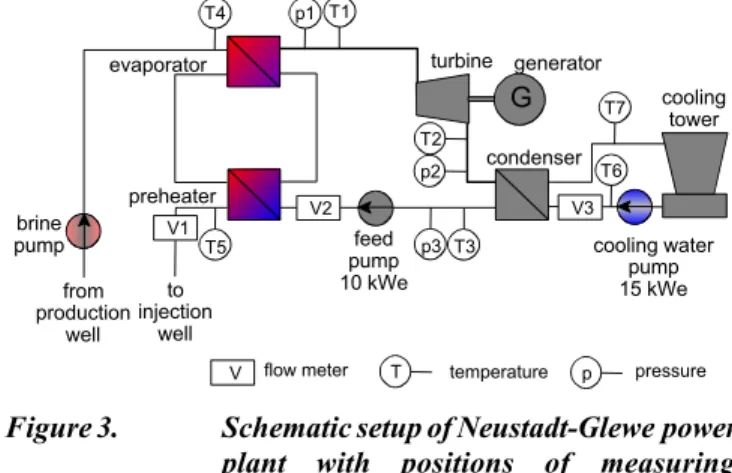
An additional pump was installed in the geothermal loop to control the mass flow rate supplied to the power plant and to overcome the pressure losses from the brine in the power plant's heat exchange equipment. Only the downhole pump in the production well is not included in the parasitic loads. Schematic layout of the Neustadt-Glewe power plant with positions of measuring equipment installed in the plant.
In total, three pressure valves, seven temperature valves and three flow meters are allowed to set up the complete energy balance in the plant as well as analysis of individual components (e.g. the turbine). The costs of the project, including the purchase of the oil boiler unit in the residential area and the district heating supply system, as well as its expansion or rehabilitation, amounted to 9.45 million ($11.4 million) with 6.44 million ($7.7 million) referring. for the geothermal and heat production units. The information on heat production in 1998 in table 1 gives an overview of the economic situation.
During the four years of operation to date (1999), there have been no failures affecting the environment. The change in legislation sparked interest in the use of geothermal energy for power generation. Furthermore, the smoothly operating Neustadt-Glewe geothermal plant was not subject to any geological risk and also the operational risk inherent in the small innovative ORC plant was limited.
Analysis of the Neustadt-Glewe Combined Heat and Power Plant,” Proceedings, World Geothermal Congress 2005, Turkey, International Geothermal Association. Five years of operating experience of the Neustadt-Glewe Geothermal Project,” Proceedings, World Geothermal Congress 2000, Japan, International Geothermal Association. Neustadt-Glewe Geothermal Power Plant - Practical experience in re-injection of cooled thermal waters into sandstone aquifers,” Proceedings, World Geothermal Congress 2005, Turkey, International Geothermal Association.
ERRATA