
FIVE-FACTOR MODEL OF PERSONALITY AND INTERNALISING PSYCHOPATHOLOGY
SUPERVISORS: LAURA MEZQUITA & MANUEL I. IBÁÑEZ
NEW CONTRIBUTIONS FOR EVALUATION AND AETIOLOGICAL MODELS
VERÓNICA VIDAL-ARENAS
DOCTORAL THESIS AUGUST, 2022
Programa de Doctorado en Psicología
Escuela de Doctorado de la Universitat Jaume I
Five-Factor model of Personality & Internalising Psychopathology: New Contributions for Evaluation and Aetiological Models
Memoria presentada por Verónica Vidal-Arenas para optar al grado de doctor/a por la Universitat Jaume I
Castelló de la Plana, Agosto 2022
Verónica Vidal Arenas
Laura Mezquita Manuel I. Ibáñez
LICENCIA Licencia CREATIVE COMMONS Reconocimiento – Compartir igual (BY-SA).
FINANCIACIÓN La presente Tesis Doctoral ha sido realizada gracias al contrato predoctoral (PREDOC / 18 /12) y la beca para realizar una estancia internacional en la Universidad William &
Mary (Virginia, Estados Unidos), otorgados por la Universitat Jaume I. Así, las investigaciones llevadas a cabo están adscritas a los siguientes proyectos financiados (códigos): UJI-A2019-08 y UJI-B2017-74 de la Universitat Jaume I, AICO/ 2019/197 de la Generalitat Valenciana, y RTI2018-099800-B-I00 financiado por el Ministerio de Ciencia, Innovación y Universidades (MICIU/FEDER).
List of publications
The current thesis comprises the following five studies:
This thesis has been accepted by the co-authors of the publications listed above, who have waived the right to present them as a part of another PhD thesis.
Vidal-Arenas, V., Ortet-Walker, J., Ibáñez, M.I., Ortet, G. y Mezquita, L. (2021).
Self-reported Anxiety Severity Measures of DSM-5: evidence of validity and reliability in Spanish youths. Psicothema, 33 (2), 312-319. https://doi.org/10.7334/psicothema2020.398
IF (2021): 4.104, Q1, Category: psychology, multidisciplinary (36/147).
1
Vidal-Arenas, V., Bravo, A. J., Ortet-Walker, J., Ortet, G., Ibáñez, M. I. &
Mezquita, L. (under review). Anxiety and Depression Severity Measures of DSM-5: Longitudinal measurement invariance, and psychopathology trajectories among undergraduate students.
2
Vidal-Arenas, V., Ibáñez, M. I., Ortet-Walker, J., Ortet, G., Mezquita, L. &
Cross-cultural Addictions Study Team (2022). Examination of the latent structure of the Ruminative Thoughts Style Questionnaire across countries, gender, and over time. Current Psychology.
https://doi.org/10.1007/s12144-022-03010-4
IF (2021): 2.387, Q3, Category: Psychology, multidisciplinary (74/147).
3
Vidal-Arenas, V., Bravo, A. J., Ortet-Walker, J., Ortet, G., Mezquita, L., Ibáñez, M. I. & Cross-cultural Addictions Study Team (2022). Neuroticism, rumination, depression, and suicidal ideation: a moderated serial mediation model across four countries. International Journal of Clinical and Health Psychology, 22 (3), 100325.
https://doi.org/10.1016/j.ijchp.2022.100325
IF (2021): 5.900, Q1, Category: Psychology, clinical (20/130).
4
Vidal-Arenas, V., Mezquita, L., Ortet-Walker, J., Ortet, G., Ibáñez, M. I. (to be submitted). A 1- year longitudinal study about Suicidal Ideation, Depressive symptoms, Rumination, and Emotional Stability.
5
A Neus, mi única mitad.
A Luna y Bruce, por su inestimable compañía en este viaje llamado vida.
ACKNOWLEDGEMENTS
The current doctoral thesis has received the following financial support: Grants UJI-B2017-74 and UJIA2019-08 from the Universitat Jaume I, AICO/ 2019/197 from the Valencian Autonomous Government, and Grant RTI2018-099800-B-I00 from the Spanish Ministry of Science, Innovation and Universities (MICIU/FEDER).
Veronica Vidal-Arenas is supported by a pre-doctoral scholarship (PREDOC/18/12) and a scholarship for a research stay from the Universitat Jaume I.
PERSONAL ACKNOWLEDGEMENTS
Cuando empiezas a redactar la tesis doctoral no acabas por imaginar que una de las partes más difíciles sea resumir en tan solo unas pocas hojas todo el agradecimiento que sientes hacia aquellas personas que, de una forma u otra, han contribuido y hecho posible este proyecto. Han sido años de trabajo muy completos, conociendo a muchas personas, aprendiendo de cada segundo vivido en el laboratorio. Aunque a continuación personalice algunas palabras, quiero agradecer enormemente a cada persona que, de alguna forma, su presencia estos años haya sido significativa en el desarrollo de la presente tesis doctoral.
Gràcies Generos, per la teua confiança, supervisió i orientació aquests anys.
Gràcies per donar-me l’oportutinat de formar part del grup IDAP. Gràcies per acompanyar-me en aquest trajecte i per formar part de la meua tesis doctoral.
A mi directora y director de tesis, Laura Mezquita y Nacho Ibáñez, por su inestimable dedicación y cariño. Gracias por ser esa variable moderadora. Gracias por enseñarme a hacer ciencia, a pensar y mirar más allá del bosque (¿o árbol?).
Gracias por cada charla de café matutina. Gracias por enseñarme a resumir las tendencias conductuales a cinco letras: N, E, A, C y O. Gracias, porque habéis
hecho del todo diferente, y posible, este trayecto. Importantly, lidiando con mis enroques. Gracias por transmitirme vuestros conocimientos, valores y buen hacer.
Estaré eternamente agradecida por haber tenido la oportunidad de llevar acabo este proyecto acompañada de grandes personas e investigadores como vosotros.
Gracias por confiar en mí.
Thank you, Adrian J. Bravo, for hosting me at William & Mary (Virginia, USA). For helping me to grow as a scientist. For giving me the opportunity to work with you and teaching me the methodology that has contributed greatly to this thesis.
Thanks to you, Georgina and your whole family for making me feel at home when I was far away. Thank you for all your support and contribution to this project which, without a doubt, has been essential.
Gracias al equipo de la Universidad Miguel Hernández. Gracias Jose Antonio Piqueras por seguir dándome la oportunidad de crecer y aprender como investigadora durante estos años. A Raquel Falcó, gracias por cada minuto de colaboración compartida, por las largas horas de trabajo de meet invertidos. Por ser mi compañera. Por tu inestimable apoyo y cariño.
Gracias Jordi Ortet-Walker, Fran López-Fernández y Paula Etkin, por cada uno de los días compartidos dentro y fuera del laboratorio. Por formar parte de esta historia.
Gracias a Irene Jaén, por el tiempo compartido generalmente arreglando las teorías de psicología para que encajaran con los resultados no deseados. Gracias por sacarme de la burbuja de concentración cuando hacía falta, y por compartir tantos buenos momentos juntas.
Gracias Jesús Ortuño-Castillo, por dar un tinte geográfico a esta tesis doctoral.
Gracias Lara y Ana por compartir cada paso conmigo. Por vuestro indudable apoyo y cariño durante esta etapa, desde el principio hasta el final.
Gracias a Joaquin y Marifeli, Jesús y Laura. Y a toda la familia Ortuño-Castillo- Vaillo. Gracias por vuestro inestimable cariño y apoyo durante estos años.
Por vuestra alegría innata. Por cada detalle y por cada palabra de ánimo.
Gracias a Ismael, por impulsarme. Por haberme acompañado sin excusas y sin importar la dirección ni continente. Por todo el cariño, ánimo y apoyo en cada paso compartido estos años. CWM.
Y finalmente, a mi familia. Gracias, mamá y papá, porque todo lo habéis hecho, y seguís haciendo posible. Gracias por ser mi ejemplo de constancia, superación, humildad y esfuerzo. Gracias por ser esa columna que nunca caerá. Gracias Neus.
Cuando se trata de ti, quizás no existan las suficientes palabras para describir el agradecimiento que siento por tu apoyo incondicional durante esta vida. Gracias por ser esa estación segura en cada descarrilamiento. Gracias Adri, porque haces que los momentos no solo sumen, sino que multipliquen. Por infundir alegría en cada meta conseguida. Y porque contigo, tres hacen manada.
A todas ellas, gracias.
Index
ABSTRACT 21
RESUMEN 27
CHAPTER 1: THEORETICAL BACKGROUND 33
Mental health: a global target 33
Depression, anxiety and suicidality in young adults 39 Psychopathology: hierarchical-dimensional nature 42
Personality and Mental Health 48
Neuroticism: a critical dispositional factor in mental health 52 Rumination: a key cognitive factor for internalising
psychopathology 54
The rumination assessment 56
A step towards the dimensional assessment system in DSM-5 59
Depression severity measure 64
Anxiety-related problems severity measures 66
Conclusions 67
CHAPTER 2: RESEARCH AIMS AND HYPOTHESES 71
CHAPTER 3: STUDY 1 (published article) 77
CHAPTER 4: STUDY 2 101
CHAPTER 5: STUDY 3 (published article) 123
CHAPTER 6: STUDY 4 (published article) 145
CHAPTER 7: STUDY 5 167
CHAPTER 8: GENERAL DISCUSSION AND CONCLUSIONS 187
REFERENCES 197
List of tables & figures
Tableb1. One-Factor Model fit Indices……….………..……… 95 Tableb2. Factor loadings of each item on its factor for the specific phobia scale……….….… 95 Tableb3. Model fit indices for the DIF analysis per gender……… 96 Tableb4. Descriptive for males and females and reliability coefficients……... 96 Tableb5. Pearson correlations between anxiety severity measures and outcomes……….……… 97 Tableb6. CFA fit indices and longitudinal measure invariance testing of DSM-5 Severity Measures……….…….. 118 Tableb7. Results of linear Latent Growth Curve Models for each SM……... 119 Tableb8. Descriptive statistics across study groups………..…… 140 Tableb9. Goodness-of-fit for the hierarchical structure of the Ruminative Thought Style Questionnaire across countries………..………. 141 Tableb10.xLongitudinal Measurement Invariance of the Ruminative Thought Style Questionnaire……….……….……… 142 Tableb11.xInvariance testing results of the path analysis across countries and gender……….….…… 162 Tableb12.xSummary of the indirect and total effects (M.1)………..……. 163 Tableb13.xGoodness-of-fit for the confirmatory-factor analysis and longitudinal measurement invariance of the study measures…………..……… 183 SupplementalbTableb1.xDescriptive statistics for all the validity measures across gender……….….………. 98 SupplementalbTableb2.xDescriptive statistics for the Spanish version of DSM-5 Severity Measures……….……….. 120 SupplementalbTableb3. Effects size and corrected means in the study groups……….………... 143 SupplementalbTableb4. Descriptive analysis across study samples and differences between countries………..………. 164 SupplementalbTableb5. Bivariate correlations among study variables………… 165 SupplementalbTableb6. Summary of indirect effects across countries of the partially invariant model (MG8)……… 165 SupplementalbTableb7. Descriptive analysis across study samples and differences between countries……… 184
Figureb1. Global disease estimated (%) prevalence of psychopathological conditions……… 35 Figureb2. Global disease estimated (%) prevalence of psychopathological condition per country……….………….. 36 Figureb3. Prevalence of major depressive (A) and anxiety disorders (B) before/after the pandemic……….………. 38 Figureb4. Proportions of DALYs across age groups……… 40 Figureb5.xHierarchal Taxonomy of Psychopathology (HiTOP) model……….……….. 44 Figureb6. Comparison of the number of publications related to either FFM or other influential theories of personality……….……….. 49 Figureb7.xBiodispositional model of neuroticism and internalising psychopathology……….. 53 Figureb8. Psychopathology measure from DSM-5 Section III: Emerging measures……….………. 62 Figureb9. Change in the SMs total score over time……..………. 117 Figureb10. Factor structure of the two competing models in the total sample………. 139 Figureb11. Diagram of the hypothesised model……… 161 Figureb12. Depicts estimates of the tested model in the total sample (M. 1) and for countries (MG8)…………..……….. 161 Figureb13. Direct effects for estimated CLPM ……… 182
Advances in the study of psychopathology have led to the development of new assessment tools to help in the transition from a categorical to a dimensional- based assessment system. These advances have also allowed the identification of very relevant variables in the understanding of psychopathology, such as normal personality traits. Several mechanisms are described in the scientific literature on how personality influences the manifestation of psychopathology. For example, personality is considered a significant antecedent to other vulnerability factors related to psychopathology (e.g., ruminative thinking style). Thus, taking into account the influence of personality in the study of relationships between different psychological factors (distal and proximal) and psychopathology is extremely valuable.
By considering these issues, the present doctoral thesis has two general objectives: (1) provide new validity and reliability evidence for different psychological assessment tools; (2) offer new evidence for the relation between aetiological variables and vulnerability to psychopathology in young adults. To this end, three studies were carried out to cross-sectionally and longitudinally examine the psychometric properties of the DSM-5 Severity Measures (SMs) for assessing
ABSTRACT
depressive and anxiety-related symptoms (Study 1 and Study 2), and a scale to assess ruminative cognitions (Ruminative Thought Style Questionnaire; RSTQ) (Study 3). To fulfil the second general objective, two studies were conducted to examine the cross-sectional (Study 4) and longitudinal (Study 5) relations between neuroticism, rumination, depressive symptoms and suicidal ideation in young adults. In Study 4, the indirect effect of neuroticism on suicidal ideation through rumination and depression was examined. We also studied whether neuroticism moderated the observed effects of rumination and depressive symptoms on suicidal ideation. Furthermore, to assess the robustness of the obtained results, we tested whether the model was invariant across four countries (USA, Spain, Argentina and the Netherlands) and across sex (female and male). Finally in Study 5, we tested a similar model presented in Study 4 with longitudinal data.
Overall, Study 1 provides evidence for the validity and reliability of the DSM-5 SMs scores for assessing anxiety symptoms (i.e., generalised anxiety, social anxiety, panic, agoraphobia, separation anxiety and specific phobia) in Spanish youths. Specifically, evidence for structure validity is provided and supports the unidimensional nature of the tested DSM-5 SMs, except for specific phobia, which showed evidence for a two-factor structure. The Anxiety SMs also provide evidence for reliability (i.e., internal consistency) and convergent (i.e., with other internalising symptom scales), discriminant (i.e., with scales assessing externalising symptoms) and criterion (i.e., with measures of personality, quality of life and life satisfaction) validity. Study 2 examines the longitudinal measurement invariance of the Anxiety SMs studied in the first paper and the Depression SM. Overall, the three studied measurement invariance levels (i.e., configural, metric, scalar) provide evidence for the stability of the latent structure
of the measures by allowing their use in, for example, studies with longitudinal designs, or in clinical follow-ups. In summary, the first two studies provide initial evidence for the validity and reliability of the Spanish version of the Depression and Anxiety SMs of DMS-5 in Spanish young adults.
Study 3 explores the psychometric properties of the RSTQ and shows evidence for measurement invariance (i.e., at the configural, metric and scalar levels) of the hierarchical structure of the RTSQ across four countries (i.e., United States, Spain, Argentina and the Netherlands) in males and females, and over time (i.e., across three assessment waves conducted every 6 months in Spanish young adults).
Furthermore, evidence for reliability of the RTSQ scores is also observed across all study groups and at each wave assessment. On the whole, the third study provides new evidence for the usefulness of the RTSQ which has, in turn, significant practical implications. The RTSQ allows us to obtain, on the one hand a global rumination score and, on the other hand, specific information about the four identified components (i.e., anticipatory, problem-focused, repetitive and counterfactual thoughts), which can be very useful in the design, planning, adaptation or customisation of clinical strategies for each individual.
The results of Study 4 suggest that neuroticism is a significant and direct predictor of rumination and depressive symptoms. In addition, a significant indirect effect of neuroticism on suicidal ideation is seen through rumination and depressive symptoms (i.e., double mediation). It also indicates that, at higher neuroticism levels, the effects of both predictors (i.e., rumination and depression) are stronger (i.e., moderation) and, therefore, more harmful. The described relations are also observed in young people from the four different countries (i.e., United States, Argentina, Spain and the Netherlands), and in both sex groups (i.e.,
male and female). This helps us to conclude that such effects are robust regardless of the study group.
Finally, the main objective of Study 5 is to test the extent to which the direct and indirect effects identified in the fourth study remain significant at the longitudinal level. Overall, it can be highlighted that neuroticism is a direct and significant predictor of rumination and depressive symptoms at all the tested waves, and evidence for its indirect effect on suicidal ideation through depressive symptoms is also observed. In addition, depressive symptoms are a significant direct predictor of suicidal ideation across waves. Finally, and as an unexpected result, the time 2 depressive symptoms predict time 3 rumination. All in all, it should be noted that this effect is isolated (only between two waves) and that the most significant pattern found is the cross-sectional relation between rumination and depressive symptoms. So these findings suggest that rather than being a longitudinal predictor of depressive symptoms (i.e., an aetiological component), rumination is perhaps better conceptualised as a concurrent and/or exacerbating factor of depression, as proposed in initial theories.
In conclusion, it can be stated that the results obtained in the last two studies highlight the role of neuroticism in the study of psychopathology (i.e., depression and suicidal ideation) and related factors (e.g., rumination). Likewise, the findings support the application of evidence-based clinical treatments (e.g., Unified Protocol), where the behaviours and cognitions related to high scores in neuroticism are addressed to reduce maladaptive strategies (such as rumination) and depressive symptomatology which would, in turn, reduce the risk of suicidal thoughts.
Los avances en el estudio de la psicopatología han dado lugar al desarrollo de nuevas herramientas de evaluación, ayudando en la transición desde un sistema de evaluación basado en un enfoque categorial hacia un enfoque basado en lo dimensional. Además, estos avances también han permitido identificar variables de suma relevancia en la comprensión de la psicopatología, como por ejemplo los rasgos de personalidad normal. Son diversos los mecanismos que se describen dentro de la literatura científica sobre cómo la personalidad influye en la manifestación de la psicopatología. Por ejemplo, la personalidad se considera como un antecedente significativo a otros factores de vulnerabilidad relacionados con la psicopatología (p.ej., estilo de pensamiento rumiativo). De tal forma que tener en cuenta la influencia de la personalidad en el estudio de relaciones entre diferentes factores psicológicos (distales y proximales) y la psicopatología resulta de gran valor.
Así, considerando estas cuestiones, la presente tesis doctoral tiene dos objetivos generales: (1) aportar nuevas evidencias sobre la validez y fiabilidad de nuevos instrumentos de evaluación psicológica, y (2) ofrecer nuevas evidencias sobre la relación entre variables etiológicas y de vulnerabilidad a la psicopatología,
RESUMEN
en adultos jóvenes. Para tal fin, se llevaron a cabo tres estudios para examinar de forma transversal y longitudinal, las propiedades psicométricas de las escalas de la gravedad (EG) para evaluar síntomas de depresión y ansiedad del DSM-5 (Estudio 1 y Estudio 2), y una escala para evaluar cogniciones rumiativas (Ruminative Thought Style Questionnaire; RTSQ) (Estudio 3). Para la consecución del segundo objetivo general, se llevaron a cabo dos estudios para analizar las relaciones transversales (Estudio 4) y longitudinales (Estudio 5) entre el neuroticismo, rumiación, la depresión y la ideación suicida, en adultos jóvenes. En el Estudio 4, se examinó el efecto indirecto del neuroticismo hacia la ideación suicida a través de la rumiación y los síntomas depresivos. Además, también se estudió si el neuroticismo moderaba los efectos observados de la rumiación y los síntomas depresivos sobre la ideación suicida. Asimismo, para valorar en qué medida los resultados obtenidos eran robustos, testamos si el modelo se mostraba invariante en cuatro países (Estados Unidos, España, Argentina y Países Bajos) y a través del sexo (masculino y femenino). Finalmente, en el Estudio 5, se testó un modelo similar al del Estudio 4 pero con datos longitudinales.
En líneas generales, el Estudio 1 aporta evidencia sobre la validez y fiabilidad de las puntuaciones de las EG del DSM-5 para evaluar síntomas de ansiedad (i.e., ansiedad generalizada, ansiedad social, pánico, agorafobia, ansiedad por separación y fobia específica) en jóvenes españoles. Específicamente, se aportan evidencias sobre la validez de estructura, apoyando la naturaleza unidimensional de las EG del DSM-5 testadas, excepto para fobia específica, que mostró evidencias de una estructura de dos factores. Además, las también mostraron evidencias de fiabilidad (i.e., consistencia interna) y validez convergente (i.e., con otras escalas de síntomas internalizados), discriminante (i.e., con escalas que
evalúan síntomas externalizados), y criterio (i.e., con medidas de personalidad, calidad y satisfacción vital). En el Estudio 2, se examinó la invarianza de medida longitudinal de las escalas de ansiedad estudiadas en el primer trabajo, y la escala de síntomas de depresión. En líneas generales, los tres niveles de invarianza de medida estudiados (i.e., configural, métrico y escalar) aportan evidencia sobre la estabilidad de la estructura latente de las medidas, permitiendo su uso en, por ejemplo, investigaciones que utilicen diseños longitudinales, o en seguimientos clínicos. En resumen, los dos primeros estudios aportan la primera evidencia de validez y fiabilidad de la versión española de las EG de la depresión y ansiedad del DSM-5 en jóvenes españoles.
El Estudio 3, explora las propiedades psicométricas del RTSQ, y muestra evidencias de la invarianza de medida (i.e., a nivel configural, métrico y escalar) de la estructura jerárquica del RTSQ a través de cuatro países (i.e., Estados Unidos, España, Argentina, y Países Bajos), en hombres y mujeres, y lo largo del tiempo (i.e., a través de tres oleadas de evaluación, realizadas cada 6 meses en adultos jóvenes españoles). Además, también se observan evidencias de fiabilidad de las puntuaciones del RTSQ en todos los grupos de estudio, y en cada oleada de evaluación. Así, el tercer estudio aporta nuevas evidencias sobre la utilidad del RTSQ, lo que a su vez presenta implicaciones practicas significativas. Por un lado, el RTSQ permite obtener una puntuación global de rumiación, y por otro obtener información específica sobre los cuatro componentes identificados (i.e., pensamientos anticipatorios, centrados en el problema, repetitivos y contrafácticos), lo cual puede ser de gran utilidad en el diseño, planificación, adaptación o personalización de estrategias clínicas a cada individuo.
Los resultados del Estudio 4 sugieren que el neuroticismo es un predictor significativo y directo de la rumiación y los síntomas depresivos. Además, se observó un efecto indirecto significativo del neuroticismo a la ideación suicida a través de la rumiación y síntomas depresivos (i.e., doble mediación). También se encontró que, a mayores niveles de neuroticismo, los efectos de ambos predictores (i.e., rumiación y depresión) fueron más fuertes (i.e., moderación) y, por ende, más perjudiciales. Las relaciones descritas se observaron de igual forma en jóvenes de cuatro países distintos (i.e., Estados Unidos, Argentina, España y Países Bajos), y en ambos sexos (i.e., masculino y femenino), ayudando a concluir que dichos efectos son robustos independientemente del grupo de estudio.
Finalmente, el Estudio 5 tuvo como principal objetivo testar en qué medida los efectos directos e indirectos identificados en el cuarto estudio se mantenían significativos a nivel longitudinal. En general, se podría destacar que el neuroticismo fue un predictor directo y significativo de la rumiación y los síntomas depresivos en todas las oleadas testadas, y se observaron evidencias de su efecto indirecto sobre la ideación suicida a través de los síntomas depresivos. Además, también se observó que los síntomas depresivos fueron un predictor directo y significativo de la ideación suicida en todas las oleadas testadas. Finalmente, como un resultado inesperado, los síntomas depresivos de tiempo 2 predijeron la rumiación de tiempo 3. Con todo, cabe señalar que este efecto fue aislado (solo entre dos oleadas) y que el patrón más significativo que se encontró fue la relación transversal entre la rumiación y los síntomas depresivos. Así, estos hallazgos sugieren que la rumiación, en vez de ser un factor predictor longitudinal de los síntomas depresivos (i.e., un componente etiológico), quizás esté mejor
conceptualizado como un factor concurrente y/o exacerbador de los síntomas depresivos, como se proponía en las teorías iniciales.
En conclusión, se podría decir que los resultados expuestos en estos dos últimos estudios ensalzan en papel del neuroticismo en el estudio de la psicopatología (i.e., síntomas depresivos e ideación suicida) y los factores relacionados con la misma (p.ej., rumiación). Asimismo, los hallazgos apoyan la aplicación de tratamientos clínicos basados en la evidencia, (p.ej., Protocolo Unificado), donde se trabajan las conductas y cogniciones relacionadas con altas puntuaciones en neuroticismo, para disminuir estrategias desadaptativas (como la rumiación) y la sintomatología depresiva, lo que a su vez disminuiría el riesgo de presentar pensamientos suicidas.
Mental health: a global target
The constitution of the World Health Organization (WHO) defines mental health as a fundamental part of the overall health and well-being of individuals: “Health is a state of complete physical, mental and social well-being and not merely the absence of disease or infirmity” (WHO, 1946). However, and as highlighted in the latest WHO mental health strategies reports, mental health remains a neglected part of global efforts to improve health (WHO, 2021b), despite being a factor that causes high mortality and disability in the world's population. Recent global reports underscore that mental health continues to have a high socio-economic (e.g., 66%
of total government spending on mental health when only considering global
CHAPTER 1
THEORETICAL BACKGROUND
median expenditure on mental hospitals, WHO, 2021a) and personal cost (e.g., people with mental health conditions are more likely to suffer physical health problems, which implies early mortality of 10-20 years, WHO, 2019).
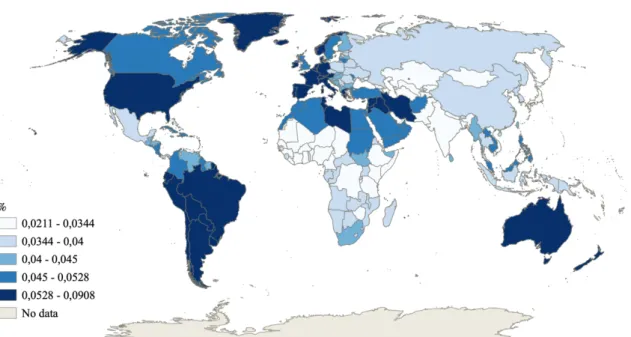
From 1990 to 2019, and according to the latest Global Burden Diseases (GBD) report (GBD 2019 Mental Disorders Collaborators, 2022), the global number of Disability-Adjusted Life-Year (DALYs) due to mental disorders increased from 80.8 million to 123.5 million (proportion from 3.1% to 4.9%) and is the seventh leading cause of DALYs in 2019 (GBD 2019 Mental Disorders Collaborators, 2022). The DALYs rates per 100,000 persons was higher in females than males (1,703.3 and 1,426.5, respectively). In terms of global distribution per country, the highest DALYs rates were observed in the USA, Brazil, New Zealand, and some locations in western Europe, such as Spain (GBD 2019 Mental Disorders Collaborators, 2022).
At a specific disorder level, and as observed in Figure 1, depressive disorders (279.6, million people) and anxiety-related disorders (301.4, million people) are the most prevalent mental disorders globally, which are the second and eighth leading causes of Year Lived with Disability (YLDs), respectively (GBD 2019 Mental Disorders Collaborators, 2022). According to countries, the USA, western Europe (e.g., Spain, Portugal, etc.), and a large part of Latin America have the highest prevalence of depressive and anxiety disorders compared to other countries (Figure 1). The 15-24 age group presents a higher prevalence of YLDs compared to the other groups, which ranges from 3.09 to 4.16 for depressive symptoms and from 2.66 to 2.70 for anxiety disorders in one million people (see the prevalence distribution in Figure 1, left side).
Figure 1
Global disease estimated (%) prevalence of psychopathological conditions
Nonetheless, not only depressive and anxiety-related disorders are of concern, but so is suicidality because nearly 800,000 people die by suicide annually, which makes it the second leading cause of death in populations aged 15-29 years and, therefore, requires special attention (WHO, 2019b). As observed in Figure 2 (Choropleth maps), the High-income for North America and Central/Eastern Europe locations has obtained a higher percentage of self-injury prevalence compared to other nearby locations, such as the USA and Spain (WHO, 2019a). In spite of these differences, suicidality still constitutes an important problem in these countries. For example, the Center for Disease Control and Prevention (CDC)
Proportion (%) of global pevalence
Global distribution prevalence (%) Prevalence (%) of YLDs
0 5 10 15 20 25 30 35 40
All ages 15-19 years 20-24 years 25-49 years
Other mental disorders
I. developmental intellectual disability
Schizophrenia
Eating disorders
Attention-
deficit/hyperactivity disorder Conduct disorder
Drug use disorders
Autism spectrum disorders
Bipolar disorder
Substance use disorders
Self-Injury
Alcohol use disorders
Anxiety disorders
Depressive disorders
from the USA States ranked suicide as the 10th cause of death in 2019, where approximately 47,000 individuals died by suicide (Kochanek et al., 2020).
Specifically, suicide was the second leading cause of death for the age groups of 10-24 years (19.2%) and 25-44 years (10.9%) (Heron, 2019). Along the same lines, suicide remains the first leading cause of unnatural death in Spain, where 3,539 individuals died by suicide in 2018, with 1,343 deaths between January and May of 2020 (INE, 2021). These data are especially alarming in Spaniards aged 15-29 years for whom suicide accounts for 44.26% of all deaths from external causes and for 16.71% of total deaths (INE, 2021).
Figure 2
Global disease estimated (%) prevalence of psychopathological condition per country
Figure 2 (continued)
Note: Global Burden of Disease Collaborative Network. Global Burden of Disease Study 2019 (GBD 2019) Results. Seattle, United States of America: Institute for Health Metrics and Evaluation (IHME), 2020. Available from http://ghdx.healthdata.org/gbd-results-tool.
Choropleth map edited by Ortuño-Castillo, J. (2022)
In addition, further attention needs to be paid to the mental health problem by considering the negative impact that the COVID-19 epidemic has had on people’s mental health, with studies estimating an increase in depressive and anxiety- related symptoms globally. Specifically, a recent systematic review by COVID-19 Mental Disorders Collaborators (Santomauro et al., 2021) has shown that before the adjustments made for the COVID-19 pandemic, depressive and anxiety-related disorders were respectively responsible for 38.7 and 35.5 million DALYs globally.
After adjusting for the COVID-19 pandemic, depressive and anxiety-related disorders were respectively responsible for 49.4 and 44.5 DALYs globally.
Furthermore, in age range and gender terms, young women aged under 25 years may constitute an at-risk group because a higher prevalence of both disorders was observed (see Figure 3; Santomauro et al., 2021).
Figure 3
Prevalence of major depressive (A) and anxiety disorders (B) prevalence before/after the pandemic.
Note: Figure taken from Santomauro et al. (2021).
Estimates of the trends in suicide observed during the COVID-19 pandemic remain unchanged (Farooq et al., 2021). This is an expected result based on other research works in which the number of suicides did not increase during natural disasters or other epidemics (Kõlves et al., 2013; Lester, 2009). Nevertheless, a recent systematic review has shown that the pooled prevalence of suicidal ideation (Farooq et al., 2021), one of the most prevalent components of suicidal behaviours (Castellví et al., 2017; Liu et al., 2020), increased (11.5%) in the general population during the COVID-19 pandemic compared to previous periods (e.g., 9.8%, Nock et al., 2008). Altogether, the data underline global mental health problems associated with depressive and anxiety problems, as well as suicide behaviours, due to their high associated mortality rates, especially for young people.
Depression, anxiety and suicidality in young adults
A recent epidemiological meta-analysis has shown that the global onset of the first mental disorders occurs before the age of 25 in 62.5%, with a peak/median age at onset of 14/18 years (Solmi et al., 2021). In relation to depressive disorders, the same study showed that the first diagnosis is made before the age of 25 in almost 40%, with a peak/median age at onset of 19.5/30 years (Solmi et al., 2021).
In relation to anxiety-related disorders, a wider variability across types was observed. For example, the study showed onsets at early ages for anxiety/fear- related symptoms, with an occurrence before the age of 18 in half (51.8%) and before the age of 25 in 73.3%, with a peak/median age of 5.5/17 years. In contrast, generalised anxiety symptoms onsets were observed at later ages, such as an occurrence before the age of 18 in 20.4% and before the age of 25 in 33.0%, with a peak/median age of 15.5/32 years. In line with this, the latest available GBD data
have shown that individuals aged approximately 20-24 years have shown higher DALYs for depressive and anxiety disorders, and also for self-harm behaviours and related deaths, compared to other age groups (Figure 4). Overall, these data point out that people aged around 25 years are a risk group that requires special attention.
Figure 4
Proportions of DALYs across age groups
Note: DEP= Depressive disorders, ANX= Anxiety disorders, S= Self-Harm (GBD, 2019).
Hence the period covering ages 18-29 is known as "emerging adulthood", which has been defined as a normal developmental period during which feeling depressed and anxious is common (Arnett et al., 2014). The way people experience this period has changed, and the challenges that emerging adults face (e.g., instability and feeling in-between) differ from late adulthood people (Arnett et al., 2014). In this group, a higher psychopathology prevalence was been observed, especially for first-year college students, which might be because the transition from high school to college is a hard time for many students.
Overall, in college students suicidal thoughts and behaviours prevalences range from 17.6-22.3%, 6.1%-9.2% and 1.1-3.2% for suicidal ideation, suicidal plan and
1 2 3 4 5 6 7 8 9 10 11
15-19 years 20-24 years 25-29 years 30-34 years 35-39 years
DALYs DEP DALYs ANX DALYs S Deaths S
suicidal attempt, respectively (Auerbach et al., 2019; Mortier et al., 2018). Several mental disorders are related to the risk of presenting any type of suicidal behaviour, especially in those who meet the criteria for more than one disorder in the last 12 months (Auerbach et al., 2019). The American College Health Association (American College Health Association-National College Health Assessment, 2019) estimates that around 24.3% and 20% of college students have anxiety and depressive symptoms, respectively, and almost 17% present both.
At a diagnosed disorder level, approximately one third of undergraduate students report a mental disorder diagnostic in the past 12 months (Auerbach et al., 2016, 2018). Broadly, major depressive disorder and generalised anxiety disorders are the two most prevalent disorders in people’s lifetime (21.2% and 18.6%, respectively), along with the last 12 months prevalence (18.5% and 16.7%, respectively) when being female and older correlate with both lifetime and last 12- month prevalence (Auerbach et al., 2018). Moreover, almost 30% of college students present anxiety-depression comorbidity (Bitsika & Sharpley, 2012;
Jenkins et al., 2020), which is associated with high severity and duration of symptoms, earlier age at onset of the first disorder, childhood trauma and high neuroticism (Lamers et al., 2011). This pattern is also observed in other populations. For instance, in adults recruited from primary care, almost half presented a secondary depressive/anxiety disorder (Hirschfeld, 2001). Thus, college students could be highlighted as a risk group for psychopathology due to their high prevalence for depression, anxiety-related disorders, suicidal behaviours and comorbidity (Auerbach et al., 2019; Mortier et al., 2018).
Psychopathology: hierarchical-dimensional nature
The previous section has shown that depression and anxiety-related symptoms/disorders are the most prevalent forms of psychopathology, and they often appear together. The co-occurrence of psychopathology conditions is not exclusively for depression and anxiety-related disorders, and two main different types of psychological co-occurrences are identified in the literature. One of them, homotypic comorbidity, refers to the co-occurrence of many disorders of the same
“type”, such as depression- and anxiety-related symptoms, as mentioned above, or conduct and oppositional defiant disorder (Maugham et al., 2004; Rowe et al., 2010). The other one, named heterotypic comorbidity, refers to the presence of different forms of psychopathology. For instance, the co-occurrence of depression and eating disorder or substance use disorder (Colder et al., 2013; Measelle et al., 2006), or conduct problems with depression (McDonough-Caplan et al., 2018) or anxiety (Linder et al., 2018).
Therefore, it is evident that psychiatric comorbidities occur more commonly than usual (Kessler et al., 2005), and the individuals who meet criteria for one disorder are likely to meet the criteria for another disorder (Krueger & Eaton, 2015).
Latent class analyses carried out with 14,348 undergraduate students have evidenced that one of the most considerably prevalent groups of comorbidities to be identified was made up of students who met the criteria for at least one disorder and almost 80% met the criteria for two disorders (Auerbach et al., 2019). This psychiatric co-occurrence phenomenon is observed in early ages, such as child and adolescents (e.g., Colder et al., 2013; Lallukka et al., 2019; McElroy, Shevlin, et al., 2018), and in clinical contexts (Assmann et al., 2018; Hirschfeld, 2001).
Consequently, all these data question the fundamental assumptions of the distinct nature (i.e., independent phenomena) of psychopathology syndromes considered from a categorical approach, and meta-analytic evidence supports the conclusion that psychopathology conditions are latently continuous (Haslam et al., 2020).
Thus, the dimensionality approach is considering the best way to characterise psychopathology and should help to explain the co-occurrence of different syndromes (Krueger et al., 2018). This issue is especially important given that comorbidity is the rule rather than the exception (Krueger & Eaton, 2015). In short, psychiatric comorbidities undermine the notion that psychopathology does not appear in isolation, and evidence suggests the existence of a common structure for psychopathology (Miller et al., 2001). Through the factor analysis framework, studies have evidenced that psychopathological symptoms and disorders tend to group and delineate latent factors that represent the natural covariance of psychopathology (Kotov et al., 2017, 2021). The resulting models by quantitative nosology have been widely accepted in their field, are effective guides for theoretical, research and clinical areas, and also produce very useful instruments (Kotov et al., 2021). These news insights of psychopathology conceptualisation may help to better understand its aetiology and, therefore, help to design more appropriate prevention and treatment programmes, especially in a risk population like college students.
One of the most recent and empirical evidenced models with a strong impact in the psychopathology field and one that integrates these issues is the Hierarchal Taxonomy of Psychopathology (HiTOP) model (Kotov et al., 2017; Ringwald et al., 2021). The HiTOP is a model developed by a consortium of experts that mainly aims to address: (1) the dimensional nature of psychopathology; (2) widespread
comorbidity; (3) within-disorder heterogeneity; (4) symptoms overlap by delineating broader dimensions, and also a specific dimension as opposed to a specific category (Kotov et al., 2017, 2021; Krueger et al., 2018; Michelini et al., 2021).
Figure 5
Hierarchal Taxonomy of Psychopathology (HiTOP) model
Note: Adapted from Kotov et al. (2021)
The HiTOP model was designed based on extensive evidence using a latent class/factorial analysis to sort psychopathology according to the natural covariance structure (Kotov et al., 2017, 2021; Krueger et al., 2018; Krueger & Eaton, 2015) by continuing the empirical study of the structure of psychopathology established by previous authors (Achenbach, 1966, 2015; Achenbach & Edelbrock, 2003). Thus, the HiTOP involves the categories underneath, which gradually increase in specificity. General speaking, six levels are defined in this model, from a more specific-basic level comprising observed signs/symptoms, to broader
Superspectra
Spectra
Subfactors
Disorders Linked to Subfactors and Spectra
Internalizing
General Factor of Psychopathology (p-factor)
Somatoform Thought
disorder Detachment Disinhibited externalizing
Antagonistic externalizing
Emotional dysfunction Externalizing
Mania Distress
Eating Fear Pathology Sexual
problems
Dimensional Syndromes
Symptoms components and maladaptive traits
Substance Abuse
Antisocial behavior
Individuals Sings, Symptoms, and Maladaptive Behaviors
MDD GAD Borderline Dysthymia PTSD
PD Agoraphobia
OCD Panic Social Phobia
Specific Phobia
levels from maladaptive behaviour/traits, syndromes, subfactors and spectra, and finally to a general psychopathology factor (Kotov et al., 2017a, 2021a).
Overall, the HiTOP model allows to account for disorder-specific variance and shared variance (e.g., transdiagnostic spectra and superspectra level).
Specifically, the spectra level includes two transdiagnostic factors identified in previous studies (e.g., Carragher et al., 2015; Eaton et al., 2010; Krueger, 1999;
Krueger & Markon, 2006), named internalising and externalising symptoms. It also consider others, such as somatoform, thought disorder and detachment. The utility of the operationalidation of transdiagnostic factors is relevant for comorbidity phenomena because many disorders are firstly manifested as transdiagnostic indicators that further develop into more defined mental disorders (McElroy, Belsky, et al., 2018). As regards the relation with suicidality, there is evidence about positive and significant associations between internalising symptoms and suicidal thought and behaviours (Conway et al., 2019; Eaton et al., 2013; Sunderland et al., 2020; Sunderland & Slade, 2015). Suicidality includes distinct components (i.e., suicidal ideation, planning and attempt), which are explained by different factors and result from the complex interplay between many differing biological, psychological and environmental factors (Joiner et al., 2005; O’Connor & Nock, 2014) and, therefore, indicate its distinctive nature (Klonsky et al., 2018). Indeed a recent meta-analysis has noted that suicide attempts are associated mainly with transdiagnostic variance (i.e., internalising factor scores) whereas suicidal ideation and self-harm injury are significantly predicted specifically by major depression disorder (Sunderland et al., 2020). This finding may resemble the close relation between depression and suicidal ideation, and the study of its relations may better account for disorder-specific variance (i.e., specifics effects of
depression) rather than shared common variance (i.e., internalising factor). So these findings reflect the utility of the conceptualised psychopathology hierarchically when we study its associations with complex clinical indicators like suicide.
The composition of internalising spectra, the largest and more complex spectrum from the HiTOP, depends largely on the specific variables included in the analysis (Watson et al., 2022). Although different subfactors have been identified, the two most widespread and best evidenced ones are distress and fear subcomponents (Kotov et al., 2017, 2021). Hierarchical branching into different components reflects the different nature of not only the subfactors, but also of the disorders that underlie them. Specifically, the distress subfactor comprises psychological problems related to pervasive negative emotionality (e.g., MDD, dysthymic disorder, GAD, PSTD), but the fear subfactor consists of disorders that involve more specific forms of distress, which, habitually involve avoidance responses, such as specific phobia, agoraphobia, social phobia, among others (Kotov et al., 2017; Watson et al., 2022). Therefore, depression belongs to the distress subfactor with generalised anxiety, while the other anxiety-related syndromes belong to the fear subfactor (e.g., social anxiety, separation anxiety disorder, among others).
This new dimensional and hierarchical psychopathology conceptualisation has several implications at the conceptual and applied levels. On the one hand, evidence continues to emphasise the need to move away from the biomedical model (i.e., studying/identifying risk factors for each particular psychopathological condition, understood as a clinical syndrome that one either has or does not have),
and encourages adopting a more integrative and empirical perspective where efforts would focus on identifying and studying many of the risk factors (e.g., personality, rumination) underlying a big group of psychological symptoms and disorders. Furthermore, this change in the theoretical-conceptual approach towards a dimensional model also has significant implications to assess psychopathology (i.e., categorical vs. dimensional assessment and diagnostic approaches).
Accordingly, we discuss the role of personality as a significant distal aetiological factor in the following sections to better understand the aetiology of mental health (see p. 48). We also present the possible mechanisms through which personality (see p. 52) and related factors (i.e., rumination, see p. 54) affect the development of frequent and co-occurring psychopathological symptoms, such as depressive symptoms and suicidal ideation. Finally, regarding the dimensional assessment of psychopathology, proposals for improving the DSM-5 are presented, and focus especially on the scales for assessing the severity of the most prevalent symptoms and disorders (depression and anxiety-related symptoms) (see p. 59).
Personality and Mental Health
Personality is defined as the relatively stable and consistent organisation of affective and cognitive dispositions exhibiting behavioral tendencies, which influence adaptation (Eysenck & Eysenck, 1985). There are even different conceptualisations of personality, and the Five-Factor Model of Personality (aka Big Five) is considered the main theoretical framework, which is one of the most accepted by the scientific community (John, 2021) and one of the most widely used in scientific studies (see Figure 6). In the Five-Factor Theory (Costa & McCrae, 2010), the basic tendencies (i.e., personality dimensions), characteristics, adaptations and self-concept are considered core components, while biological bases, behaviour (e.g., emotional reactions, mid-career shifts, etc.) and external influences are conceived as related interfacing components of personality (Costa et al., 2019; McCrae & Costa, 1996). From this approach, personality leads to wide range of behaviours (e.g., skills, attitudes, relationships, among others) that, in turn, lead to explain subsequent and more complex behaviours, such as social and emotional responses. The FFM comprises five general personality dimensions, commonly called neuroticism (vs. emotional stability), extraversion (vs.
introversion), conscientiousness (vs. disinhibition), agreeableness (vs.
antagonism) and openness to experience. Overall, extraversion is conceptualised as individual differences in social skills, activities, excitement seeking and positive emotionality. Conscientiousness reveals the tendency to respect conventional social norms/rules, to be organized, to control impulses, and being a methodical person. Agreeableness reflects individual differences oriented to altruism, empathy, collaboration and compliance. Openness represents differences in
social/political attitudes, fantasy, intellectual curiosity and appreciation of artistic expression. Lastly, neuroticism refers to the propensity to experience negative affect, such as depression, anxiety, hostility and irritability, and to also have low self-worth.
Figure 6
Comparison of the number of publications related to either FFM or other influential theories of personality.
Note: The numbers identified in the figure as “Other personality models” refer to the sum of all the studies that used “Eysenk/Cattell personality model”, “Hexaco personality model”, “Allport personality model”, “Cloninger personality model”, “Gray personality model” or “Zuckerman personality model” as a key word in the title, abstract or keywords; those identified as “Five- Factor Model and Big Five” are the sum of all the articles whose keywords may have included
“Big Five personality model” or “Five-Factor personality model”. Data were taken from Scopus (access date 14-06-2022).
Basic personality dimensions have consistently shown their relevance in many life outcomes (Soto, 2019; Ozer & Benet-Martínez, 2006), such as those related to individual life (e.g., happiness, spirituality, virtue, physical health, longevity, self- concept, identity; see Allen et al., 2013; Anglim et al., 2020; Heller et al., 2004;
Malouff et al., 2010; Smith et al., 2015; Steel et al., 2008), inter-personal (e.g., peer, family, romantic relationships; see Barańczuk, 2019; Roberts et al., 2007), and
0 100 200 300 400 500 600 700 800 900 1000
1990 1991 1993 1992 1996 1995 1994 1999 1997 1998 2000 2002 2006 2005 2001 2003 2007 2004 2009 2010 2015 2011 2014 2008 2012 2013 2018 2017 2020 2016 2019 2021 Five-Factor Model and Big five Other personality models
socio-institutional outcomes (e.g., occupational choice and performance, political attitudes, values, volunteerism, community involvement, criminality, citizenship behaviour, academic performance; see Chiaburu et al., 2017; Poropat, 2009;
Roberts et al., 2007; Sackett & Walmsley, 2014). The FFM has been also robustly related to psychopathology (Krueger et al., 2020). Several meta-analyses, which have examined cross-sectional associations between personality and psychopathology, have evidenced differentiated associations between personality dimensions and specific clinical disorders. High neuroticism, low extraversion and, to a lesser extent, low conscientiousness show significant and strong effects for major depression, unipolar, dysthymic disorder generalised anxiety, posttraumatic stress disorder, panic, agoraphobia, social anxiety, specific phobia and obsessive- compulsive disorder (i.e., internalising disorders) (Kotov et al., 2010). For substance use disorders and other addictive behaviours like gambling disorder, together antisocial personality disorder and psychopathic traits (i.e., externalising disorders) low conscientiousness, low agreeableness and, to a lesser extent, high neuroticism show significant effects (Decuyper et al., 2009; Kotov et al., 2010;
MacLaren at al., 2011; Ruiz, Pincus & Schinka, 2008). Studies about the relation of the FFM and the suprafactors of psychopathology have found similar associations. Despite some minor differences across studies (i.e., samples employed, scales included), it would seem that neuroticism and introversion are related to the internalising factor (Castellanos-Ryan et al. 2016; Etkin et al., 2020, 2022), low agreeableness and low conscientiousness are associated with a disinhibited externalising factor (Caspi et al., 2014), low agreeableness is related to an antagonistic externalising factor (Etkin et al., 2020, 2022), and low conscientiousness and high neuroticism are associated with hyperactivity and
attention problems (Etkin et al., 2020, 2022). High neuroticism, low agreeableness and low conscientiousness would also be related to the general psychopathology factor identified at the top of the HiTOP hierarchy (Caspi et al., 2014; Castellanos- Ryan et al., 2016; Etkin et al., 2020, 2022; Mann et al., 2020).
Thus, the similitude between the FFM of personality and the HiTOP factors is clear, and experts have noted and highlighted in previous works that:
“This is because, like normative personality variation, maladaptive dispositions linked to psychopathology are well-organized by domains that are generally well conceptualized as maladaptive extensions of the domains of the FFM” (p.1, Krueger et al., 2020).
Therefore, this resemblance is not accidental, and transdiagnostic factors of psychopathology have been described as akin to personality domains, such as the FFM, where various personality forms and mental disorders are conceived as manifestations of underlying dimensions (Brandes & Tackett, 2019; Krueger et al., 2020; Rodriguez-Seijas et al., 2015). Negative affect/neuroticism is a fundamental trait domain in research into psychopathology, especially for internalising symptoms like depression and anxiety-related problems. As explained above, studies have largely shown associations between neuroticism and internalising symptoms, such as mood and anxiety-related problems, and in both clinical and general populations (Hakulinen et al., 2015; Jeronimus et al., 2016; Kotov et al., 2010; Malouff et al., 2005), but also with other health indicators, such as suicidality (e.g., Bentley et al., 2021; Handley et al., 2013; Rappaport et al., 2017). In the next section, we focus on describing the role of neuroticism because it is one of the most important psychological factors for understanding internalising mental
disorders (Brandes & Tackett, 2019; Lahey, 2009; Ormel et al., 2013; Widiger &
Oltmanns, 2017).
Neuroticism: a critical dispositional factor in mental health
Neuroticism is conceptualised as a basic personality dimension that leads to individual differences in a continuum from a pole of emotional stability to the opposite extreme of negative affect, in which negative emotions like fear, anger, irritability or sadness are experienced at greater intensity and more frequently (Costa & McCrae, 2010; Eysenck & Eysenck, 1985; John & Robins, 2021; Watson &
Clark, 1992). This has also been found to be related to almost all psychopathology types (Brandes & Tackett, 2019; Kotov et al., 2010; Malouff et al., 2005; Tackett et al., 2008), and accounts for a significant proportion of current and lifetime comorbidity (Clark, 2005; Khan et al., 2005). Jeronimus et al. (2016) yields the stability of the associations of neuroticism and psychopathology over time. These authors conclude that these data reinforce the idea that neuroticism is an independent and robust indicator of vulnerability in the development of psychopathology (Jeronimus et al., 2016). This falls in the line with a recent Mendelian randomisation study (Howard et al., 2019), which has determined that neuroticism constitutes a causal factor for depression. However, the role of personality in understanding psychopathology is complex, and it is necessary to consider how other socio-cognitive factors interact with personality in the development of psychopathology.
From a biodispositional view (Figure 7), effects from distal and proximal biological factors (e.g., genetics and brain systems associated with approach- avoidance behaviours) to distal outcomes like psychopathology can be observed.
This is likely through basic dispositional behaviours (e.g., personality) and their proximal outcomes (e.g., cognitive-related factors).
Figure 7
Biodispositional model for neuroticism and internalising psychopathology
Note: This figure has been designed based on information taken from Costa & McCrae (2010), Ortet & Sanchís (2004), Barlow et al., (2014) and Watson et al., (2022).
Accordingly in this model, the effects of transitional factors in the relation between personality and psychopathology are considered. These social-cognitive vulnerability behaviours may lead to better understand why those with high neuroticism develop one disorder (e.g., depression or generalised anxiety), while otherd develop another disorder (e.g., panic or specific phobia) (Barlow, Ellard, et al., 2014). This perspective falls in line with the triple vulnerability theory in the aetiology of mood and anxiety disorders, where the third component, known as specific psychological vulnerability, is described as a mechanism through which a particular emotional disorder may emerge from high neuroticism levels (Barlow, Ellard, et al., 2014).
Five-Factor model of Personality Neuroticism Extraversion Conscientiousness
Agreeableness Openness
Distal outcome Social behaviors
Health Psychopathology
… Distal
ADN D2DR D4DR SERT
…
Proximal outcome Self-concept
Cognition
… Proximal
CNS BAS BIS
… Proximal (Friends; School; Family…) and distal (Culture; …) contextual factors
Biological factors Basic dispositional behaviors Social-cognitive behaviors
Neuroticism facets related with
internalising psychopathology Cognitive Vulnerabilities
Anxiety
Emotional lability / Vulnerability Depression
Self-Conscientiousness
Rumination / Hopelessness
Anxiety sensitivity Fear of negative evaluation
Worry
Internalising Psychopathology
Depression
Panic Social Anxiety Generalized Anxiety
Regarding internalising psychopathology, social-cognitive vulnerabilities like anxiety sensitivity have been associated mainly with panic or social anxiety (Haeffel et al., 2008; Hong, 2013), while others like rumination have been proposed to explain generalised anxiety and depression (Hong, 2013; McLaughlin & Nolen- Hoeksema, 2011; Nolen-Hoeksema et al., 2008), as have other clinical outcomes like suicide (Rogers & Joiner, 2017). In the next section, we focus on describing rumination at the conceptual level, its relations to neuroticism, and some of the most frequent and comorbid symptoms, such as depression and suicidal ideation.
Rumination: a key cognitive factor for internalising psychopathology
Traditionally, rumination has been considered a way of responding to depressive symptoms that involves repetitively and passively self-focusing on one’s depressed mood and on the possible causes and consequences of this negative mood (Butler & Nolen-Hoeksema, 1994; Nolen-Hoeksema, 1991).
According to the Response Style Theory (Nolen-Hoeksema, 1991), rumination is one of the main factors involved in the onset, duration and exacerbation of depression via several mechanisms (McLaughlin & Nolen-Hoeksema, 2011; Nolen- Hoeksema et al., 2008). In addition, as studies support the notion that rumination can lead to several detrimental psychopathologies beyond depression (e.g., social and general anxiety, substance abuse or eating disorders; Aldao et al., 2010), rumination is proposed as a transdiagnostic pathological process (Nolen- Hoeksema & Watkins, 2011). Indeed, the reference authors in the study of rumination suggest that it can exacerbate psychopathology in at least four ways (Watkins & Roberts, 2020): (a) magnifying and prolonging existing negative mood states; (b) interfering with problem-solving; (c) with active instrumental
behaviours; (d) reducing sensitivity to changing contingencies and context. So the conceptualidation of rumination has evolved from a specific-related factor of depression to a broader risk-factor for psychopathology, and is described as a transdiagnostic factor (Aldao et al., 2010; Watkins & Roberts, 2020).
As previously emphasised, the common core of internalising psychopathology (e.g., depression) is negative affect. As we know that rumination is significantly related to these types of symptoms, it is not surprising that neuroticism presents a significant association with rumination. In fact as an proximal antecedent of rumination, neuroticism/negative affect has been proposed to be aetiologically involved in the development of rumination (Hyde et al., 2008; Mezulis et al., 2011;
Sachs-Ericsson et al., 2014; Shaw et al., 2019), and some studies propose that rumination may constitute a significant mediator in the link between neuroticism and depression (Barnhofer et al., 2011; Chen et al., 2020; Hong, 2013; Kuyken et al., 2006; Lyon et al., 2021; Muris, 2006; Roelofs et al., 2008; Verstraeten et al., 2009, 2011). In addition, recent research has found interactive effects between negative affect and rumination on depression, suicidality or non-suicidal self-injury (Nicolai et al., 2016; Zvolensky et al., 2016), which, thus, increases the harmful effects of these variables. Nonetheless, it is important to know that most studies about the associations of rumination and other mental health indicator are based on psychological measures that assess mainly “depressive rumination” rather than rumination as a global thinking style, which is less tied to negative affect. Hence the magnitudes and significances of the observed associations may be biased.
This makes the study of rumination assessments a relevant point to improve our understanding of the neuroticism- rumination-depression interrelation.


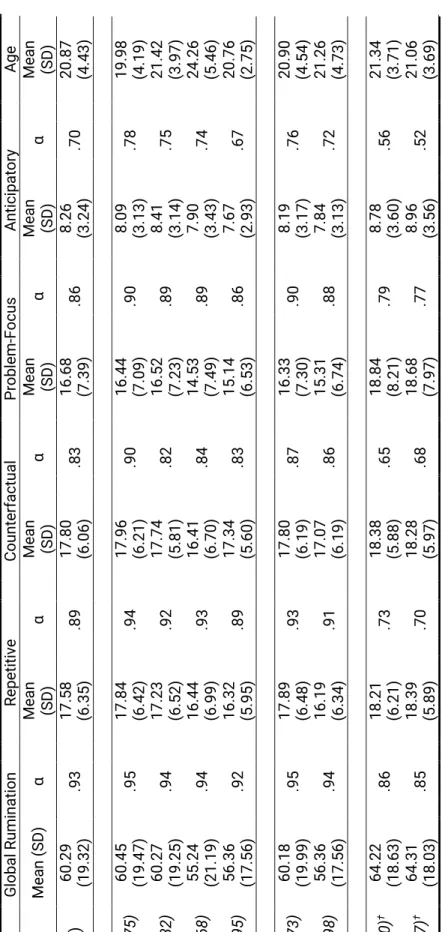
![Table 9 Goodness-of-fit for the hierarchical structure of the Ruminative Thought Style Questionnaire across countries Overall Fit IndicesComparative Fit Indices χ2dfCFITLIRMSEA [90% CI]Model comparisonΔCFIΔTLIΔRMSEA Across countries U.S.1130.04986.954.944](https://thumb-us.123doks.com/thumbv2/123dok_es/12613075.0/141.892.207.683.97.1162/goodness-hierarchical-structure-ruminative-questionnaire-indicescomparative-χ2dfcfitlirmsea-comparisonδcfiδtliδrmsea.webp)



![Table 13 Goodness-of-fit for the confirmatory factor analysis and longitudinal measurement invariance of the study measures Overall Fit IndicesComparative Fit Indices χ2dfCFITLIRMSEA [90% CI]Model comparisonΔCFIΔTLIΔRMSEA Depressive symptoms Wave 1 200.0](https://thumb-us.123doks.com/thumbv2/123dok_es/12613075.0/183.892.195.754.116.1150/confirmatory-longitudinal-measurement-invariance-indicescomparative-χ2dfcfitlirmsea-comparisonδcfiδtliδrmsea-depressive.webp)
