BENEMÉRITA UNIVERSIDAD AUTÓNOMA DE PUEBLA
Facultad de Lenguas
Maestría en la enseñanza del inglés
Stories of Music and Language Learning: The effects behind the joy of listening to music in English
Language. A Qualitative Study
A Thesis submitted to the Faculty of Languages For the degree of
Maestra en la Enseñanza del Inglés By
Consuelo del Pilar Carné Marín
Dra. Nancy Susan Keranen Thesis Director
Puebla, Pue. November 2015
Abstract
This thesis reports on qualitative narrative inquiry based study which aimed to understand the relationship between music and second language learning. The study was carried out to identify motivations behind language learning associated with music. The overall goal was to elicit language learning and music stories from the participants and to use those to better understand the theoretical connections between music and language and music and language learning.
The research data were collected via two different instruments. Written accounts were requested from language teachers, non-teachers and second language learners who actively described their own experiences regarding their contact with foreign music and second language acquisition from an early age. Likewise, the study reported the responses obtained through a questionnaire sent to Mexican and international music fan clubs via social networks on internet.
The study results supported the actual association between music and language learning and demonstrated that participants who had previous contact with English through exposure to music/songs in English, most at a very early age, provided positive and intense emotional experiences which triggered their motivation to learn the language.
In order to interpret the study findings, a theoretical framework was constructed from the literature on language learning, music, and cognitive and emotional factors associated with both topics.
In overall terms, the study contributes to our understanding of the complicated association between language learning, intrinsic sources of language learning motivations, and music in the lives of language learners.
Acknowledgements
I would like to express my thankfulness to my thesis director professor Nancy Keranen whose inspirational devotion for her profession has been a major example for me. Thanks professor for your total support, encouragement and guidance for the fulfillment of this project.
I also would like to extend my special thanks to my readers, Mtra. Fátima Encinas Prudencio and Mtra. Gicela Cuatlapantzi Pichón for their valuable suggestions, comments and advice.
My absolute gratitude to Professor Amanda Howard (University of Birmingham, United Kingdom) for taking her precious time to read this thesis, as well as her enthusiasm and willingness to provide helpful and valuable comments and ideas for the final revision of the paper.
I am grateful to each of the masters’ professors who contributed with their knowledge to the development of this project as well as to the institution authorities for their efforts to offer the best features of the program.
Finally, I recognize and undoubtedly appreciate and thank my participants’
contributions who kindly shared their stories with me.
Stories of Music and Language Learning:
The Effects behind the Joy of Listening to Music In English Language. A Qualitative Study
This thesis is dedicated to my beloved daughter Paola whose inner light has always guided my path.
TABLE OF CONTENTS
FRONT MATTER
Abstract Iii
Acknowledgements Iv
Dedications
V CHAPTER ONE: THESIS INTRODUCTION
1.0 General Introduction 1.1 Study rationale 1.2 Study significance
1.3 The context of the research 1.4 The background of the researcher 1.5 Research location
1.6 Aims of the research 1.7 Objectives
1.8 Research questions
1.9 Chapter Summary and overview of thesis document CHAPTER TWO: LITERATURE REVIEW 2.0 Introduction
2.1 Music and human development
2.1.1 Sensitive periods in human development 2.1.2 Music culture and the evolution of human mind 2.1.3 The musilanguage theory
2.2 Music, memory, emotions and the brain 2.2.1 Music and autobiographical memory 2.2.2 Music, memory and the brain 2.2.3 Music, emotions and the brain 2.3 Music, language and learning: the relationship
2.3.1. Music and learning 2.4 Emotions and language learning
2.4.1 Motivation in the EFL classroom 2.5 Why use music/songs in English language learning?
2.5.1 The song stuck on my head phenomenon
2.5.2 Approaches to listening to music in the classroom 2.6 Conclusion
CHAPTER THREE: RESEARCH METHODOLOGY 3.0 Introduction
3.1 Methods
3.2 Context and participants 3.3 Study design diagram 3.4 Data collection
3.4.1 Narratives 3.4.2 Questionnaire 3.5 Data collection procedures
3.5.1 Narratives accounts 3.5.2 Questionnaire 3.6 Data Analysis
3.6.1 Narratives accounts -Holistic-content method -Categorical-content perspective -Holistic-content approach
3.6.2 Questionnaire 3.7 Conclusion
CHAPTER FOUR: RESULTS 4.0 Introduction
4.1 Research questions
2 3 4 4 5 7 8 8 9
11 11 11 13 15 15 16 17 18 19 22 23 26 29 31 32 35
37 37 39 42 42 42 42 43 43 43 44 44
50 51
53 54
4.2 Narratives
A. 4.2.1 Holistic Content Analysis B. 4.2.2 Categorical Content Analysis
Themes (and labels)
4.2.3 Influence (Family and Relationships) 4.2.4 Education (English Language and Media) 4.2.5 Recalling (Time and Memories)
4.2.6 Motivation (Songs and Emotions) 4.2.7 Categories (and themes)
Language Learning (Influence and education) Music (Recalling and Motivation)
C. 4.2.8 Holistic Content Perspective
Reconstruction of Narrative Accounts through early memories and uniqueness.
4.2.9 Section conclusion 4.3 Questionnaire
4.3.1 Demographic results
4.3.2 Influence of music, motivation and emotions 4.3.3 Discussion
4.4 Conclusion
CHAPTER FIVE: IMPLICATIONS OF THE STUDY LIMITATIONS AND CONCLUSION
5.0 Introduction
5.1 Summary of the findings and significance 5.1.1 Narratives
5.1.2 Questionnaire
5.2 Aims of the study and answers to research questions 5.3 Study contributions and implications
5.4 Limitations of the study 5.5 Suggestions for further research 5.6 Reflective account and final comments
54 54 55 57 59 62 64 66
67 79 79 79 83 85 88
90 90 90 92 93 95 96 97 98
5References 100
Appendix A: Color coded words 108
Appendix B: Narratives’ quotations 110
Appendix C: Questionnaire 119
List of Figures
Figure 3.1 Study design
Figure 4.1 Categorical-content analysis sequence Figure 4.2 Respondents age ranges
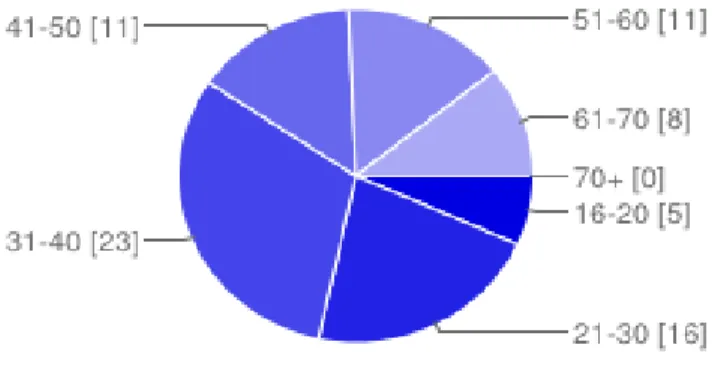
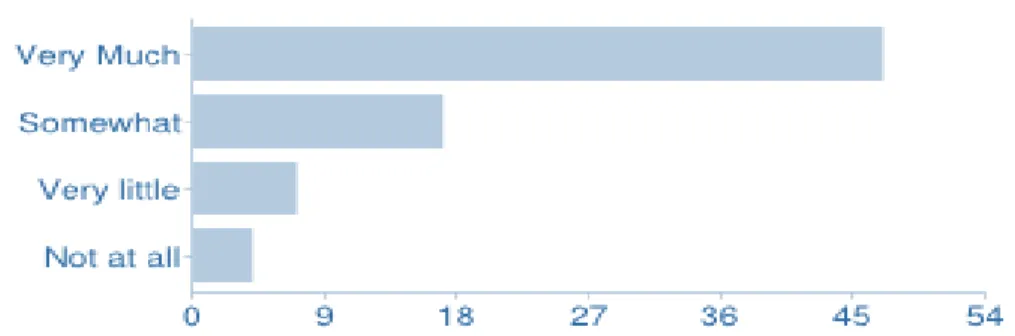
Figure 4.3 Respondents (n=74) Music influencing additional language(s) learning Figure 4.4 Respondents (n=74) Motivating elements of music
Figure 4.5 Respondents (n=74) Emotions
42 56 80 83 84 85
List of Tables
Table 3.1 Participant’s description Groups a, B and C.
Table 4.1 Demographic information - nationalities
Table 4.2 Respondents (n=74) Demographic information – place of residence Table 4.3 Respondents (n=74) Demographic information – native languages Table 4.4 Respondents (n=74) Demographic information – additional languages
41 80 81 81 82
2
Stories of Music and Language Learning: The effects behind the joy of listening to music in English
Language. A Qualitative Study
CHAPTER ONE
Thesis Introduction Chapter
1.0 General Introduction 1.1 Study rationale 1.2 Study significance
1.3 The context of the research
1.4 The background of the researcher 1.5 Research location
1.6 Aims of the research 1.7 Objectives
1.8 Research questions
1.9 Chapter summary and overview of thesis document
CHAPTER ONE
Thesis Introduction Chapter
1.0 General Introduction
Listening to music is one of the joys in life which creates an intense emotional experience. Language on the other hand, is the human capacity for acquiring and using complex systems of communication. Although music and language involve separate schemes, they are complimentary systems of structured communication. Language is responsible for content and music evokes emotion. Therefore, these emotional experiences derived from music can be linked to a second language learning process.
In recent years researchers have found there is a relationship between music and language and new findings show that speech functions and music have many aspects in common and several neural modules are similarly involved in speech and music (discussed further in Chapter Two). A characteristic development of phonological awareness has been demonstrated, which is an essential feature for reading and writing skills as stated by Jäncke (2012). When a foreign language is taught, music has a decisive and powerful influence, and this is because it allows learners to portray an image to the outside world as well as satisfy their emotional needs (North & Hargreaves, 2000). Music is a motivation generator.
“Motivation refers to the combination of effort plus desire to achieve the goal of learning the language plus a favorable attitudes towards learning the second language” (Gardner, 1985, p. 10). Consequently, music and songs generate a type of positive motivation which increases the desire to understand and learn the new language providing students at the same time with a sense of identity when sharing feelings and emotions within a specific group.
It was the intention in this qualitative study, to identify motivation for learning English through listening to music. Ten narrative stories were written to explore the role that music and songs had in the lives of the participants seeking to understand this specific human experience. The stories were analyzed and re-constructed to comprehend each individual’s perception and personality. A questionnaire was also administered to participants as well as to a broader number of music lovers who responded through social networks, in order to complement the study and understand the possible benefits the influence of songs could contribute to a second language environment (see Chapter Three).
1.1 Study rationale
Investigating the relationship between music and second language acquisition is a fascinating field to explore. The notion that most human beings enjoy music from an early age and when adolescence brings a new world to explore in life opens the possibility to research the possible benefits the influence of songs we enjoy and which can contribute to a second language learning environment.
The joyful experiences and memories related to songs that the participants in the research have expressed, make the study meaningful raising social awareness of the phenomena. The research methodology was qualitative, conducted mainly from a phenomenological perspective with narrative inquiry methods to construct and reconstruct personal stories and experiences related to music and English learning, as well as the role of music in participants’ lives.
The origin of the idea for the research started from an observation I made during my graduate studies. In one course we were asked to write our autobiographies. Many of us mentioned music as a starting point in our interest in learning English. Similarly, as an
English language teacher for many years, I have detected a faster development and improvement of students when learning the language once they were previously and voluntarily exposed to songs in English. These things, including my personal experience with language learning (1.4 below) were influential factors leading me to this research.
1.2 Study significance
There have been various studies carried out concerning the decisive influence of music in the classroom as well as the motivation it generates (reviewed in detail in the following chapter). Other studies have centered on didactic ways of presenting songs in a language learning environment. Recent research has been performed finding a relationship between music and language, showing that speech functions and music have many aspects in common and a distinctive development of phonological awareness has been demonstrated. Narratives of personal experiences and stories in this study, linking the feelings and emotions music evokes and the content of a second language learning process were, in an interesting manner, validating what Murphey (1990) means by implying that the connection of songs to both the development of human languages and the linguistic development of the individual are anthropologically worth noting. Thus, understanding individual perceptions and feelings towards music and learning could be a significant objective to appreciate what songs in teaching environments may offer, to embrace teaching and learning with music in the classroom.
1.3 The context of the research
Music is part of human development. Back to very early times music has been present in all cultures and societies enhancing and reflecting emotions and all kinds of feelings and behaviors. Many new theories have emerged and as suggested by Cross et
al. (2013), they lead us to conclude that music and language derived from a single and common root, but perhaps one of the most important features of both music and language entails communication. The impact music has on our minds is decisive, diversifying human musical activities we engage in as the cultural creatures we are. One of these variations refers to motivation for various activities we connect with music, including learning.
Language on the other hand, has also evolved in a complex system of communication we humans just use and generally take for granted. Thus, acquiring a second language through music might be a satisfying and fulfilling interest. Particularly, this study attempts to explore the relationship between music and second language acquisition as well as to suggest innovative approaches for using English songs in the classroom to increase the interest for learning through the inherent joy music evokes.
1.4 Background of the researcher
I have devoted more than thirty years of my life to teaching English. I have spent many hours in classrooms full of young learners from whom I have also learnt something new every day, and I have really enjoyed what I do. I love teaching and being in contact with students. On the other hand, I have also been a music lover. From an early age music was around me everywhere. My father enjoyed listening to opera and operettas and my mother liked singing tangos. My eldest sister, twelve years older than I, would listen to her Elvis Presley, Platters and Ricky Nelson rock and roll music. Having a nice soprano voice, everyday she was singing the songs that I also enjoyed. During the family reunions everybody sang and enjoyed having a pleasant time. As a child I participated in those gatherings and learnt many of the lyrics they sang, but it was not until I was eleven years old that I encountered The Beatles for the first time when I saw them performing in
their black and white original film called A Hard Day`s Night. Needless to say, I fell in love with them immediately. From that day on, English became the most important language in my world! My two puberty passions had woken up. Music, the Beatles music and them, themselves, inspired me to learn the English language.
I enjoyed transcribing the lyrics by listening to their records once, twice and many more times, repeating the songs one after the other, trying to understand the lyrics and writing down the words as fast as I could. Then, to make sense of what I had written, it was essential to look up the words in a dictionary until I could find the appropriate word(s) that fitted in the song. Once I had identified the words, I was ready to sing and practice pronunciation and stress, enjoying my task so much and, correspondingly, learning a lot about the language. It was very satisfactory to be able to understand and sing along with the songs I loved; consequently, I was motivationally learning.
Many years went by doing the same pleasing routine, listening to long play after long play, and without noticing, my English language had incredibly developed. Later on I polished my language studying it formally. I became an English teacher and through the years I have seen many of my students developing the same enthusiasm for the language through music, and sometimes I had asked myself how this connection with music and language had happened. Quite recently, reflecting about my English language education as well as my passion for music, I decided to find out what it is in our human development that makes us cultivate, build these characteristics. And so, although my background has evidently influenced the selection of this project, my personal interest rests not only to finding out how and why these learning processes and music enjoyment link together ,but it is a
legitimate desire to understand other people's perceptions and feelings to possibly benefit teachers and students in the English language acquisition field.
1.5 Research location
The research setting was a faculty of languages in an important university situated in central Mexico. The place showed to be the most suitable place for the study since it is where I work and where in fact, teachers and students were enthusiastic about sharing their experiences.
The faculty holds a relevant number of students and teachers within different areas of study, a master's degree and bachelors' degrees in English and French language teaching, as well as learning different languages, being the university center for international certification in languages. The research was planned according to the interesting and varied personalities of the participants; language teachers and non-teachers, as well as students who wrote a narrative and answered a questionnaire related to the study topic. This enhanced credibility and deepened sentiment when constructing and re-constructing, through narrative inquiry, their experiences and stories regarding learning English and songs.
1.6 Aims of the research
The study had three principal aims. The first was to construct a theoretical framework for understanding the role that music plays in language learning. The second aim, guided by theoretical framework, was to explore the part that music and songs have had in the lives of a focused group of participants from an early age and their experiences including emotions and feelings with music, and the third, to examine whether listening to music in English has influenced their motivation to learn the language, in order to
complement the study and comprehend the possible benefits the influence of songs could contribute to a second language environment.
1.7 Objectives
Ten volunteer participants were asked to write down their personal experiences with music and language learning from an early age. By guiding them with examples, in a chronological order they wrote individual stories which were analyzed in order to establish a relationship between the motivation to learn a second language and the emotions generated when listening to songs in that language. To comprehend and interpret each individual’s uniqueness was another objective, to finally report the findings.
An online questionnaire was responded to by seventy-four people including music lovers from different music fan clubs on the internet as well as the teachers and students participating in the study, in order to obtain complementary data to enhance the trustworthiness of the study.
1.8 Research questions
The following research questions identified the phenomenon studied and were the foundation to accomplish the specific objectives the study addressed.
RQ1 What do the participants’ narratives reveal about the relationship of music and language learning in their lives?
RQ2 What is it about the music they enjoy that they consider motivating for learning English?
RQ3 Based on the findings from RQ1 and RQ2, what are some potential benefits from the associations related to music and learning which could be applied in an English language acquisition context?
1.9 Chapter summary and overview of thesis document
This chapter described the reasons why this topic was researched, the significance of the study, the context of the research, the background of the researcher, the setting where the study was carried out and the reason the topic was chosen. The aims and the research questions were also presented. In Chapter Two the theoretical framework and literature review will be presented followed by the research methodology in Chapter Three, the results, analysis and comparison of data in Chapter Four and finally the presentation of the conclusions in Chapter Five.
CHAPTER TWO Literature Review
2.0 Introduction
2.1 Music and human development
2.1.1 Sensitive periods in human development
2.1.2 Music culture and the evolution of human mind 2.1.3 The musilanguage theory
2.2 Music, memory, emotions and the brain 2.2.1 Music and autobiographical memory 2.2.2 Music, memory and the brain
2.2.3 Music, emotion and the brain
2.3 Music, language and learning: the relationship 2.3.1 Music and learning
2.4 Emotions and language learning
2.4.1 Motivation in the EFL classroom
2.5 Why use music/songs in English language learning?
2.5.1 The song stuck on my head phenomenon
2.5.2 Approaches to listening to music in the classroom 2.6 Conclusion
CHAPTER TWO Literature Review
2.0 Introduction
This chapter provides the theoretical basis for the development of the study and analysis of the findings. Hence, relevant existing literature pertaining to the topic was analyzed and synthesized to build a logical framework guiding the research.
2.1 Music and human development
Humans have made music for thousands of years. Music has been connected with human development going back to prehistoric times. Archeologists have even found remnants of a “flute” carved from bones by Neanderthals. And in recent years, neuroscientists and psychologists have exposed additional evidence that music has been intertwined with human evolution. Judging by the ways that our brains and bodies respond, it seems humans may be wired for music (Rodrigues, 2008). Fundamental properties such as rhythm and pitch are recognized by babies. Young children's songs help them learn the alphabet letters and to remember animal names and numbers, for instance. In adulthood, music seems to be a learning device which plays an essential role in helping the brain form new and diverse pathways. Additionally, music triggers emotion. People enjoy listening to music. Their brain activity spikes in regions involved in reward and motivation (ibid).
In this section of the study some of the evidence and new findings concerned with music and its actual influence in our emotions are explored, as well as the way it is intertwined with language and memory and its correlation to second language acquisition.
2.1.1 Sensitive periods in human development
A "sensitive period" is a limited time during development where specific experience can contribute to long-lasting changes in behavior and in the brain (Dahmen &
King, 2007; Knudsen, 2004; Kral & Eggermont, 2007; Trainor, 2005; Kuhl et al, 2005;
Bischof, 2007; Penhune, 2011). A sensitive time period denotes a time where sensory experience has a relatively greater influence on behavioral and cortical levels in the brain.
(Penhune, 2011). Sensitive periods may also be times when exposure to specific stimuli stimulates plasticity, enhancing changes at the neural and behavioral levels. There appears to be a sensitive period for learning auditory categories which are important for language.
Until recently, most evidence for sensitive periods in humans was drawn from the domain of language acquisition. Case studies of individuals chronically deprived of linguistic stimulation in early childhood showed that these individuals failed to develop normal language, even after intensive exposure (Curtiss, 1977). Through these findings Lenneberg (1967) proposed there was a critical time which now is described as a sensitive period for neural plasticity, underlying language functions that extends from early infancy to puberty.
Lenneberg's hypothesis has been applied to the study of second language acquisition to suggest that exposure to a second language during this sensitive period results in greater fluency than exposure after a time. This has been supported by the outcomes of a number of studies showing that second-language proficiency is greater in individuals who were exposed to the second language before age 11-13 (Weber-Fox & Neville, 2001).
On the other hand, a number of recent behavioral studies have presented evidence for sensitive periods for musical training. Evidence for the impact of early training on auditory perception comes from studies of musicians with absolute or perfect pitch (The ability to name an individual pitch without reference to an external standard).
Consequently, after this evidence it could be said that if the exposure during the sensitive period in puberty to both experiences simultaneously; learning a second language in addition to music training while listening to songs in that language (auditory perception category), the effect might be definitely more conclusive when increasing behavioral long lasting changes. These changes not only imply an evolutionary state of the human mind but also lead us to look for cultural cognition and a framework where music and language are connected.
2.1.2 Music, Culture and the Evolution of the human mind
The origins of human musicality is one of the most complex and polarized subjects in contemporary musicology. Levi-Strauss, an eminent anthropologist, pointed out sixty years ago that music is the central mystery of anthropology (Cross et al, 2013). On one hand, Van der Schyff (2013) mentions that for some people music is central to the development of human consciousness, having its primordial roots in the communication of emotional states of being, a necessity to share with many other animals. Conversely, for other people music is a human invention whose relationship to our survival is not well defined, and whose origin is best understood as a result of cultural forces acting on pre- existing cognitive adaptations.
Despite the many differences found like the ones mentioned above, the origin of human musicality is often discussed within a dichotomous nature-or-culture framework (ibid). Recent developments in evolutionary theory and neuroscience are opening up "dual inheritance" models of music's origins. In other words, these recent theories hypothesize a shared evolutionary origin for music and language, while other theories have suggested that music played a crucial role in the emergence of the human mind and "cultural
cognition". Indeed, growing evidence for music's deep roots in the most primordial areas of the brain and of its effects in the neocortex (the largest and evolutionarily most recent portion of the cerebral cortex where most of the higher brain functions), support strong connections between the emotional communications of animals, musicality in human developmental history of individual organisms and the wide variety of musical activities we learn and participate in. Although music is recognized or conceived differently by diverse societies, every known culture on earth has its own music and this music is somehow representative of each group's identity (Cross et al., 2013).
Music appears to be one of the basic actions of humans resulting from regular cultural contact and musical exchange between members of different societies. Music, like language, is multimodal. Therefore, there can be language without speech, as well as there can be music without sound. Musical behavior can be expressed through voice or other body movements such as dancing. There are many kinds of music and dance, and many ways to conceptualize them. The meaning associated with what modern English speakers or Spanish speakers recognize as music and dance may not be shared cross-culturally.
"From an anthropological perspective, musical, like linguistic elements’ meaning emerges from its total context - one that includes the sounds, body movements, and symbols as well as the “who,” “where,” “why,” “when,” and “how” of its performance" (Cross, et al., 2013 p. 48). Like language, music is a universal human behavior that combines gestural and sonic elements. Levinson (1996) claims, that expectancy, prosody, and paralanguage in speech and song are bridges between language and music.
2.1.3 The "Musilanguage" Theory
Among many other new theories emerging, Brown (2000) has suggested that music and language evolved as two specializations from a common proto-musical ancestor – an early communicative system which formed the basis of the "dual acoustic nature" of musical protolanguage labeled as "musilanguage". This theory refers to sound providing emotive meaning, and also sound as referential meaning. Furthermore, Mithen (2005) claims that musilanguage was holistic, multimodal, manipulative, musical and mimetic communication, suggesting it is the kind of multi-modal systems of signaling (movement, gesture and sound) that we find in primates, not human, that points to musilanguage's deep roots in our pre-human ancestors.
The Musilanguage theory somehow supports results found from comparative studies of music-like behavior in animals in which their communication systems share similarities to human music making of innate and learned behavior and such behaviors correspond to human music making. In such comparative studies, evidence was found that music-like communication systems can evolve relatively easily, (three times among birds and three times in mammals) while in humans a complex communication system with the ability to communicate arbitrary meaning has evolved only once. These findings led researchers to develop a hypothesis in which complex signals ("song") evolve first, and the meanings were added to these signals later (Fitch, 2006). The term song is taken to refer to complex learned vocalization, of the type generated by birdsong and human singing (ibid.), and innate song to refer to limited learned or non-learned vocalizations of the type by suboscine songbirds (comprising the more primitive birds with less well developed vocal organs) and some nonhuman primates (e.g., gibbon “song”). The main difference between
human “song” and “speech” is that speech conveys complex propositional meanings, based on an interconnection and/or interdependence of meaningful lexical items (words), whereas song without lyrics often does not (Cross et al, 2013).
New views of evolution and the human mind are continuously emerging and many debates are being held over the origins and meaning of human musicality. However, music one way or another is innate to all societies. Modern music and songs, incorporating structured language lyrics are filled not only with rich meanings and emotions, but complex aspects inherent to communication our most elemental and primal necessity. When we hear a particular piece of music or song we like, it also evokes pleasant feelings reminding us of places, people, smells, colors, and so on. Songs and music bring back memories we recall for a lifetime.
2.2 Music, memory, emotions and the brain
The sentiment triggered by music as well as the improvement of memory and recall by the use of music seem to be generated and processed by a unique and very complex system located in the lobes of the human brain. In this section of the study, some research and scientific findings will be examined to comprehend this brain function and its effects.
2.2.1 Music and autobiographical memory
Music can trigger exceptionally unique memories in all of us, perhaps recalling the first melody ever danced to, the song retrieving memories of a wonderful holiday or a sad experience in the past. Malchiody (2008), referring to a study on autobiographical memory presented in England in 2008 by the researchers Martin Conway and Catriona Morrison from the University of Leeds, directs our attention to this research
about the influence and the impact The Beatles and their music have had on people of different cultures over the last four decades, pointing out that from all the arts music is the only one which rapidly stimulate both long term personal memory and emotion.
Autobiographical memory consists of a long term memory which comprises the events and experiences we had during our lives making us identify who we are and how our sense of self is formed. Songs and music hold the mysterious power of making us remember places we have been and people we have met. When these autobiographical memories are shared with friends, families, groups, communities and cultures, they create commonly held beliefs, values and affective bonds providing us with a sense of unity and reinforcing our identity. Music leads to increased social cohesion of a group. Humans have a “need to belong” and a strong motivation to form and maintain enduring interpersonal attachments (Cross et al., 2013). Music is also used by therapists to recall important events in our lives.
It is used with children for example, to help them develop language and memory.
2.2.2 Music, memory and the brain
Scientists and researchers although intrigued by the mysteries of the power of music affecting our memory, have explained some biological processes taking place in certain parts in the brain and our bodies when people are exposed to music. The first system for helping humans to memorize information in both, languages (words) and music (familiar tunes), is located in the temporal lobes. The second system is situated in the frontal lobes of the brain and stimulates memory to involuntarily learn and use the rules of syntax in language and the rules of pitches in music (Janata, Tomic, & Rakowski, 2007). Different networks of neurons are also activated in the right hemisphere of the brain while music is processed depending on whether a person is listening to music or playing an instrument,
and whether or not the music involves lyrics (Lemonick, 2000). Although music is mostly processed in the right hemisphere of the brain, O'Donnell (1999) established that
"Mozart's music and baroque music, for example, with a 60 beats per minute beat pattern, activates the left hemisphere where language is processed, as well as the right brain. The simultaneous left and right brain action maximizes learning and retention of information.
The information being studied activates the left brain while the music activates the right brain" (p.3).
Classical music has also been used to teach foreign languages and the results after a study made at The Center for New Discoveries in Learning showed that learning potential can be increased at least five times by using those sixty beats per minute music mentioned above.
2.2.3 Music, emotion and the brain
The way emotional reactions to music are produced are also still regarded as mysterious since according to Juslin and Västfjäll (2008), they do not involve implications for goals in life. Emotional reactions to music have been classified in terms of various subcomponents. However, scientists have not found in what manner they are produced. Among other classifications, we can find the psychophysiology where music listening may give rise to physiological reactions similar to those shown to other emotional stimuli, including changes in heart rate, skin temperature, respiration, and hormone secretion. In brain activation they are classified as when listeners’ responses to music involve regions of the brain that are known from previous research to be implicated in emotional responses, including hippocampus, prefrontal cortex, and the orbitofrontal cortex. The emotional expression categorization, is when music listening “makes people cry, smile, laugh, and furrow their eyebrows” (Juslin & Västfjäll, 2008, p. 562).
Regarding secretion of hormones while listening to music Lemonick (2000) mentions "cortisol" which is involved in arousal and stress, "oxytocin" linked to nurturing
behavior and "testosterone" related to aggression and arousal. "Endorphins" (natural opiates which raise the pain threshold and produce feelings of euphoria reducing stress) are also released when the brain is exposed to songs and melodies we enjoy and/or dislike.
Personal experiences, reactions and perceptions are very different from one individual to another. Thus, the experiences may be positive or negative. Levitin (2006) states that an exquisite orchestration of brain regions is where the story of our brains in music develops, involving the oldest and newest part of human brain.
Music's tempo seems to also be related to emotional impact the same way the biological rhythm of the body is. The faster the beats per minute in music are, in the same way as when the heart rate accelerates, the happier the people feel and the opposite occurring as well. Rhythm is another characteristic of music which enables and organizes movement inevitably, a physical response related to the human body. When dancing together or in a group, the coordination of movements seems to be associated with pleasure (Cross et al., 2013). Speech, singing, music and dancing are involved in the expression of emotion and the relationship between language and music is basically the pragmatic aspect of expressing emotions, moods and attitudes through timbre and supra-segmental features such as timing, rhythm and melody (ibid).
2.3 Music, language and learning; the relationship
The connection between music and language has been continuously mentioned throughout this chapter. It is evident that many researchers have found new evidence of this relationship and the findings have led them as well to study about the correlation of these two systems and the enhanced ability they both when combined generate for learning.
The association between language and learning starts off by identifying their similarities. Cross et al. (2013) mention that music acquisition is an innate ability of the human brain paralleling the natural human capability to acquire language. There seems to be a well identified "bridge" that connects the left hemisphere of the brain, related to language, and the right hemisphere concerned with musical intonations and rhythmical patterns. Scientists have named this bridge the "corpus callosum". It is composed of over 200 million nerve fibers which carry information both ways (of the two brain's halves).
Consequently, the brain operates as a complicated system of interconnected elements and functions by simultaneously going one way or another (Adkins, 1997). Due to the advent of modern brain imaging techniques and the improvement in neurophysiological measures, speech and music processing are shown to overlap (Jäncke, 2012). According to Cross, et al. (2013) these over- laps in the brain process indicate that “music” and “language” are different aspects, or two poles, of a single continuous domain. "This continuum, therefore, can be interpreted in terms of at least two dimensions, the first running from definite to indefinite meanings and the second from greater to lesser affective potency" (Cross, et al., 2013, p.544). Within this continuum, a number of features are identical between music and language. The first aspect relates to the complexity of musical and linguistic signals which are more complex than the innate vocalizations available in our species, such as groans, laughter and shouts. The second feature mentioned, refers to generativity or the structure of both language and music constructed according to a syntactic system. Cultural transmission is the fourth characteristic, meaning that music, like language, is culturally transmitted and learnt by experience. Finally, transposability, which is music and speech being generated in different keys or starting tones and still being recognized (Cross, et al.,
2013). Studies developed by Hoch et al (2011) on the effect of a musical chord’s tonal function on syntactic and semantic processing concluded that neural and psychological resources of music and language processing strongly overlap. Even though there are still some differences between music and speech-processing, the evidence exposed above reveals that speech and music processing strongly overlap. From the functions' point of view, Tallal and Gaab (2006) mention that numerous functions of speech and music have various aspects in common and several neural modules are similarly involved in speech and music. Subsequently, the evidence of these findings reveals that speech functions can benefit from music functions and vice versa (Jäncke, 2012).
A recent hypothesis called OPERA proposed by Patel (2011) explains why music entails numerous benefits on speech functions. The following are his words:
“The ‘OPERA’ hypothesis proposes that such benefits are driven by adaptive plasticity in speech-processing networks, and that this plasticity occurs when five conditions are met. These are: (1) Overlap: there is anatomical overlap in the brain networks that process an acoustic feature used in both music and speech (e.g., waveform periodicity, amplitude envelope), (2) Precision: music places higher demands on these shared networks than does speech, in terms of the precision of processing, (3) Emotion: the musical activities that engage this network elicit strong positive emotion, (4) Repetition: the musical activities that engage this network are frequently repeated, and (5) Attention: the musical activities that engage this network are associated with focused attention.
According to the OPERA hypothesis, when these conditions are met neural
plasticity drives the networks in question to function with higher precision than needed for ordinary speech communication. Yet since speech shares these networks with music, speech processing benefits” (p.142).
Repeatedly, the studies cited have shown, even from different points of view that definitely many language and music functions coincide and have developed in the same part of our brains. Thus, the relationship of these two systems is beneficial for a number of learning abilities.
2.3.1 Music and learning
Learning is a continuous internal process of acquiring knowledge and skills and through which we use our experience to deal with new situations. Music is a powerful influence in our lives since it provides us with inspiration and motivation to learn by creating a desired atmosphere through emotion. Music enhances learning as well because it stimulates our memory and increases attention. Through music, multisensory experiences are facilitated. Music in other words, provides valuable features that make learning a remarkable experience. O'Donnell (1999) points out that music is thought to link all of the emotional, spiritual, and physical elements of the universe, affecting not only body responses, but also affecting memory and learning and influencing animals and plants as well. Furthermore, Campbell (1992) has stated that music is not only considered as art and entertainment, but as a vital manner of sensorial patterning that enhances long-term memory, reading skills, and physical development. Ettlinger et al. (2011) emphasize the specific role of implicitly acquired knowledge, implicit memory, and their associated neural structures in the acquisition of linguistic or musical grammar.
Concerning language acquisition, the use of music in class is considered a valuable tool to provide meaningful experiences. Music and songs offer cognitive benefits such as vocabulary acquisition, symbolic understanding, sense of sequence, and auditory training (Campabello, De Carlo, O'Neil & Vacek, 2002). In their research findings,Milovanov and Tervaniemi (2011) highlight the positive influence of musical ability on the acquisition of linguistic skills as for example in acquiring a second language.
The combination of music and language found in songs provide a more intense and significant experience when learning a second language. The interaction between linguistic stress and musical meter was examined by Gordon et al. (2011) and established that the alignment of linguistic stress and musical meter in song enhances musical beat tracking and comprehension of lyrics. The results of their study support the notion of a strong relationship between linguistic and musical rhythm in songs. Making use of songs in a second language environment allows the listeners to raise awareness of the phonemic system and therefore learn to discriminate sounds (vowels and consonants) and recognize new words. The lyrics will help them develop reading skills and the rhythm fluency. By singing songs in groups, the listeners will fulfill social needs and the affective bonds will be tightened.
2.4 Emotions and language learning
Positive emotions generated in a second language acquisition context certainly promote and facilitate the learning process. However, we need to consider what we mean by emotion and how we associate it to learning. "Emotion" is a quite complicated concept to define. Although researchers have attributed some characteristics to the concept, (i.e. short-lived, feeling-arousal, purposive expressive, adaptive mechanisms), most
dictionaries relate it to feelings, and when looking up the word "feelings", the definition is concerned with emotional states. MacIntyre and Gregersen (2012) refer to emotion as a complex concept elusive to define. It seems therefore, that the vague dictionary' definitions take us back to where we started. We should then, ask what type of feelings and/ or emotions we are talking about, and how researchers associate them to language learning.
According to the "broaden-and-build theory" of positive emotion, Fredrickson (2001) states that there are positive emotions and negative emotions as well. That is, good feelings or bad feelings. This theory proposed that certain positive emotions including joy, interest, contentment, and love broaden people's momentary thought-action range. Joy generates the urge to play and enhance creativity, interest generates the urge to explore and absorb new information, contentment sparks the urge to appreciate and love generates a recurring cycle of all the former and build individuals’ personal resources. Positive emotions encourage discovery of new and creative actions, ideas and social bonds, which in turn build those individual's personal resources; ranging from physical and intellectual resources to social and psychological resources. The widened states of mind arising from these positive emotions are contrasted to the narrowed states of mind produced by many negative emotions which dispose a person to a specific action tendency (i.e. disgust, rejection, attack or escape) ( MacIntyre & Gregersen, 2012). Both tendencies of positive and negative emotions have a place of their own in the language classroom. "Positive emotion facilitates the building of resources because positive emotion tends to extend a person’s perspective, opening the individual to absorb the language. Negative emotion on the contrary, produces the opposite tendency, a narrowing of focus and a restriction of the range of potential language input" (MacIntyre & Gregersen, 2012 p.193).
Anxiety has constantly been studied and associated with language learning and this disorder can cause negative feelings such as fear, apprehension, tension, nervousness and worrying. The physical dimension is also present when the heart races, the body sweats, the hands tremble, and there is a sinking feeling in the stomach (Reeve, 2005). Learners often experience a general state of worry before confronting something challenging such as a test but the feelings associated with language anxiety typically precede avoidance or escape. When we do not understand what the teacher or the people around us say, as a means of self-protection, we want to escape, we want to leave a situation that makes us anxious. Rejection and fear for not being accepted by the group is another sign causing anxiety, a voluntary and/or involuntary call for help (MacIntyre & Gregersen, 2012).
It seems that both types of emotion although characterized by different functions, are always and simultaneously present in humans, hence the goal to pursue is to provide and promote positive emotional disposition and resources as well as lowering anxiety.
Although emotion is often an involuntary reaction, MacIntyre and Gregersen (2012) suggest it is possible for teachers to approach influencing students’ emotions in at least two ways: (a) to dispose conditions to provoke a reaction; and (b) to work with the comprehension that modifies the emotional schema. Awareness of languages in a language learning environment is an important feature as well. Bolitho et al. (2003) suggest that:
…sensitivity to affect in teachers may influence lesson and course design in a profound way through choice of texts and activities, and may help them to
‘unblock’ failing learners by encouraging them to respond affectively as well as cognitively to language inputs of various kinds. Affective engagement with language in use also has the considerable advantage of stimulating a fuller use of
the resources of the brain. Positive attitudes, self-esteem, and emotive involvement help to fire neural paths between many areas of the brain, and to achieve the multi-dimensional representation needed for deep processing of language (Bolitho et al, 2003, p.256).
Learning a second language by means of songs and music in the classroom is an enriching experience and inspiring motive to affectively engage learners with the language.
Using songs in the classroom is an activity students enjoy and love doing. Thus, this activity signifies creating a positive emotional condition to constantly motivate students to learn.
2.4.1 Motivation in the EFL classroom
For quite some decades now, motivation has been regarded as an influential key element in the success of second language and foreign language learning. Motivation has been the target of a great deal of research and numerous definitions have emerged.
Gardner (1985, p. 10) defined L2 motivation as "the extent to which an individual works or strives to learn the language because of a desire to do so and the language, and an attitude towards the act of learning the language". Motivation is, as viewed by Pintrich and Schun (1996, p.4) "the process whereby goal-directed activity is integrated and sustained".
Woolfolk (1998 p. 372) described motivation as "an integral process that activates, guides and maintains behavior over time". Brown (2001 p.75) stated that "motivation refers to the intensity of one's impetus to learn". Ellis (1997 p. 75) highlighted that "motivation involves the attitudes and affective states that influence the degree of effort that learners make to learn a L2".
Even though the various definitions shown above, and the different sources and fields of study in which they originated, "researchers seem to agree that motivation is responsible for determining human behavior by energizing it and giving it direction"
(Dörnyei, 1998 p. 117). However, motivation is a very complex multifaceted construct and its descriptions might only take us to a superficial overview of its nature and core features.
Based on Gardner's socio-educational model (1985), we will explore some of these features. Gardner distinguishes two types of motivational concepts; language learning motivation which is an integral part of growing up and necessary to communicate in one’s social context (and which is motivational in its own right), and classroom learning motivation, referring to the motivation in the classroom situation (or in any specific situation) to learn or acquire a second language. The classroom type of motivation offers a different learning environment within a school social background and the special conditions under which such learning takes place. In Gardner's theory, he highlights that second language learning focuses on the individuals' perception of the task at hand and it is state oriented. It will be influenced naturally by many factors associated with the language class: the teacher, the class atmosphere, the course content, materials and facilities, as well as personal characteristics of the student such as studiousness, aptitude, motivation, attitude and so on. To be able to integrate in this learning environment, certain social affective and motivational conditions are essential such as low social anxiety, ego permeability, positive group attitudes, cohesiveness, and so on (Madrid, et al., 1993). For most psycholinguists, either in a language learning situation or in a second language acquisition context, the importance of the learner's attitudes linked to motivation plays a major role. In L2 acquisition and development, Gardner's hypothesis is positioned on four
stages that can be identified as; the initial stage described as elemental, the second stage as consolidation, the third stage corresponds to conscious expression and the fourth stage is identified as automaticity and thought. All of these learning processes are similar if not equal to stages in toddlers and young children learning to speak their first language. Such stages emphasize and represent the different meanings at different stages of learning a language.
Concerning motivation to learn a second language in the school, two points of view to be considered are proposed: the educational context and the cultural context. In the educational context, learning the language is implied as learning any other subject, while in the cultural context learning a language is unlike studying most school subjects since it involves acceptance of elements of other cultures. Our own culture, referring to attitudes, beliefs, personality characteristics, emotions, ideals and expectations are a main influence in attitudes when learning a second language. Depending on the culture implications about what can and cannot be achieved and beliefs about its value might be also applied in the learning process (Gardner, 2006). Educational and cultural context are both important on the motivation developed by learners. Some other individual differences are also found in the achievement of the language e.g. classroom behavior, persistence in language study, nervousness and language retention.
Gardner also proposed two types of motivation he identified as firstly, integrative motivation in which students are culturally or socially oriented and possess the intention or wish to integrate into the culture of the language studied and secondly, instrumental motivation which is associated to ulterior motives such as acquiring a language as a means
for furthering a career or for academic purpose. Both of these orientations are decisive in successful language learning and are not mutually exclusive (Brown, 2000).
Intrinsic and extrinsic motivation have been aspects continuously studied as well.
Intrinsic motivation deals with behavior performed for its own sake, in order to experience pleasure and satisfaction such as the joy of doing a particular activity or satisfying one's curiosity. The extrinsic motivation in contrast involves performing a behavior as a means to an end, that is, to receive some extrinsic reward (e.g. good grades) or to avoid punishment (Dörnyei, 1997 p.121).
In addition to the above, the teachers play a significant role motivating students depending on the materials they use and recommend as well as the activities they present.
These activities will influence the student's level of motivation and how much the students learn. (Gardner, 1985).
Music and songs have been regarded as motivational means for their linguistic benefits and the interest they generate in language learners. Typically and for a long time, young children have been motivated to learn first and second language through songs and currently they are also used sporadically and not systematically in adolescent and adult's second language learning classrooms. Approached from a different perspective, constant exposure to appropriate music/songs might be a sustainable incentive to maintain motivation.
2.5 Why use music / songs in English language learning?
Because it is an emotive companion during our whole life, because it inspires us with deep feelings of affection, because it thrills us to the bones, music is in its own right a powerful representative of human kind and therefore a valuable representative
of the English speaking world. But, how to integrate music into the current English language teaching/ learning classrooms? - By means of songs. Apart from being a combination of music and lyrics by which we can express all those emotions, songs are considered an integral part of our language experience, and the language, serving as direct genuine source of teaching materials, is of great importance to foreign language teaching as well as for the many-faceted merits songs possess. They enrich and activate our foreign language class (Shen, 2009). "Songs have a place in the classroom. They help create a friendly and co-operative atmosphere which is particularly important for language learning, and songs can offer much more. They offer insights into the culture and especially the stories and myths of different societies, providing a window into the frames of reference and values of the peoples whose language we are learning" (Candlin, 1992; ix). “Language expresses, embodies and symbolizes cultural reality” (Kramsch, 2000, p.3). Songs, according to Shen (2009 p.88) "are plentiful of themes which will echo in the learner's heart and memory". Love, dreams, memorable stories, ideals, spirituality, reminisce about the past, hope for the future and so on, are some of the topics found in popular songs young learners are so familiar with. The so called "Pop Culture" is a globalized phenomenon bounded for common youth culture with pop songs as its backbone (Griffee, 1992). Popular songs represent a bridge between generations, between the concept of formal and informal learning, and a bridge between conventional beliefs about formal and informal learning settings. Domoney and Harris (1993) state that pop songs also validate and make adolescent learners' music language and culture very powerful. Either for their cultural content, their poetic expression, or rhythmic repetition outcomes, songs and singing provide authentic and significant skills' materials learners will appreciate. “Acquisition of
automatic language skills depends on rich, meaningful, repeated exposure to comprehensible input without awareness” (Bolitho et al., 2003, p.253).
2.5.1 The Song Stuck in My Head Phenomenon
The involuntary rehearsal of a foreign language in one's mind, including words, sounds, intonations and phrases is called the "Din in the head" (DIN hereafter), and according to Krashen (1983) this DIN is a result of stimulation of the Language Acquisition Device, (the LAD). Murphey (1990) calls this involuntary rehearsal, when triggered by music, the song stuck in my head phenomenon or SSIMHP whose characteristic direct us to a close and very interesting relationship between music and second language acquisition.
It is hypothesized that a song may act as LAD activator or be a strategy of the LAD in the ontogenetic development of language. However, this activation of the DIN will only occur depending on these two corollaries (immediate consequence or easily drawn conclusion):
The DIN is set off firstly, by comprehensible input and secondly the input needs to contain significant quantities of the acquirer's "I plus 1", meaning language input plus a little more advanced or new language structures, which the acquirer has not yet acquired but is "ready"
for. This consequence also predicts that the DIN will not occur in very advanced performers, since they will receive less input containing I plus 1, having acquired most of the target language and will not occur either after output practice without input and after pattern drills or grammar exercises. Apparently the DIN takes a certain time to start up...at least one or two hours of good input (Krashen, 1983).
Undoubtedly we all can recognize the DIN in the LAD phenomenon happening many times in our lives. This involuntary but enjoyable rehearsal might be a great tool
through the use of appropriate and pleasurable songs in class, so students activate this mechanism by experiencing deep positive emotions therefore, improve their learning.
Due to the research findings provided in the overview of this chapter above, the relationship between music and language comprises songs and singing as characteristics of human development. This fusion has not only been studied in different fields of study such as cognitive science, psycholinguistics and, anthropology. Researchers in first and second language acquisition are also searching for new approaches to promote the use of music and songs in the English language teaching/learning classroom.
2.5.2 Approaches to listening to music/songs in the classroom
The use of music and songs to teach a foreign language has been around for quite a long time. It is not new at all. The Audiolingual method (Bartle, 1962) used music from the 1950's to the 1970's to reduce monotony which could occur from repetitive drills (Engh, 2013). Suggestopedia a methodology to teach foreign language in the classroom was introduced in 1978 by the Bulgarian psychotherapist and physician Georgi Lozanov.
Unusual for that time, this method uses classical and/or instrumental music to provide relaxation and make the brain receptive to inputs and trigger the subconscious resources to help acquisition and retention of vocabulary and language structures (Salcedo, 2002).
However, it was not until the introduction of the Communicative language teaching (CLT) and the Task based learning (TBL) approaches in the late 70's and early 80's ( which are now still utilized in many schools in our country) that an opening view was brought for the use of songs in the language learning classroom .
Under the light of second language acquisition (SLA), Stephen Krashen's "affective filter hypothesis" emerged in 1982. He argues that providing comprehensible input in a
low anxiety and highly motivated situation, favorable learning occurs. Regarding music and songs, the affective filter as proposed by Wilcox (1995), lowers affective barriers relaxing and motivating learners, making them more receptive to the language learning.
The theory of Multiple Intelligence (MI) developed by Gardner (1993) reveals that a series of at least nine different types of intelligence prevail in each individual differing in degree. These multiple intelligences are categorized in verbal/linguistic intelligence, mathematical/logical intelligence, visual/spatial intelligence, body/kinesthetic intelligence, musical/rhythmic intelligence, interpersonal intelligence, intrapersonal intelligence, naturalist intelligence and existential intelligence, all of which are interdependent but complementary with each other (Shen, 2009).
Each individual possess different types of intelligences and for that reason teaching should not merely be directed towards verbal, spatial and numerical intelligences. Berman (1998) claims that musical, bodily kinaesthetic, interpersonal and intrapersonal intelligences should also be taught. Implementing all these intelligences together in effective activities such as listening to songs within different lyrics, rhythms and images, may contribute to develop linguistic potential, balancing the learner's linguistic competence and enhancing his ability for learning a foreign language.
On one hand and according to Salcedo (2002 p. 62) researchers have proposed music and songs in the foreign language classroom with different purposes: to lower anxiety and promote motivation, to improve speaking pronunciation, to guide lesson planning and practical classroom use, to provide physiological benefits to enhance cultural awareness and contribute to the development of the whole being through the aesthetic domain. On the other hand, Engh (2013, p. 119) states that research in specific skills in