SEFO
SPANISH AND INTERNATIONAL ECONOMIC & FINANCIAL OUTLOOK
VOLUME 9 | number 4, July 2020
Challenges for Spanish industry under COVID-19 and beyond
Spain and the European Recovery Plan
The Spanish economy: Signs of recovery in the midst of high uncertainty
Changes in financing trends and payments preferences under COVID-19
Banks’ market value in times of COVID-19
The blow to tourism and the recovery of the Spanish economy
Spanish manufacturing in the wake of COVID-19 Spanish high-tech exports Challenges for Spain’s auto industry: Mobility model
WHAT MATTERS
SEFO
Spanish and International Economic & Financial OutlookVOLUME 9 | number 4, July 2020Orders or claims:
Funcas
Caballero de Gracia, 28 28013 Madrid (España) Teléfono: 91 596 54 81 Fax: 91 596 57 96 [email protected] www.funcas.es
ISSN: 2254 - 3880 9772254388005
9772254389002
SEFO is a bi-monthly Economic Journal published by Funcas and written by its experts, on the most pressing issues facing the Spanish and international economy / financial system today.
Readers can find this and archived issues of SEFO at www.funcas.es. Please contact us to request permission to republish an article at [email protected]
Electronic Edition
An electronic edition of this Journal is available at
http://www.funcas.es/Publicaciones
Board of Editors Carlos Ocaña Santiago Carbó José Félix Sanz Raymond Torres
Managing Editors Alice B. Faibishenko Juan Núñez
Board of Trustees Isidro Fainé Casas (President) José María Méndez Álvarez-Cedrón (Vice president)
Fernando Conlledo Lantero (Secretary) Carlos Egea Krauel
Miguel Ángel Escotet Álvarez Amado Franco Lahoz Manuel Menéndez Menéndez Pedro Antonio Merino García Antonio Pulido Gutiérrez Victorio Valle Sánchez Gregorio Villalabeitia Galarraga
Contact [email protected]
Web Site www.funcas.es Orders or Claims:
Funcas, publications
Tel.; +34-91-5965481, Fax: +34-91- 5965796, e-mail: [email protected] Printed in Spain
Editorial and Production Funcas
Caballero de Gracia, 28. 28013 Madrid (Spain)
Ownership and Copyright:
© Funcas 2012
ISSN print edition 2254-3899 ISSN electronic edition 2254-3880 Depósito Legal: M-10678-2012 Prints: Cecabank.
SEFO
SPANISH AND INTERNATIONAL ECONOMIC & FINANCIAL OUTLOOK
Letter from the Editors
ith lockdown measures having eased, the Spanish economy is beginning to show signs of incipient recovery. Activity levels hit bottom in April and began to recover in May, a process which gathered pace in June, as the ‘easing’
measures accelerated. Recovery is expected to continue into 2021, albeit not reaching pre- pandemic levels; however, current forecasts remain subject to an unusually high degree of uncertainty, not only because of the possibility of a second wave requiring new restrictions, but also regarding the behaviour of certain key macroeconomic variables, such as the savings rate and international tourism. Given the impact of COVID-19 on the Spanish economy and the country’s fiscal constraints, the ability to access the EU Recovery Plan will be critical to Spain’s recovery, alongside tapping already available EU-level emergency programs.
Within this context, the July issue of Spanish and International Economic and Financial Outlook (SEFO) first assesses the EU-level response to COVID-19, as well as how the pandemic has impacted the Spanish economy overall, as well as the impact across the key sectors of the economy.
OECD forecasts indicate that Spain is one of the countries most impacted by COVID-19.
However, its fiscal stimulus measures are small in comparison with other countries, such as the UK and Germany. For this reason, Spain’s recovery will rely heavily on support from EU funds.
Given the time-sensitive nature of responding to the pandemic’s economic consequences and the
schedule of European Recovery Plan payments, it is essential that Spain accesses other EU funding initiatives. The Spanish government has already expressed its desire to use the SURE scheme, which will be available until the end of 2022, and may also use the ESM credit line, which would provide Spain with 10-year financing on more attractive terms than those offered by the financial markets. However, the ability to tap these EU initiatives will depend on Spain’s capacity to demonstrate the allocation of funds to support the EU’s twin green and digital transition objectives.
COVID-19 is forecast to have contributed to an 18% quarter-on-quarter decline in GDP in 2Q2020. While lockdown measures have eased, the economy is not expected to reach pre-pandemic levels until at least 2023. From a sectoral perspective, the automotive industry was particularly hard hit, with a contraction of nearly 90% in April and May. Likewise, the services sector’s turnover index in April declined by 42%. However, job losses in the construction sector exceeded those of the services industry.
International trade has been strongly affected, too. April figures show exports declined by 32% in real terms compared with February, and imports dropped by 29%. COVID-19 also contributed to a significant expansion of government debt by more than 24 billion euros in 1Q2020. While the Spanish economy should experience a rebound in 3Q2020, it will not make up for the ground lost during the state of emergency. In general, projections are subject to significant uncertainty due to potential new outbreaks, the increase in
W
IV
savings rates, and the fate of furloughed workers once the employment support scheme expires.
As regards the Spanish financial system, the COVID-19 pandemic has disrupted Spain’s credit markets and payments methods. In regard to the former, it has triggered the need for financial aid programmes, including state guarantees of business loans. Notably, the volume of outstanding business loans in Spain, which had registered year-on-year growth of 1% in January and 0.4% in February, accelerated to 1.1% in March and to 3.1% in April. As for origination, while new loans amounted to 55.12 billion euros in January and February, the aggregate amount for March and April rose to 89.91 billion euros, providing a glimpse of the extra effort made by Spain’s banks to extend financing during the pandemic. Turning to payments, ATM cash withdrawals contracted by 9.3% year on-year in April, having registered growth of 0.3% in 2019. Meanwhile, point-of-sale card payments, which had sustained growth of 9.4% in 2019, increased by a much lower 2.3% in the first quarter of 2020. That said, this does not foretell the death of cash, with certain segments of the Spanish economy still displaying strong preferences for this form of payment.
Relatedly, as is the case with equities across a broad range of sectors, bank stocks have also been disrupted. COVID-19 issued a substantial blow to banks’ share prices across the globe but especially in Europe. Notably, this occurred in the context of a three-year-long sector valuation slump despite an improvement in banks’ capital and liquidity levels.
Analysis of banks’ equity prices and COVID-19 incidents shows the intensity of the equity market contractions sustained by the national banking systems is somewhat correlated with the incidence of the pandemic. Looking more deeply at the impact, data show these market corrections have sharply eroded banks’ price-to-book ratios. However, the industry has broadly seen a recovery since the lows of March, due to fiscal and monetary stimulus, the possibility of a vaccine, and effectiveness of lockdown measurements. Interestingly, those banks that have made the greatest loss provisions have also been the institutions to perform most strongly during the recovery.
The next section of the July SEFO provides an analysis of various key sectors of the Spanish economy, and their recent performance/resilience both in the face of COVID-19 as well as more broadly in the context of addressing existing challenges.
We start off by examining trends in the services sector, in particular, the tourism sector, among the most crucial to Spain’s GDP. We then look at the manufacturing sector more generally, to be followed by a more in-depth analysis of Spain’s performance in high-tech exports, as well as within the automotive industry.
COVID-19 resulted in a sudden interruption in global tourism after years of sustained growth.
In Spain, the tourism sector accounted for 12.3% of GDP and 12.7% of employment in 2018. Both the European Commission and Spanish government have unveiled plans to support the tourism sector.
Taking into account the furlough scheme and business stoppage benefits, the state guarantee lines, and the deferral of taxes, the government estimates it has earmarked 19.54 billion euros to the tourism sector. Nevertheless, some sector representatives have argued that these funds are moderate in size compared with the losses the sector faces in 2020. Specifically, tourism export receipts could fall to around 33.6 billion euros, representing more than a 50% decline from 2019.
While a diversion of residents’ expenditure abroad could cushion the pandemic’s impact on the tourism sector’s GDP and on the balance of payments in 2020, the forecast for 2021 is less optimistic. As oil prices rebound and a rise in internal demand leads to an increase in imports, the strong current account dynamics observed since 2013 may weaken.
COVID-19 has unleashed a massive shock on Spain’s industrial sector before it had achieved the production levels of 2008, prior to the Great Recession. The impact of the pandemic on the manufacturing sector is the result of a dual supply and demand shock. The direct contraction in the manufacturing industry’s GVA is estimated at 11.1%, solely due to transport and electrical equipment.
This figure rises to 24.2% when the knock-on effect on the rest of the economy’s sectors is considered.
Spanish manufacturers are particularly sensitive to foreign demand considering that 40% of their output is exported, which means the anticipated drop in world exports could have a major impact on industry.
While data show that the competitiveness of the Spanish manufacturing industry is relatively strong, productivity is lower than that of Germany, Italy and France. This underperformance is attributable to human and technological capital, two factors which Spanish companies include on their balance sheets under intangible assets. These challenges could be more surmountable through the adoption of more robust technology and industrial policy coordinated by the Spanish government in concert with private industry.
The COVID-19 crisis highlights the importance of a robust science and technology base in a country. One way of measuring this is by analysing exports of high-tech products. Looking at export intensity of high-tech products, Spain ranks 25th out of the 27 EU member states and in terms of net trade, it is the country with the highest deficit in this product category among the four major EU economies. From 2008 to 2013, high-tech imports fell by close to 30% (in a context of rising exports). However, between 2013 until 2018, this category of imports increased by 45%, pointing to certain shortcomings in the national high-tech product manufacturing sector. While it is tempting to draw a connection between investment in R&D and export intensity in high-tech products, data analysis indicates there is no linear relationship between the two variables. Unsurprisingly, Spain trades more with its EU than its non-EU partners. By sector, Spanish high-tech exports are dominated by the aerospace and chemistry industries, while electronics and telecommunications dominate on the import side. Given the importance of high-tech exports for national science and knowledge, it is crucial that Spain improves these indicators.
The Spanish automotive sector is a key part of the country’s industrial sector, accounting for 9%
of GDP and nearly 8% of employment. Notably, export growth between 2013 to 2019 was equivalent to a constant annual rate of 2.6%, just shy of growth in Germany (2.9%) but ahead of Italy (2.4%) and France, where annual average growth in exports has been just 0.5%. However, export growth has been slowing, a concern given that historically eight out of every ten vehicles produced in Spain are exported. This slowdown in exports has also occurred in countries, such as Germany, Italy and France, leading to a deterioration of trade
balances in the automotive sector. Unfortunately, the arrival of COVID-19 interrupted a recovery in car exports, leading to an annual export contraction of 87.9% in April. That said, there are longer term challenges other than COVID-19 that threaten the future growth of the industry, including significant competition from abroad, slower growth in new car registrations in Europe, and uncertainty regarding the cleanest alternative technology for cars. The latter is of particular importance and will call for the design of transitional measures that address the reorganisation of the production of diesel cars, which, in any case, are less environmentally harmful than previous diesel models.
This page was left blank intentionally.
What´s Ahead (Next Month)
Month Day Indicator / Event
August 4 Social Security registrants and official unemployment (July) 7 Industrial production index (June)
13 CPI (July)
21 Foreign trade report (June) 28 Retail trade (July)
31 Preliminary CPI (August)
31 Balance of payments monthly (June)
September 2 Social Security registrants and official unemployment (August) 10 Non-financial accounts, State (July)
10 Non-financial accounts, Regional Governments and Social Security (June) 10 ECB monetary policy meeting
11 Industrial production index (July) 11 CPI (August)
21 Foreign trade report (July)
23 Balance of payments quarterly (2nd quarter) 23 Quarterly National Accounts (2nd quarter) 29 Preliminary CPI (September)
30 Non-financial accounts, State (August)
30 Non-financial accounts, Regional Governments and Social Security (July) 30 Non-financial accounts, General Government (2nd quarter)
30 Quarterly Non-financial Sector Accounts (2nd quarter) 30 Balance of payments monthly (July)
This page was left blank intentionally.
What Matters
Spain and the European Recovery Plan Given the impact of COVID-19 on Spain’s economy and the country’s fiscal constraints, the ability to access EU-level funding will be key to Spain’s recovery. While there are numerous initiatives Spain could benefit from, the EU Commission will want to see evidence of how this funding will support its twin green and digital transition objectives.
Eduardo Bandrés, Lola Gadea, Vicente Salas and Yolanda Sauras
The Spanish economy: Signs of recovery in the midst of high uncertainty
COVID-19 has led to an abrupt decline in output in key sectors, which form the backbone of the Spanish economy, and the projected recovery in the second part of 2020 will only make up for part of the ground already lost. While growth should rebound more strongly in 2021, there are significant downside risks related to new outbreaks, rising unemployment and subdued demand reflecting a rise in precautionary savings.
Raymond Torres and María Jesús Fernández
5
15
Changes in financing trends and payments preferences under COVID-19
COVID-19 has increased the volume of business loans and disrupted traditional preferences for cash transactions in Spain.
While the demand for credit may persist depending on the duration of the crisis, the uptick in card payments should not be interpreted as a definitive movement away from the use of cash.
Santiago Carbó Valverde and Francisco Rodríguez Fernández
23
Spanish manufacturing in the wake of COVID-19
Along with causing a contraction in output, COVID-19 has highlighted some of the vulnerabilities in Spain’s industrial sector including its reliance on foreign demand and low productivity. These challenges could be addressed, in part, through a robust industrial policy by the Spanish government with a particular focus on emerging technology and
cooperation between the public and private sectors.
Rafael Myro
49
The blow to tourism and the recovery of the Spanish economy
With the tourism sector having accounted for 12.3% of GDP and 12.7% of employment in 2018, the paralysis of international travel has dealt a hard blow to the Spanish economy. Although both state and EU-level support have been mitigating factors, it is unlikely that the tourism sector will rebound quickly, with adverse consequences for Spanish GDP growth and the current account balance.
Gonzalo García Andrés and Andreu García Baquero, A.F.I.
39
Banks’ market value in times of COVID-19 Although COVID-19 hit banks’ share prices hard across the globe, the effect was particularly acute in Europe. However, analysis shows that those banks that have recognised the highest provisions have outperformed during the recovery period since the market fell to its lowest point in March.
Ángel Berges, Marta Alberni and Diego Aires, A.F.I.
31
Regulation and Economic Outlook
Recent key developments in the area of Spanish financial regulation
79
Prepared by the Regulation and Research Department of the Spanish Confederation of Savings Banks
Spanish economic forecasts panel: July 2020
83
Funcas Economic Trends and Statistics Department
Key Facts
Economic Indicators
91
Financial System Indicators
129
Social Indicators
135
Spanish high-tech exports
Despite having registered sustained growth in recent years, Spanish exports of high-tech products as a percentage of total exports are the lowest of the four major EU economies. This indicator can be used as a proxy for the country’s strength in science and technology, suggesting a more robust policy approach may be required to generate and draw large-scale international science and high-tech investments to Spain.
Ramon Xifré
Challenges for Spain’s auto industry: Mobility model uncertainty and collapse in exports Although home to Europe’s second largest automobile industry, the value of Spanish automotive exports has fallen in recent years due to stagnation in European export markets as well as the prevailing product mix that favours alternative fuel models over diesel vehicles. For this reason, the Spanish and European authorities should design transitional measures that support the production of less environmentally harmful diesel vehicles.
María José Moral
61
69
This page was left blank intentionally.
Spain and the European Recovery Plan
Given the impact of COVID-19 on Spain’s economy and the country’s fiscal constraints, the ability to access EU-level funding will be key to Spain’s recovery. While there are numerous initiatives Spain could benefit from, the EU Commission will want to see evidence of how this funding will support its twin green and digital transition objectives.
Abstract: OECD forecasts indicate that Spain is one of the countries most impacted by COVID-19. However, its fiscal stimulus measures are small in comparison with other countries, such as the UK and Germany.
For this reason, Spain’s recovery will rely heavily on support from EU funds. Given the time-sensitive nature of responding to the pandemic’s economic consequences and the schedule of European Recovery Plan payments, it is essential that Spain accesses other EU funding initiatives. The Spanish
government has already expressed its desire to use the SURE scheme, which will be available until the end of 2022, and may also use the ESM credit line, which would provide Spain with 10-year financing on more attractive terms than those offered by the financial markets. However, the ability to tap these EU initiatives will depend on Spain’s capacity to demonstrate the allocation of funds to support the EU’s twin green and digital transition objectives.
Eduardo Bandrés, Lola Gadea, Vicente Salas and Yolanda Sauras RECOVERY PLAN
6 Funcas SEFO Vol. 9, No. 4_July 2020
Introduction
The OECD’s most recent forecasts (2020) suggest that Spain, France and Italy will be the advanced economies hit hardest by the coronavirus crisis. The OECD has estimated a GDP contraction of over 11% in 2020, and potentially over 14% in the event of a second wave. The IMF forecasts (2020) point in a similar direction, with a contraction in GDP of between 12.5% and 12.8% projected this year in all three countries.
So far, the economic policy response has been faster and more on target than in prior crises. However, the Spanish public sector’s budgetary fire-power faces two comparative disadvantages: a structural deficit of around 3% of GDP, one of the highest in the European Union; and a public debt to GDP ratio of 95.5%
at the end of 2019, more than 17 percentage points above the EU-27 average.
The comparison between the public funds earmarked by the core eurozone countries to address the crisis and the impact on their economies highlights the differing fiscal wherewithal for tackling the problem, measured not only by the current state of their public finances (deficit and debt) but also the market’s assessment of the sustainability of those finances, whether via the credit ratings assigned to the debt they issue or the risk premiums priced into their debt instruments.
According to the calculations performed by Anderson et al. (2020), Spain’s fiscal stimulus measures account for 3.7% of 2019 GDP, which is below levels observed in France (4.4%), the UK (8.0%), the US (9.1%) or Germany (13.3%). The deferral of tax and social security payments in Spain offers an even starker picture, accounting for 0.8%
of GDP, far behind Italy (13.2%), France (8.7%) and, again, Germany (7.3%). Lastly,
the total funds mobilised via public support mechanisms for the provision of liquidity rank Spain somewhere in the middle (9.2%), well behind Italy (32.1%), Germany (27.2%), the UK (15.4%) and France (14.2%). Countries hit very hard by the pandemic have not been able to respond with fiscal measures in proportion to the intensity of the economic shock they are suffering due to their relatively weaker fiscal position. [1]
As a result, to avoid an incomplete and asymmetric recovery from the crisis in Europe, it is vital to formulate a strategy that helps member states recover their pre-crisis levels of growth and employment without having to depend on their own financial muscle. As the European Commission itself has acknowledged, such a strategy would also sidestep the negative consequences of an uneven recovery on the internal market and the European project itself.
The Commission’s proposal (2020a, 2020b), while having garnered broad political support within the Union, has been subject to major changes by the European Council held on July 17th-21st. Four aspects were generating debate: the size of the programme and its financing; the mix between direct aid (grants) and loans; the terms and conditions;
and, the criteria for allocation among the various countries.
The aim of this paper is to review the content (programmes, budget assignations, execution timeframe, criteria for allocating the funds by country) of the European Recovery Plan as part of the broader European programme to help member states tackle the costs of the health and economic crisis, with particular focus on the opportunities and challenges it poses for Spain.
“ Spain’s fiscal stimulus measures account for 3.7% of 2019 GDP,
which is below levels observed in France (4.4%), the UK (8.0%), the
US (9.1%) or Germany (13.3%). ”
Spain and the European Recovery Plan
European funds for supporting income and kick-starting the economic recovery
Europe, heavily criticised for its tardiness and lack of determination in tackling the Great Recession, has reacted decisively to the challenges posed by this unprecedented crisis. The first to react was the European Central Bank (ECB) with a new 750 billion- euro asset purchase programme (PEPP), which it approved in March, granting greater flexibility in terms of asset eligibility and allocation among jurisdictions than previous bond buying initiatives. On June 4th, the ECB increased the size of the programme by 600 billion euros and extended its application until at least the end of June 2021.
The European Union’s response has come in several stages. In mid-March and early April it announced a range of measures, including:
activating the Stability and Growth Pact escape clause; allowing more flexible use of the EU budget; approving a Temporary Framework for state aid –permitting member states to step in to help with their companies’
liquidity needs–; and, creating a 2.7 billion- euro Emergency Support Instrument for member states’ health systems. It later eased the rules on the use of EU structural funds, eliminating the joint financing obligation and allowing the transfer of money between funds and regions to meet their particular pandemic- related needs. Then, in early May, the scope of the Temporary Framework for state aid was expanded to allow public intervention in the form of the recapitalisation and acquisition
of the subordinated debt of non-financial companies.
In parallel, two pan-European programmes were rolled out to provide member states with access to funds on highly favourable terms: (i) a new instrument for temporary Support to mitigate Unemployment Risks in an Emergency (SURE), with a budget of 100 billion euros in the form of loans; and, (ii) a 240 billion euro loan through the European Stability Mechanism (ESM) designed to finance direct and indirect healthcare and prevention-related costs due to the COVID-19 crisis. In addition, the activities of the European Investment Bank (EIB) were reinforced with a 25 billion euro guarantee fund, which could generate up to 200 billion euros of new financing. The goal of these programmes is to cover potential liquidity needs, albeit at the cost of increasing member states’ borrowings, competing therefore with the availability of funds issued through the ECB.
The SURE Instrument, the ESM credit line, and the EIB guarantee scheme comprise between them a package of measures which can be used by member states throughout 2020 without special conditionality attached.
The potential to mobilise 540 billion euros of loans is a good first step in responding swiftly to the fallout from the crisis.
Even though attention has focused almost exclusively on the European Recovery Plan –also known as Next Generation EU– in recent
“ On June 4
th, the ECB increased the size of its emergency asset purchase programme by 600 billion euros and extended its application until at least the end of June 2021. ”
“ The activities of the European Investment Bank were reinforced
with a 25 billion euro guarantee fund, which could generate up to
200 billion euros of new financing. ”
8 Funcas SEFO Vol. 9, No. 4_July 2020 weeks, it is important to note that regardless of how long it takes to finally approve it, and the amendments it may suffer along the way, the financing will not arrive immediately.
A reading of the various documents written by the Commission points to a dichotomy between the continuous calls for speed in processing and rolling out the funds as a prerequisite for the success of the overall plan, on the one hand, and the desire to tie the aid to medium- and long-term reform plans aimed at fostering the transition towards a greener, more digital and more resilient economy.
It is for that reason that we believe that the package of measures endorsed by the European Council on April 23rd (SURE, ESM credit line and EIB guarantees) may prove a valuable tool in funding a portion of the national fiscal stimulus measures without having to wait for the European Recovery Plan to materialise. The Spanish government has already expressed its desire to use the SURE scheme, which will be available until the end of 2022, and may also use the ESM line, although it has not yet formally stated its intention to do so. The Spanish Treasury’s financing effort in the wake of the COVID-19 crisis has increased gross issuance by 104.54 billion euros compared to initial forecasts, which would put public debt this year 20 percentage points higher than the debt to GDP ratio observed in 2019.
However, as the ESM itself has noted (2020a), despite the increase in debt triggered by the coronavirus crisis, Spain’s public debt is sustainable in the medium- to longer- term (10 years). Specifically, 50% of its debt is held by residents and the take-up in the markets for recent Treasury issues, which were raised on very favourable terms, has been strong.
In addition, the ECB’s intervention in the form of the Pandemic Emergency Purchase Programme (PEPP) is playing a key role in stabilising the eurozone’s bond markets.
Without getting into political considerations, the use of the ESM credit line set to support businesses during the crisis could facilitate funding equivalent to up to 2% of Spanish GDP (nearly 25 billion euros) at below- market rates. Moreover, it could be made available immediately in exchange for simply committing to reinforce the Spanish economy’s economic and financial fundamentals. By way of comparison, the Spanish government has approved a 16 billion euro COVID-19 fund for transfer to the regions to finance the pandemic’s main costs and the associated collapse in revenue.
The ESM funds are, therefore, an alternative that is not subject to special conditionality rules and are available if necessary to support the healthcare system as it grapples with the direct and indirect effects of COVID-19.
The credit line would potentially provide 10-year financing at a total cost equivalent to 0.07% -0.08% for seven-year paper. At least 11 countries in the eurozone, including Spain, would be able to secure financing on more attractive terms than those offered by financial markets (ESM, 2020b).
The European Recovery Plan: Next Generation EU
Having acknowledged the need for more forceful intervention that puts member states on an even footing in terms of their ability to support a recovery, the European Union has drawn up an ambitious Recovery Plan as part of its Multi-Annual Financial Framework. The Plan has the support of France and Germany, who had previously presented an initiative endowed with 500 billion euros and targeted at the sectors and regions most affected by the pandemic.
Whereas the 2021-2027 Multi-Annual Financial Framework had a budget of 1.074 trillion, the financial instrument proposed by
“ Despite the increase in debt triggered by the coronavirus crisis,
Spain’s public debt is sustainable in the medium
–to longer
–term
(10 years). ”
Spain and the European Recovery Plan
the Commission in response to the COVID-19 crisis (Next Generation EU) amounts to 750 billion euros between 2021 and 2024.
It is a one-off emergency programme that marks a quantitative and qualitative leap in EU dynamics which puts European political and economic policy in a new realm that will require funding, political guidance and, as a prerequisite, consensus between the member states.
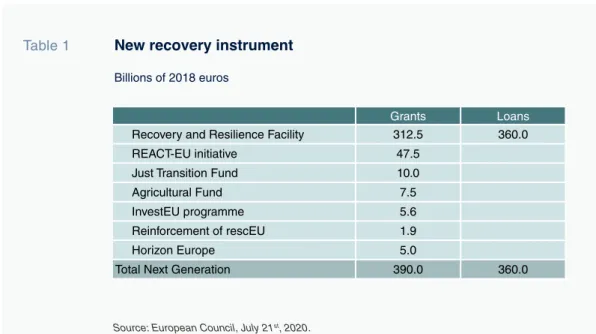
Table 1 shows the budget allocations contemplated for each of the initiatives and programmes.
Although the Multi-Annual Financial Framework runs from 2021 to 2027, each line of initiative has its own execution timeline. However, the idea is to allocate the vast majority of the funds earmarked to the Next Generation EU programme before December 31st, 2024, since, as the document
itself emphasises, the success of the various initiatives depends not only on the funds and policies put into play but also the speed with which they are deployed.
Although the idea was to concentrate the allocation of 90% of the funds in the next two years, the timetable contemplated in the Next Generation EU programme distributes the actual outlays over a time horizon of at least seven years so that its effective availability will be spread out throughout the entire 2021- 2027 Multi-Annual Financial Framework. For example, in the case of the initiatives targeted explicitly at helping member states with their recovery, the 312.5 billion euros included in the form of grants are scheduled for allocation in the amount of 70% in the first two years but their payment during those first two years represented just 24% of the total in the Commission’s proposal.
“ At least 11 countries in the eurozone, including Spain, would be able to secure financing on more attractive terms via ESM funds than those offered by financial markets. ”
Table 1 New recovery instrument
Billions of 2018 euros
Grants Loans
Recovery and Resilience Facility 312.5 360.0
REACT-EU initiative 47.5
Just Transition Fund 10.0
Agricultural Fund 7.5
InvestEU programme 5.6
Reinforcement of rescEU 1.9
Horizon Europe 5.0
Total Next Generation 390.0 360.0
Source: European Council, July 21st, 2020.
10 Funcas SEFO Vol. 9, No. 4_July 2020 Spain should be one of the biggest beneficiaries in terms of the volume of funds allocated, due to the impact of COVID-19 on its healthcare system and the devastating impact on GDP and employment levels.
However, the allocation criteria contemplated by the European Commission are not in all instances directly related with the prevailing crisis and vary depending on the various programmes’ objectives. For the direct aid in support of member states’ recovery efforts (312.5 billion euros in total), the allocation criteria in 2021 and 2022 are:
population, the inverse of GDP per capita and the average rate of unemployment during the last five years, all relative to the EU averages and subject to certain limits in the case of the last two variables. In the allocation for 2023, the criteria will be the loss in real GDP observed over 2020 and the cumulative loss over the period 2020- 2021. As for the REACT-EU initiative (47.5 billion euros), allocation will be based on the contraction observed in GDP and in total youth unemployment as a result of the pandemic. On the basis of the above criteria, and those that may conceivably be used to allocate funds from the other programmes (not all of which are explicit in the Commission documents), Spain may receive around 72.7 billion euros of grants:
59 billion from the Recovery and Resilience Facility, 12.4 billion from ReactEU and the rest from other programmes. Lastly, given that the allocation of the loans under the Recovery and Resilience Facility (360 billion euros) is subject to a ceiling of 6.8% of each countries’
gross national income, Spain could apply for more than 70 billion euros.
The schedules for the disbursements included in each programme’s annexes reveal that the availability of the funds will be tied to delivery of a series of milestones and objectives by member states. The documents also suggest
that the use of the funds should be interpreted more as a supply-side policy underpinned by green and digital transition and economic resilience targets rather than as an exercise designed to stimulate a demand-fuelled recovery.
The European Recovery Plan can therefore be characterised more as a financial framework for member states’ supply-side policies (i.e., reforms) than a form of fiscal stimulus for urgent economic recovery, although the multiplier effect of the public investments contemplated on each country’s and the bloc’s GDP is undeniable. The simulations run by the European Commission (2020c) on the macroeconomic impact of a 750 billion euro recovery plan with 93.5% of the funds in the form of public investment point to an impact of between 2.8 and 4.2 percentage points of GDP between 2021 and 2024 for the group of highly-indebted countries, which includes Spain, alongside Italy, Portugal, Greece and Cyprus. The impact also depends on the Plan’s ability to mobilise private investment and assumes that all of the funds are invested during the first four years.
Programme timing,
recommendations and assessment criteria
The deployment of the funds, which will be spread out over seven years, will be subject to delivery of certain objectives and a strict reform programme marked by precise implementation milestones. The evaluation and approval of the programmes, their monitoring, and the release of the funds as the milestones are met will fall within the remit of the European Commission and Council.
The recovery plans drawn up by each member state will be integrated into their respective national reform programmes,
“ Spain may receive around 72.7 billion euros of grants: 59 billion from
the Recovery and Resilience Facility, 12.4 billion from ReactEU
and the rest from other programmes. ”
Spain and the European Recovery Plan
which are presented annually along with the updated stability programmes. The Commission and Council will then make their recommendations, which will be incorporated into the national plans. The documents that flesh out the Recovery Plan anticipate that the assessments of the national programmes will factor in their alignment with the priorities identified at the European level, particularly with respect to the twin green and digital transition, the long-lasting effects of the measures, their coherence and the ability to substantiate the sums requested in the form of reform and investment proposals.
Against that backdrop, on May 20th, 2020, the European Commission published the Council Recommendation on the 2020 National Reform Programme of Spain (European Commission, 2020d). This document refers to the Country Report on Spain published on February 26th, 2020 (European Commission, 2020e), as part of its assessment of the progress made on structural reforms as part of the so-called 2020 European Semester Framework for the coordination of economic policies across Europe. It is worth taking a look at the key points made in these documents insofar as they contain some of the criteria which in all likelihood will be used to analyse the programmes presented by Spain under the scope of the European Recovery Fund.
By way of example, some of the lines of initiative falling under the scope of the funds allocated to supporting member states’
recovery and resilience, which is the largest
‘pot’ of funds contemplated within the Plan (655 billion euros), condition the EU aid on the reform proposals contemplated in the European Semester and the twin green and digital transition objectives. By the time the Spanish government presents its draft budget for 2021 in Brussels, it will need to include the investment and reform programme for Spain with all the corresponding requirements and financing formulae.
As noted in the Communication from the Commission (2020a) COM(2020) 456 Final, the three political principles that should inspire the states’ reform strategies and long- term growth plans are the European Green Deal; digitalisation of the economy; and, a fair and inclusive recovery, all of which underpinned by an effort to build a more resilient European economy by focusing on strategic sectors and areas. Those principles are bound to shape the European authorities’ assessments of the national programmes presented in a bid to obtain the new European funds.
Recovery and resilience
The Council Recommendation on the 2020 National Reform Programme of Spain (European Commission, 2020d), issued on May 20th, 2020, outlines the lines of initiative that should be prioritised for access to the recovery funds: (i) the front-loading of public investment projects and the promotion of private investment in order to drive demand;
and, (ii) support for companies in the sectors hardest hit by the crisis. Importantly, these investment initiatives must be strategically
“ By the time the Spanish government presents its draft budget for 2021 in Brussels, it will need to include the investment and reform programme for Spain. ”
“ The documents that flesh out the Recovery Plan anticipate that the
assessments of the national programmes will factor in their alignment
with the priorities identified at the European level. ”
12 Funcas SEFO Vol. 9, No. 4_July 2020 oriented. Although the Commission wants all EU countries to focus on these requirements, it is more pressing in its recommendations for Spain on account of its distance from European trends. Specifically, Spain must increase productivity and foster innovation, guided by the twin digital and green transition objectives.
In the context of the European Semester, the European Commission (2020e) has highlighted the scant growth in the productivity of the Spanish economy in recent years. In pinpointing some of the reasons for that shortfall, it warns of shortcomings in the field of innovation where Spain’s performance is below the EU average. In particular, it notes the slow digital uptake in the SME segment, the low number of ICT experts, and the drag implied by overly-high reliance on temporary contracts among employees, which exacerbates inequalities and labour poverty. Hence, its insistence on supporting the digitalisation of businesses, notably SMEs and micro-enterprises.
The European Union also underlines the need to reinforce research and innovation governance at all levels, specifically the importance of increasing cooperation between research centres and the business community, raising the share of students in science and digital technologies, and increasing the attractiveness of vocational education. In short, it calls on Spain to refocus the resources earmarked to the research effort and enhance education and skills training so as to drive productivity gains.
Cohesion and REACT-EU
The tremendous impact of the COVID-19 pandemic in Spain has exposed, in the opinion of the Commission, existing structural shortcomings in health infrastructure, regional disparities in health spending, physical resources and staff, coordination issues between the different levels of
government and the need to reinforce primary care and develop e-health. The core lines of initiative of the European Recovery Plan prioritise investment in the healthcare sector, which the Spanish authorities must address.
Regional cohesion also features in the agenda and observations formulated by the European Commission, which advocates for stronger cooperation between the different levels of government. This could be accomplished through projects aimed at reducing the digital divide between urban and rural areas, investing in rail for freight transport and ensuring equal access to digital learning for students in rural areas and from vulnerable households. Education therefore emerges as an area of strategic importance for any investment projects presented in Europe.
In the broadest sense, the promotion of inclusive growth entails lowering the incidence of poverty and social exclusion, reforming assistance and reinsertion programmes for the long-term unemployed, temporary workers and the self-employed, and reducing disparities in regional minimum income schemes.
Just Transition Fund
The transition towards a carbon-neutral and digitalised economy are two of the objectives which the European authorities have frequently cited as conditions for accessing the recovery funds. The European Recovery Plan explicitly contemplates the allocation of funds to projects aimed at a just transition and a specific regime under the aegis of the Invest EU programme.
Spain is one of the member states with greatest exposure to climate change and the Commission has flagged the importance of new measures designed to accelerate the transition in the areas of sustainable mobility, decarbonisation of energy and building energy efficiency.
“ Education emerges as an area of strategic importance for any
investment projects presented in Europe. ”
Spain and the European Recovery Plan
The European Commission has issued a raft of recommendations along these lines. In the context of higher public and private investment, execution of those recommendations could be accelerated to boost the economic recovery and create new jobs. This would include investments in energy infrastructure, the reduction of energy consumption in private and public buildings, sustainable transport, the development of renewable energies, water and waste management, circular economic initiatives, etc.
Conclusion
The scale of the challenges facing the Spanish economy as a result of the COVID-19 crisis will require the entire arsenal of expansionary monetary and fiscal policy in order to repair the economic and social damage caused by the pandemic, facilitate the return to a stable growth path, and tackle the reforms needed to deliver the twin green and digital transition objectives. On the monetary front, the European Central Bank has expanded its asset repurchase programme twice and passed a package of exceptional measures that provide considerable relief to debt issuers in the eurozone countries with the highest risk premiums. Fiscal policy, however, remains part of national policy, which means that the health crisis has the potential to become an asymmetric shock which undermines the position of those countries with less firepower for reactivating their respective economies. This necessitates the deployment of the European financing programmes in order to mobilise funds that help the national productive sectors make the required adjustments, overcome the effects of the economic shutdown, resume a sustainable growth trajectory, and support job creation.
The European Union has responded faster and more forcefully than in previous crises
due to the destructive and unprecedented impact of the pandemic. The Commission itself has acknowledged that the biggest spending programme in its entire history –the European Recovery Plan– needs to be cast in terms of a European public good with benefits that will extend to all of the member states’ economies irrespective of the amounts ultimately allocated to each.
Spain stands to receive grants equivalent to 5.8% of its GDP in 2019 and loans equivalent to up to 6.8% of its GNI.
However, the Plan suffers from three problems that seriously limit its capacity as an instrument for economic recovery. Firstly, its amount: 5.4% of EU-27 GDP does not seem to be a sufficient stimulus to tackle a crisis of this size. Second, its implementation schedule, too long to cope with the immediate needs to boost demand in the countries most affected by the pandemic. And third, its orientation, more concerned with medium-term reforms, than with ensuring the immediate reactivation of the economy. It would be advisable, therefore, to complete the Plan with other fiscal stimulus programs, with more immediate execution and aimed at mitigating the effects on the productive and social sectors hardest hit by the crisis.
The urgency of the situation therefore warrants making the most of the programmes already on offer by the European Union in 2020 via a package of measures approved in May: the SURE Instrument, the ESM credit line and the EIB guarantees.
While the European Recovery Plan is being negotiated, all levels of government should prepare to leverage the full potential of the Plan and articulate a roadmap for a sustainable economic recovery.
“ The Commission has flagged the importance of new measures
designed to accelerate Spain’s transition in the areas of sustainable
mobility, decarbonisation of energy and building energy efficiency. ”
14 Funcas SEFO Vol. 9, No. 4_July 2020
Notes
[1] Note that the estimates for national fiscal support in response to the pandemic may vary relative to earlier estimates published by Funcas in other publications, as these figures are being constantly updated.
References
Anderson, J., Bergamini E., Brekelmans, S., Cameron, A., Darvas, Z., Domínguez Jíménez, M. and Midões, C. (2020). The fiscal response to the economic fallout from the coronavirus.
Bruegel Datasets, June 4th. Retrievable from:
https://www.bruegel.org/publications/datasets/
covid-national-dataset/
ESM. (2020a). Assessment of public debt sustainability and COVID-related financing needs of euro area Member States. Retrievable from: https://ec.europa.eu/info/sites/info/files/
economy-finance/annex_2_debt_sustainability.pdf European Commission. (2020a). The EU budget powering the recovery plan for Europe.
COM(2020) 442 final, May 27th, 2020.
Retrievable from: https://eur-lex.europa.eu/resource.
html?uri=cellar:4524c01c-a0e6-11ea-9d2d- 01aa75ed71a1.0018.02/DOC_1&format=PDF
— (2020b). Europe’s moment: Repair and Prepare for the Next Generation. COM(2020) 456 final, May 27th, 2020. Retrievable from: https://eur-lex.
europa.eu/legal-content/ES/TXT/PDF/?uri=CEL EX:52020DC0456&from=ES
—(2020c). Identifying Europe’s recovery needs, SWD(2020) 98 final, May 27th, 2020. Retrievable from: https://ec.europa.eu/info/sites/info/files/
economy-finance/assessment_of_economic_and_
investment_needs.pdf
— (2020d). Council Recommendation on the 2020 National Reform Programme of Spain and delivering a Council opinion on the 2020 Stability Programme of Spain, COM(2020) 509 final, May 20th, 2020. Retrievable from: https://ec.europa.
eu/info/sites/info/files/2020-european-semester- csr-comm-recommendation-spain_es.pdf
— (2020e). Country Report Spain 2020.
Commission Staff Working Document, European Semester 2020, SWD(2020) 508 final, February 26th, 2020. Retrievable from: https://ec.europa.
eu/info/sites/info/files/2020-european_
semester_country-report-spain_es.pdf
European Council. (2020). Special Meeting of the European Council (17-21 July 2020). Conclusions.
Government of Spain. (2020). 2020 Stability Programme Update. Kingdom of Spain. Retrievable from: https://www.mineco.gob.es/stfls/mineco/
c o m u n / e n l a c e s / d e s t a c a d o s / 2 0 2 0 0 4 3 0 _ PROGRAMA_ESTABILIDAD.pdf
IMF. (2020). Reopening from the Great Lockdown:
Uneven and Uncertain Recovery, June. Retrievable from: https://blogs.imf.org/2020/06/24/reopening- from-the-great-lockdown-uneven-and-uncertain- recovery/
MEDE. (2020b). Out of the box: a new ESM for a new crisis, June. Retrievable from: https://www.
esm.europa.eu/blog/out-box-new-esm-new-crisis OECD. (2020). Economic Outlook, 107, Preliminary version, June. Retrievable from: https://www.
oecd-ilibrary.org/docserver/0d1d1e2e-en.pdf?expir es=1592811782&id=id&accname=guest&checksum
=C30C32A1CFAB0388F2C8C1146B3EF9F0
Eduardo Bandrés. Funcas and University of Zaragoza
Lola Gadea. University of Zaragoza Vicente Salas. University of Zaragoza Yolanda Sauras. Economic and Social Council of Aragon
The Spanish economy: Signs of recovery in the midst of high uncertainty
COVID-19 has led to an abrupt decline in output in key sectors, which form the backbone of the Spanish economy, and the projected recovery in the second part of 2020 will only make up for part of the ground already lost. While growth should rebound more strongly in 2021, there are significant downside risks related to new outbreaks, rising unemployment and subdued demand reflecting a rise in precautionary savings.
Abstract: COVID-19 is forecast to have contributed to an 18% quarter-on-quarter decline in GDP in 2Q2020. While lockdown measures have eased, the economy is not expected to reach pre-pandemic levels until 2023, at best. From a sectoral perspective, the automotive industry was particularly hard hit, with a contraction of nearly 90% in April and May. Likewise, the services sector’s turnover index in April declined by 42%. However, job losses in the construction sector exceeded those of the services industry. International
trade has been strongly affected, too. April figures show exports declined by 32% in real terms compared with February, and imports dropped by 29%. COVID-19 also contributed to a significant expansion of government debt by more than 24 billion euros in 1Q2020. While the Spanish economy should experience a rebound in 3Q2020, it will not make up for the ground lost during the state of emergency. In general, projections are subject to significant uncertainty due to potential new outbreaks, the increase in savings rates, Raymond Torres and María Jesús Fernández
SPANISH ECONOMY
16 Funcas SEFO Vol. 9, No. 4_July 2020 and the fate of furloughed workers once the employment support scheme expires.
First green shoots
Having contracted by 5.2% in the first quarter of the year as a result of the collapse in activity during the second half of March, the situation in Spain will deteriorate further in the second quarter, when GDP is expected to decrease by 18% quarter-on-quarter. Activity levels hit bottom in April and began to recover in May, a process which gathered pace in June, as the
‘easing’ measures accelerated, albeit without reaching pre-pandemic levels.
For example, Spain’s industrial production index (IPI) contracted by 33% in April with respect to February, recovering a scant third of that decline in May. However, according to the manufacturing PMI and industrial confidence index, the recovery gained traction
in June (Exhibit 1). An analysis of the trend in the various manufacturing segments reveals that the automotive sector was the hardest hit in March and April, registering a contraction of close to 90%. That collapse undermined the momentum underway since the middle of last year as the sector began to recover from the slump that emerged in September 2018. The next hardest-hit sectors were the textile, garment, leather and footwear, and furniture segments, which sustained smaller but still sizeable declines. The segments affected the least were the food and pharmaceutical industries. The rest –capital and semi- manufactured goods– fell somewhere in the middle. The May figures suggest that the sectors most impacted by the crisis were, with the exception of the garment sector, also the sectors to post the strongest incipient recoveries. Nevertheless, production volumes were still well below crisis levels in May.
“ An analysis of the trend in the various manufacturing segments reveals that the automotive sector was the hardest hit in March and April, registering a contraction of close to 90%. ”
60 65 70 75 80 85 90 95 100 105
0 10 20 30 40 50 60
Jan-20 Feb-20 Mar-20 Apr-20 May-20 Jun-20
Manufacturing PMI (LH axis) Services PMI (LH axis)
Turnover large services companies (RH axis)
Exhibit 1 Manufacturing and services industry activity indicators
Indices (PMIs) and absolute numbers rebased to January = 100 (SCA series)
Sources: Markit Economics, INE and Spanish Tax Agency.
The Spanish economy: Signs of recovery in the midst of high uncertainty
In the services sector, the contraction was initially harsher than in the manufacturing sector. There was a 42% decline in the services sector’s turnover index in April along with the collapse in the number of overnight stays and tourist arrivals. The services segments most affected were eateries, hospitality establishments, and the retail sector. In other areas, such as professional and telecommunications services, the impact was smaller. However, the services PMI readings suggest that following a modest recovery in May, activity picked up sharply in June (Exhibit 1).
The construction sector was more heavily affected at the start of the crisis than expected, with job losses in March and April exceeding the services sector and a drop in cement consumption of over 50%. However, it is also the sector to have rebounded most sharply. In May alone, cement consumption regained 72% of the above loss and between May and June around 60% of the jobs destroyed in March and April were created, a much stronger recovery than observed in either the services or manufacturing industries.
“ May figures suggest that the sectors most impacted by the crisis were, with the exception of the garment sector, also the sectors to post the strongest incipient recoveries. ”
“ The construction sector experienced job losses in March and April exceeding the services sector and a drop in cement consumption of over 50%. ”
-35 -30 -25 -20 -15 -10 -5 0
0 20 40 60 80 100 120
Jan-20 Feb-20 Mar-20 Apr-20 May-20 Jun-20
Retail sales (LH axis) Car registrations (LH axis) Consumer confidence (RH axis)
Exhibit 2 Consumption indicators
Indices (cons. conf.) and absolute numbers rebased to January = 100 (SCA series)
Sources: INE and ANFAC.
18 Funcas SEFO Vol. 9, No. 4_July 2020 Turning to international trade, the most recent figures date to April and show exports declined by 32% in real terms compared with February, as well as a drop in imports of 29%. These figures suggest a sharper impact than observed in overall international trade.
Specifically, global trade declined by 16%
and exports from developed economies were 25% lower in April. [1] Drilling down by segment reveals exactly the same pattern as the IPI readings. The products registering the sharpest decline in exports were automotive products, followed by textiles, garments, leather goods, and footwear. In contrast, exports of food products actually increased.
The consumer confidence indicators are also showing some encouraging signs. Having fallen sharply in March and April, retail sales rebounded in May, as did car registrations and the consumer confidence index in June, albeit still far from pre-crisis levels (Exhibit 2).
Other high-frequency indicators, such as POS card payments, also point to a sustained recovery, with volumes closing in on pre-crisis levels by the end of June.
The job market is also showing signs of a recovery. Around 170,000 of the nearly 800,000 contributors who lost their jobs
between March and April found work in June (Exhibit 3). Additionally, roughly 1.5 million employees out of a total 3.3 million affected as of the end of April exited furlough.
The balance of payments has deteriorated in the wake of the crisis. The drop in expenditure on imports, accentuated by the oil price correction, was not enough to make up for the collapse in tourism receipts. Consequently, the current account showed a 2.5 billion euro deficit for the first four months of the year, compared to a modest surplus during the same period in 2019.
Lastly, public finances are beginning to show the impact of the crisis. In the first four months of the year, the deficit at all levels of government except for the local corporations stood at 24.04 billion euros, compared to 6.74 billion euros in the first quarter of 2019.
The expenditure related with COVID-19 amounted to nearly 8.9 billion euros, while public revenue fell by 3 billion euros.
Forecasts for 2020-2021
The forecasts assume a virus scenario of controlled outbreaks that do not necessitate the reintroduction of lockdown measures. They
90 92 94 96 98 100 102 104
Jan-20 Feb-20 Mar-20 Apr-20 May-20 Jun-20
TOTAL Manufacturing Construction Services
Exhibit 3 Social Security contributors
Numbers rebased to January = 100
Source: Ministry of Inclusion, Social Security and Migration.
The Spanish economy: Signs of recovery in the midst of high uncertainty
Table 1 Economic forecasts for Spain, 2020-2021
Annual rate of change in percentages, unless otherwise indicated
Actual data Funcas forecasts Average
1996-2007
Average 2008-2013
Average 2014-2019
2019 2020 2021
1. GDP and components, constant prices
GDP 3.7 -1.3 2.6 2.0 -9.8 7.8
Final consumption, households
and NPISHs 3.7 -2.1 2.2 1.1 -12.1 7.9
Final consumption, government 4.2 0.9 1.2 2.3 7.4 3.6
Gross fixed capital formation 6.1 -7.6 4.0 1.8 -14.7 9.0
Construction 5.5 -10.7 3.2 0.8 -13.7 8.4
Capital goods and other products 7.5 -2.7 4.9 2.7 -15.7 9.6
Exports of goods and services 6.5 1.8 4.1 2.6 -20.4 13.7
Imports of goods and services 8.7 -4.0 4.3 1.2 -17.8 11.4
Domestic demand (a) 4.4 -3.1 2.5 1.5 -8.4 6.8
Net exports (a) -0.7 1.8 0.1 0.5 -1.4 0.9
GDP, current prices: - billions of euros -- -- -- 1,245.3 1,133.3 1,233.9
% change 7.3 -0.8 3.4 3.6 -9.0 8.9
2. Inflation, employment and unemployment
GDP deflator 3.5 0.5 0.8 1.6 0.9 1.0
Household consumption deflator 3.1 1.7 0.8 1.2 -0.1 1.2
Total employment
(national accounts, FTEs) 3.3 -3.4 2.4 2.3 -5.4 2.2
Unemployment rate
(Spanish labour force survey) 12.5 20.2 18.8 14.1 18.2 16.7
3. Financial equilibrium (% of GDP)
National savings rate 16.7 18.8 21.6 22.9 21.3 22.1
- of which, private savings 13.3 22.9 23.6 23.7 30.3 26.6
National investment rate 26.7 21.7 19.4 20.8 19.9 20.0
- of which, private investment 17.9 17.8 17.2 18.8 17.6 17.3
Current account surplus/(deficit) -4.5 -2.9 2.2 2.0 1.0 1.9
Spain's net lending (+) or borrowing
(-) position -3.7 -2.4 2.6 2.3 1.7 2.4
- Private sector -3.8 6.4 6.6 5.2 12.9 9.4
- Govt. deficit excl. financial sector
bailout debt -0.9 -8.1 -3.9 -2.8 -11.3 -7.0
Government debt, EDP criteria 52.2 67.6 98.5 95.5 116.1