Association of HLA-DQ and IFNL4 polymorphisms with
susceptibility to hepatitis B virus infection and clearance
Jia-Hao Fan,*, Si-Hui Hou,*, Qing-Ling Li,** Jun Hu,* Hong Peng,* Jin-Jun Guo*
* Department of Gastroenterology and Hepatology, The Second Affiliated Hospital of Chongqing Medical University, Chongqing, China. ** Institute of Life Sciences, Chongqing Medical University, Chongqing, China These two authors contributed equally to this work.
A B S T R A C T A B S T R A C T A B S T R A C T A B S T R A C T A B S T R A C T
Background and aim. Background and aim.Background and aim. Background and aim.
Background and aim. Leukocyte antigen DQ (HLA-DQ) and interferon-λ4 (IFNL4) gene polymorphisms were associated with susceptibility to chronic hepatitis B and C virus infection. This study further confirmed that variants of these genes were associated with susceptibility and spontaneous clearance of HBV infection in a Chinese population. Material and methods.Material and methods.Material and methods.Material and methods.Material and methods. A total of 1,069 subjects were recruited and divided into three groups i.e. 397 with CLD (HBV-related chronic liver disease), 434 with SC (spontane-ous clearance), and 238 HC (healthy controls). HLA-DQrs9275319 and IFNL4rs368234815, rs12971396, rs12979860, and rs8099917SNPs were genotyped using the Sequenom MassARRAY MALDI-TOF system. Results.Results.Results.Results.Results. HLA-DQ rs9275319 showed a significant association with HBV infection (allele model, OR, 0.514; 95% CI, 0.359-0.738, adjusted p = 0.0003) and with natural clearance (allele model, OR, 1.659; 95% CI, 1.197-2.300, adjusted. However, there was no association between IFNL4 polymor-phism and HBV susceptibility or natural clearance (all p > 0.05). The multifactor dimensionality reduction (MDR) test with permuta-tion correcpermuta-tion showed that a three-way interacpermuta-tion between IFNL4 and HLA-DQ SNPs was identified for HBV susceptibility (permutation p = 0.009 for the best factor model) and clearance (permutation p = 0.014 for the best factor model). Conclusions.Conclusions.Conclusions.Conclusions.Conclusions. The data from the current study provided additional evidence for an SNP-SNP interaction between HLA-DQ and IFNL4 in regulation to HBV infection and natural clearance.
Key words. Key words.Key words. Key words.
Key words. Hepatitis B virus (HBV). Human leukocyte antigen DQ (HLA-DQ). Interferon-λ4 (IFNL4). Single nucleotide polymor-phisms (SNPs). Viral infection risk.
July-August, Vol. 15 No. 4, 2016: 532-539
INTRODUCTION
Hepatitis B virus (HBV) infects approximately 400 million people in the world and the highest HBV inci-dence occurs in China. Chinese national surveys have in-dicated that a prevalence of approximately 10% of the entire Chinese population is infected with chronic HBV.1 After HBV infection, 5-10% of adults will develop
chronic HBV infection,2 which consequently causes a
broad spectrum of diseases, such as chronic hepatitis, liv-er cirrhosis (LC), and even hepatocellular carcinoma (HCC).3 Hepatic diseases are responsible for
approxi-mately 5% of deaths in China, indicating that HBV infec-tion is a significant public health problem and challenge in this country. To date, the outcomes of HBV infection are multifactorial and include HBV subtypes, host
im-munization status and genetic factors. There is compel-ling evidence, which shows that host genetic factors play a role and contribute to variability of HBV-related liver disease.4-6 Segregation analysis and twin studies support
the role of intrinsic host factors in influencing the host response to HBV infection.7 A recent genomic-wide
as-sociation study (GWAS) of HBV-related HCC in a Chi-nese population showed an association between human leukocyte antigen DQ (HLA-DQ) rs9275319 with a risk of developing HBV-related HCC using a two-stage de-sign with 2514 chronic HBV carriers.8 Other candidate
gene association studies also suggested that the HLA class II locus was associated with HBV-related disease.9-12
HLA-DQ encodes a cell surface receptor type protein in antigen presenting cells and presents different anti-gens to T-lymphocytes, which consequently guides
The Official Journal of the Mexican Association of Hepatology, the Latin-American Association for Study of the Liver and
the Canadian Association for the Study of the Liver
Manuscript received: Manuscript received: Manuscript received: Manuscript received:
B-lymphocytes to produce antibodies to initiate the host defense system against foreign antigens or immune toler-ance to self-antigens.8 Thus, further study of the
HLA-DQ SNP (rs9275319) could help us to better understand the association of HLA-DQ SNP with HBV infection or clearance.
Furthermore, association of interferon gene variants with viral invasion has also been reported in several stud-ies along with the effect of HLA-DQ polymorphisms on HBV infection.13-16 For example, interferon-λ4 (IFNL4)
encodes the interferon lambda 4 (IFN-λ4) protein that can induce antiviral activity by activation of the JAK-STAT pathway.17,18 A previous GWAS showed that
IFNL4 SNPs were associated with impaired HCV clear-ance in the African clear-ancestry and ss469415590 (namely
rs368234815) was better than rs12979860 in predicting host HCV clearance.19 Other candidate gene association
studies corroborated these results.20-22 On the other
hand, a genome-wide association study showed that the polymorphism of HLA-DQ had a significant association with chronic HCV infection in Japanese and this associa-tion might have relaassocia-tionship with the genotype of the
IFNL4 polymorphism in Japanese.23 Thus, in this study,
we explored SNPs in these two genes as well as gene-gene interaction between HLA-DQ and IFNL4 to assess their association with HBV susceptibility and natural clearance in Chinaese. We also added three other IFNL4 SNPs (rs12971396, rs12979860 and rs8099917) that are lo-calized at exon 5, intron 1, and upstream of IFNL4 gene, respectively19 as there are controversial views on
hepati-tis B risk and their association.16,24-26
MATERIAL AND METHODS
Study subjects
In this study, we enrolled a total of 1069 subjects from the First and Second Affiliated Hospital of Chongqing Medical University (Chongqing, China) between January 2011 and August 2014. All subjects were unrelated Han Chinese without age or gender restrictions. They were classified into three groups i.e.:
• CLD (HBV-related chronic liver disease) group (n = 397).
• SC (spontaneous clearance) group (n = 434), and • HC (healthy control) group (n = 238).
Subjects in the CLD group included those diagnosed as having chronic hepatitis B (CHB), HBV-related liver cir-rhosis (LC), and HBV-related HCC. Diagnosis of each condition was listed in table 1. The exclusion criteria in-cluded:
• Infection with human immunodeficiency virus (HIV) or another hepatitis virus.
• Lack of data on HBV serological markers. • Those vaccinated against hepatitis B.
• Other chronic liver disease, such as autoimmune hepa-titis, toxic hepahepa-titis, or primary biliary cirrhosis. • Severe systemic disease such as systemic lupus
ery-thematosus; and
• Non-Chinese Han origin.
The study was approved by the Ethics Committee of the Second Affiliated Hospital of Chongqing Medical University and informed consent was obtained from each subject before participation in this study.
Table 1. Diagnosis criteria for Healthy control group (HC), HBV spontaneous clearance group (SC), and HBV-related chronic liver disease (CLD).
Healthy control group (HC)
1. Anti-HBs, HBsAg and anti-HBc negative and no HBV vaccination history.
2. Anti-HCV and HCV RNA negative. 3. Anti-HDV and/or HDAg negative. 4. ALT < 40 and AST < 45 IU/L.
HBV spontaneous clearance group (SC)
1. HBsAg negative plus anti-HBs and anti-HBc positive. 2. HBV-DNA negative, HDAg negative and/or anti-HDV
negative.
3. Anti HCV and HCV RNA negative.
4. ALT < 40 IU/L and AST < 45 IU/L at enrollment.
Chronic hepatitis B group (CHB)
1. Two positive tests for HBsAg (at least 6months) and anti-HBcAg apart.
2. Anti-HCV and HCV RNA negative. 3. Anti-HDV and/or HDAg negative.
4. ALT and/or AST levels greater than 2 times upper limits of normal range for testing hospital before or current (ALT and/or AST >80 IU/L); and, HBV-DNA Load > 1,000(copy/mL).
5. No clinical evidence of liver cirrhosis.
HBV-related liver cirrhosis group (LC) 1. HBsAg and anti-HBc positive. 2. Anti-HCV and HCV RNA negative. 3. Anti-HDV and/or HDAg negative.
4. LC confirmed by biopsy and sonography or CT or MRI. 5. Liver cirrhosis with clinical presentation of
gastroesophageal varication or a history of bleeding, or ascites, or edema, or encephalopathy, or serum albumin < 35 g/L, total bilirubin > 35 μmol/L.
HBV-related hepatocellular carcinoma group (HCC) 1. HBsAg and anti-HBc positive.
2. Anti-HCV and HCV RNA negative. 3. Anti-HDV and/or HDAg negative.
Collection of serological and biochemical data from each subject
A single venous blood sample of approximately 3-5 mL was collected from each subject. All serum specimens were stored at -80°C until use. Clinical, biological, and vi-ral characteristics of the first two groups of subjects were collected and are shown in table 2. A questionnaire was used to record all personal information, including age, gender, alcohol consumption and other characteristics. Total serum bilirubin (T-Bil), serum HBV markers, as-partate aminotransferase (AST), alanine aminotransferase (ALT), and serum levels of HBV-DNA were routinely as-sessed using standard clinical laboratory techniques.
Genomic DNA extraction and SNP selection and genotyping
Genomic DNA was extracted from peripheral blood leukocytes from whole blood using the Wizard® Genom-ic DNA PurifGenom-ication Kit according to the manufacturer’s instructions (Promega, Madison, WI, USA). DNA sam-ples were quantified using the NanoDrop 2000 spectro-photometer (Thermo Scientific, Wilmington, USA) and diluted to 20 ng/μL in TE buffer and then stored at -80°C until use.
We initially identified eight SNPs, which represented all haplotypes of the HapMap sets according to a previous study19 and after combining these with the MAF > 0.05
from Chinese Han samples in Beijing, China, we selected five SNP loci for genotyping in this study. These includ-ed rs368234815, rs12979860, rs8099917, rs12971396, and rs4803221. Due to a high disequilibrium between SNP rs12971396 and rs4803221 in the HapMap-CHB (r2 = 1.0),
we selected the SNP rs12971396 as a representative of these two loci. We utilized the Sequenom MassARRAY MALDI-TOF system (Biomiao Biological, Beijing, Chi-na) to genotype these SNPs. Locus detection was
evaluat-ed using a > 95% success rate. Genotyping for all SNPs was repeated in 5% of samples for verification and quality control. Quality control testing revealed that the genotype data had an error rate of < 0.1%.
Statistical analysis
The Hardy-Weinberg equilibrium (HWE) of genotype frequency was performed using Stata 12.0 (Stata Corp, College Station, TX, USA). Differences in age and labora-tory parameters, such as AST, ALT, and T-Bil were com-pared between groups using Student t test or Mann-Whitney U test. The χ2 test was performed to assess
differences in distribution of gender between cases and controls (CLD vs. HC or CLD vs. SC). A binary logistic regression test was conducted to estimate the relative risk of these SNPs with HBV infection and clearance in both an allelic model (major allele A vs. minor B) and a genetic model. Odds ratios (ORs) and 95% confidence intervals (95% CI) were calculated. Each genotype was assessed with the dominant model(AA vs. AB + BB). Haploview 4.2 software (http://www.broad.mit.edu/haploview/hap-loview) and PHASE software (v2.0.2) were employed to analyze linkage disequilibrium (LD) and haplotype fre-quencies. All statistical tests were two-sided, and a proba-bility level of p < 0.05 was considered statistically significant. P-values were corrected for multiple testing by Bonferroni’s corrections. Statistical analysis was per-formed using SPSS 19.0 (SPSS Inc. Chicago, IL, USA).
MDR analysis of SNP-SNP interaction
A Multifactor Dimensionality Reduction (MDR) pro-gram (v3.0.2) was performed to analyze the gene-gene inter-actions of HLA-DQ and IFNL4 SNPs with HBV susceptibility or natural clearance. This program was rec-ommended as a method to improve the identification of polymorphism combinations associated with the risk
Table 2. Characteristics of study subjects.
Parameters CLD (n = 397) SC (n = 434) HC (n = 238) P value CLD vs. SC/CLD vs. HC
Age (years) 51.5 ± 13.7 52.2 ± 13.9 50.3 ± 13.2 0.512/0.486 Male/Female, n (%) 289 (72.8)/108 (27.2) 295 (68.0)/139 (32.0) 160 (67.2)/78 (32.8) 0.129/0.136 ALT (IU/L) 64.0 (32.0, 214) 16.0 (11.0, 24.0) 16.0 (11.0, 23.0) < 0.001/< 0.001 AST (IU/L) 56.0 (25.0, 153.0) 20.0 (17.0, 25.0) 20.0 (16.0, 23.0) < 0.001/< 0.001 T-Bil (μmol/L) 24.1 (14.3, 70.9) 10.7 (8.0, 14.8) 10.4 (7.6, 13.5) < 0.001/< 0.001 HBV-DNA (IU/L) 5.02E3 (1.00E3, 4.28E5) - -
-CLD: HBV-related chronic liver disease. SC: spontaneous clearance. HC: healthy control. ALT: alanine aminotransferase. AST: aspartate transferase. T-Bil: total bilirubin. Continuous variables as mean ± standard or median (range), categorical variables as n (%). Differences in age, ALB, ALT and T-Bil were com-pared between groups using the Student t test or Mann-Whitney U test. χ2 test was used to assess the differences in the distribution of gender between the
of diseases by reducing the dimensionality of multilocus information.27 Permutation test of MDR program was used
to determine statistical significance for SNP-SNP interac-tion. Similarly, p < 0.05 corrected by Bonferroni’s correc-tions was considered statistically significant in Permutation test. The MDR program is an open-source software and freely available from http://www.epistasis.org.
RESULTS
Demographic and
clinical characteristics of these subjects
In this study, we recruited 397 individuals who had HBV-related chronic liver disease, 434 who had spontane-ous HBV clearance, and 238 who were healthy controls. Table 2 summarizes their laboratory and demographic characteristics, including age, gender, ALT, AST, T-Bil and HBV-DNA load. As expected, there was no statistical difference in age and gender between cases and controls (CLD vs. SC or CLD vs. HC). However, abnormal labora-tory results of ALT, AST, and T-Bil, and HBV DNA load were present in the CLD group.
Association of HLA-DQ rs9275319 with HBV infection and clearance
There was no departure from the Hardy-Weinberg dis-tribution in each genotype of these 5 SNP loci in all groups (p > 0.05). This finding indicates that there was no significant SNP-specific deviation observed and all sub-jects were suitable for further statistical analysis. We then assessed the association of HLA-DQ rs9275319 with HBV susceptibility and clearance and found that the rs9275319 TT was most frequently identified among all groups (86.2% in the CLD group, 77.6% in the SC group, and 75.9% in the HC group). Carriage of the rs9275319 C allele was a protective factor for chronic HBV infection and
clearance (the allele model: p = 0.002, OR, 1.659; 95%CI, 1.197-2.300, respectively; Table 3). In the dominant genet-ic model, there was signifgenet-icant divergence for HBV infec-tion (p = 0.001; OR, 0.465; 95%CI, 0.293-0.739), whereas there was no significant association between the CLD and SC group (p = 0.058; OR, 1.505; 95%CI, 0.986-2.296). Af-ter Bonferroni’s corrections, rs9275319 still showed a sig-nificant association with chronic HBV infection and clearance (Table 3).
Association of IFNL4 polymorphisms with chronic HBV infection and clearance
The prevalence of rs368234815 ΔG/ΔG, rs12971396 GG, rs12979860AA, and rs8099917GG was very low, or even un-detectable in any of these three groups of subjects. We as-sessed whether IFNL4 polymorphisms were associated with CLD subjects compared to healthy controls or spon-taneous clearance patients by logistic regression models and did not find any association between these SNPs and HBV infection (allele model: p = 0.082 for rs368234815; p = 0.063 for rs12971396; p = 0.517 for rs12979860; p = 0.695 for rs8099917) or HBV natural clearance (allele mod-el: p = 0.358 for rs368234815; p = 0.105 for rs12971396; p = 0.640 for rs12979860; p = 0.640 for rs8099917; Table 4). Moreover, there was no statistical difference found using the dominant model. Although carriage of the rs12971396 minor G allele had some association for HBV susceptibil-ity (p = 0.063 for the allele model; p = 0.056 for the domi-nant model), there was no statistical significance after Bonferroni’s corrections (p = 0.315 for the allele model; p = 0.280 for the dominant model) (Table 4).
Haplotype analysis of IFNL4 polymorphisms with HBV infection and clearance
Due to a complete linkage disequilibrium between rs368234815 and rs12979860 (r-squared=1.0),19 as a
Table 3. Association of HLA-DQ genotypes with HBV susceptibility and clearance.
Polymorphism CLD (n = 397) SC (n = 434) HC (n = 238) P value/OR (95% CI)
CLD vs. HC CLD vs. SC
HLA-DQ (rs9275319) n = 347 n = 375 n = 224
TT/TC/CC 299/45/3 291/75/9 170/48/6 Reference Reference C allele model 51 (0.07) 93 (0.12) 60 (0.13) 0.0003*1/0.514 0.002*2/1.659
(0.359, 0.738) (1.197, 2.300)
Dominant model 299/48 291/84 170/54 0.001*3/0.465 0.058/1.505
(TT/TC+CC) (0.293, 0.739) (0.986, 2.296)
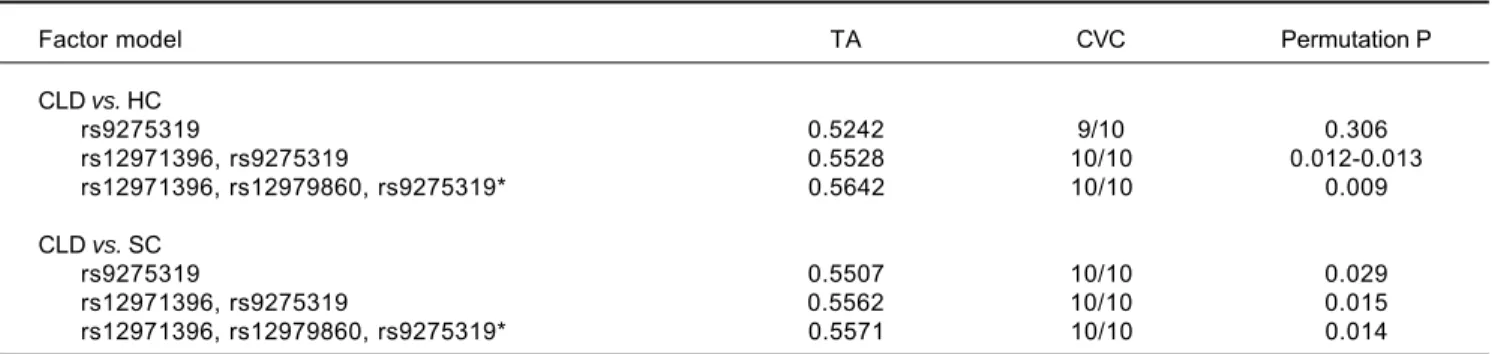
Table 6. Gene-gene interaction of IFNL4 and HLA-DQ in relation to HBV infection.
Factor model TA CVC Permutation P
CLD vs. HC
rs9275319 0.5242 9/10 0.306
rs12971396, rs9275319 0.5528 10/10 0.012-0.013 rs12971396, rs12979860, rs9275319* 0.5642 10/10 0.009
CLD vs. SC
rs9275319 0.5507 10/10 0.029
rs12971396, rs9275319 0.5562 10/10 0.015 rs12971396, rs12979860, rs9275319* 0.5571 10/10 0.014
TA: testing accuracy. CVC: cross-validation consistency. CLD: HBV-related chronic liver disease. SC: spontaneous clearance. HC: healthy control. *The best factor model.
Table 4. Association of IFNL4 genotypes with HBV susceptibility and clearance.
Polymorphism CLD SC HC P value/OR (95% CI)
(n = 397) (n = 434) (n = 238) CLD vs. HC CLD vs. SC
IFNL4 (rs368234815) n = 397 n = 434 n = 238
TT/TT-ΔG/ΔGG 374/23/0 417/17/0 232/6/0 Reference Reference
ΔG allele 23 (0.03) 17 (0.02) 6 (0.01) 0.082/2.303 (0.899, 5.901) 0.358/0.729 (0.371, 1.431) Dominant model
(TT/TT-ΔG + ΔGG) 374/23 417/17 234/4 0.079/2.343 (0.907, 6.053) 0.352/0.723 (0.365, 1.431)
IFNL4 (rs12971396) n = 390 n = 421 n = 222
CC/CG/GG 358/32/0 375/46/0 194/28/0 Reference Reference G allele 32 (0.04) 46 (0.05) 28 (0.06) 0.063/0.593 (0.341, 1.028) 0.105/1.506 (0.918, 2.470) Dominant model
(CC/CG + GG) 358/32 375/46 194/28 0.056/0.575 (0.325, 1.014) 0.095/1.543 (0.927, 2.567)
IFNL4 (rs12979860) n = 385 n = 430 n = 228
GG/AG/AA 344/40/1 381/48/1 200/27/1 Reference Reference A allele 42 (0.05) 50 (0.06) 29 (0.06) 0.517/0.848 (0.516, 1.395) 0.640/1.110 (0.716, 1.720) Dominant model
(GG/AG + AA) 344/41 381/49 200/28 0.564/0.858 (0.510, 1.444) 0.596/1.132 (0.716, 1.789)
IFNL4 (rs8099917) n = 383 n = 418 n = 221
TT/TG/GG 347/35/1 376/42/0 198/22/1 Reference Reference G allele 37 (0.05) 42 (0.05) 24 (0.05) 0.695/0.898 (0.524, 1.538) 0.640/1.119 (0.699, 1.791) Dominant model
(TT/TG + GG) 347/36 376/42 198/23 0.742/1.081 (0.678, 1.724) 0.613/1.107 (0.746, 1.644)
CLD: HBV-related chronic liver disease. SC: spontaneous clearance. HC: healthy control. Logistic regression analyses adjusted for age and gender. CI: confi-dence interval. OR: odds ratio. After Bonferoni correction.
Table 5. Haplotype frequencies of IFNL4 SNPs in all three groups of subjects.
Haplotype CLD (n = 383) HC (n = 221) SC (n = 418) P value/OR (95% CI) Frequency n Frequency n Frequency n CLD vs. HC CLD vs. SC
(%) (%) (%)
CGT1 94.57 362 92.19 204 92.27 386 1
GAG 3.68 14 5.01 11 5.93 25 0.418/0.72 (0.32, 1.61) 0.128/1.67 (0.86, 3.27) Others 1.75 7 2.80 6 1.80 7 0.453/0.66 (0.22, 1.98) 0.905/0.94 (0.33, 2.70)
1The most common haplotype as the reference. CLD: HBV-related chronic liver disease. SC: spontaneous clearance. HC: healthy control. From left, SNPs
representative of the two sites, rs12979860 was consid-ered in the following statistical analysis. Haplotypes were constructed and analyzed for their associations with HBV infection and clearance (Table 5). When compared with the most frequent CGT haplotype, there was no signifi-cant correlation with HBV infection or natural clearance for the haplotype GAG (CLD vs. HC: p = 0.418; CLD vs.
SC: p = 0.128) or other minor frequency haplotype (CLD
vs. HC: p = 0.453; CLD vs. SC: p = 0.905; Table 5).
Interaction of HLA-DQ and
IFNL4 polymorphisms with HBV infection and clearance
The MDR program (v3.0.2) was applied to analyze in-teractions of HLA-DQ (rs9275319) and IFNL4 polymor-phisms with HBV infection and clearance. We identified significant effects of a three-way (rs12971396, rs12979860, and rs9275319) interaction on HBV susceptibility (Per-mutation) and clearance (Permutation, p = 0.014; Table 6), indicating that this gene-gene interaction could alter susceptibility to HBV infection and clearance.
DISCUSSION
Chronic HBV infection is a major health problem in China and beyond. Effective control of HBV infection not only prevents HBV-related hepatitis and cirrhosis, but also reduces HCC incidence and death. Researchers in the field are especially interested in the association of the host gene variants with the risk and clearance of HBV infec-tion.4-6,13-16 Thus, our current study assessed such an
asso-ciation in 1,069 subjects and found that HLA-DQ rs9275319 C allele was associated with a decrease in HBV infection risk and an increased HBV clearance. However, IFNL4 variants were not associated with HBV infection or natural clearance.
Classic HLA loci span 4 Mb on the short arm of chro-mosome 6p21, which includes MHC class I, II, and III genes. The HLA-DQ, a classical HLA class II, encodes a protein with two non-covalently bound glycoprotein chains, the 34 Kd α and the 28 Kd β chains. This protein mediates the host immune response against infection through its combination with antigen peptides to CD4+ T-lymphocytes.28 Our current data showed that carriage of
the rs9275319 C allele was associated with a reduced HBV infection, which is consistent with data from a previous GWAS of HBV-related HCC in the Han Chinese popula-tion.8 Moreover, our current study further confirmed that
rs9275319 non-TT genotype was associated with an in-creased effect on HBV natural clearance but this was not statistically significant. To the best of our knowledge, our current data corroborate the GWAS data reported by Jiang and colleagues and demonstrate that the rs9275319 loci
plays a key role in modulating HBV infection and clear-ance. However, direct experimental validation is still re-quired.
A di-nucleotide variant ss469415590, namely rs368234815 (TT/ΔG), localized upstream of IFNL3 (IL-28B) on chromosome 19q13.13, has been reported to be associated with chronic HCV infection.19-21 A frame-shift
variant of ss469415590 [ΔG] generates a novel gene, denot-ed by IFNL4. The IFNL4-ΔG encodes an interferon-λ4 protein, which closely resembles IFN-λ3 and can activate the JAK-STAT signaling pathway. However, as a novel type of interferon, it has been postulated as having a para-doxical function distinct from other type III IFNs against HCV infection.18 However, our current study did not
show the same prominent impact of both rs368234815 and rs12979860 on hepatitis B as has been observed for hepati-tis C.19 Meanwhile, there was no association between
IFNL4 rs12971396 and rs8099917 SNPs and hepatitis B in-fection. We speculate that ethnicity plays an important role in association of these SNPs with HBV infection (different genetic background causes different disease sus-ceptibilities) and HBV is a DNA virus that is different from HCV.
In our study, the gene-gene interaction analysis of IFNL4 and HLA-DQ imply that host gene-gene interac-tions do alter HBV infection or clearance. Although the molecular mechanisms underpinning this association has not been elucidated, we speculate that there are several po-tential contributing factors. The most important one might be that the encoding products of mutant IFNL4 have no di-rect effect on the immune of HBV infection or clearance. However, the IFNL4 and HLA-DQ polymorphisms might affect each other in complementary during any phase of HBV infection. Moreover, a another GWAS had not ob-served this association of HLA-DQ and IFNL4 polymor-phisms with spontaneous resolution of HCV infection in african ancestry.29 So we speculate that ethnicity,
environ-mental factors, virus type, limited sample size or other co-existing genetic might also be possible confounders. Direct experimental validations are required as well.
To the best of our knowledge, our current study of the rs12971396 SNP is the first to investigate interactions of HLA-DQ and IFNL4 polymorphisms with HBV immu-nity. However, there are several limitations in the current study, which must be addressed. For example, we were unable to verify our findings using another independent population, although the chance of false positive findings has been reduced by using a very strict correction for mul-tiple testing. Furthermore, our study was limited to the sample size for effective analyses of the progression of chronic HBV infection.
combined with IFNL4 polymorphisms are correlated with HBV infection risk and natural clearance. Further study will verify our current data before we can utilize this information for prevention and management of chronic HBV infection in clinic.
ACKNOWLEDGMENTS
This work was supported in part by a grant from the National Natural Science Foundation of China (#81071338).
CONFLICT OF INTEREST
The authors declare that there is no conflict of interest in this work.
REFERENCES
1. Zhang Y, Zhang H, Elizabeth A, Liu XQ. Epidemiology of hep-atitis B and associated liver diseases in China. Chin Med Sci J 2013; 27: 243-8.
2. Custer B, Sullivan SD, Hazlet TK, Iloeje U, Veenstra DL, Kowdley KV. Global epidemiology of hepatitis B virus. J Clin Gastroenterol 2004; 38: S158-S168.
3. Kew MC. Epidemiology of chronic hepatitis B virus infection, hepatocellular carcinoma, and hepatitis B virus-induced hepa-tocellular carcinoma. Pathol Biol (Paris) 2010; 58: 273-7. 4. Frodsham AJ. Host genetics and the outcome of hepatitis B
viral infection. Transpl Immunol 2005; 14: 183-6.
5. Ramezani A, Hasanjani Roshan MR, Kalantar E, Eslamifar A, Banifazl M, Taeb J, Aghakhani A, et al. Association of human leukocyte antigen polymorphism with outcomes of hepatitis B virus infection. J Gastroenterol Hepatol 2008; 23: 1716-21. 6. Wang FS. Current status and prospects of studies on
hu-man genetic alleles associated with hepatitis B virus infec-tion. World J Gastroenterol 2003; 9: 641-4.
7. Hann HW, Kim CY, London WT, Whitford P, Blumberg BS. Hepatitis B virus and primary hepatocellular carcinoma: fami-ly studies in Korea. Int J Cancer 1982; 30: 47-51.
8. Jiang DK, Sun J, Cao G, Liu Y, Lin D, Gao YZ, Ren WH, et al. Genetic variants in STAT4 and HLA-DQ genes confer risk of hepatitis B virus-related hepatocellular carcinoma. Nat Genet
2013; 45: 72-5.
9. Liu C, Cheng B. Association of polymorphisms of human leu-cocyte antigen-DQA1 and DQB1 alleles with chronic hepati-tis B virus infection, liver cirrhosis and hepatocellular carcinoma in Chinese. Int J Immunogenet 2007; 34: 373-8. 10. Thursz MR, Kwiatkowski D, Allsopp CE, Greenwood BM,
Thomas HC, Hill AV. Association between an MHC class II al-lele and clearance of hepatitis B virus in the Gambia. N Engl J Med 1995; 332: 1065-9.
11. Hohler T, Gerken G, Notghi A, Lubjuhn R, Taheri H, Protzer U, Lohr HF, et al. HLA-DRB1*1301 and *1302 protect against chronic hepatitis B. J Hepatol 1997; 26: 503-7.
12. Ahn SH, Han KH, Park JY, Lee CK, Kang SW, Chon CY, Kim YS, et al. Association between hepatitis B virus infection and HLA-DR type in Korea. Hepatology 2000; 31: 1371-3. 13. Thomas DL, Thio CL, Martin MP, Qi Y, Ge D, O’Huigin C, Kidd
J, et al. Genetic variation in IL28B and spontaneous clear-ance of hepatitis C virus. Nature 2009; 461: 798-801.
14. Montes-Cano MA, Garcia-Lozano JR, Abad-Molina C, Rome-ro-Gomez M, Barroso N, Aguilar-Reina J, Nunez-Roldan A, et al. Interleukin-28B genetic variants and hepatitis virus infec-tion by different viral genotypes. Hepatology 2010; 52: 33-7. 15. Sonneveld MJ, Wong VW, Woltman AM, Wong GL, Cakaloglu Y, Zeuzem S, Buster EH, et al. Polymorphisms near IL28B and serologic response to peginterferon in HBeAg-positive patients with chronic hepatitis B. Gastroenterology 2012; 142: 513-20 e1.
16. Ren S, Lu J, Du X, Huang Y, Ma L, Huo H, Chen X, et al. Ge-netic variation in IL28B is associated with the development of hepatitis B-related hepatocellular carcinoma. Cancer Im-munol Immunother 2012; 61: 1433-9.
17. Li M, Liu X, Zhou Y, Su SB. Interferon-lambdas: the modula-tors of antivirus, antitumor, and immune responses. J Leu-koc Biol 2009; 86: 23-32.
18. O’Brien TR, Prokunina-Olsson L, Donnelly RP. IFN-lambda4: the paradoxical new member of the interferon lambda family.
J Interferon Cytokine Res 2014; 34: 829-38.
19. Prokunina-Olsson L, Muchmore B, Tang W, Pfeiffer RM, Park H, Dickensheets H, Hergott D, et al. A variant upstream of IFNL3 (IL28B) creating a new interferon gene IFNL4 is asso-ciated with impaired clearance of hepatitis C virus. Nat Genet 2013; 45: 164-71.
20. Real LM, Neukam K, Herrero R, Guardiola JM, Reiberger T, Rivero-Juarez A, Salazar J, et al. IFNL4 ss469415590 vari-ant shows similar performance to rs12979860 as predictor of response to treatment against Hepatitis C Virus genotype 1 or 4 in Caucasians. PLoS One 2014; 9: e95515.
21. Bibert S, Roger T, Calandra T, Bochud M, Cerny A, Semmo N, Duong FH, et al. IL28B expression depends on a novel TT/ -G polymorphism which improves HCV clearance prediction.
J Exp Med 2013; 210: 1109-16.
22. Kramer B, Nischalke HD, Boesecke C, Ingiliz P, Voigt E, Mauss S, Stellbrink HJ, et al. Variation in IFNL4 genotype and response to interferon-based therapy of hepatitis C in HIV-positive patients with acute and chronic hepatitis C. AIDS
2013; 27: 2817-9.
23. Miki D, Ochi H, Takahashi A, Hayes CN, Urabe Y, Abe H, Ka-waoka T, et al. HLA-DQB1*03 Confers Susceptibility to Chronic Hepatitis C in Japanese: A Genome-Wide Associa-tion Study. PLoS One 2013; 8: e84226.
24. Fabris C, Falleti E, Cussigh A, Bitetto D, Fontanini E, Bignulin S, Cmet S, et al. IL-28B rs12979860 C/T allele distribution in patients with liver cirrhosis: role in the course of chronic vi-ral hepatitis and the development of HCC. J Hepatol 2011;
54: 716-22.
25. Martin MP, Qi Y, Goedert JJ, Hussain SK, Kirk GD, Hoots WK, Buchbinder S, et al. IL28B polymorphism does not deter-mine outcomes of hepatitis B virus or HIV infection. J Infect Dis 2010; 202: 1749-53.
26. Robek MD, Boyd BS, Chisari FV. Lambda interferon inhibits hepatitis B and C virus replication. J Virol 2005; 79: 3851-4. 27. Ritchie MD, Hahn LW, Roodi N, Bailey LR, Dupont WD, Parl
FF, Moore JH. Multifactor-dimensionality reduction reveals high-order interactions among estrogen-metabolism genes in sporadic breast cancer. Am J Hum Genet 2001; 69: 138-47.
28. Navarrete C, Jaraquemada D, Fainboim L, Karr R, Hui K, Awad J, Bagnara M, et al. Genetic and functional relation-ship of the HLA-DR and HLA-DQ antigens. Immunogenetics
1985; 21: 97-101.
Correspondence and reprint request:
Jin-Jun Guo, Ph.D.
Department of Gastroenterology and Hepatology, The Second Affiliated Hospital of Chongqing Medical University, 76 Linjiang
Road, Yuzhong District, Chongqing 400010, China Tel.: +862363693326. Fax: +862368486780