Granulocyte-colony stimulating
factor for acute-on-chronic liver failure:
systematic review and meta-analysis
Norberto C. Chavez-Tapia,* Indira Mendiola-Pastrana,** Victoria J. Ornelas-Arroyo,* Camilo Noreña-Herrera,** Desiree Vidaña-Perez,** Guadalupe Delgado-Sanchez,** Misael Uribe,* Tonatiuh Barrientos-Gutierrez**
* Medica Sur Clinic & Foundation, Mexico City, Mexico. ** National Institute of Public Health. Cuernavaca, Mexico City, Mexico.
ABSTRACT
Acute-on-chronic liver failure (ACLF) is associated with increased short and long-term mortality. Animal mo-dels of liver failure have demonstrated that granulocyte-colony stimulating factor (G-CSF) accelerates the liver regeneration process and improves survival. However, clinical evidence regarding the use of G-CSF in ACLF remains scarce. The aim of this study was to assess the benefits and harms of G-CSF in patients with acute-on-chronic liver failure. An electronic search was made in The Cochrane Central Register of Contro-lled Trials (CENTRAL), MEDLINE, EMBASE and LILACS up to November 2013. Randomized clinical trials compa-ring the use of any regimen of G-CSF against placebo or no intervention in patients with ACLF were included. Primary outcomes included overal mortality, mortality due multi-organ failure, and adverse events. Relative risk (RR) and mean difference (MD) were used. Two trials involving 102 patients were in-cluded. A significant reduction in short-term overall mortality was observed in patients receiving G-CSF compared to controls (RR 0.56; 95%CI 0.39,0.80). G-CSF failed to reduce mortality secondary to gastroin-testinal bleeding (RR 1.45; 95%CI 0.50, 4.27). Adverse effects reported included: fever, rash, herpes zoster, headache and nausea. In conclusion, the use of G-CSF for the treatment of patients with ACLF significant-ly reduced short-term mortality. While the evidence is still limited, the apparent benefit observed on short-term mortality, mild adverse effects and lack of an alternative therapy make the use of G-CSF in ACLF patients a reasonable alternative when liver transplantation is contraindicated or unavailable.
Key words. Hepatic insufficiency. End Stage Liver Disease. Filgrastim. Liver transplantation. Bone marrow cells.
Correspondence and reprint request: Tonatiuh Barrientos-Gutierrez, M.D., Ph.D.
National Institute of Public Health. 7a Calle de Fray Pedro de Gante #50, Col. Sección XVI. Del. Tlalpan. Mexico City, Mexico. C.P. 14000.
Tel.: 5487-1015, ext.: 4221 E-mail: [email protected]
Manuscript received: October 21, 2014. Manuscript accepted: January 26, 2015.
September-October, Vol. 14 No. 5, 2015: 631-641
CONCISE REVIEW
INTRODUCTION
Acute-on-chronic liver failure (ACLF) is an acute insult to the liver in a previously diagnosed or undi-agnosed chronic liver patient.1 ACLF manifests with jaundice and coagulopathy,1 ascites and/or encepha-lopathy, increasing the mortality at 3 months main-ly through multisystem organ failure.2 ACLF is a frequent complication of chronic liver disease, ac-counting for up to 30% of hospitalized patients with
decompensated cirrhosis,3 and 28% of hospitalized patients with liver insufficiency and alcoholic cir-rhosis.4 ACLF precipitating factors vary by geo-graphic region. In Western countries, non-infectious etiologies, such as alcoholic hepatitis, variceal bleed-ing, or hepatotoxic drugs, represent the major caus-es. In Eastern countries, infectious etiologies such as reactivation of hepatitis B virus, hepatitis C vi-rus and superinfection with hepatitis E vivi-rus ac-count for the vast majority of cases.1,5
Chavez-Tapia NC, et al. , 2015; 14 (5): 631-641
632
nosocomial infections and further deterioration.2,6 ACLF rapidly progresses into multi-organ dysfunc-tion, septic shock and hypovolemic shock,3,7,8 pro-ducing a short and medium term mortality of 50-90%.9,10 Currently, orthotopic liver transplanta-tion (OLT) remains the only definitive therapy for patients who fail to improve with life support meas-ures.1 Yet, the availability of OLT for ACLF pa-tients is very limited; a recent five-year follow-up Belgium cohort reported that only 7% of ACLF pa-tients received liver transplantation.4
Granulocyte colony stimulating factor (G-CSF) is an immunomodulator glycoprotein produced by monocyte-macrophages, fibroblast and endothelial cells that could modify the course of ACLF. G-CSF acts primarily on neutrophils and neutrophilic pre-cursors to promote cell growth, differentiation and function.11 G-CSF use has been approved in patients receiving myelosuppressive chemotherapy to acceler-ate immune reconstitution after hematopoietic stem cell transplant, mobilization and collection of pe-ripheral blood stem cells for transplantation, and for severe chronic neutropenia. The most commonly reported adverse-effects of G-CSF include bone pain, headache, fatigue, nausea, fever, insomnia, anorexia and myalgia.12
In animal models the administration of G-CSF to rats with liver damage promoted liver repair by in-creasing the migration of bone marrow progenitors to the liver, and also by acting locally within the liv-er microenvironment facilitating the hepatic resto-ration program through oval cells.13 Another model of liver damage showed that the administration of G-CSF ameliorates the histological liver damage, ac-celerates the regeneration process and improves sur-vival.14 Human trials have also shown beneficial effects of G-CSF on liver regeneration. In a rand-omized controlled trial including patients with alco-holic steatohepatitis, G-CSF therapy mobilized CD34+ cells, increased hepatocyte growth factor, and induced hepatic progenitor cells to proliferate.15 Mobilization of bone marrow-derived stem cells in-duced by G-CSF in patients with cirrhosis has also been reported.16
ACLF is a major chronic liver disease complica-tion with no therapeutic alternatives beyond OLT. Recent evidence suggests G-CSF could prove beneficial in the treatment of patients with ACLF when transplantation is either contraindicated or unavailable. The present systematic review and meta-analysis aims to assess the benefits and harms of G-CSF in patients with acute-on-chronic liver failure.
MATERIAL AND METHODS
Criteria for considering the studies
• Types of studies. Randomized clinical trials comparing the administration of G-CSF against placebo or no intervention for the treatment of patients with ACLF. Trials were included irre-spective of publication status, language or blind-ing.
• Types of participants. Adult patients diag-nosed with ACLF (according to the Asian-Pacific Association for the Study of the Liver or Ameri-can Association for the Study of Liver Diseases-European Association for the Study of the Liver definition) regardless of the etiology of the pre-existing liver disease, the precipitating event, or the severity of the disease.1,2
• Types of interventions. Use of G-CSF alone or in combination, regardless of dose, type of recom-binant G-CSF, or route of administration. Control groups received either placebo or no intervention. • Types of outcome measures. Primary
out-comes: overall mortality, mortality due multi-or-gan failure, adverse events.17 Secondary outcomes: complications, hospitalization length, liver transplantation, changes in severity indices [Child-Turcotte-Pugh (CTP), Model of End-stage Liver Disease (MELD), Sequential Organ Failure Assessment (SOFA)], mortality secondary to gas-trointestinal bleeding, changes in peripheral leu-kocyte and/or neutrophil counts, and changes in peripheral and hepatic CD34+ count.
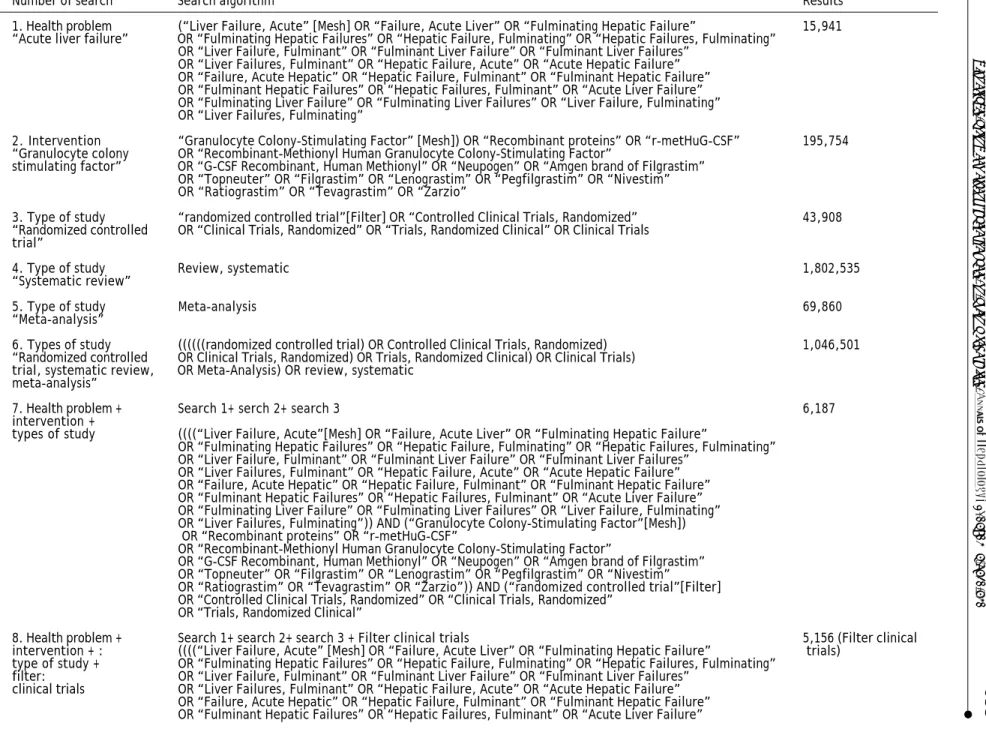
• Search methods for identification of stud-ies. Electronic searches. Relevant randomized tri-als were identified by searching the Cochrane Central Register of Controlled Trials (CEN-TRAL) (Issue 2013) in The Cochrane Library, MEDLINE (1950 to November 2013), EMBASE (1980 to November 2013), and LILACS (1987 to November 2013). Search strategies and time span of the searches are given in table 1. Other sources. The reference list of all identified re-ports was inspected to identify further trials. • Data collection and analysis. Selection of
633
Granulocyte-colony stimulating factor for acute-on-chronic liver failure.
, 2015; 14 (5): 631-641
Table 1. Search strategy.
Number of search Search algorithm Results
1. Health problem (“Liver Failure, Acute” [Mesh] OR “Failure, Acute Liver” OR “Fulminating Hepatic Failure” 15,941 “Acute liver failure” OR “Fulminating Hepatic Failures” OR “Hepatic Failure, Fulminating” OR “Hepatic Failures, Fulminating”
OR “Liver Failure, Fulminant” OR “Fulminant Liver Failure” OR “Fulminant Liver Failures” OR “Liver Failures, Fulminant” OR “Hepatic Failure, Acute” OR “Acute Hepatic Failure” OR “Failure, Acute Hepatic” OR “Hepatic Failure, Fulminant” OR “Fulminant Hepatic Failure” OR “Fulminant Hepatic Failures” OR “Hepatic Failures, Fulminant” OR “Acute Liver Failure” OR “Fulminating Liver Failure” OR “Fulminating Liver Failures” OR “Liver Failure, Fulminating” OR “Liver Failures, Fulminating”
2. Intervention “Granulocyte Colony-Stimulating Factor” [Mesh]) OR “Recombinant proteins” OR “r-metHuG-CSF” 195,754 “Granulocyte colony OR “Recombinant-Methionyl Human Granulocyte Colony-Stimulating Factor”
stimulating factor” OR “G-CSF Recombinant, Human Methionyl” OR “Neupogen” OR “Amgen brand of Filgrastim” OR “Topneuter” OR “Filgrastim” OR “Lenograstim” OR “Pegfilgrastim” OR “Nivestim” OR “Ratiograstim” OR “Tevagrastim” OR “Zarzio”
3. Type of study “randomized controlled trial”[Filter] OR “Controlled Clinical Trials, Randomized” 43,908 “Randomized controlled OR “Clinical Trials, Randomized” OR “Trials, Randomized Clinical” OR Clinical Trials
trial”
4. Type of study Review, systematic 1,802,535
“Systematic review”
5. Type of study Meta-analysis 69,860
“Meta-analysis”
6. Types of study ((((((randomized controlled trial) OR Controlled Clinical Trials, Randomized) 1,046,501 “Randomized controlled OR Clinical Trials, Randomized) OR Trials, Randomized Clinical) OR Clinical Trials)
trial, systematic review, OR Meta-Analysis) OR review, systematic meta-analysis”
7. Health problem + Search 1+ serch 2+ search 3 6,187
intervention +
types of study ((((“Liver Failure, Acute”[Mesh] OR “Failure, Acute Liver” OR “Fulminating Hepatic Failure”
OR “Fulminating Hepatic Failures” OR “Hepatic Failure, Fulminating” OR “Hepatic Failures, Fulminating” OR “Liver Failure, Fulminant” OR “Fulminant Liver Failure” OR “Fulminant Liver Failures”
OR “Liver Failures, Fulminant” OR “Hepatic Failure, Acute” OR “Acute Hepatic Failure” OR “Failure, Acute Hepatic” OR “Hepatic Failure, Fulminant” OR “Fulminant Hepatic Failure” OR “Fulminant Hepatic Failures” OR “Hepatic Failures, Fulminant” OR “Acute Liver Failure” OR “Fulminating Liver Failure” OR “Fulminating Liver Failures” OR “Liver Failure, Fulminating” OR “Liver Failures, Fulminating”)) AND (“Granulocyte Colony-Stimulating Factor”[Mesh]) OR “Recombinant proteins” OR “r-metHuG-CSF”
OR “Recombinant-Methionyl Human Granulocyte Colony-Stimulating Factor”
OR “G-CSF Recombinant, Human Methionyl” OR “Neupogen” OR “Amgen brand of Filgrastim” OR “Topneuter” OR “Filgrastim” OR “Lenograstim” OR “Pegfilgrastim” OR “Nivestim” OR “Ratiograstim” OR “Tevagrastim” OR “Zarzio”)) AND (“randomized controlled trial”[Filter] OR “Controlled Clinical Trials, Randomized” OR “Clinical Trials, Randomized”
OR “Trials, Randomized Clinical”
8. Health problem + Search 1+ search 2+ search 3 + Filter clinical trials 5,156 (Filter clinical
intervention + : ((((“Liver Failure, Acute” [Mesh] OR “Failure, Acute Liver” OR “Fulminating Hepatic Failure” trials) type of study + OR “Fulminating Hepatic Failures” OR “Hepatic Failure, Fulminating” OR “Hepatic Failures, Fulminating”
filter: OR “Liver Failure, Fulminant” OR “Fulminant Liver Failure” OR “Fulminant Liver Failures” clinical trials OR “Liver Failures, Fulminant” OR “Hepatic Failure, Acute” OR “Acute Hepatic Failure”
Chavez-Tapia NC, et al.
, 2015; 14 (5): 631-641
634
OR “Fulminating Liver Failure” OR “Fulminating Liver Failures” OR “Liver Failure, Fulminating” OR “Liver Failures, Fulminating”)) AND (“Granulocyte Colony-Stimulating Factor”[Mesh]) OR “Recombinant proteins” OR “r-metHuG-CSF”
OR “Recombinant-Methionyl Human Granulocyte Colony-Stimulating Factor”
OR “G-CSF Recombinant, Human Methionyl” OR “Neupogen” OR “Amgen brand of Filgrastim” OR “Topneuter” OR “Filgrastim” OR “Lenograstim” OR “Pegfilgrastim” OR “Nivestim” OR “Ratiograstim” OR “Tevagrastim” OR “Zarzio”)) AND (“randomized controlled trial”[Filter] OR “Controlled Clinical Trials, Randomized” OR “Clinical Trials, Randomized”
OR “Trials, Randomized Clinical”) Filters: Clinical Trial
9. Health problem + Search 1+ search 2+ search 3+ Filter clinical trial +Filter meta-analysis + Filter systematic review 5784 (Filter clinical intervention + ((((“Liver Failure, Acute”[Mesh] OR “Failure, Acute Liver” OR “Fulminating Hepatic Failure” trial, systematic type of study OR “Fulminating Hepatic Failures” OR “Hepatic Failure, Fulminating” OR “Hepatic Failures, Fulminating” review and
meta-OR “Liver Failure, Fulminant” meta-OR “Fulminant Liver Failure” meta-OR “Fulminant Liver Failures” analysis) OR “Liver Failures, Fulminant” OR “Hepatic Failure, Acute” OR “Acute Hepatic Failure”
OR “Failure, Acute Hepatic” OR “Hepatic Failure, Fulminant” OR “Fulminant Hepatic Failure” OR “Fulminant Hepatic Failures” OR “Hepatic Failures, Fulminant” OR “Acute Liver Failure” OR “Fulminating Liver Failure” OR “Fulminating Liver Failures” OR “Liver Failure, Fulminating” OR “Liver Failures, Fulminating”)) AND (“Granulocyte Colony-Stimulating Factor”[Mesh]) OR “Recombinant proteins” OR “r-metHuG-CSF”
OR “Recombinant-Methionyl Human Granulocyte Colony-Stimulating Factor”
OR “G-CSF Recombinant, Human Methionyl” OR “Neupogen” OR “Amgen brand of Filgrastim” OR “Topneuter” OR “Filgrastim” OR “Lenograstim” OR “Pegfilgrastim” OR “Nivestim” OR “Ratiograstim” OR “Tevagrastim” OR “Zarzio”)) AND (“randomized controlled trial”[Filter] OR “Controlled Clinical Trials, Randomized” OR “Clinical Trials, Randomized”
OR “Trials, Randomized Clinical”) Filters: Clinical Trial; Meta-Analysis; Review
10. Health problem + Search 1+search 2+search 3+search 4+ search 5 1843931
intervention + Search (((((((“Liver Failure, Acute”[Mesh] OR “Failure, Acute Liver” OR “Fulminating Hepatic Failure” type of study OR “Fulminating Hepatic Failures” OR “Hepatic Failure, Fulminating” OR “Hepatic Failures, Fulminating”
OR “Liver Failure, Fulminant” OR “Fulminant Liver Failure” OR “Fulminant Liver Failures” OR “Liver Failures, Fulminant” OR “Hepatic Failure, Acute” OR “Acute Hepatic Failure” OR “Failure, Acute Hepatic” OR “Hepatic Failure, Fulminant” OR “Fulminant Hepatic Failure” OR “Fulminant Hepatic Failures” OR “Hepatic Failures, Fulminant” OR “Acute Liver Failure” OR “Fulminating Liver Failure” OR “Fulminating Liver Failures” OR “Liver Failure, Fulminating” OR “Liver Failures, Fulminating”)) AND (“Granulocyte Colony-Stimulating Factor”[Mesh]) OR “Recombinant proteins” OR “r-metHuG-CSF”
OR “Recombinant-Methionyl Human Granulocyte Colony-Stimulating Factor”
OR “G-CSF Recombinant, Human Methionyl” OR “Neupogen” OR “Amgen brand of Filgrastim” OR “Topneuter” OR “Filgrastim” OR “Lenograstim” OR “Pegfilgrastim” OR “Nivestim” OR “Ratiograstim” OR “Tevagrastim” OR “Zarzio”)) AND (“randomized controlled trial”[Filter] OR “Controlled Clinical Trials, Randomized” OR “Clinical Trials, Randomized”
OR “Trials, Randomized Clinical”)) OR Review, Systematic) OR Meta-Analysis)
11. Health problem + Search 1+ search 2+ search 6 49
intervention + ((((((“Liver Failure, Acute”[Mesh] OR “Failure, Acute Liver” OR “Fulminating Hepatic Failure”
type of study OR “Fulminating Hepatic Failures” OR “Hepatic Failure, Fulminating” OR “Hepatic Failures, Fulminating” OR “Liver Failure, Fulminant” OR “Fulminant Liver Failure” OR “Fulminant Liver Failures”
OR “Liver Failures, Fulminant” OR “Hepatic Failure, Acute” OR “Acute Hepatic Failure” OR “Failure, Acute Hepatic” OR “Hepatic Failure, Fulminant” OR “Fulminant Hepatic Failure” OR “Fulminant Hepatic Failures” OR “Hepatic Failures, Fulminant” OR “Acute Liver Failure” OR “Fulminating Liver Failure” OR “Fulminating Liver Failures” OR “Liver Failure, Fulminating” OR “Liver Failures, Fulminating”))) AND ((“Granulocyte Colony-Stimulating Factor”[Mesh]) OR “Recombinant proteins” OR “r-metHuG-CSF”
OR “Recombinant-Methionyl Human Granulocyte Colony-Stimulating Factor”
OR “G-CSF Recombinant, Human Methionyl” OR “Neupogen” OR “Amgen brand of Filgrastim” OR “Topneuter” OR “Filgrastim” OR “Lenograstim” OR “Pegfilgrastim” OR “Nivestim” OR “Ratiograstim” OR “Tevagrastim” OR “Zarzio”))) AND (((((((randomized controlled trial) OR Controlled Clinical Trials, Randomized) OR Clinical Trials, Randomized)
635
Granulocyte-colony stimulating factor for acute-on-chronic liver failure. , 2015; 14 (5): 631-641
for study exclusion was documented. Data extrac-tion and management. Two authors independently extracted all relevant data from included studies. In case of disagreement a third author extracted the data. Data extraction was discussed, decisions documented, and, when clarification was neces-sary, the authors of the original reports were con-tacted. Studies were identified with the last name of the first author and the year in which the re-port was published, and ordered chronologically. The following data were extracted, verified, and recorded: characteristics of the studies, character-istics of participants, charactercharacter-istics of interven-tion, and characteristics of outcomes measured.
Assessment of risk of bias in included studies. Fol-lowing the Cochrane Handbook for Systematic Re-views of Interventions two authors independently assessed the risk of bias in the included trials. The following domains were assessed: sequence generation, allocation concealment, blinding of participants and personnel, blinding of outcome assessment, incomplete outcome data, selective re-porting, and other sources of bias. Any disagree-ment was resolved by discussion and, when needed, settled by a third author. The trial au-thors were contacted for clarification when need-ed. Measures of treatment effect. Dichotomous data of each trial was analyzed using the risk ratio (RR) and 95% confidence intervals; continuous data was analyzed with mean difference and 95% confidence intervals. Assessment of heterogeneity. To quantify the heterogeneity between trials we used the I2 test and Q statistic. Heterogeneity was considered significant when the Q statistic pro-duced a P value ≤ 0.10 or when the I2 > 25%.
As-sessment of reporting biases. To assess
publication bias, a funnel plot presenting the treatment effect against the trial precision was ex-amined. Additional testing for funnel plot asym-metry was not performed due to the number of trials included. Data synthesis. Under no signifi-cant heterogeneity the Mantel-Haenszel method for fixed-effects was used to estimate the pooled RR and 95% CI.
RESULTS
Search results
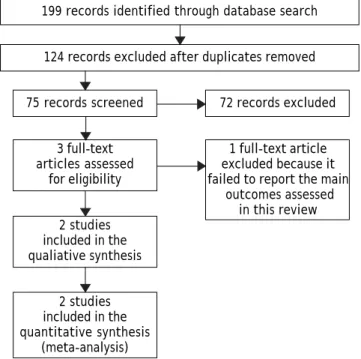
Seventy-five relevant references were initially identified and screened. Three articles were consid-ered suitable for inclusion. One article was excluded because it did not consider the primary outcomes of
this review.19 Finally, two trials were included for the analysis (Figure 1).
Included studies
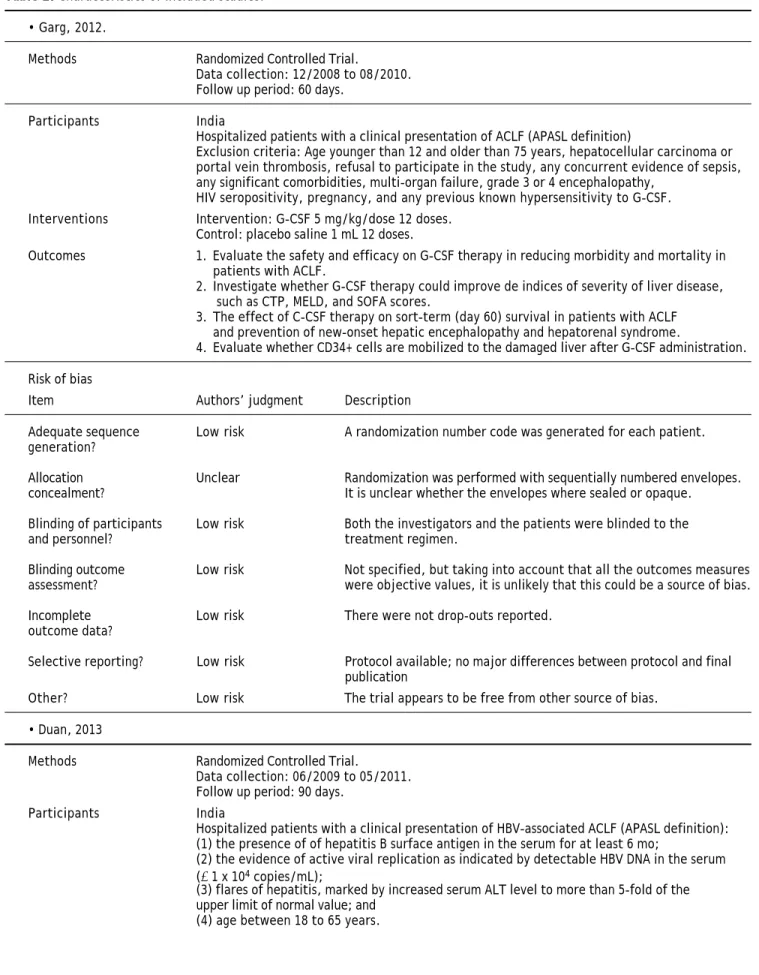
Two trials evaluating the effectiveness of G-CSF for the treatment of ACLF in 102 patients were in-cluded.20,21 One trial compared G-CSF against place-bo.20 The second trial compared G-CSF against no intervention. Trials were conducted in India20 and China,21 and both were performed in hospitalized pa-tients. One trial included only patients with HBV-associated ACLF,21 while alcoholic liver disease was the main etiology of the underlying chronic liver dis-ease in the other trial.20 Both studies administered G-CSF subcutaneously at a dose of 5 μg/kg. In one trial, patients received a total of 6 doses in six con-secutive days21 and in the other a total of 12 doses over one month (daily doses for the first five days and then every third day).20 Both studies aimed to evaluate the safety and efficacy of G-CSF and as-sessed short-term mortality, CD34+ cell mobiliza-tion, MELD and CTP. Risk of bias in the included studies. None of the trials were evaluated as having high risk of bias (Table 2).
Figure 1. Study flowchart: search results. Seventy-five re-levant references were initially identified and screened. Three articles were considered suitable for inclusion. One ar-ticle was excluded because it did not consider the primary outcomes of this review. Finally, two trials were included for the analysis.
199 records identified through database search
124 records excluded after duplicates removed
75 records screened 72 records excluded
3 full-text 1 full-text article
articles assessed excluded because it
for eligibility failed to report the main outcomes assessed
in this review 2 studies
included in the qualiative synthesis
2 studies included in the quantitative synthesis
Chavez-Tapia NC, et al. , 2015; 14 (5): 631-641
636
Table 2. Characteristics of included studies.
• Garg, 2012.
Methods Randomized Controlled Trial.
Data collection: 12/2008 to 08/2010. Follow up period: 60 days.
Participants India
Hospitalized patients with a clinical presentation of ACLF (APASL definition)
Exclusion criteria: Age younger than 12 and older than 75 years, hepatocellular carcinoma or portal vein thrombosis, refusal to participate in the study, any concurrent evidence of sepsis, any significant comorbidities, multi-organ failure, grade 3 or 4 encephalopathy,
HIV seropositivity, pregnancy, and any previous known hypersensitivity to G-CSF. Interventions Intervention: G-CSF 5 mg/kg/dose 12 doses.
Control: placebo saline 1 mL 12 doses.
Outcomes 1. Evaluate the safety and efficacy on G-CSF therapy in reducing morbidity and mortality in patients with ACLF.
2. Investigate whether G-CSF therapy could improve de indices of severity of liver disease, such as CTP, MELD, and SOFA scores.
3. The effect of C-CSF therapy on sort-term (day 60) survival in patients with ACLF and prevention of new-onset hepatic encephalopathy and hepatorenal syndrome.
4. Evaluate whether CD34+ cells are mobilized to the damaged liver after G-CSF administration.
Risk of bias
Item Authors’ judgment Description
Adequate sequence Low risk A randomization number code was generated for each patient.
generation?
Allocation Unclear Randomization was performed with sequentially numbered envelopes.
concealment? It is unclear whether the envelopes where sealed or opaque.
Blinding of participants Low risk Both the investigators and the patients were blinded to the
and personnel? treatment regimen.
Blinding outcome Low risk Not specified, but taking into account that all the outcomes measures
assessment? were objective values, it is unlikely that this could be a source of bias.
Incomplete Low risk There were not drop-outs reported.
outcome data?
Selective reporting? Low risk Protocol available; no major differences between protocol and final publication
Other? Low risk The trial appears to be free from other source of bias.
• Duan, 2013
Methods Randomized Controlled Trial.
Data collection: 06/2009 to 05/2011. Follow up period: 90 days.
Participants India
Hospitalized patients with a clinical presentation of HBV-associated ACLF (APASL definition): (1) the presence of of hepatitis B surface antigen in the serum for at least 6 mo;
(2) the evidence of active viral replication as indicated by detectable HBV DNA in the serum (≥ 1 x 10⁴ copies/mL);
(3) flares of hepatitis, marked by increased serum ALT level to more than 5-fold of the upper limit of normal value; and
637
Granulocyte-colony stimulating factor for acute-on-chronic liver failure. , 2015; 14 (5): 631-641
Mortality
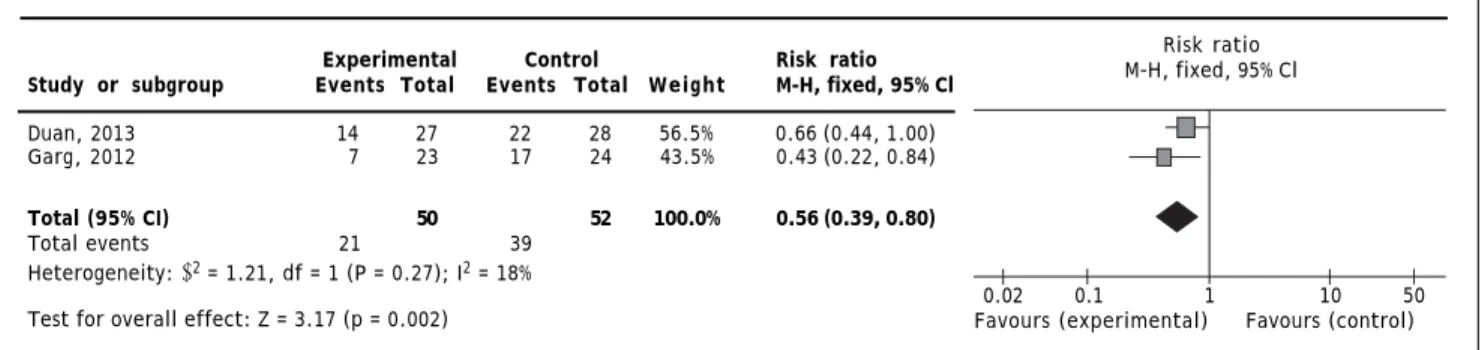
Two trials reported overall mortality. G-CSF sig-nificantly decreased overall mortality (RR 0.56; 95% CI 0.39, 0.80; P = 0.002); no heterogeneity (Q = 0.27; I2 = 18%) nor significant asymmetry in the fun-nel plot were detected (Figure 2). Mortality secondary to multi-organ failure. One trial reported multi-organ failure as cause of death.20 The mortality rate second-ary to multi-organ failure was 13% in the experimen-tal and 50% in the control group (P = 0.011).20
Adverse events
Only minor adverse events were reported in the treatment group. One study reported fever, head-ache and nausea,21 while the other reported rash, herpes zoster, and fever.20
Development of complications
Only one trial reported complications.20 The treatment arm showed a lower probability of hepato-renal syndrome than controls (19 vs. 71%, respec-tively; p ≤ 0.001), new-onset encephalopathy (19 vs.
66%, respectively; p = 0.001) and sepsis (14 vs. 41%, respectively; p = 0.04).20
Changes in severity indices
Both trials reported the changes in CTP from baseline. One trial reported the outcome as the medi-an chmedi-ange from baseline. At day 60, the medimedi-an change in the treatment group was -33% compared to +7% in the control group.20 The second trial
Exclusion criteria:
(1) Superinfection or coinfection with hepatitis A, C, D, E, EBV, CMV or HIV;
(2) previous course of any antiviral, immunomodulator or cytotoxic/immunosuppressive therapy for chronic hepatitis within the prior 12 mo:
(3) evidence of decompensated liver disease prior to the enrolment; (4) hepatocellular carcinoma diagnosed by CT or MRI;
(5) co-existence of any other serious medical illness or other liver diseases, such as
autoimmune hepatitis,alcoholic liver disease, drug-induced liver injury or Wilson’s disease; (6) any concurrent evidence of sepsis;
(7) malignant jaundice induced by obstructive jaundice and hemolytic jaundice; and (8) prolonged prothrombin time due to blood system disease.
Interventions Intervention: G-CSF 5 mg/kg/dose 6 doses. Control: no intervention.
Outcomes Evaluate the effects of G-CSF therapy on the proliferation of peripheral CD34+ cells and on liver function in patients with HBV-associated ACLF. The parameters of liver function in these patients were consecutively measured.
CTP score, MELD score and survival rate were evaluated during a 3-mo follow up study.
Risk of bias Authors’ Description
Item judgment
Adequate sequence Low risk A randomization number code was generated for each patient.
generation?
Allocation concealment? Unclear It is unclear whether they use central allocation,
sequentially numbered drug containers, or sequentially numbered envelopes.
Blinding of participants and Low risk Both the investigators and the patients were blinded to the
personnel? treatment regimen.
Blinding outcome Low risk Not specified, but taking into account that all the outcomes measures
assessment? were objective values, it is unlikely that this could be a source of bias.
Incomplete outcome data? Low risk There were not drop-outs reported.
Selective reporting? Unclear risk Protocol not available.
Chavez-Tapia NC, et al. , 2015; 14 (5): 631-641
638
Experimental Control Risk ratio Study or subgroup Events Total Events Total Weight M-H, fixed, 95% Cl
Duan, 2013 14 27 22 28 56.5% 0.66 (0.44, 1.00) Garg, 2012 7 23 17 24 43.5% 0.43 (0.22, 0.84)
Total (95% CI) 50 52 100.0% 0.56 (0.39, 0.80)
Total events 21 39
Heterogeneity: χ2 = 1.21, df = 1 (P = 0.27); I2 = 18%
Test for overall effect: Z = 3.17 (p = 0.002)
reported the CTP score at baseline and at day 30 the percentage of change was -8.9% and +4.9% in the experimental and control group respectively.21 Both trials reported changes in the MELD score. One tri-al reported the outcome as the median change from baseline.20 At day 60, the median change was -15.3% in the treatment group and +11.7% in the control group. The second trial reported the MELD score at baseline and at day 30; the percentage of change was -7.2% and +13.3% in the experimental and control group respectively.21 Only one trial reported changes in SOFA score from baseline to day 60. Median change was -50% in the treatment group and +50% in the control group.20
Mortality secondary to gastrointestinal bleeding
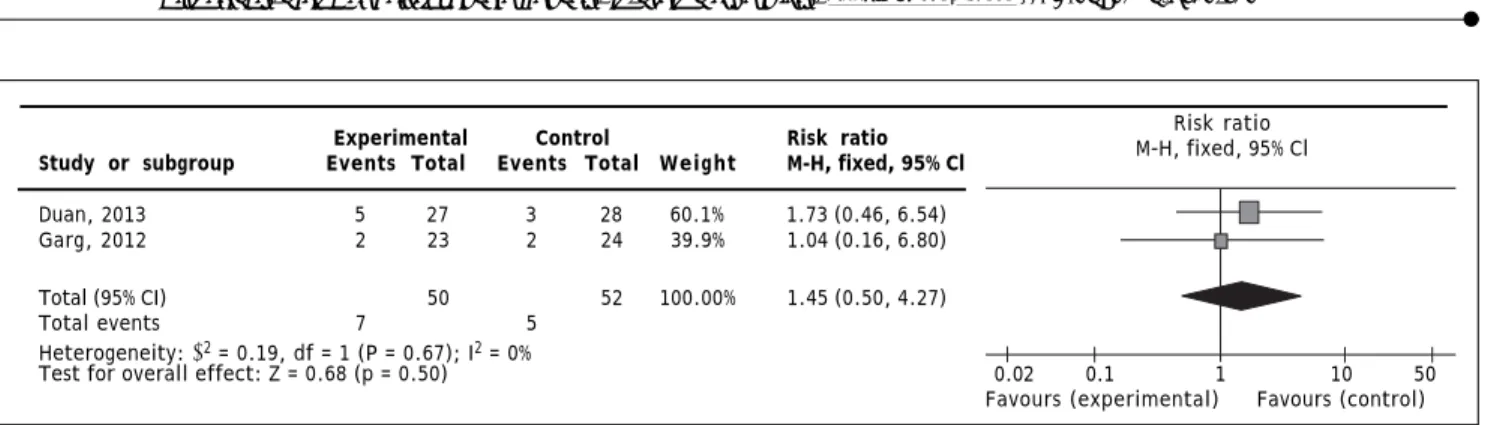
Both trials reported gastrointestinal bleeding mortality; no statistically significant difference for G-CSF therapy was observed (RR 1.45; 95% CI 0.50, 4.27; P = 0.50); no heterogeneity (Q = 0.67; I2 = 0%) nor significant asymmetry in the funnel plot were observed (Figure 3).
Changes in peripheral leukocyte and/or neutrophil counts
One trial reported a greater increase from base-line in total leukocyte count at days 2, 4, 7, 14, 21, and 30 in the treatment group compared to the con-trol group.20 At days 42 and 60, no difference was detected. The absolute value of the leukocyte count and the units used to measure this outcome were not specified.20 The second trial reported the periph-eral neutrophil count at days 3, 7, and 15. At day 15 was 5.8 ± 3.6 x 10⁹/L vs. 4 ± 1.3 x 10⁹/L, P = 0.032 in treatment and the control group, respectively.21
Changes in peripheral CD34+ count
One trial reported the peripheral vein CD34+ cells at day 30 as percentage.20 They reported no significant difference in peripheral CD34+ cells between groups (0.43% treatment vs. 0.41% control; P = 0.803).20 The second trial reported the peripher-al CD34+ cells at days 3, 7, and 15 as mean and SD.21 At day 15, were 4.92 ± 1.63 x 10⁹/L vs. 2.11 ± 1.39 x 10⁹/L, P ≤ 0.001, in the treatment and control groups respectively.21
Changes in hepatic CD34+ count
Only one trial assessed this outcome.20 The per-centage of hepatic CD34+ cells at baseline and day 30 was reported. The group that received G-CSF experi-enced a significant increase from baseline (27.5 to 40%, P = 0.001); meanwhile the control group experi-enced a significant decrease (30 to 20% P = 0.03).
No information regarding days of hospitalization or number of patients requiring transplantation was reported.
DISCUSSION
The present systematic review and meta-analysis aimed to analyze the benefits and harms of G-CSF in patients with ACLF. Patients treated with G-CSF ex-perienced a 44% reduction in short-term mortality (60-90 days) compared to controls, as well as an improvement in liver function, and an increase in pe-ripheral neutrophil/leukocyte counts, and pepe-ripheral and intrahepatic CD34+ cell count. Patients under G-CSF were also less likely to experience important com-plications such as hepatorenal syndrome, new onset encephalopathy and sepsis. Furthermore, no signifi-cant adverse events were reported in any of the trials.
Figure 2. Comparison of G-CSF vs. placebo or no intervention for short-term mortality. CI: confidence interval. M-H: Mantel Haenszel.
Risk ratio M-H, fixed, 95% Cl
639
Granulocyte-colony stimulating factor for acute-on-chronic liver failure. , 2015; 14 (5): 631-641
Experimental Control Risk ratio Study or subgroup Events Total Events Total Weight M-H, fixed, 95% Cl
Duan, 2013 5 27 3 28 60.1% 1.73 (0.46, 6.54) Garg, 2012 2 23 2 24 39.9% 1.04 (0.16, 6.80)
Total (95% CI) 50 52 100.00% 1.45 (0.50, 4.27)
Total events 7 5
Heterogeneity: χ2 = 0.19, df = 1 (P = 0.67); I2 = 0%
Test for overall effect: Z = 0.68 (p = 0.50)
Recombinant G-CSF was developed in 1985 and approved in 1991 to reduce the incidence of neutro-phenic fever after myelosuppressive chemotherapy in patients with non-myeloid malignancies.23 Since its approval, several trials in animal models and hu-mans have demonstrated G-CSF efficacy in stimulat-ing the proliferation and differentiation of neutrophil progenitor cells as well as activation of mature neutrophils.22,24,25 These findings are con-sistent with the increase in the peripheral neu-trophil/leukocytes and CD34+ cells observed after the administration of G-CSF in both trials included.
Bone marrow cell mobilization towards the liver is the most likely mechanism for G-CSF liver regen-eration. Animal models of acute and chronic liver failure have shown that under severe liver damage bone marrow-derived stem cells can migrate and en-graft into the liver.13-16,26-31 The evidence regarding the latest is not universally conclusive, since some studies have been unable to reproduce these find-ings.32-34 In our review, only one study evaluated the presence of CD34+ cells (a marker of hemat-opoietic stem cells) in liver biopsies after G-CSF treatment, confirming their presence.20 However, the effects of G-CSF in liver regeneration are not limited to the mobilization of bone marrow-derived stem cells. G-CSF exerts autocrine and paracrine ef-fects in the liver, promoting and enhancing the oval cell reaction.13 The synergistic contribution of the bone marrow-derived stem cells and the oval cells might be responsible for the liver function improve-ment observed in this review.
The observed effect of G-CSF on mortality is like-ly the product of both liver regeneration and im-proved immune response. Both studies included in this review provided evidence of improved liver func-tion demonstrated by the reducfunc-tion in CTP, MELD and SOFA scores. Yet, another potential beneficial effect of G-CSF is the increase, activation and cor-rection of neutrophil defects.35,36 The improvement
in neutrophil activity can result in the reversal of the severe immunologic dysfunction that character-izes the physiopathology of ACLF, as well as the prevention of sepsis and finally in reducing the mor-tality.
To our knowledge, this is the first systematic re-view and meta-analysis to assess the role of G-CSF in the treatment of patients with ACLF. Some im-portant limitations must be mentioned. The number of trials included in this review is small and restrict-ed to Asian populations, limiting the external validi-ty of the results. Eligible reports failed to report important information such as number of patients requiring transplantation, and total length of hospi-talization, precluding the analysis of these impor-tant outcomes. Inconsistent data reporting made overall mortality and mortality secondary to gas-trointestinal bleeding the only outcomes susceptible of meta-analysis. Both trials were considered as hav-ing low risk of bias. Takhav-ing into account that the amount of information remains scarce, the quality of the evidence should be considered limited and re-sults interpreted carefully. Still, it is promissory that both studies included converged to the same positive result, even when different treatment regi-mens were used.
ACLF is associated with a very high short-term mortality and to date OLT is the only effective treat-ment available. However, in most cases, transplan-tation is not an option due to elevated costs, shortage of organs, or lack of experienced person-nel. G-CSF therapy demonstrated a significant re-duction in short-term mortality and improvement in liver function in ACFL patients with no significant adverse events. G-CSF could represent an alterna-tive to improve the life quality and expectancy of ACLF patients when OLT is contraindicated or una-vailable. Further randomized controlled trials evalu-ating the effectiveness of G-CSF in patients with ACLF are required.
Figure 3. Comparison of G-CSF vs. placebo or no intervention for mortality secondary to gastrointestinal bleeding. CI: confi-dence interval. M-H: Mantel Haenszel.
Risk ratio M-H, fixed, 95% Cl
Chavez-Tapia NC, et al. , 2015; 14 (5): 631-641
640
ACKNOWLEDGMENT
NCT conceived of the study, and participated in its design and coordination, data analysis and inter-pretation, and helped to draft the manuscript. IMP conceived of the study, performed the literature re-search and selection of the included studies, and per-formed the data extraction. VOA collaborated with the data management, data interpretation and data analysis, and to draft the manuscript. DVP con-ceived of the study, performed the literature re-search and selection of the included studies. GDS conceived of the study, performed the literature re-search and selection of the included studies. CHN conceived of the study, performed the literature re-search and selection of the included studies, and per-formed the data extraction. MU provided general advice and reviewed the final manuscript. TBG con-ceived of the study, and participated in its design and coordination, data analysis and interpretation, and helped to draft the manuscript.
ABBREVIATIONS
• ACLF: acute-on-chronic liver failure. • CTP: Child-Turcotte-Pugh.
• G-CSF: granulocyte colony-stimulating factor. • MELD: model of end-stage liver disease. • OLT: orthotopic liver transplantation. • RR: risk ratio.
• SOFA: sequential organ failure assessment.
FINANCIAL SUPPORT
No grants or financial support to declare.
REFERENCES
1. Sarin SK, Kumar A, Almeida JA, Chawla YK, Fan ST, Garg H, de Silva HJ, et al. Acute-on-chronic liver failure: consensus recommendations of the Asian Pacific Association for the study of the liver (APASL). Hepatol Int 2009; 3: 269-82. 2. Olson J.C, Kamath P.S. Acute-on-chronic liver failure:
con-cept, natural history, and prognosis. Curr Opin Crit Care 2011; 17: 165-9.
3. Moreau R, Jalan R, Gines P, Pavesi M, Angeli P, Cordoba J, Durand F, et al. Acute-on-chronic liver failure is a distinct syndrome that develops in patients with acute decompen-sation of cirrhosis. Gastroenterology 2013; 144: 1426-37, 1437 e1-9.
4. Katoonizadeh A, Laleman W, Verslype C, Wilmer A, Maleux G, Roskams T, Nevens F. Early features of acute-on-chro-nic alcoholic liver failure: a prospective cohort study. Gut 2010; 59: 1561-9.
5. Garg H, Kumar A, Garg V, Sharma P, Sharms BC, Sarin SK. Cli-nical profile and predictors of mortality in patients of acute-on-chronic liver failure. Dig Liver Dis 2012; 44: 166-71.
6. Sen S, Williams R, Jalan R. The pathophysiological basis of acute-on-chronic liver failure. Liver 2002; 22(Suppl. 2): 5-13.
7. Cordoba J, Ventura-Cots M, Simón-Talero M, Amorós A, Pa-vesi M, Vilstrup H, Angeli P, et al. Characteristics, risk factors, and mortality of cirrhotic patients hospitalized for hepatic encephalopathy with and without acute-on-chronic liver failure (ACLF). J Hepatol 2014; 60: 275-81. 8. Wlodzimirow KA, Eslami S, Abu-Hanna A, Nieuwoudt M,
Cha-muleau RA. A systematic review on prognostic indicators of acute on chronic liver failure and their predictive value for mortality. Liver Int 2013; 33: 40-52.
9. Jalan R, Gines P, Olson JC, Mookerjee RP, Moreau R, Gar-cia-Tsao G, Arroyo V, et al. Acute-on chronic liver failure.
J Hepatol 2012; 57: 1336-48.
10. Laleman W, Verbeke L, Meersseman P, Wauters J, van Pelt J, Cassiman D, Wilmer A, et al. Acute-on-chronic liver failu-re: current concepts on definition, pathogenesis, clinical manifestations and potential therapeutic interventions.
Expert Rev Gastroenterol Hepatol 2011; 5: 523-37.
11. Houston AC, Stevens LA, Cour V. Pharmacokinetics of glycosylated recombinant human granulocyte colony-sti-mulating factor (lenograstim) in healthy male volunteers.
Br J Clin Pharmacol 1999; 47: 279-84.
12. D’Souza A, Jaiyesimi I, Trainor L, Venuturumili. Granulocyte colony-stimulating factor administration: adverse events.
Transfus Med Rev 2008; 22: 280-90.
13. Piscaglia A.C, Shupe TD, Oh SH, Gasbarrini A, Petersen BE. Granulocyte-colony stimulating factor promotes liver re-pair and induces oval cell migration and proliferation in rats. Gastroenterology 2007; 133: 619-31.
14. Yannaki E, Athanasiou E, Xagorari A, Constantinou V, Bat-sis I, Kaloyannidis P, Proya E, et al. G-CSF-primed hemato-poietic stem cells or G-CSF per se accelerate recovery and improve survival after liver injury, predominantly by pro-moting endogenous repair programs. Exp Hematol 2005; 33: 108-19.
15. Spahr L, Lambert JF, Rubbia-Brandt L, Chalandon Y, Fros-sard JL, Giostra E, Hadengue A. Granulocyte-colony stimu-lating factor induces proliferation of hepatic progenitors in alcoholic steatohepatitis: a randomized trial.
Hepatolo-gy 2008; 48: 221-9.
16. Gaia S, Smedile A, Omedè P, Olivero A, Sanavio F, Balzola F, Ottobrelli A. Feasibility and safety of G-CSF administration to induce bone marrow-derived cells mobilization in pa-tients with end stage liver disease. J Hepatol 2006; 45: 13-9.
17. International Conference on Harmonisation of Technical Requirements for Registration of Pharmaceuticals for Hu-man Use (ICH) adopts Consolidated Guideline on Good Clini-cal Practice in the Conduct of CliniClini-cal Trials on Medicinal Products for Human Use. Int Dig Health Legis 1997; 48: 231-4.
18. Higgins JPT, Green S, and Cochrane Collaboration. Co-chrane handbook for systematic reviews of interventions. Chichester, England ; Hoboken, NJ: Wiley-Blackwell; 2005, p. 649.
19. Di Campli C, Zocco MA, Saulnier N, Grieco A, Rapaccini G, Addolorato G, Rumi C, et al. Safety and efficacy profile of G-CSF therapy in patients with acute on chronic liver fa-ilure. Dig Liver Dis 2007; 39: 1071-6.
641
Granulocyte-colony stimulating factor for acute-on-chronic liver failure. , 2015; 14 (5): 631-641
21. Duan XZ, Liu FF, Tong JJ, Yang HZ, Chen J, Liu XY, Mao YL, et al. Granulocyte-colony stimulating factor therapy improves survival in patients with hepatitis B virus-asso-ciated acute-on-chronic liver failure. World J
Gastroente-rol 2013; 19: 1104-10.
22. Morstyn G, Lieschke GJ, Cebon J, Dührsen U, Villeval JL, Sheridan W, McGrath K, et al. Early clinical trials with co-lony-stimulating factors. Cancer Invest 1989; 7: 443-56. 23. Sylvester RK. Clinical applications of colony-stimulating
factors: a historical perspective. Am J Health Syst Pharm 2002; 59: S6-S12.
24. Kuwabara T, Kobayashi S, Sugiyama Y. Pharmacokinetics and pharmacodynamics of a recombinant human granulo-cyte colony-stimulating factor. Drug Metab Rev 1996; 28: 625-58.
25. Demetri GD, Griffin JD. Granulocyte colony-stimulating factor and its receptor. Blood 1991; 78: 2791-808. 26. Quintana-Bustamante O, Alvarez-Barrientos A, Kofman AV,
Fabregat I, Bueren JA, Theise ND, Segovia JC. Hemato-poietic mobilization in mice increases the presence of bone marrow-derived hepatocytes via in vivo cell fusion.
Hepatology 2006; 43: 108-16.
27. Zhang L, Kang W, Lei Y, Han Q, Zhang G, Lv Y, Li Z, et al. Granulocyte colony-stimulating factor treatment amelio-rates liver injury and improves survival in rats with D-ga-lactosamine-induced acute liver failure. Toxicol Lett 2011; 204: 92-9.
28. Li N, Zhang L, Li H, Fang B. Administration of granulocy-te colony-stimulating factor amelioragranulocy-tes radiation-indu-ced hepatic fibrosis in mice. Transplant Proc 2010; 42: 3833-9.
29. Maiwal R, Kumar A, Sarin SK. Liver regeneration during acute-on-chronic liver failure using growth factors: in vivo or ex vivo indulgence of bone marrow?
Gastroentero-logy 2013; 145: 901-4.
30. Bird TG, Lorenzini S, Forbes SJ. Activation of stem cells in hepatic diseases. Cell Tissue Res 2008; 331: 283-300. 31. Meng F, Francis H, Glaser S, Han Y, DeMorrow S, Stokes A,
Staloch D, et al. Role of stem cell factor and granulocyte colony-stimulating factor in remodeling during liver rege-neration. Hepatology 2012; 55: 209-21.
32. Masson S, Harrison DJ, Plevris JN, Newsome PN. Potential of hematopoietic stem cell therapy in hepatology: a criti-cal review. Stem Cells 2004; 22: 897-907.
33. Thorgeirsson SS, Grisham JW. Hematopoietic cells as hepa-tocyte stem cells: a critical review of the evidence.
Hepa-tology 2006; 43: 2-8.
34. Wagers AJ, Sherwood RI, Christensen JL, Weissman IL. Little evidence for developmental plasticity of adult hema-topoietic stem cells. Science 2002; 297: 2256-9.
35. Rolando N, Clapperton M, Wade J, Panetsos G, Mufti G, Williams R. Granulocyte colony-stimulating factor impro-ves function of neutrophils from patients with acute li-ver failure. Eur J Gastroenterol Hepatol 2000; 12: 1135-40.
36. Rolando N, Clapperton M, Wade J, Wendon J. Administe-ring granulocyte colony-stimulating factor to acute liver failure patients corrects neutrophil defects. Eur J
Gas-troenterol Hepatol 2000; 12: 1323-8.
37. Zamora Nava LE, Aguirre Valadez J, Chávez-Tapia NC, To-rre A. Acute-on-chronic liver failure: a review. Ther Clin