OFFSHORING OF INTERMEDIATE PRODUCTION AND FIRM-LEVEL INNOVATION: AN EMPIRICAL ANALYSIS
LUCÍA AVELLA FRANCISCO GARCÍA
SANDRA VALLE
FUNDACIÓN DE LAS CAJAS DE AHORROS DOCUMENTO DE TRABAJO
Nº 719/2013
De conformidad con la base quinta de la convocatoria del Programa de Estímulo a la Investigación, este trabajo ha sido sometido a eva- luación externa anónima de especialistas cualificados a fin de con- trastar su nivel técnico.
ISSN: 1988-8767
La serie DOCUMENTOS DE TRABAJO incluye avances y resultados de investigaciones dentro de los pro- gramas de la Fundación de las Cajas de Ahorros.
Las opiniones son responsabilidad de los autores.
1
OFFSHORING OF INTERMEDIATE PRODUCTION AND FIRM-LEVEL INNOVATION: AN EMPIRICAL ANALYSIS
Lucía Avella*
Francisco García*
Sandra Valle*
Abstract
Offshoring is a widespread practice nowadays and has been the subject of much scientific research. The effect of offshoring on factors such as costs, productivity, employment or wages has been extensively analyzed. Despite its importance, however, empirical research on the impact of offshoring on firm-level innovation has been scarce. Theoretical arguments predict contrasting effects. While some of the characteristics of the offshoring process may induce firm innovation, others might have deleterious consequences. Grounded on the resource-based view of the firm, and transaction cost theory we analyze the effect of the offshoring of intermediate production activities –either offshore outsourcing or captive offshoring– on firm-level innovation. Using data from 1,203 Spanish manufacturing firms from 2006 to 2009, we find a positive association between the offshoring of intermediate products and product innovation. Our results also show that the effect is positive for both captive offshoring and offshore outsourcing.
Key words: Manufacturing; offshore outsourcing; captive offshoring; innovation.
JEL classification: M10, M11, M16.
Corresponding author: Lucía Avella, Departamento de Administración de Empresas, Facultad de Economía y Empresa, Avda. del Cristo s/n, 33071 Oviedo-Spain. Phone: +34 985 10 39 15. E-mail: [email protected]
*Departamento de Administración de Empresas, Facultad de Economía y Empresa, Universidad de Oviedo.
Acknowledgments: The authors are grateful to the Spanish Ministerio de Economía y Competitividad (ECO2012-33204) for its financial support and to the Fundación SEPI for providing access to the ESEE data.
2
OFFSHORING OF INTERMEDIATE PRODUCTION AND FIRM-LEVEL INNOVATION: AN EMPIRICAL ANALYSIS
1. INTRODUCTION
The current world scene, characterized by increasingly integrated world markets, dynamic, global competition, and fast technological change has led to an unprecedented fragmentation of production. Value chains are being finely sliced into just a few or many separate steps (Contractor et al., 2010), which has meant a modification in the organization and location of activities in firms’ value chains. Firms are reassessing their decisions in terms of the optimal organization of these activities (in-house or externalized) and their location, combining those kept in their home country with those others transferred abroad (Feenstra, 1998). Out of the four possible organization-location choices for any given value chain activity (in-house domestically, in-house internationally, externalized domestically, externalized internationally), offshoring is generally considered to comprise the subcontracting of activities that were previously carried out internally to foreign, independent firms – international outsourcing or offshore outsourcing–, and/or the transfer of these activities to subsidiaries abroad –captive offshoring (Grossman and Rossi-Hansberg, 2006). Which of the two modes of offshoring is adopted depends on the perceived relative advantages of carrying out value chain activities internally versus externalizing them, coupled with the advantages, in both cases, of their transfer to a foreign location.
Offshoring (both production and services) is a widespread practice nowadays, and as
such is the subject of much scientific research. Many studies in recent years have
analyzed offshoring from different viewpoints (economics, international business,
strategic management, operations management), focusing on several relevant
aspects. However, research in this field still lacks a widely accepted definition of what
practices offshoring exactly involves, which undoubtedly hinder a further
understanding of this phenomenon (Ricart, 2011). Besides, empirical studies are still
scarce, which reflects that empirical research on offshoring is yet in its infancy (Mol et
al., 2004; Stack and Downing, 2005).
3
Among all the topics covered in the offshoring literature –e.g. trends, antecedents, benefits and drawbacks–, the effects or consequences of offshoring is an especially relevant one. Scholars have thoroughly analyzed the impact of offshoring on several business variables, such as costs and productivity (e.g. Olsen, 2006; Fariñas and Martín-Marcos, 2010), and employment and wages (e.g. Feenstra and Hanson, 1999, 2001; Crinò, 2009). However, the impact of offshoring on innovation has been characterized not only by a lack of conceptual clarity, but also by a shortage of empirical evidence (Kotabe, 1990; Naghavi and Ottaviano, 2009). Understanding the impact of offshoring on innovation is important both for managers and policymakers, as innovation has been long suggested to be at the core of the growth of economies and firms (Grossman and Helpman, 1994). Besides, innovation strategy is not only increasingly organized internationally (Archibugi and Michie, 1995), but also requires the use of new know-how from many different sources and locations (Álvarez and Molero, 2004) and its integration with existing knowledge. Achieving commercially useful innovations is not only the result of the conscious action of creative individuals, but also of interaction processes and learning amongst the various agents involved in international innovation systems –producers, users, suppliers, public authorities and scientific institutions. In this context, both the capacity to absorb, transfer, and disseminate new knowledge, and the ability to learn from international interaction are crucial factors for successful innovation (Cohen and Levinthal, 1989; Chesborough, 2003). These characteristics of current innovation processes call for additional empirical evidence on the association between offshoring and innovation.
When it comes to the impact of offshoring on innovation, theory predicts contrasting effects. While some of the characteristics of the offshoring process clearly favor on- going firm innovation, others might lead to a reduction in innovation capability.
In this paper we aim to address this debate focusing on offshoring of intermediate
production activities. In contrast with much of previous research, our approach to this
issue is firm-level, instead of industry- or country-level. Moreover, whereas one of the
limitations of previous research has been the use of cross-sectional data (Kotabe,
1990), we take advantage of the panel nature of our data to conduct longitudinal
analyses.
4
Therefore, using data from 1,203 Spanish manufacturing firms, we examine whether and how decisions to offshore intermediate manufacturing activities (parts and components that will subsequently be incorporated into the production process in the firm’s home country) influence firm´s product innovation. We find that offshoring of intermediate production is positively related to the ex post introduction of product innovations by Spanish firms. Additionally, we analyze whether the effect of offshoring on firm innovation differs depending on governance mode choice (captive offshoring vs. offshore outsourcing). In this case we find that both captive offshoring and offshore outsourcing are positively associated to subsequent product innovation, not finding any significant differences among the effect of offshoring governance modes on ex post firm innovation.
The remainder of the paper is structured as follows. First, we present the theoretical framework –reviewing the literature on the association between offshoring and innovation–, as well as our hypotheses. Second, we detail the empirical research design (data and methods), including information on the sample, variables and econometrics. We then present our results. Afterwards, we conclude and discuss the results and contributions of our study to the advancement of the offshoring literature and the implications to business practice. In this final section we also present the main limitations of our study, which may motivate future research.
2. THEORY AND HYPOTHESES
2.1. Theoretical framework: Resource-based view, and transaction cost theory
Offshoring refers to the transfer of value chain activities to other countries, either by subcontracting them to independent, foreign firms or carrying them out internally in subsidiaries outside the firm’s home country
1. In either case, firms’ value chain activities are offshored to gain access to strategic resources not available in the firms’ home country –parts and components, a skilled and/or cheap labor force, and/or other required knowledge and capabilities.
1An intermediate hybrid possibility could also be considered: transferring activities overseas through a joint venture (Jahns et al., 2006). However, our study focuses only on the extreme options: internal development and outsourcing.
5
Resource-based view (RBV), and transaction cost economics (TCE) have been the dominant approaches in management to explain strategic outsourcing (Holcomb and Hitt, 2007). Taken together, they also provide an appropriate theoretical framework to study firms’ offshoring decisions
2. In fact, the search for competitive advantage (in which RBV focuses) and the election of the most efficient governance structure (in which TCE is focused) are two major concerns when deciding where to source manufacturing processes (McIvor, 2013).
The resource-based view of the firm provides a useful framework to analyze the benefits that, rooted in the comparative advantage of nations, accrue to offshoring firms. A major concern of the resource-based view is how organizations capabilities develop and affect their competitive position and performance. Proponents of the RBV argue that heterogeneity in organizations’ knowledge-based resources and capabilities explain differences in firm performance, as well as the sustainability of a competitive advantage (Teece et al., 1997). In essence, this theory states that the competitive advantage stems not only from opportunities in the environment but also from any resources –physical, human and/or organizational– that the firm can identify, develop, combine, use and protect (Penrose, 1959; Wernerfelt, 1984;
Barney, 1991; Grant, 1991). Firms may gain access to those strategic resources either by locating facilities in foreign countries (i.e. captive offshoring) or establishing relationships with suppliers abroad (i.e. offshore outsourcing). The former choice allows firms to enter foreign markets and to acquire unique resources, thus, keeping direct control over them. Therefore, first-movers in a given country may leverage the resources’ potential and gain competitive advantage (Jahns et al., 2006). However, in offshore outsourcing firms choose to specialize in core activities that they can perform well, externalizing the rest to other firms located in foreign countries. In this manner, the scarce but valuable resources they possess can be redirected towards key areas of the firm, that is, those that generate value for consumers and in which the firm has a competitive advantage. The most classic research is clearly grounded on RBV theory and states that it is the core activities that the firm should retain, while the non-essential ones may be outsourced (Prahalad and Hamel, 1990; Bettis et al.,
2 Besides RBV and TCE, some recent offshoring research is also grounded on institutional theory, analyzing how institutional norms and assumptions influence offshore outsourcing (e.g. Tate et al., 2009). Additionally, some scholars argue that internalization theory may also inform the manufacturing location decision (e.g. Casson, 2013; Ellram, 2013).
6
1992; Kelley, 1995; Mullin; 1996; Grossman and Rossi-Hansberg, 2006; Tallman, 2011)
3.
In addition to the resource-based view of the firm, transaction cost theory (Coase, 1937; Williamson, 1975, 1979) represents a suitable theoretical framework for studying offshoring. TCE compares and balances the costs and risks of market transactions with those of internalization (Williamson, 2008). Therefore, transaction cost theory aids firms in deciding what to do internally and what to buy in the market and, thus, in choosing between offshoring governance modes.
In international outsourcing (or offshore outsourcing), firms acknowledge the advantages of externalizing value chain activities. That is, the possibility of focusing on their core competencies (Quinn and Hilmer, 1994), as well as the co- specialization and organizational learning derived from the use of the information and superior resources and capabilities of specialized suppliers (Kakabadse and Kakabadse, 2002) that close relations with these suppliers allow. Co-specialization and organizational learning make up for the costs and risks that stem from having to establish transactions with third parties (Kedia and Mukherjee, 2009).
However, firms choose captive offshoring when they do not clearly perceive many advantages from outsourcing. When transaction costs of externalization –mainly opportunism, but also possible loss of control and risks of spillovers towards external suppliers– are too high, firms will choose to keep activities in-house, but taking up the benefits of superior resources found in other countries. In other words, captive offshoring offers firms the advantages of the target country while avoiding the risks entailed in transferring know-how to third parties, as well as the risk of losing competitiveness that might stem from outsourcing certain activities abroad. In such cases, the advantages of establishing their own facilities in foreign locations make up for the specific risk factors of the location (Kedia and Mukherjee, 2009).
3 However, some other scholars consider that core activities can also be outsourced, provided that the firm controls and protects any exchange rent (Dyer and Singh, 1998) or simply if other firms perform them better (Quinn, 1999). In fact, there is now a growing trend in manufacturing firms to outsource activities tied to their core competencies (Ehie, 2001).
7
2.2. Effects of offshoring on innovation: Background and hypotheses
Empirical evidence clearly shows that many are the benefits that accrue to firms from transferring value chain activities abroad. Offshoring provides advantages derived from specialization and from specific locations. These advantages generate not only financial benefits to firms –due to cost savings and subsequent productivity improvements–, but also managerial, operational and human resource-related benefits (Schniederjans and Zuckweiler, 2004). These latter benefits, in turn, materialize in higher quality and value added of offshored activities, as well as in greater firm flexibility and learning capability. However, whether the aforementioned benefits and their immediate outcomes increase firm innovation remains an open question. That is, the impact of offshoring on firm innovation is still unclear, given that offshoring may have both positive and negative effects on firms’ degree of innovation.
Taking these issues into consideration, we analyze the effect –either positive or negative– that an offshoring strategy, in our study, of intermediate production activities, may have on firm-level innovation.
Offshoring of intermediate manufacturing as a boost to firm innovation
Offshoring intermediate manufacturing activities generates a set of advantages for firms that may derive in improvements in their innovation ability.
On the one hand, by internationally transferring the manufacturing of parts and/or
components firms may obtain costs saving that may be later invested in R&D (Brown
and Wilson, 2005) and, thus, may materialize in improved innovation. In the case of
captive offshoring, cost savings will be mainly due to location of intermediate
production in cheaper labor countries. In the case of offshore outsourcing, costs
savings will be also due to the externalization of value chain activities. By not
carrying out these intermediate activities in-house, firms may redirect the freed
resources to, and focus on, other key activities such as R&D. In this vein, it may even
be argued that firm competitiveness can be eroded if intermediate value chain
activities are not transferred to countries where resources can be obtained at
advantageous conditions. This loss of competitiveness may, in turn, erode firm
8
chances to invest in R&D. R&D investments may aid firms exploit their technological capabilities or augment their technological knowledge base, therefore acquiring new knowledge and developing new capabilities (Cantwell and Molero, 2003) that may lead to improved innovation.
On the other hand, by internationally disintegrating value chain activities –either subcontracting or delocalizing them– firms may gain access to specialized and diverse knowledge. This variety of knowledge is an essential innovation input, often times not available in the firm’s home country regardless of how technologically advanced this may be. In the case of offshore outsourcing, firms may take advantage of the skills, experience and knowledge of international suppliers. This will favor innovative decisions and greater flexibility to face quick and unexpected changes in the business environment (Kedia and Mukherjee, 2009). Similarly, captive offshoring will also allow firms to add value in terms of knowledge (Pfannenstein and Tsai, 2004). In fact, as Dunning (1998: 54) points out, “locational needs of corporations have shifted from those to do with access to markets, or to natural resources, to those to do with access to knowledge-intensive assets and learning experiences […]”. For instance, by maintaining a local presence firms may gain localized tacit knowledge, acquire a better understanding of market and consumer patterns, and/or access a highly skilled labor force (Lewin et al., 2009). In either case, the wide range of knowledge, resources and know-how that firms obtain abroad by offshoring is added to their knowledge base and technological capabilities, and will stimulate innovation (Leonard-Barton, 1992, 1995). By using this strategy, firms can mobilize and exploit knowledge that is internationally disseminated, thus increasing their innovation and adaptation capabilities (Berger, 2006; Fernández, 2007).
Also, the international fragmentation of their value chains, both by captive offshoring
or offshore outsourcing, allow firms to develop inter-organizational relations which,
based on the sharing of information and on close cooperation, can lead to sound
organizational learning (O´Dwyer and O´Flynn, 2005; Kedia and Lahiri, 2007), which
in turn should lead to greater innovativeness. Access to greater knowledge, skills and
experience, and the creation of organizational learning should lead to innovative,
fast, and specialist solutions.
9
Time arbitrage (Kedia and Mukherjee, 2009) should be added to the aforementioned advantages. Foreign locations where intermediate production is transferred –either to foreign suppliers or to owned facilities– may be in different time zones. Time differences allow work to be done non-stop, which substantially increases firm productivity and, in turn, may improve the firm’s bottom line. If the firm decides to use these additional revenues to increase its investments in R&D, then time arbitrage may have a positive impact on firm innovation.
Finally, it is worth noting that by offshoring, particularly by offshore outsourcing, firms’
structures become modular, which endow them with greater sensitiveness, speed and flexibility. All this helps firms to respond quickly to unexpected threats and to market opportunities (Kedia and Mukherjee, 2009). Thus, modularity may be directly linked to greater innovativeness since organizational flexibility is associated to the firm’s ability to develop new products or services rapidly (Schilling and Steensma, 2001).
According to the aforementioned arguments, we may expect the offshoring of intermediate manufacturing activities to be positively associated to firm innovation.
Therefore, we propose the following hypothesis:
Hypothesis 1a: Offshoring of intermediate production has a positive effect on firm
innovation. This effect is positive for both offshoring governance modes (captive offshoring and offshore outsourcing).
Offshoring of intermediate manufacturing as a hindrance to firm innovation
Transferring production activities to other countries also involves risks that may negatively affect firm-level innovation.
If intermediate production is offshored but activities such as R&D and design are kept in the home country, coordination of these activities and knowledge transfers among them may be greatly complicated. Although these would mean that most added value (R&D) is kept in the home country, it is not always advisable to separate design and manufacturing as they are closely related activities (Markides and Berg, 1988).
Physical and intellectual activities such as these are mutually linked primarily by
direct and reverse knowledge flows (Casson, 2012). By breaking up and separating
10
activities in the value chain, feedback and coordination are made more difficult, which slows down and impairs the innovation process. Apart from potential language barriers (Kogut and Zander, 1992), if geographical distance is placed between R&D and manufacturing, the communication channels taken for granted when both functions share a common location, will be stretched (Argote et al., 2003). Passing knowledge from side to side becomes more difficult, thus making it a challenge to maintain a sense of team spirit (Brown and Duguid, 2001), and the toing-and-froing between departments that so often plays a part in developing and creating products and services will be seriously limited (HRMID, 2005). Additionally, previous findings in the literature have shown that in certain contexts –particularly, those dealing with unfamiliar, unstructured situations– problem solving requires experts being physically present, mainly to find and interpret relevant information (Tyre and von Hippel, 1997).
All this means that, unless the necessary feedback from R&D experts in the home country is received quickly in offshore production facilities, a firm that manufactures abroad may shortly lose its design know-how and innovation capability. Furthermore, manufacturing may gradually become neglected when separated from other value chain activities. This is not a minor risk, as on-going involvement in manufacturing is argued to be positively associated with innovation and cutting-edge product design (Kotabe and Murray, 2004).
Another important risk, specifically for offshore outsourcing, is that the firm might become increasingly dependent on its external suppliers (Alexander and Young, 1996). This may be harmful for innovation purposes for several reasons. First, externalization of value chain activities may gradually lead to the loss of key areas of expertise to suppliers (Hoetch and Trott, 2006). Similarly, Kotabe and Murray (2004) argue that depending heavily on external suppliers may harm the firm’s ability to introduce both product and process innovations, as firms may lose sight of new technologies over time and may be unable to retain their technological base.
Moreover, Berger (2006) stresses that when a firm becomes more dependent on its
suppliers there is the risk that it will reduce the size and experience of its technical
team. Such firms will then be unlikely to either detect in time, or take advantage of,
innovation opportunities that may arise. It will also be more complicated for these
firms to hire new specialists as the skills needed are closely linked to knowledge of
the firm’s internal processes and its experience. Such data is impossible to codify
11
and transmit fast. Additionally, relying in foreign suppliers may also be problematic for on-going innovation in case they do not have the desired leading-edge experience over a long period (Earl, 1996).
Also, there are risks related to the preservation of proprietary firm information (Doig et al. 2001; Quinn and Hilmer, 1994), as there may be unintended information leaks (spillovers) to suppliers, or because these may disseminate this information and/or use the expertise built in the supply relationship amongst their other customers. This may lead an industry best practice to become little more than a standard. Although detailed legal contracts might offer a short-term solution, they are only useful when the results being protected are tangible, but the results of innovation not only are not always tangible but they may not even be easy to define (Hoecht and Trott, 2006).
Additionally, if intellectual property rights are weak or not easily enforced, arm’s- length relationships become a less desirable option (Casson, 2013).
Finally, it is worth mentioning some “hidden” risks of offshoring (Barthelemy, 2001).
Specifically, as most critics of this strategy argue, from a country perspective, technical knowledge and innovative capability could be damaged by employing and training workers in foreign countries, rather than advancing the nation’s own workforce (Babcock, 2004). In this vein, Pisano and Shih (2009; 2012) also argue that the offshoring of production activities may hinder the firms’ ability to innovate, as it may damage what they call the “industrial commons” –a set of capabilities embodied in the supplier network, the workforce, and the educational infrastructure associated with a technology area.
Considering the risks mentioned above, we may expect the offshoring of intermediate manufacturing activities to be negatively related to firm innovation. Therefore, we propose the following hypothesis:
Hypothesis 1b: Offshoring of intermediate production has a negative effect on firm
innovation. This effect is negative for both offshoring governance modes (captive offshoring and offshore outsourcing).
Table 1 summarizes both the positive and negative consequences that offshoring of
intermediate production may have on firm innovation.
12
Table 1: Influence of offshoring intermediate production on firm innovation
Benefits of offshoring Positive effect on innovation
Cost savings Greater R&D investment
Access to specialized and diverse knowledge
Enrichment of own knowledge base and technological capabilities
Inter-organizational relations Organizational learning
Time arbitrage advantages Additional revenues and greater R&D investment Modular structures Greater sensitiveness, speed and flexibility
Risks of offshoring Negative effect on innovation Separation of design and manufacturing
activities and complicated feed-back and coordination between them
Loss of manufacturing abilities and loss of design know-how and innovation capability
Excessive dependence on external suppliers Potential gradual loss of key areas of expertise Risk of reduction of size and experience of the technical team
No preservation of proprietary firm
information Dissemination of information amongst other
customers of suppliers
“Hidden” risks from a country perspective Damage of “industrial commons” embedded in suppliers, customers, partners, skilled workers and local institutions such as universities
In sum, theory predicts contrasting effects of offshoring on firm innovation. On the one hand, firms may benefit from the several advantages that stem from offshoring of intermediate manufacturing activities, which may manifest in increased innovation.
On the other hand, however, offshoring entails risks that may hinder firm innovation.
Both governance modes (captive offshoring and offshore outsourcing) may generate benefits and risks and, thus, may enhance or harm firm innovation.
3. DATA AND METHODS 3.1. Sample
To test our hypotheses, we use the Business Strategy Survey (Encuesta sobre Estrategias Empresariales, ESEE), a survey carried out annually by the SEPI Foundation with the support of the Spanish Ministry of Industry. This survey gathers primary data from a representative sample (by size and industry) of the population of Spanish manufacturers employing10 or more workers. Sample selection varies
according to firm size. In the initial survey year (1990), the SEPI Foundation sent the questionnaire to all firms with more than 200 employees, while firms employing between 10 and 200 employees were selected according to a random sampling scheme. The initial rate of participation for each size group was approximately 70%and 5%, respectively. Annually, new firms have been added to the sample using the
13
same criteria as in 1990. The SEPI Foundation has also kept record of the firms dropping from the sample in any given year. Therefore, given firm entry and exit into the sample, the ESEE is an unbalanced panel of firms. We were able to gather access to the data from 1990 to 2009.However, data for our independent variables is
only available as from 2006. Moreover, the econometric technique used imposes a
set of restrictions that reduce even further the number of usable observations. Our
empirical specification is dynamic; that is, the regressions include one lag of the
dependent variable. In this type of dynamic models there can be no gaps in the time
series for the firms. This means that all observations for which there are no data for
at least two consecutive years are lost. All this, coupled with missing values for some
of the other variables included in the estimates means that the final sample
comprises 1,203 firms and 2,502 observations. Table 2 presents the breakdown of
our sample by industry with descriptives.
14
Table 2: Industry breakdown (2006-2009)
Industry
Total Number of Firms
Avg.
Employees
Firms introducing
product innovations
(%)
Avg.
Product Innovations
Offshoring (% of firms)
Captive offshoring
(% of firms)
Offshore outsourcing (% of firms)
Captive &
Offshore outsourcing (% of firms) 1. Meat
products 42 295.66 11.54 0.71 26.92 1.28 21.79 3.85 2. Food and
tobacco 122 195.52 21.03 0.88 35.32 0 29.76 5.16
3. Beverages 26 185.20 23.21 0.98 35.71 0 35.71 0 4. Textiles and
wearing apparel
85 61.72 14.61 1.68 39.55 0 37.85 1.13 5. Leather and
footwear 29 28.63 13.85 1.78 38.46 0 38.46 0
6. Wood 53 116.42 8.10 0.11 29.73 0 28.83 0.90 7. Paper 37 108.97 19.23 1.44 58.97 1.28 48.72 8.97 8. Graphic arts 59 219.23 6.14 0.27 28.95 0 28.95 0 9. Chemical
and
pharmaceutical products
72 323.95 34.18 3.42 72.78 4.43 40.51 27.85
10. Rubber and plastic
products 63 139.20 22.66 1.27 48.44 0 37.50 10.16
11. Non- metallic mineral products
103 170.75 12.15 1.18 23.36 0.93 15.89 6.54
12. Ferrous and non- ferrous metals
38 523.80 8.75 8.38 48.75 3.75 33.75 11.25 13. Metal
products 155 97.48 9.06 0.20 35.63 3.75 28.13 6.25 14. Agricultural
and industrial machinery
73 145.36 33.33 1.24 50.98 0.65 41.83 8.50 15. Computer,
electronic and optical products
26 567.12 54.00 6.18 82.00 0 56 26
16. Electrical machinery and
equipment 50 283.95 32.67 1.41 55.45 5.94 36.63 12.87 17. Motor
vehicles 56 1049.08 34.45 1.55 73.95 3.36 32.77 37.82 18. Other
transport
material 27 358.68 39.62 1.06 56.60 0 37.74 18.87
19. Furniture 70 78.21 19.05 0.63 28.57 0 26.19 2.38 20.
Miscellaneous manufacturing
34 94.38 7.35 0.16 50.00 7.35 36.76 5.88
3.2. Variables
To analyze the association between offshoring and innovation we use the following variables.
Dependent variable
We measure firm innovation by “product innovation”. This is a dummy variable taking
value 1 if, in a given year, the firm introduced product innovations –either completely
15
new products or important modifications to existing products (new materials, new components or intermediate products, or new functions)–, and value 0 otherwise.
Product innovation is considered to be a more direct measure of innovative activity (Kotabe, 1990), and as such, has been long used in the literature as a proxy for firm innovation (e.g., Pavitt, 1984; Acs and Audretsch, 1988).
Independent variables
We proxy for the offshoring of intermediate production activities by the four following variables:
“Offshoring” is a dummy variable that takes value 1 if the firm has imported products and services that are transformed in the production process during a given year, and 0 otherwise. “Captive offshoring” is also a dummy variable that takes value 1 these intermediate products and services are imported exclusively through firms that belong to the same group and/or foreign firms with a stake in the focal firm (affiliated firms), and value 0 otherwise. “Offshore outsourcing” is a dummy variable taking value 1 if such imports exclusively go through other foreign firms (non-affiliated firms), and 0 otherwise. Finally, “Captive & Offshore outsourcing” is a dummy variable taking value 1 if, in a given year, the firm imports intermediate products and services both from affiliated and non-affiliated foreign firms, and 0 otherwise. Put differently, “Captive & Offshore outsourcing” takes value 1 if both “Captive offshoring”
and “Offshore outsourcing” take value 1, and takes value 0 in any other case.
Since the effect of the offshoring of intermediate production activities on product innovation may not be immediate, we lag our independent variables. Given the size of our panel, we introduce one lag of the offshoring variables in the regressions.
Control variables
In addition to the independent variables, we also control for other factors that may affect firm innovation.
First, prior studies show that market structure is related to innovation (Van Cayseele,
1998), to the extent that market structure affects firms’ incentives to innovate. There
is debate about whether such incentives are greater in monopolistic/oligopolistic
16
market structures or in markets closer to perfect competition. Either way, we control for market structure. Similarly to previous studies (Kotabe, 1990), we define the variable “concentration ratio” as the four-firm concentration ratio in the firm’s primary market.
The literature has also examined the effect of firms’ intangible capabilities –such as its R&D and marketing– on innovation ability (e.g., Cohen and Levin, 1989). We therefore also control for investment in R&D and in advertising by the firms in the sample. Following prior literature (e.g. Acs and Audretsch, 1988; Kotabe, 1990), we include “R&D intensity” –defined as total R&D expenditure divided by total sales–, and “advertising intensity” –defined as total advertising expenditure divided by total sales– as additional control variables.
Ownership structure may also affect firm innovation. Innovation is likely to differ depending on whether the firm is foreign-owned or not. On the one hand, foreign investors may provide valuable resources for innovation (financial, know-how, etc.).
On the other hand, foreign investors may decide to concentrate innovation activity in the parent company in their home country, thus converting their Spanish subsidiary into a firm that merely adopts innovations developed elsewhere (García et al., 2013).
Irrespective of whether the effect of foreign capital on innovation is positive or negative, we include the “percentage of foreign capital” in the firm in a given year (expressed as a decimal) as an additional control.
There is also an extensive literature suggesting that firm size has an effect on innovation (e.g., Schumpeter, 1942). As with the effect of foreign capital, it is not clear whether large or small firms are better suited to innovate. On the one hand, large size is generally related to better funding and, thus, greater capability for innovation but, on the other hand, small firms may have more flexible organizational structures, which facilitate innovation. Either way, we control for the effect of firm size on innovation, defining the variable “firm size” as the natural logarithm of the total number of employees of the focal firm in a given year.
Finally, innovation may vary not only from industry to industry, but also over time due
to changes in the macroeconomic environment. Since these are unobserved to
researchers, industry and year dummies are included in the estimates.
17
3.3. Econometric technique
Our dependent variable –product innovation– is a dummy variable, so it can only take two values: 0 or 1. Probit regression models are normally used for such variables.
Given the structure of our data, we use a probit model for panel data, with a dynamic specification.
With data of this type, with several observations per firm, problems of serial correlation may arise. That is, if observations within firms are not independent, the results of the regressions may be spurious.
By including dynamics (that is, lags of the dependent variable as regressors), it is possible to control for serial correlation in a suitable, effective manner. The dynamics control for unobservable firm characteristics because they allow the dependent variable at the present time to co-vary with its past instantiations. This reduces the potential of serial correlation.
Also, dynamic models allow us to control for endogeneity in offshoring decisions, to the extent that offshoring decisions may be influenced by previous innovation.
For the same reasons that we use a one-year lag structure for the independent variables, we also lag our dependent variable one period in each of the regressions.
The general model we use to test our hypotheses is expressed in equation (1). This model allows us to analyze whether offshoring is positively or negatively related to firm innovation:
it t t it it
it
it
PI OFF CONTROLS T I
PI 0 1 1 2 1 3 4 5 (1), in which PIit(-1) indicates the introduction of product innovations for firm i in year t, and t-1, OFFit-1 represents the offshoring decision (“Offshoring” variable) for firm i in year t-1, CONTROLSit is a vector of control variables, Tt and It are a set of year and industry dummies respectively, and εit is the unobserved individual error term.
To test the effect of the different offshoring governance modes on firm innovation we
sequentially introduce in our general model interaction terms of the different
18
offshoring variables. An advantage of the inclusion of multiplicative interaction terms in regressions is that, this way, we are also able to analyze whether there are significant differences in the impact on innovation among those governance modes.
In equation (2),
it t t
it it
it it
it
I T
CONTROLS CAPTIVE
OFF OFF
PI PI
6 5
4 1 3
1 2
1 1
0
( )
(2),
(OFFxCAPTIVE)
it-1represents the interaction of the dummy variables “Offshoring”
and “Captive offshoring” (as previously defined) for firm i in year t-1. Coefficient β
2now captures the effect of importing intermediate products by either “Offshore outsourcing” or “Captive & Offshore outsourcing” on firm innovation. Coefficient β
3now measures whether there are differences in the impact on innovation of importing intermediate products via exclusively “Captive offshoring” in respect to importing intermediate products via either “Offshore outsourcing” or “Captive & Offshore outsourcing”. Therefore, β
2+ β
3indicate the effect that importing intermediate products exclusively via affiliated companies (variable “Captive offshoring”) has on firm innovation.
In equation (3), we additionally introduce another interaction term:
it t t
it it
it it
it it
I T
CONTROLS OUTS
CAPT CAPTIVE
OFF
CAPTIVE OFF
OFF PI
PI
8 7
6 1 4
1 3
1 2
1 1 0
)
&
(
) (
(3),
In this case, (OFFxCAPTIVExCAPT&OUTS)
it-1represents the interaction among
“Offshoring”, “Captive offshoring” and “Captive & Offshore outsourcing”, as they are
defined in the variables section of the paper. Again, coefficients now measure
different effects. Coefficient β
2now captures the effect that importing intermediate
products exclusively via non-affiliated companies (variable “Offshore outsourcing”)
has on firm innovation. Coefficient β
3measures whether there are differences in the
impact on innovation of importing intermediate products exclusively affiliated
companies(“Captive offshoring” variable) in respect to importing intermediate
products exclusively via non-affiliated firms (variable “Offshore outsourcing”). Finally,
coefficient
β4captures whether there are differences in the impact on innovation of
19
importing intermediate products exclusively via both affiliated and non-affiliated companies (variable “Captive & Offshore outsourcing”) in respect to importing intermediate products via exclusively non-affiliated firms (“Offshore outsourcing”).
4. RESULTS 4.1. Correlations
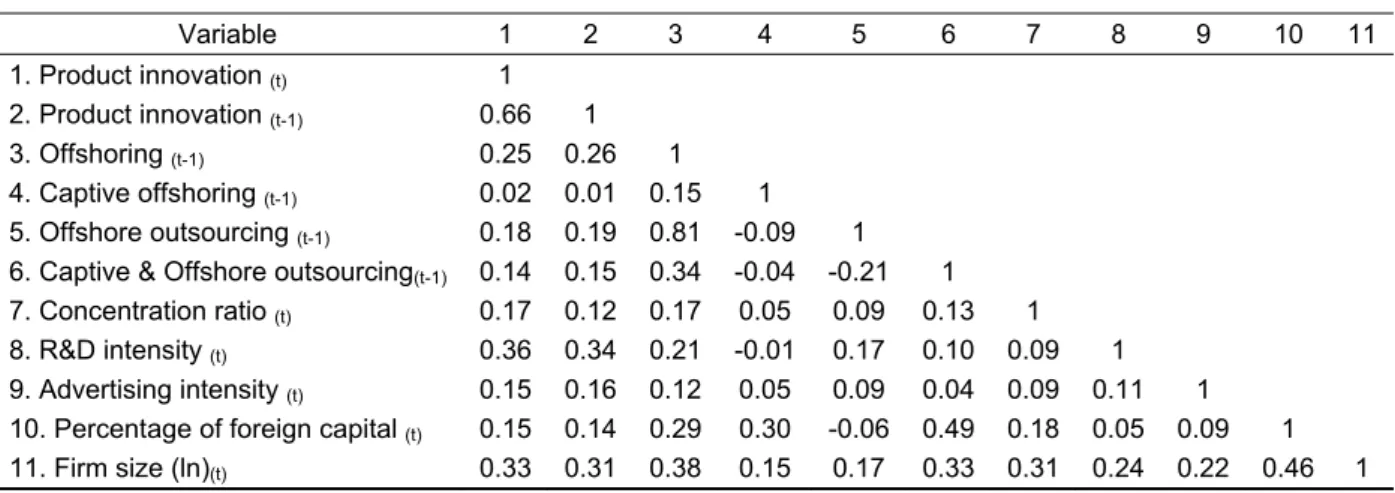
Table 3 presents correlations among the variables used in this study.
Table 3: Correlations (final sample)
Variable 1 2 3 4 5 6 7 8 9 10 11
1. Product innovation (t) 1
2. Product innovation (t-1) 0.66 1
3. Offshoring (t-1) 0.25 0.26 1
4. Captive offshoring (t-1) 0.02 0.01 0.15 1 5. Offshore outsourcing (t-1) 0.18 0.19 0.81 -0.09 1
6. Captive & Offshore outsourcing(t-1) 0.14 0.15 0.34 -0.04 -0.21 1 7. Concentration ratio (t) 0.17 0.12 0.17 0.05 0.09 0.13 1 8. R&D intensity (t) 0.36 0.34 0.21 -0.01 0.17 0.10 0.09 1 9. Advertising intensity (t) 0.15 0.16 0.12 0.05 0.09 0.04 0.09 0.11 1 10. Percentage of foreign capital (t) 0.15 0.14 0.29 0.30 -0.06 0.49 0.18 0.05 0.09 1 11. Firm size (ln)(t) 0.33 0.31 0.38 0.15 0.17 0.33 0.31 0.24 0.22 0.46 1
* All correlation coefficients are significant at the 10% level or better.
We find that our control variables (industry concentration ratio, R&D intensity, advertising intensity, percentage of foreign capital, and firm size) are positively related to product innovation. Similarly, our measures of intermediate production offshoring (offshoring, captive offshoring, offshore outsourcing and captive & offshore outsourcing) are in most cases positively correlated with R&D intensity, advertising intensity, firm size, industry concentration ratio and the percentage of foreign capital.
This indicates that Spanish firms that transfer intermediate manufacturing activities abroad are generally larger and invest more in R&D and advertising than their non- offshoring counterparts. Moreover, offshoring of intermediate production activities is more prevalent in more concentrated markets and in foreign-owned firms.
Regarding our independent variables, they are positively related to each other. The
negative sign of correlations between offshore outsourcing and captive offshoring,
and between captive & offshore outsourcing and offshore outsourcing, and captive
offshoring is logical given the way these variables have been defined. In this respect,
20
it is worth noting that offshore outsourcing and offshoring are very highly correlated (0.81). This suggests that the firms that transfer intermediate products and services abroad mainly resort to offshore outsourcing. With respect to the impact of our independent variables on product innovation, we find a positive correlation between product innovation and all intermediate production offshoring indicators. This hints at a potential positive influence of offshoring, in general and in any of its modalities (captive offshoring, offshore outsourcing, captive & offshore outsourcing), on the innovation of Spanish manufacturing firms.
However, we must exercise caution in interpreting these effects. Correlations neither consider the temporal relationships among the variables nor control for other intervening effects. Thus, we turn to multivariate regression analysis, where we can control for these effects and better capture the relationships among the variables.
4.2. Regression results
Table 4 shows the results of the probit regressions for panel data. Column 1 shows the base model, which only includes the control variables. Column 2 presents the results of the regression expressed in equation (1), therefore including only the first of our independent variables: “Offshoring”. Columns 3 and 4 show the models after sequentially including interaction terms of our independent variables, as expressed in equations (2) and (3), respectively. As already stated, all offshoring variables in these models are lagged one year to take into account that the effect of offshoring of intermediate manufacturing activities on product innovation may not be immediate.
Though not presented in the table, year and industry dummies are included in
regressions as additional controls.
21
Table 4: Probit regressions for panel data (Dependent variable = Product innovation (t))
Variable 1 2 3 4
Offshoring (t-1) 0.1788**
(2.17)
0.1798**
(2.18)
0.1941**
(2.29) Offshoring (t-1) * Captive offshoring(t-1) -0.0625
(-0.22) -0.1153 (-0.40) Offshoring (t-1) * (Captive & Offshore Outsourcing)
(t-1)
-0.1051 (-0.73) Product innovation (t-1) 1.7939***
(21.98) 1.7739***
(21.61) 1.7729***
(21.56) 1.7730***
(21.56) Concentration ratio (t) 0.4456***
(4.19) 0.4395***
(4.12) 0.4395***
(4.12) 0.4390***
(4.11) R&D intensity (t) 10.6402***
(6.16) 10.4907***
(6.05) 10.4730***
(6.04) 10.4757***
(6.03) Advertising intensity (t) 0.6027
(0.43) 0.5772
(0.41) 0.5830
(0.42) 0.5866 (0.42) Percentage of foreign capital (t) -0.0112
(-0.10) -0.0373
(-0.32) -0.0317
(-0.27) 0.0058 (0.05) Firm size (ln)(t) 0.1720***
(5.49) 0.1575***
(4.91) 0.1577***
(4.91) 0.1592***
(4.95)
Constant -2.7025***
(-9.54) -2.6815***
(-9.46) -2.6802***
(9.45) -2.6892***
(-9.47)
N 2502 2502 2502 2502
Log likelihood -700.8817 -698.5331 -698.5079 -698.2442 Wald Chi2 790.94*** 788.91*** 789.00*** 788.33***
*: p<.10; **: p<.05; ***: p<.01 t-statistics appear in (brackets)
Year and industry dummies included, but not presented
The results in Table 4 indicate that innovation is persistent over time. That is, firms that introduced product innovations the year before are more likely to continue introducing product innovations in the current year.
Results for the control variables are similar across estimates. The effect of
concentration of the firm’s primary market on product innovation is positive and
significant, which suggests that highly concentrated markets are the ones that offer
the greatest incentives or pressures for firms to innovate. These results indicate that
firms competing in more concentrated markets are more likely to introduce product
innovations than those that compete in less concentrated markets. The coefficients
for the “R&D intensity” and “advertising intensity” variables (taken as indicators of
firms’ intangible capabilities) are also positive, although only the former are
significant. That is, investments in research and development have a positive,
significant effect on product innovation. This suggests that investments in R&D lead
to the introduction of new products. This result is consistent with previous findings in
22
the innovation literature (e.g., Cohen and Levin, 1989). The “percentage of foreign capital” is the only control variable in which the results vary slightly across estimates.
However, in general, a foreign stake in the firm’s capital has a negative, though not significant impact on innovation. Finally, the association between “firm size” and product innovation is positive and significant, which suggests that larger firms have the resources and capabilities needed to innovate.
Regarding our hypotheses, the results presented in column 2 show a positive, significant association (p<0.05) between the offshoring of intermediate manufacturing activities and subsequent innovation. That is, firms that transferred intermediate production activities abroad the year before are more likely to introduce product innovations in the current year. This result favors hypothesis 1a over hypothesis 1b.
Results in columns 3 and 4 may be interpreted in terms of the sign of the effect of the various governance modes on firm innovation, as well as in terms of whether these effects are significantly different from each other. On the one hand, the coefficient for
“Offshoring” in column 4 indicates that there is a positive and significant influence (p<0.05) of offshore outsourcing of intermediate manufacturing activities on the subsequent introduction of product innovations. That is, imports of intermediate products and services exclusively from external foreign suppliers enhance firms’
propensity to innovate the following year. On the other hand, the positive and significant (p<0.05) coefficient of the same “Offshoring” variable in column 3 indicates that those firms that import intermediate products and services exclusively via offshore outsourcing or simultaneously via captive offshoring and offshore outsourcing will also see an increase in their propensity to introduce product innovations the next year. Lastly, by adding up the coefficients of “Offshoring” and the multiplicative variable “Offshoring*Captive offshoring” in column 3 we can measure the impact that importing intermediate products exclusively through affiliated companies has on firm innovation. Given that their sum is 0.1173, we can argue that there is a positive and significant association between “Captive offshoring”
and product innovation. In other words, the propensity to introduce product
innovations will increase when imports of intermediate products are made exclusively
through affiliated companies. Jointly considered, these results suggest that both
captive offshoring and offshore outsourcing are positively associated to product
23
innovation. These results provide additional evidence supporting hypothesis 1a over hypothesis 1b.
The rest of the coefficients of the independent variables in columns 3 and 4 are negative, though not significant. The fact that neither of these interaction terms is significant indicates that there are no statistically significant differences in the impact of the various offshoring governance modes on firm innovation. That is, we find no significant differences in the innovation propensity of those firms that offshore their intermediate production exclusively through affiliated companies (“Captive offshoring”) and: 1) those others that do it exclusively via non-affiliated firms (“Offshore outsourcing”) or both via affiliated and non-affiliated firms (“Captive &
Offshore outsourcing”); 2) those others that do it exclusively via “Offshore outsourcing” (coefficients for interaction term “Offshoring*Captive offshoring” in columns 3 and 4, respectively). Additionally, in column 4 the non-significant coefficient for the interaction term “Offshoring*(Captive & Offshore outsourcing)”
indicates that we also find no differences in the propensity to introduce product innovations between firms importing intermediate products both via captive offshoring and offshore outsourcing (“Captive & Offshore outsourcing”) and firms importing those intermediate products exclusively via “Offshore Outsourcing”.
Taken together, our findings suggest that, overall, the offshoring of intermediate manufacturing activities enhances firm innovation, and that both captive offshoring and offshore outsourcing positively impact firm innovation (H1a).
5. DISCUSSION AND CONCLUSIONS
In this study we have aimed to analyze the effect of production offshoring on firm innovation. Specifically, we have focused on the impact of the offshoring of intermediate production activities on product innovation. We have done so in a sample of Spanish manufacturing firms from 2006 to 2009.
After providing theoretical arguments for the positive and negative effects of
offshoring (both captive offshoring and offshore outsourcing) on firm innovation, we
have empirically tested whether and how firm-level innovation is affected by
intermediate production offshoring. Our results show a positive and significant
24
association between the offshoring of intermediate manufacturing activities and product innovation. Thus, our findings suggest that product innovation of firms that offshore their intermediate production activities not only will not be hindered but, on the contrary, it will be enhanced. When considering governance modes, this overall positive effect of offshoring on product innovation remains when such activities are transferred abroad through externalization to foreign suppliers (offshore outsourcing), as well as when they are kept in-house and relocated in overseas facilities (captive offshoring). Moreover, we failed to find significant differences among the effect of different governance modes on the innovation of firms in our sample. From an innovation standpoint, our results hint at the potential to obtain benefits from offshoring regardless of the governance mode choice.
We interpret these results as evidence that firms in our sample realized some of the advantages of internationally transferring intermediate production activities, while successfully facing or mitigating the risks inherent in a strategic choice such as this.
In the case of the international outsourcing of intermediate production to external suppliers, firms in our sample may have gained access to the greater resources and more diverse and specialized knowledge of such suppliers. Once incorporated into the firm’s own knowledge base, these may have contributed to increase the firm’s innovation capability. Moreover, firms in our sample may have benefited from a strong learning process resulting from the inter-organizational relations established with suppliers. In turn, this learning may have led to greater innovation. Besides, offshore outsourcing may have allowed firms’ structures to become modular and thus, firms may have attained greater flexibility. Finally, externalization of value chain activities may have allowed these firms to focus on their core capabilities and to invest the freed resources in strengthening their own R&D. All this may have contributed to enhanced product innovation.
When intermediate production was transferred abroad without externalization, we likewise interpret our results as evidence that firms in our sample have realized at least some of the potential benefits of locating their own facilities in foreign countries.
For example, if intermediate production has been relocated to cheaper labor
countries, firms in our sample may have reinvested personnel costs saving in
innovation activities. Or in case intermediate production has been localized in
25
countries with a pool of highly skilled individuals, firms in our sample may have benefited from the superior knowledge and skills of these foreign employees. Human talent is not only a scarce and a fairly difficult to imitate resource, but it is also at the core of innovation processes. In general, firms in our sample may have taken advantage of the knowledge and synergies (both tangible and intangible) derived from a local presence, all of which can contribute to an improvement in their innovative capability.
Aside from benefiting from the several advantages of offshoring, our results might also be interpreted in terms of the ability of firms in our sample to minimize or avoid the potential risks derived from offshoring: mainly, difficulties to coordinate value chain activities dispersed worldwide, to identify specific route for action in each country and to develop trust-based, close relationships with foreign suppliers and affiliates. In fact, in a previous case study, Valle et al. (2011) found that an exhaustive knowledge of the host countries and a strict and careful selection of foreign suppliers allowed the firms analyzed to avoid the potential risks of offshoring.
These firms kept close relations with their foreign suppliers, exchanging information and sharing resources and even values. By establishing long-term agreements and protocols for action based on the learning they had obtained over time in the host countries, these firms looked for continuity, trust and, ultimately, allied partners.
Regardless of the offshoring mode, the protocol for action in all analyzed firms included the expatriation of one or more employees to serve as bonds with the firm in the foreign country. These expatriates had advanced knowledge of the foreign language and had been trained to perform their duties abroad previous to departure.
We believe our study makes contributions to the offshoring literature. While most
research on this topic focuses on the effect of production offshoring on productivity,
employment or wages, our study analyzes –integrating the resource-based view of
the firm and transaction cost theory– its effect on innovation, a field of undoubted
interest today but characterized by a scarcity of empirical research and a lack of
conclusive evidence. Also, unlike much of previous research, our study is firm-level
rather than industry- or country-level and, besides, it is longitudinal. Longitudinal
studies are important in revealing root-cause effect and, thus, in generating new
ideas and theories, and in questioning old ones (Kuula and Putkiranta, 2012).
26
The results from our study also hold important implications for business practice. Our findings may be of great use for business managers involved in offshoring processes or taking them into consideration for the future. At present it is assumed that firms need to make great innovation efforts in order to increase their competitiveness and thus guarantee their survival. It is also considered inevitable for firms to transfer abroad any activities they are unable to carry out internally in the home country in a competitive fashion. Therefore, the fact that the link between both needs is positive represents good news for both firms and countries. Managers should be aware that offshoring of intermediate production not only is not damaging for innovation, but may enhance it and, as a result, may help increase firm competitiveness. Nevertheless, our arguments must be taken with some caution, as our interpretation of results is based on the assumption that even when firms have relocated intermediate production abroad, at least some end production activities are kept in Spain. Results on the effect of offshoring on innovation could be substantially different had firms transferred most intermediate and end production activities, as well as R&D, to a foreign location.
In spite of these contributions, our study is not free of limitations. On the one hand,
our analysis does not consider the countries to which activities are transferred,
although some important factors in successful offshoring stem precisely from the
choice of the target country. For example, the propensity to manufacture offshore
depends heavily on transportation costs (Grunwald and Flamm, 1985), which
depend, in turn, on the distance between countries. On the other hand, although we
include industry dummies as controls in our regressions, there may be differences
amongst industries (primarily depending on innovation speed and technological
intensity) in the propensity to offshore production activities and to innovate. However,
we do not analyze whether the effect of offshoring on firm innovation differs between
firms in high and low technological content industries, or between firms competing in
fast and slow innovation industries. Similarly, ownership structure might as well have
a potential influence on the impact of offshoring on innovation. This may vary
between domestic-owned and foreign-owned firms. Future research would be well
served to examine these issues.
27
In addition to these limitations, we acknowledge that long-term competitive advantage cannot be sustained by product innovation alone (Kotabe and Murray, 2004). Thus, we encourage future research to analyze the effects of manufacturing offshoring not only on product innovation , but also on firms’ overall manufacturing capabilities (i.e., cost, quality, flexibility and delivery), as well as on firm financial performance.
For all the reasons mentioned above, we are cautious to generalize our findings.
Further research would certainly help strengthen our conclusions. However, despite
its limitations, this study stands to contribute to the fields of operations management
and international business.
28
REFERENCES
Acs, Z. J., Audretsch, D. B., 1988. Innovation in large and small firms: An empirical analysis”. The American Economic Review, 78 (4), 678-690.
Alexander, M., Young, D., 1996. Outsourcing: where´s the value?. Long Range Planning, 29 (5), 728-730.
Álvarez, I., Molero, J., 2004. Las empresas multinacionales y la innovación tecnológica: Dinámica internacional y perspectiva española. Información Comercial Española. Revista de Economía, 818, 101-122.
Archibugi, D., Michie, J., 1995. The globalisation of technology: A new taxonomy.
Cambridge Journal of Economics, 19 (1), 121-140.
Argote, L.; McEvily, B.; Reagens, R., 2003. Managing knowledge in organizations:
An integrative framework and review of emerging themes. Management Science, 49 (4), 571-582.
Babcock, P., 2004. America´s newest export: white-collar jobs. HR Magazine, 49 (9), 50-57.
Barney, J., 1991. Firm resources and sustained competitive advantage. Journal of Management, 17 (1), 99-120.
Barthelemy, J., 2001. The hidden costs of IT outsourcing. Sloan Management Review, 42 (3), 60-69.
Berger, S., 2006. Desde las trincheras. Empresa Activa. Barcelona.
Bettis, R.; Bradley, S.; Hamel, G., 1992. Outsourcing and industrial decline. Academy of Management Executive, 6 (1), 7-22.
Brown, D., Wilson, S., 2005. The black book of outsourcing: How to manage the changes, challenges, and opportunities. John Wiley. New York.
Brown, J. S., Duguid, P., 2001. Knowledge and organization: A social-practice perspective. Organization Science, 12 (2), 198-213.
Cantwell, J., Molero, J., 2003. Multinational enterprises, innovative strategies and systems and innovation. Edwar Elgar. Cheltenham.
Casson, M., 2012. The theory of the multinational enterprise from a supply chain perspective. MNE Academy Journal, 7 (5), 1-18.
Casson, M., 2013. Economic analysis of international supply chains: An internalization perspective. Journal of Supply Chain Management, 49 (2), 8-13.
Chesborough, H., 2003. Open innovation: The new imperative for creating and
profiting from technology. Harvard Business School Press. Boston. MA.
29
Coase, R. H., 1937. The nature of the firm. Economica, New Series, 4 (16), 386-405.
Cohen, W. M., Levin, R. C., 1989. Empirical studies of innovation and market structure, in: Schmalensee, R., Willig, R.D. (Eds.), Handbook of Industrial Organization. North-Holland. New York, 1059-1107.
Cohen, W. M., Levinthal, D. A., 1989. Innovation and learning: The two faces of R&D.
The Economic Journal, 99, 569-596.
Contractor, F. J.; Kumar, V.; Kundu, S. K.; Pedersen, T., 2010. Reconceptualizing the firm in a world of outsourcing and offshoring: The organizational and geographical relocation of high-value company functions. Journal of Management Studies, 47 (8), 1417-1433.
Crinò, R., 2009. Offshoring multinationals and labour market: A review of the empirical literature. Journal of Economic Survey, 23 (2), 197-249.
Doig, S. J.; Ritter, R. C.; Speckhlas, K.; Woolson, D., 2001. Has outsourcing gone too far?. McKinsey Quarterly, 4, 24-37.
Dyer, J., Singh, H., 1998. The relational view: Cooperative strategy and sources of interorganizational competitive advantage. Academy of Management Review, 23 (4), 660-679.
Dunning, J. H., 1998. Location and the multinational enterprise: A neglected factor?.
Journal of International Business Studies, 29, 45-66.
Earl, M., 1996. The risks of outsourcing IT. Sloan Management Review, 37 (3), 26- 32.
Ehie, I. C., 2001. Determinants of success in manufacturing outsourcing decisions: A survey study. Production and Inventory Management Journal, 42 (1), 31-39.
Ellram. L. M.; Wendy, L. T.; Kenneth, J. P., 2013. Offshoring and reshoring: An update on the manufacturing location decision. Journal of Supply Chain Management, 49 (2), 14-22.
Fariñas, J. C., Martín-Marcos, A., 2010. Foreign sourcing and productivity: Evidence at the firm level. The World Economy, 33 (3), 482-506.
Feenstra, R. C., 1998. Integration of trade and disintegration of production in the global economy. Journal of Economic Perspectives, 12 (4)