THE UTILITY OF LATENT VARIABLE MODELS IN REFINING BEHAVIOURAL CRIME SCENE ANALYSIS OF SERIAL STRANGER SEXUAL OFFENCES
by
Andrew E. Brankley
Bachelor of Arts in Philosophy, University of Toronto 2009
A thesis
presented to Ryerson University
in partial fulfillment of the requirements for the degree of
Master of Arts in the Program of
Psychology
Toronto, Ontario, Canada, 2014
©Andrew E. Brankley 2014
AUTHOR’S DECLARATION FOR ELECTRONIC SUBMISSION OF A THESIS I hereby declare that I am the sole author of this thesis. This is a true copy of the thesis, including any required final revisions, as accepted by my examiners.
I authorize Ryerson University to lend this thesis to other institutions or individuals for the purpose of scholarly research.
I further authorize Ryerson University to reproduce this thesis by photocopying or by other means, in total or in part, at the request of other institutions or individuals for the purpose of scholarly research.
I understand that my thesis may be made electronically available to the public.
Thesis Title: The Utility of Latent Variable Models in Refining Behavioural Crime Scene Analysis of Serial Stranger Sexual Offences
Degree: Master of Arts Year of Convocation: 2014
Name: Andrew Ernest Josiah Brankley Graduate Program: Clinical Psychology University: Ryerson University
Abstract
Behavioural crime scene analysis (BCSA) is a police tool used to reconstruct an offence based on behaviours. Recently, BCSA has demonstrated clinical utility by predicting recidivism and aiding case conceptualization. However, a systematic review of BCSA models showed a paucity of research evaluating which behaviours are necessary and sufficient to model sexual offences.
Groth and Birnbaum’s sex offender typology, which is based on offence behaviours, provides a theoretical framework that integrates investigative information and clinical practice. The purpose of this thesis was to evaluate statistical- and theory-based approaches to refine BCSA models that distinguish sexual offenders. In Studies 1 through 3, Multidimensional Scaling, Nonlinear Principal Component Analysis, and Latent Class Analysis were used to create statistically-driven and theory-driven behavioural models from 59 serial, stranger sexual offenders. Validity testing of the theory-driven model indicated that applying Groth and Birnbaum’s framework to BCSA could optimize both investigative efforts and clinical decision-making.
Acknowledgements
Alasdair Goodwill. Without you, none of this would have been possible. Thank you for endless support in all my endeavors.
Eric Beauregard. Thank you for collecting such an amazing dataset and letting me use it.
Thesis Committee. Your flexibility and support allowed me to push the limits of my thesis.
My Cohort. My colleagues and my friends, you always acted as a symbol of excellence to which I strove to achieve. I am lucky to be in such brilliant company.
Rose Steele. Your keen eye made my thesis look better than it is.
Arlene Brankley. Of the many gifts you gave me, your love of science and reason are my most cherished.
Nicola Brankley. My expert proofreader, my loving wife, and my best friend.
Andrew E. Brankley. I want to thank all those past versions of me for not giving up on my thesis or myself.
Table of Contents
Title Page i
Author’s Declaration ii
Abstract iii
Acknowledgements iv
Table of Contents v
List of Tables viii
List of Figures xi
List of Appendices x
Introduction 1
Chapter One: Literature Review 4
Collecting Behavioural Data for BCSA 4
Standardized Crime Scene Databases 6
Applying BCSA: Offender Profiling 8
Data Proliferation Due to Lack of Process Research 9 Using Latent Variable Models to Process Crime Scene Behaviour Data 11
Multidimensional Scaling 11
Nonlinear Principal Component Analysis 13
Latent Class Analysis 15
Theoretical Approaches for Processing Crime Scene Behaviour Data 16 Groth and Colleagues’ Typology of Sexual Violence 17
Power 18
Anger 19
Sadism 20 Impact of Groth and colleagues’ Typology 21
Chapter Two: Research Design and Implementation 23
Definition of Sexual Offences 25
Participants 25
Selecting Crime Scene Behaviour Variables 26
Chapter Three: Demographic Information 27
Chapter Four: Initial Examination of Underlying Behavioural Patterns 29
Analyses for Study 1 29
Results for Study 1 31
Discussion for Study 1 33
Chapter Five: Data Refining Based Upon Statistical Criteria 36
Analyses for Study 2 36
Variable Refinement 36
Participant Classification 37
Results for Study 2 38
Nonlinear Principal Component Model 38
Latent Class Model 42
Discussion for Study 2 44
Chapter Six: Theory Driven Data Refinement 48
Item Selection 49
Analyses for Study 3 50
Results For Study 3 51
Nonlinear Principal Component Model 51
Latent Class Model 53
Discussion for Study 3 56
Chapter Seven: External Validity of the Theory-Driven Model 58
Measures 59
Criminal and Psychological History 59
Phallometric Assessment 60
Analyses for Study 4 61
Results for Study 4 62
Model Validity 62
Investigative Utility 63
Clinical Utility 66
Discussion for Study 4 68
Chapter Eight: General Discussion 72
Implications 75
Conclusion 76
References 80
List of Tables
Table 1: Sample Demographic Information 28
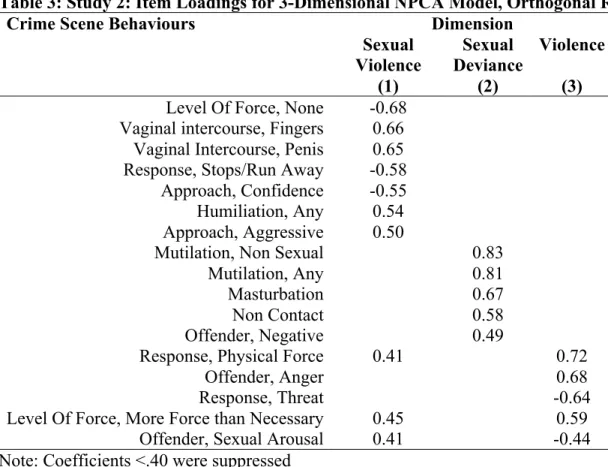
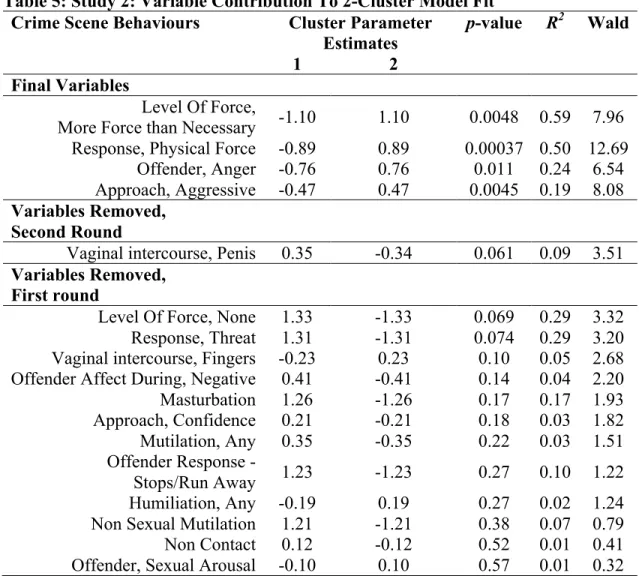
Table 2: Study 2: Vector Coordinates for All Variables in a 3-Dimensional NPCA Model 40 Table 3: Study 2: Item Loadings for 3-Dimensional NPCA Model, Orthogonal Rotation 41 Table 4: Study 2: Initial Fit Indices for Latent Classes 42 Table 5: Study 2: Variable Contribution To 2-Cluster Model Fit 43
Table 6: Study 2: Final Fit Indices for Latent Classes 44
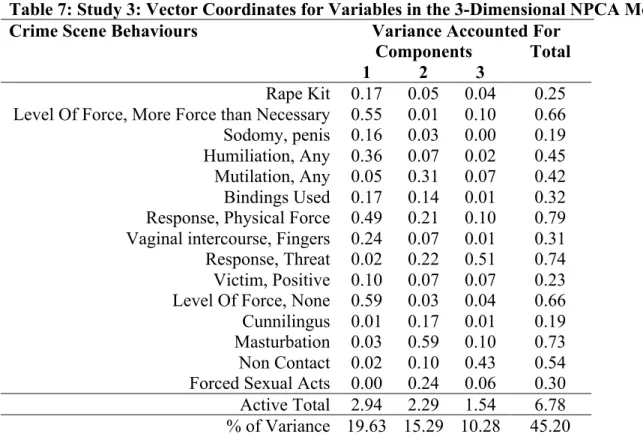
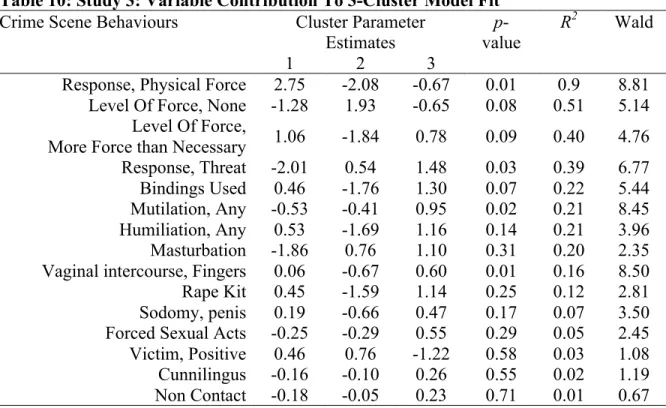
Table 7: Study 3: Vector Coordinates for Variables in the 3-Dimensional NPCA Model 52 Table 8: Study 3: Item Loadings for 3-Dimensional NPCA Model, Orthogonal Rotation 53 Table 9: Study 3: Fit Indices for 1 to 5 Cluster Latent Class Models 54 Table 10: Study 3: Variable Contribution To 3-Cluster Model Fit 55 Table 11: Study 4: Custom Tables Results for Model Validity 63 Table 12: Study 4: Custom Tables Results for Investigative Outcomes 65 Table 13: Study 4: Custom Table Results for Clinical Outcomes 67
List of Figures
Figure 1. Research Outline 24
Figure 2: PROXSCAL Plot of all Crime Scene Behaviour Variable 33
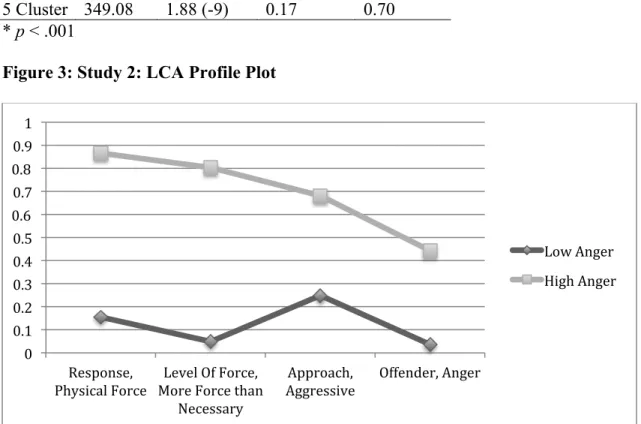
Figure 3: Study 2: LCA Profile Plot 44
Figure 4: Study 3: LCA Profile Plot 55
List of Appendices
Appendix A 77
INTRODUCTION
Compared to all other violent offenders, sexual offenders who target stranger victims are the least likely to be arrested and convicted (Bonnar-Kidd, 2010; Brennan & Taylor-Butts, 2008), the most likely to continue offending (Harris & Hanson, 2004), and the most likely to escalate in terms of frequency of offending and seriousness of violence and sexual deviance (Brankley, Goodwill, & Reale, 2014a; Hewitt & Beauregard, 2013; Stermac & Hall, 1989). For these reasons, improving our understanding of individuals who repeatedly commit sexual offences against strangers is of paramount importance to public safety. Stranger or unknown sexual offenders are individual who came into contact with the victim less than 24 hours prior to the offence (Corovic, Christianson, & Bergman, 2012). Optimizing police efforts to identify and incarcerate unknown offenders, increasing the accuracy of risk assessments in identifying factors associated with risk for reoffending upon release, and tailoring treatments aimed to reduce the criminogenic needs can minimize the impact of sexual violence. Presently, there is a lack of research supporting theories of sexual violence that integrate all three domains. Although sexual violence has been theorized and evaluated in risk assessment and treatment (Beech, Fisher, &
Ward, 2005; Laws & O'Donohue, 2008; Mann, Hanson, & Thornton, 2010; Marshall, 1996;
Marshall & Barbaree, 1990), the perspective adopted in those articles is not readily applicable to police investigations. The unit of focus for clinical research is the individual whose past
behaviours and personal characteristics (e.g., age at first offence, psychopathy, paraphilia diagnosis) are examined and used as a basis for predicting future sexual violence. On the other hand, police investigations of unknown offenders have to focus on the information available, namely a description of offence behaviours (e.g., how the offender approached the victim, level of violence used, type of sexual penetration). This information provides a basis for officers to
make inferences about the offender during their investigation. However, these offence
behaviours are often ignored in clinical research. Indeed, when risk assessment scales include crime scene behaviours, they exclusively focus on victim selection (Hanson & Thornton, 2000;
Quinsey, Harris, Rice, & Cormier, 2006). Therefore, there is an absence of research connecting theories of sexual violence with crime scene behaviours.
When the offender is unknown and there is a dearth of physical evidence to identify suspects, police investigators often rely on crime scene behaviours (Douglas, Burgess, Burgess,
& Ressler, 2006; Hazelwood, Ressler, Depue, & Douglas, 1987). Behavioural Crime Scene Analysis (BCSA) is a tool employed by some police investigators to better understand the offence in question. The process of BCSA usually includes two general steps: (1) collecting evidence from a variety of sources (e.g., victim statements, victimology, geography of offence) and then (2) processing and interpreting evidence by making decisions about the key aspects that characterized the offence. The resulting model is then used to guide various aspects of police decision-making. For example, BCSA is often used as a strategic basis for inferring
characteristics about the offender (i.e., criminal, criminal personality, or offender profiling) (Devery, 2010; Hicks & Sales, 2006), prioritization potential suspects (Douglas, Ressler, Burgess, & Hartman, 1986; Snook, Cullen, Bennell, Taylor, & Gendreau, 2008), and releasing information to the media during an investigation (Ainsworth, 2001). BCSA has also been used when exploring offence consistency (Harbers, Deslauriers-Varin, Beauregard, & van der Kemp, 2012; Schlesinger, Kassen, Mesa, & Pinizzotto, 2010) in order to see if a series of unsolved offences were committed by one person (i.e., case linkage, Bennell, Jones, & Melnyk, 2009;
Bennell & Woodhams, 2012; Winter et al., 2013), and when plotting serial crimes on a map to determine spatial patterns in offending (i.e., geographical profiling (Deslauriers-Varin &
Beauregard, 2013; Goodwill & Alison, 2005). Recently, researchers have argued that crime scene behaviours have clinical utility as predictors of recidivism (Lehmann, Goodwill, Gallasch- Nemitz, Biedermann, & Dahle, 2013) or in aiding treatment conceptualization (Brankley &
Goodwill, 2014). Therefore, BCSA has the potential to be useful across the three aforementioned domains of intervention with sexual offenders. However, BCSA has been criticized for
producing inconsistent results (Snook et al., 2008; Snook, Eastwood, Gendreau, Goggin, &
Cullen, 2007; Snook, Luther, House, Bennell, & Taylor, 2012). Based upon systematic review of BCSA research, Brankley, Goodwill, Reale, Whitney, and Belanger (2014b) proposed that methodological issues plague BCSA research. Specifically, researchers have not attended to the second aforementioned step in constructing a BCSA model: processing and interpreting
behavioural evidence to select variables that are necessary and sufficient to model the offence.
Therefore, the purpose of this thesis is to evaluate methodological approaches in refining BCSA models of sexual violence in cases of serial sexual offences committed by strangers and how these methods could optimize the utility of BCSA models for investigative efforts and clinical decision-making.
CHAPTER ONE: LITERATURE REVIEW Collecting Behavioural Data for BCSA
Unlike many tools created by psychologists to make inferences about human behaviour, BCSA was created by police officers attempting to solve sexual offences in which little forensic evidence was available. In 1986, Special Agent John Douglas and colleagues at the Federal Bureau of Investigation (FBI) published a paper in which they outlined how to derive a
psychological “profile” of an offender by evaluating their crime scene behaviours. In doing so, the authors presented a model for conducting BCSA by first collecting inputs about the offence (e.g., victimology, crime scene, forensic information, location) and then conducting an
assessment of the data, in which they mentally reconstructed the crime to determine the offender’s motivation. Whereas Douglas and colleagues gave only a vague description of the information to be collected from the crime scene, Hazelwood and Burgess (1987) provided a series of 14 questions to ask victims to elicit the details needed for BCSA. Although victims are not always present to provide details of the offence, these questions reflect the key aspects of sexual offences that are needed for BCSA.
Hazelwood and Burgess (1987) outlined a number of important behavioural elements to a sexual offence that future researchers expanded and revised. The victim approach is often the first point of contact that demarcates the beginning of the offence: either non-violent (e.g., a confidence style) or violent (e.g., surprise or blitz). A confidence style approach refers to cases when the offender uses an inconspicuous stratagem or means of subterfuge to gain control over the victim. A famous example was Ted Bundy’s use of a fake cast and a sling to allay
apprehension in young women when he asked them to help him carry groceries to his car (Rule, 2009). In other instances, an offender may surprise the victim and use threats of violence or
immediately apply brutal force (i.e., blitz) to subdue the victim. Indeed, it is important to note the overall use of force in the offence. Level of force may vary from no force, to minimal force (i.e., application of force only needed to keep the victim compliant), to excessive/brutal force. Victims may engage in a variety of resistance strategies (e.g., verbal, physical). However, it is also of paramount importance to note how the offender responded to resistance. Did the offender stop when resisted against? Did s/he run away? Did he use non-physical threats or did he simply use more physical force to overpower the victim? The type of sexual acts should be documented, including non-contact (e.g., offender masturbating in presence of victim), contact (e.g., fondling, kissing), and penetration. Moreover, it should be noted which orifice was penetrated (i.e., mouth, vagina, or anus) and whether it was penetrated with fingers, penis, and/or objects. It has also been suggested that the order of these behaviours may be important as well, e.g., as if it appeared that the offender was playing out a fantasy (Hazelwood & Burgess, 1987). In addition, offenders sometimes experience sexual dysfunction (Carvalho, Quinta-Gomes, & Nobre, 2013; Metz &
Sawyer, 2004), which may provide useful information about the offender. Lastly, affect is important to note. In particular, what was the offender’s dominant emotional state during the offence and how did he perceive the victim (e.g., potentially evidenced by questions or comments made to the victim)?
Sexual offences are comprised of sexual and violent activity in service of an unforeseen need. The aforementioned behavioural-oriented interview questions provide police officers with an opportunity to understand the motivations that might have prompted the sexual offence. But, it still requires police officers to make an inferential leap between observable behaviours and latent motivations. This inference is mired by unstructured methods to reliably extract
behavioural variables. For these reasons, standardized databases improve upon unstructured
interviews as they increase confidence that the same variables are being examined in each offence.
Standardized Crime Scene Databases
Data collection for BCSA has predominantly been conducted in pursuit of identifying and tracking unknown offenders through case linkage or geographical profiling. The two largest national crime scene database programs in North America - the Violent Criminal Apprehension Program (ViCAP) in the United States and the Violent Crime Linkage System (ViCLAS) in Canada - were created in the latter half of the 20th century, largely upon reflection after solving a case of serial sexual homicides. Although these programs have been instrumental in formalizing and centralizing the process of BCSA, researchers have criticized the construction and utility of these databases (Snook et al., 2008; Snook et al., 2007; Snook et al., 2012).
In the 1950s, Pierce Brooks, a detective with the Los Angeles Police Department, was inspired to track crime scene behaviours after a series of American sexual homicides committed by Harvey Glatman. Brooks dedicated the next 30 years of his life to creating a computer database that facilitated the linking of sexual offences and other serious violent crimes. This database was made available to all U.S. law enforcement agencies, in effect allowing police departments to better coordinate communicative and investigative efforts on potentially linked crimes (FBI, 2008; Howlett, Hanfland, & Ressler, 1986). On May 29th, 1985, analysts began entering case reports on the new ViCAP database at the FBI Academy in Quantico, Virginia (Howlett et al., 1986). ViCAP has now been active for almost 30 years, with over 5,000 police agencies adding more than 85,000 cases to the database (FBI, 2008).
Canadian law enforcement began reviewing their methods for tracking violent offenders in the 1980s, however, it was the series of 11 Canadian sexual homicides committed by Clifford
Olson that spurred officials into the process that would ultimately lead to the development of ViCLAS. The first iteration of this program was the Major Crimes File (MCF) developed by the Royal Canadian Mounted Police (RCMP) after reviewing ViCAP procedures (Wilson & Bruer, n.d.). The MCF had accrued 800 cases by 1990, but it did not provide any cases based on similar crime scene behaviours (Wilson & Bruer, n.d.). After training with the FBI, Inspector Ron MacKay was charged with evaluating and improving the MCF’s ability to identify sexual offence series. Inspector MacKay collaborated with police officers and with Dr. Peter Collins of the Clarke Institute of Psychiatry in Toronto, Ontario before spending a year revising MCF into the present ViCLAS system (Collins, 1998; Wilson & Bruer, n.d.). The RCMP maintains that sexual offenders are driven by insatiable fantasies and, thus, they have based many of their 262 ViCLAS variables on this assumption (Collins, 1998; Wilson & Bruer, n.d.). There were 300,000 cases entered into the ViCLAS database as of 2007, leading to the identification of 3,200
linkages. The over 88,000 offence series presently on ViCLAS demonstrate the large number of serial offences committed against Canadians (Wilson & Bruer, n.d.).
The first and most important step of BCSA is data collection. Errors or inconsistency in data collection will skew interpretations and distort the desired application. However, BCSA is more than just data collection. On their own, databases such as ViCAP and ViCLAS neither link violence offences nor produce criminal profiles. Rather, these databases are repositories of information for police officers to review if needed for an investigation; there is currently no clear scientific process for extracting variables. This state of affairs likely arose because most research using BCSA focuses on outcomes (e.g., predicting background characteristics, case linkage) rather than on evaluating the validity or utility of the process used to derive those outcomes.
Hence, BCSA has often been evaluated through utilitarian thinking by evaluating the strength of
its predictions. There is no more well-researched or famous application of BCSA than offender profiling.
Applying BCSA: Offender Profiling
Predicting behaviours from characteristics is a common research design in psychology (Ajzen, 1987); however, offender profiling is based on the assumption that offender
characteristics can be predicted by crime scene behaviours. Evaluating how BCSA has been used to predict offender characteristics will provide information on how previous researchers have progressed in selecting behavioural variables. Offender profiling is employed to identify
potential characteristics of the offender (Douglas et al., 2006; Scott, Lambie, Henwood, & Lamb, 2006) by making inferences using crime scene behaviours (otherwise known as criminal,
criminal personality, or offending profiling). Profiling is based on a series of inferences made by identifying behavioural patterns that relate to an offender’s characteristics, such as modus operandi (i.e., action taken by an offender during the perpetration of a crime) and signature (i.e., an individualized set of behaviours that can point specifically to an offender’s personality).
Canter (1995, 2004) described offender profiling using the “Aà C” equation. In this equation,
“A” refers to actions and behaviours related to the offence in question; the content of A is determined through the first step of BCSA. “C” refers to characteristics about the offender that are inferred (“à”).
One of the earliest notable instances of profiling occurred in November 1888 in the Whitechapel area of London, England for a series of five unsolved, gruesome sexual murders.
Dr. Thomas Bond, a consulting physician and considered by some to be the first offender profiler, surveyed the forensic evidence available and constructed an offender profile on one of the most famous unidentified offenders, labeled by the local media as Jack the Ripper (Canter,
2004). As early as the 1940s, the FBI similarly recruited mental health professionals to analyze crime scene behaviours and establish profiles of unknown offenders (Schlesinger, 2009). These attempts were not always prosperous, however, one successful example in the early half of the 20th century was the 1950s case of the Mad Bomber. Psychiatrist James Brussel constructed a profile, based upon photographs of the crime scene and descriptions of the bombs, that led to the successful apprehension of George Metesky (Schlesinger, 2009). Brussel’s profile was
constructed from assumptions about the stability of the underlying psychological constructs causing this criminal behaviour. Certainly by the early 1970s, police investigators regularly obtained advice from mental health professionals in cases of unknown serial sexual offences in the United States (Reiser, 1982) and the United Kingdom (Canter, 1994). Notwithstanding the debt owed to profiling pioneers by current forensic investigators and researchers, reliably identifying relevant offender characteristics from BCSA is more difficult than was initially assumed (Mokros & Alison, 2002).
Data Proliferation Due to Lack of Process Research
As noted earlier, researchers using BCSA have often focused on outcomes (i.e., offender profiling, case linkage). But caution is advised in evaluating the specific variables used in these studies as there is a dearth of research evaluating which crime scene behaviour variables are necessary and sufficient to model a sexual offence and how to model these variables. In other words, there has been considerable emphasis on the “C” of the AàC equation, without first evaluating how to measure A. In a recent unpublished review of all empirical papers that utilized some form of BCSA in sexual offences, Brankley and colleagues (2014b) identified over 1,300 distinct crime scene behaviours across 76 different studies. The behavioural variable sets used for input in BCSA studies varied from 4 variables (Myers & Chan, 2012) to 357 variables
(Ressler, Burgess, Douglas, Hartman, & D’Agostino, 1986). Almost 70% of the variables were used only in one study. Also, the level of detail in crime scene behaviours variables varied between some studies. For example, whereas Santtila et al. (2008) coded only the presence of binding at a crime scene, Fujita and colleagues (2013) specified whether bindings were used to restrain the victim or were the cause of death. Importantly, lack of consistency was not
necessarily due to poor judgment by the researchers but to limitations in what was available to be coded. Moreover, researchers often just reported their final variable list, leaving it uncertain as to how the list was formed. When data were used from a database, did they use all available
behavioural variables? Or did they select variables, and if so, how did they make their decisions?
Contrarily, if the researchers had secondary sources (e.g., police reports, offender interviews) or a primary source (e.g., crime scene photographs), how did they proceed in defining and
collecting their data? This vast array of decisions often goes unmentioned, yet is crucial to evaluating the behavourial model produced by BCSA.
The paucity of BCSA research on data processing may be related to a recommendation by Canter (2004) who stated that researchers should focus on the inferences made using BCSA.
Though investigating these outcomes are of utmost practical importance to using BCSA, one must first, however, evaluate how the behavioural variables were selected. Unwittingly, researchers could have over- or under-emphasized the level of behavioural detail in efforts to detect their desired outcomes. However promising, the results may be trivial if the behavioural model is idiosyncratic to a sample and does not have any meaningful connection to theories of sexual offending. Data collection without a clear method for selecting variables that are
meaningfully related to underlying constructs may produce BCSA research that is ambiguous. A
variety of statistical methods can be used to evaluate behavioural models of sexual offences to remedy this issue.
Using Latent Variable Models to Process Crime Scene Behaviour Data
Researchers using BCSA in their studies have either focused on the manifest aspects of the behaviours or made inferences about underlying latent variables. Latent variables have about as many slightly different definitions as they have alternative names (e.g., unmeasured or
unobserved variables, true scores, factors, or constructs). However, many agree that latent variables are not real, they are produced by scientists to test their theories (Bollen, 2002). A variety of latent variable models exist in BCSA research; their differences are based upon the measurement levels of the manifest variables and the latent variables. Behavioural variables are nominal, existing almost exclusively in a dichotomous format (i.e., the behaviour was present in the offence or not). Therefore, the various options in latent variable models depend upon the desired measurement level of the latent variables. The most common latent variable modeling procedure used in BCSA research is Multidimensional Scaling (MDS), which provides continuous measures of latent variables.
Multidimensional Scaling
MDS may be used at an exploratory level of inquiry with latent variables as it provides an easy to interpret visual output of the degree of similarity or dissimilarity between behavioural variables. It is often used as an alternative to factor analytic methods, which require that the variables be normally distributed. The straightforward output and relatively few assumptions make MDS a common method in exploratory data analysis. However, MDS does not allow for a fine-grained analysis of the contribution of both the individual variables and the overall model in explaining variance in the dataset. Nonlinear Principal Component Analysis (NPCA) provides a
viable, yet underutilized, alternative to principal components analysis (Jolliffe, 2002) that also provides a continuous level of measurement for underlying latent variables. Although it is similar in many ways to MDS (e.g., they both examine behavioural dimensions), NPCA can expand the results of a MDS analysis by providing a means of removing variables that do not contribute to overall model fit. Utilizing this facet of NPCA would provide researchers with the means to address the data proliferation discussed previously.
Canter and Heritage’s 1990 paper on a multivariate model of sexual offence behaviours began the trend of using MDS to conduct BCSA in research. The null hypothesis in MDS is that variables have no reliable influence on each other; for example, the fact that an offender binds a victim’s limbs will neither increase nor decrease the chance of the offender also gagging the victim (Canter & Heritage, 1990). The assumption in MDS is that the underlying behavioural structure will be observed most accurately by examining the relation between all analyzed variables simultaneously through a graphical output that represents the overall relationship between variables as a function of the Euclidian distance between variables. The actual
measurable distance between variables on the output is meaningless. The reliability of relative differences, however, provides insight into how changes in variables influence other variables.
Using this method, the task of interpreting underlying dimensions is a subjective process of analyzing the pattern of data points, referred to in Facet Theory (Canter, 1985) as the regional hypothesis (Canter & Heritage, 1990). Facets can be grouped using the principle of contiguity (Foa, 1958), which states that variables will be empirically correlated due to their functional relationship. The regional hypothesis can be interpreted as an extension of this approach; thus, variables that have shared facet elements will be in the same area of space (Canter & Heritage,
1990). This approach provides an opportunity to generate hypotheses about the nature of regional structures in the MDS output, i.e., the behavioural themes (Canter, 2000).
The accuracy of MDS models are not easily measurable, as accuracy depends upon a complex combination of the number of variables, the amount of error in the data, and the logical strength of the interpretative framework (Canter & Heritage, 1990). In particular, the selection of variables to identify the behavioural patterns in sexual offences has shown great variability across studies. Therefore, whereas MDS provides an excellent means to initially explore behavioural themes, other latent class models can better evaluate which variables are necessary and sufficient to model these themes (i.e., NPCA) and classify offenders into meaningful groups (i.e., LCA).
Nonlinear Principal Component Analysis
NPCA is conducted using many of the same assumptions as MDS: specifically, the null hypothesis is that there is no relationship between the variables. Also, the output of NPCA is highly dependent on the variables inputted to the analysis. However, NPCA allows researchers to do three things that MDS does not (Linting & van der Kooij, 2012): (1) use eigenvalues to
measure the variance accounted for (VAF) by each principle component (e.g., underlying themes), (2) measure the VAF by each crime scene behaviour variable indicated by the sums of squared component loadings per variables, and (3) measure the strength of the relationship between crime scene behaviour variables and the components through loading coefficients.
This author is unaware of published comparisons between MDS and NPCA. MDS has often been compared in other areas of psychology with linear Principal Component Analysis and Factor Analysis (FA). Silverstein (1987) found that a FA method was a preferable method when conducting component analysis of the Wechsler’s intelligence scales, as MDS often failed to
extract the first component of the scales – general intelligence. In a more recent comparison of MDS and FA in a study about cognitive abilities, Tucker-Drob and Salthouse (2009) found that MDS models were unable to account for multiple factor loadings. In the radex approach, the simplex and the circumplex of the MDS output are interdependent, i.e., higher loading on the general, spatially central facet is conversely associated with less domain specificity. Last, Tucker-Drob and Salthouse noted that the primary advantage of MDS is the visual nature of the output, which, although unique, is primarily qualitative in nature and is not as quantitatively descriptive as FA. In short, MDS has several advantages at an exploratory stage in data
processing. However, NPCA extends understanding of those behavioural dimensions by refining the variables and components of interest through convergence of statistical results.
NPCA provides a means to more rigorously model latent behavioural dimensions.
However, what is unclear is if these dimensions meaningfully distinguish groups or types of offenders. The dimensional/categorical distinction is a distinction present in the diagnosis of mental illness (e.g., Brown & Barlow, 2005; Widiger & Samuel, 2005). This statement is not meant to imply that patterns in sexual offending are a form of mental illness, rather, the analogy with psychopathology underscores the benefits and limitations of using either a dimensional or categorical approach. Evaluating dimensional latent variables in offending behaviour are likely to have high validity, as they will communicate additional information about the offenders that would be lost in a more descriptive MDS model. But, categorical latent models provide increased utility as they provide clearer support for decision-making, such as differentiating offenders (Park, Schlesinger, Pinizzotto, & Davis, 2008; Salfati & Taylor, 2006).
While MDS and NPCA both provide a continuous measure of latent variables,
categorical measures are often argued to be of more use to professionals who rely upon these
models for decision making purposes, e.g., in clinical diagnosis (First, 2005). An alternative to MDS and NPCA that provides a categorical model of latent variables is Latent Class Analysis (LCA). LCA provides researchers with the ability to sort participants into categories depending on the likelihood of engaging in behavioural variables. Indeed, the three methods complement each other well: MDS simplifies initial data exploration through defining important constructs, NPCA facilitates further exploration of behavioural themes and provides a means to remove unnecessary variables, and LCA allows participants to be classified into independent groups.
Latent Class Analysis
MDS and NPCA can help differentiate between behavioural variables, and LCA helps differentiate between offenders. Lazarsfeld and Henry (1968) introduced LCA as a multivariate technique used to create latent classes in which participants could be categorized, based upon a series of dichotomous indicator variables. An assumption in LCA is that individuals in the sample meaningfully differ and form sub-groups (Lanza, Flaherty, & Collins, 2003). However, the underlying constructs that define these subgroups are not directly measureable (i.e., they are
“latent”); therefore, observable variables have to be selected based upon the theoretical likelihood that they are measuring the intended latent variables. There are two further
assumptions underlying LCA. First, it is assumed that sample participants are only members of one latent class (Goodman, 1974). Second, these latent classes are assumed to be unrelated to each other, which is referred to as the assumption of local independence (Vermunt & Magidson, 2003). At its core, the latent class model is expected to explain all of the associations between the observed variables. LCA has been described as a categorical data analogue to NPCA and FA (McCutcheon, 1987). LCA has also been used to statistically evaluate the models created
through MDS and expert opinion (Pacini et al., 2014). LCA has been used in BCSA research
(Deslaurieres-Varin & Beauregard, 2010; Vaughn, DeLisi, Beaver, & Howard, 2008); yet, there is no evidence that it has been used to evaluate the specific contribution of variables to
underlying behaviour classes. Comparing LCA with MDS and NPCA in the present study will balance different statistical approaches to modeling latent variables. Interpreting these variables provides a theoretical evaluation of these models. If statistical model improve our understanding of sexual offences and the individuals who commit them, they are of great utility. So, further research on the association between behavioural models and behavioural theories of sexual offences is warranted to increase the utility of BCSA.
Theoretical Approaches for Processing Crime Scene Behaviour Data
Multivariate analysis provides a statistical method to model patterns in sexual offences and this analysis has to be driven by a theoretical framework. A primary postulate in the investigation of individuals who commit sexual offences is that they are not all alike (Groth &
Birnbaum, 1979; Marshall & Barbaree, 1990). A vast number of typologies have been proposed based upon various distinctions amongst offenders (Anderson, Kunce, & Rich, 1979; Briggs, Simon, & Simonsen, 2011; Cohen, Seghorn, & Calmas, 1969; Gebhard, Gagnon, Pomeroy, &
Christenson, 1965; Guttmacher & Weihofen, 1952; Kopp, 1962; Sewall, Krupp, & Lalumiere, 2013). For example, one of the earliest investigative typologies was Hazelwood and Douglas’s (1980) organized/disorganized distinction of violent, serial offenders. Hazelwood and Douglas based this distinction on the manner in which the crime was committed. Organized offenders were described as intelligent and often psychopathic (i.e., callous and manipulative), often engaging in forensic counter measures (e.g., using a disguise, condom, gloves to avoid fingerprint detection) and leaving clean crime scenes. On the other hand, an offence was categorized as committed by a disorganized offender when there was a high degree of physical
evidence, the environment was greatly disturbed or ransacked, and/or little effort was made by the offender to avoid detection (e.g., no/little cleaning of the crime scene). These offenders were assumed to be less intelligent or even psychotic (e.g., experiencing delusions or hallucinations) and to have made little attempt to alter their crime scene (Holmes & Holmes, 2000).
Later, a third category was added to this typology: the mixed offender who displays aspects of organized and disorganized offences (Douglas et al., 2006). Several police services, e.g. the FBI, have readily adopted this typology and it is often associated with BCSA and profiling efforts. However, empirical findings create doubt about its validity (Canter, Alison, Alison, & Wentink, 2004). Another approach is to base the typology around the motivations for the sexual offence. Sexual assaults necessarily imply the presence of violence and sexual acts.
The degree of violence used and the level and quality of sexual behaviours may provide insight into the offenders’ motivations, which many agree are central to predicting offender
characteristics (Andrews & Bonta, 2010; Beech et al., 2005; Ward & Stewart, 2003). Indeed one of the most impactful sex offender-specific motivation-based typologies was developed from clinical observations and interviews conducted by Nicholas Groth and colleagues (Groth, Burgess, & Holmstrom, 1977; Groth & Birnbaum, 1979).
Groth and Colleagues’ Typology of Sexual Violence
Groth and colleagues (1977) proposed one of the earliest and most parsimonious typologies of sexual assault. This typology emerged from clinical observations of over 500 offenders. Six different samples of sexual offenders were examined: offenders who were not apprehended (and therefore known only through victim reports), offenders who were identified but were never prosecuted, offenders who were apprehended but found not criminally
responsible for their crime, offenders who were tried but not convicted, offenders who were
convicted of sexual assaults, and offenders who were convicted and were identified as being dangerous and at a high risk for reoffending (Groth & Birnbaum, 1979). In the earliest version of their typology, Groth and colleagues categorized offenders as committing offenses based upon power or anger. Power refers to offences motivated by conquest and control. Anger assaults, on the other hand, are characterized primarily by rage and fury towards the victim. Later, in the 1979 book Men who rape: The psychology of the offender, Groth and Birnbaum expanded a rarer third category, sadism, in which violence and pain are used as a means for sexual gratification.
Though this framework was developed for non-homicide sexual assaults, it has influenced attempts to classify other sub-populations of sexual offences such as intrafamilial sexual assault (Chaffin, 1992), male on male sexual assault (Almond, McManus, & Ward, 2014), homicide (Keppel & Walter, 1999; Myers, Husted, Safarik, & O'Toole, 2006), and child victims (Guay, Prouix, & Ouimet, 2001; Rebocho & Goncalves, 2012). Aspects of this typology have also been predictive of outcomes such as treatment difficulty (Lin, Maxwell, & Barclay, 2000), personality (Lu & Lung, 2012), treatment completion (Chaffin, 1992), and previous criminal convictions (Goodwill, Alison, & Beech, 2009).
Power. Themes of ownership, possession, and conquest typify power assaults. Offenders engaging in these types of attacks are often motivated to control their victims to bolster their faltering sense of their own masculinity. Moreover, these offenders desire to sexually arouse their victim to demonstrate their sexual prowess. Therefore, power offenders are usually curious and concerned about the victims’ thoughts regarding the sexual interaction. The individual committing the offence usually suffers from feelings of inadequacy and lack of sexual intimacy (Groth & Birnbaum, 1979). Arguably, the primary motivation of the offence is using sex to empower and reassure the offender’s perception of self-worth. Violence is engaged in, out of
service to this primary motivation, to control the victim (Shipley & Arrigo, 2008). These types of offenders are more likely to engage in sexual acts that would mimic consensual sexual
encounters (e.g., cunnilingus, masturbation) than in more deviant or degrading sexual behaviour (e.g., object penetration, humiliation). In response to resistance, the offender will be more likely to use threats (e.g., “If you do not want to get hurt, do what I say”) rather than physical force to maintain control over the victim (Groth & Birnbaum, 1979). An individual who commits these types of sexual assaults has few, if any, intimate relationships; may fantasize that the victim may secretly be in love with him; may delusionally believe the victim is not actually being hurt; and will force the victim to engage in sexual behaviours to fulfill the offender’s fantasies (Keppel &
Walter, 1999). In the earliest version of the framework, Groth and colleagues (1977) divided power offenders into those primarily interested in intimacy (i.e., power-reassurance) or those primarily interested in dominance (i.e., power-assertive). However, this distinction was not always maintained (Groth & Birnbaum, 1979).
Anger. Offences are categorized under “Anger” due to the usage of high levels of force and violence, as well as a hatred of women. Sexual behaviours are used as a means to further this motivation of hostility towards the victim rather than as a means for gratification. Indeed,
sexuality and intimacy may actually be viewed with disgust by these individuals and motivate their need to punish their victims (Pardue & Arrigo, 2008). The fury and rage that characterize the motivation of anger offenders stands in stark contrast to power offences, where pseudo- intimacy and conquest are the goals. Interviews with these offenders revealed a sense of loss of control, where the offence was engaged in as a means of expelling pent up feelings of aggression (Groth & Birnbaum, 1979). BCSA research evidences the notion that anger offenders are more likely to use brute force (e.g., bludgeoning) to beat the victim into submission (Bennel,
Bloomfield, Emeno, & Musolino, 2013; Keppel & Walter, 1999). Similar to power, anger was first divided into two subtypes: retaliatory and excitation (Groth et al., 1977). The descriptions of anger assaults mentioned thus far were largely attributed to the subtype of anger retaliatory.
Groth and colleagues also described another subtype, called “anger excitation”, characterized by sexual arousal associated with pain and suffering of the victim. Groth and Birnbaum altered the nomenclature of anger assaults in Men who rape, separating the excitation subtype into a new category, sadism, and leaving retaliatory as the sole type of anger.
Sadism. Individuals who use violent and demeaning behaviour in their offences as a means to increase their sexual arousal are categorized into the third typological class, sadism.
Previous researchers (Alison, Bennell, Mokros, & Ormerod, 2002; Bennell et al., 2013; Dietz, Hazelwood, & Warren, 1990; Mokros & Alison, 2002; Proulx, Blais, & Beauregard, 2005;
Ressler & Shachtman, 1992; Warren, Hazelwood, & Dietz, 1996) have identified a number of crime scene behaviours relevant to sadism, such as torture, binding victims blindfolded or gagged, kidnapping, humiliation, torture, asphyxiation as primary means of death, trophies collected, foreign object penetration, use of a rape kit, and postmortem sexual acts or mutilation.
Unlike power or anger, sadism existed as a meaningful sexual-offence construct prior to its inclusion in Groth and Birnbaum’s (1979) typology. Sadism is most often defined as a paraphilia in the Diagnostic and Statistical Manual of Mental Disorders (DSM; American Psychiatric Association [APA], 2013). Specifically, it is defined as Sexual sadism disorder and characterized by “recurrent and intense sexual arousal from the physical or psychological suffering of another person, as manifested by fantasies, urges, or behaviors” (APA, 2013, p. 695). Prevalence rates in the correctional population vary due to documented issues of diagnostic reliability (Yates, Huck,
& Kingston, 2008). The DSM 5 reported that at least 10% of all sexual offenders are likely to
have reported symptoms that meet criteria for sadism, with estimates climbing to 37-75% in the subpopulation of individuals who committed sexually-motivated homicide (APA, 2013).
However, researchers typically report frequencies of sadism at around 5-10% (e.g., Abel, Becker, Cunningham-Rathner, Mittelman, & Rouleau, 1988).
Impact of Groth and colleagues’ typology. The power, anger, and sadism typology has been influential in many subsequent classification systems of sexual offenders. Hazelwood (1987) adopted the subdivided power and anger model, adding a new category of “opportunistic”
to describe individuals whose sexual assault was incidental and was committed during the act of another crime (e.g., robbery, home invasion). Canter and Heritage (1990) developed a more statistically driven typology influenced by power, anger, and sadism. Using MDS analyses, they evaluated five behavioural themes of offence behaviours: intimacy, sexuality, violence,
impersonal, and criminality. Intimacy and sexuality include behaviours reminiscent of the power category. Intimacy is characterized by behaviours such as complimenting or asking questions of the victim; sexuality is characterized by performing or receiving oral sex. Violence includes behaviours that could be present in both anger and sadism (e.g., physical or verbal violence).
Criminality includes several behaviours that directly relate to sadism (e.g., binding and gagging) if they were motivated by sexual arousal rather than control. Indeed, an enduring issue with BCSA is that behaviour may be produced by distinct motivations. To better characterize motivation, Canter and colleagues (Canter, Bennell, Alison, & Reddy, 2003) expanded upon Groth and Birnbaum’s (1979) classification system, arguing that offenders can also be classified based upon the severity and quality of harm to the victim. Their work produced four thematic styles: hostility, control, theft, and involvement. In a previous version of the model (Canter et al., as cited in Santtila, Junkkila, & Sandnabba, 2005), the theft type was incorporated within the
control theme. This combination of control and theft is consistent with power offences characterized by theft from the victim and threatening the victim verbally or with weapons to achieve control.
The power, anger, and sadism framework has also influenced clinical practice through treatment driven typologies. An alternative to the investigative-driven typology was produced by Canter and colleagues is the Massachusetts Treatment Centre Rape Classification System (MTC, Knight & Prentky, 1990). Currently in its 3rd version, it is used to aid in the assessment and treatment of sexual offenders. Throughout the various iterations of this typology, four themes have been present: degree of violence in the offence, presence of antisocial traits in the
offenders, the presence of sexual motivation, and sadism (Polaschek, 2003). Of the 9 types in the MTC:R3, Type 3, pervasively angry, and Types 4 and 5, sadistic, directly relate to the categories Anger and Sadism respectively (Knight & Prentky, 1990). Whilst other typologies exist, both related and unrelated to Groth and Birnbaum’s (1979) framework, Canter’s behavioural thematic model and the MTC:R3 are quite influential in their respective fields (Brown & Forth, 1997;
Marshall & Kennedy, 2003; Salfati, 2003; Salfati & Canter, 1999). Moreover, in Goodwill, Alison, and Beech’s (2009) comparative study of behavioural models in BCSA, the authors found the models that performed best (e.g., predicting an offender’s previous convictions) were all based on Groth and Birnbaum’s framework. Therefore, the typology of power, anger, and sadism was adopted in the current study as the theoretical framework to evaluate behavioural models of sexual violence.
CHAPTER TWO: RESEARCH DESIGN AND IMPLEMENTATION
There is a paucity of research specifically investigating which crime scene behaviours are both necessary and sufficient to model sexual violence. The purpose of this thesis was to explore multivariate methods for constructing BCSA models that directly inform the investigation of sexual offenders, as well as the assessment and treatment of those offenders. Four research objectives, as outlined graphically in Figure 1, were explored across four studies on BCSA data of serial sexual offences committed by strangers. In Study 1, patterns in sexual offences were explored using MDS analysis. In Study 2, a statistical criterion (i.e., p < .05) was used to refine statistical models of sexual violence. First, NPCA was used to refine variables into themes and the LCA was used with the remaining variables to classify participants. The statistical criterion approach was contrasted in Study 3; a behavioural model was constructed by selecting variables consistent with Groth and Birnbaum’s (1979) categories of power, anger, and sadism. NPCA and LCA were used in Study 3 to evaluate whether a theoretical criterion method for variable
refinement produced a model that was a good fit for the data. To further evaluate the theoretical model, model validity and practical utility were evaluated in Study 4 by predicting participants’
background characteristics. The impact of this investigation was to underscore the importance of evaluating data by identifying superfluous variables that do not contribute towards an
understanding of sexual violence. This approach will begin a body of research for future researchers to reference in developing a tool for BCSA that will validly identify these behavioural typologies in sexual offences.
Figure 1. Research Outline
Study 4 Investigative
Utility
Clinical Utility Objective 4:
External Validity
Study 3
Theoretical Criterion (Power, Anger, Sadism)
Study 2
Statistical Criterion (p < .05)
Latent Class Analysis Objective 1:
Explore Variables
Objective 2: Refine Variables
Objective 3:
Classify Participants
Nonlinear Principle Component
Analysis
Latent Class Analysis Nonlinear Principle
Component Analysis Study 1
Multidimensional Scaling
Model Validity
Definition of Sexual Offences
Sexual offences were defined according to Canadian standards. In Canada, sexual offences are divided by the Criminal Code (1985) based on crime scene behaviours: (1) Sexual Assault level 1 (s. 271), which involves assault, is defined in section 265 as a touching of a sexual nature, without the consent of the complainant, and which violates the sexual integrity of the victim; (2) Sexual Assault level 2 (s. 272), whereby the offender (a) carries, uses, or threatens to use a weapon, (b) threatens to cause bodily harm to a person other than the victim, (c) causes bodily harm to the victim, or (d) is a party to the offence with any other individual; and (3) Aggravated Sexual Assault (level 3, s. 273) where an individual assaults, wounds, maims, disfigures, or endangers the life of another. Stranger sexual offences are defined as the offender first coming into contact with the victim less than 24 hours prior to the offence (Corovic et al., 2012).
Participants
Data for the present study was extracted from a larger database on serial sexual offences collected by Eric Beauregard. Participants were individuals incarcerated in a Correctional Service of Canada penitentiary (an institution where inmates serve a sentence of two years or more) located in the province of Québec. Inclusion criteria were that participants had committed two or more sexual offences, at least one victim was a woman, and the victim was a stranger.
Beauregard constructed a semi-structured interview to collect behavioural information about participants’ offences. Interviews were conducted in either French or English and ranged from 2 to 12 hours, depending upon the number of offences committed. Also, participants provided consent for researchers to access their correctional files. The content of these files varied
depending on the offender but reliably included in the original police reports from their offences
as well as psychological reports conducted during the penitentiary intake. Although this sample is part of a larger database that has been utilized in a number of publications to date (e.g., Beauregard, Proulx, Rossmo, Leclerc, & Allaire, 2007; Beauregard, Rossmo & Proulx, 2007;
Oziel, Goodwill, & Beauregard, 2014), subsets of variables used in the present study differ from previous research.
Selecting Crime Scene Behaviour Variables
Beauregard’s interview included questions about 77 crime scene behaviours. The main focus of the larger study was to analyze patterns between crime scene behaviours and
geographical location. Upon review, 41 variables were specific to modeling geographical
patterns (e.g., victim release site, description of the vehicle used in the offence). For the purposes of the current study to model offence behaviours more generally (i.e., not specifically geographic patterns), these variables were removed, leaving 36 usable behavioural variables. Serial offences were then collapsed and recoded, as the unit of measure was the individual committing the offences and not the offences themselves. The new variables indicated whether participants ever engaged in specific behaviours regardless of frequency. This approach provided an inclusive measure of the participants’ behavioural repertoire. Please see Appendix A for the variable pool and Beauregard’s coding guide for the 36 variables; all variables were measured dichotomously based upon their presence in a participant’s given case file.
CHAPTER THREE: DEMOGRAPHIC INFORMATION
Data for this current study were obtained from a database in which participants had been recruited between 1995 and 2004 from multiple correctional sites of varying security levels in the Canadian province of Québec. Amongst the thousands of sex offenders incarcerated during this period, only 59 individuals met the inclusion criteria and also agreed to participate in this research. The sample size was still relatively small despite the fact the database represents over a decade of province-wide data collection. The ages of participants at the time of the offences ranged from 18 to 55 years (M=30.73, SD=9.40). The first language for a majority of the participants was French (N=52, 88.14%). Participants offended against a total of 277 females, with the number of female victims per offender ranging between 1 and 37 (M=4.69, SD=6.25).
Victims ranged in age from 4 to 68 years old, with approximately half being 18 years or older (N=148). Seven participants also offended against male victims, with one participant offending against eight male victims. However, the offences against male victims were not included in the present analyses. See Table 1 for further demographic information.
Table 1: Sample Demographic Information
Mean (Standard Deviation) Frequency (Percentage) Participants (N=59)
Age at Time Offence in
years (N=56) 29.95 (8.82)
Marital Status Partnered 26 (44.10)
Single 23 (39.00) Married 5 (8.50) Divorced 3 (5.10) Separated 1 (1.70) Widow 1 (1.70)
Sexual Orientation Heterosexual 55 (93.20)
Homosexual 2 (3.40) Bisexual 2 (3.40)
Offender Employed Yes 36 (61.00)
Number of Female Victims 4.69 (6.24) Number of Male Victims 0.33 (1.21) Victims (N=277)
Age in years 20 (9.27)
Race White 271 (87.80)
Black 3 (1.10) Asian 1 (0.40) Other 2 (0.70)
CHAPTER FOUR: INITIAL EXAMINATION OF UNDERLYING BEHAVIOURAL PATTERNS
Approximately one third of previous BCSA research on sexual offences uses some form of MDS analysis to analyze crime scene behaviours, formulate predictions about offender characteristics, and/or classify offenders and offences (Brankley et al., 2014b). However, the primary function of MDS is to explore the underlying associations between data by producing a visual representation of similarities between variables. Variables are assigned a location in N- dimensional space, with closer objects indicating stronger relationships (Borg & Shye, 1995).
Variables that are further away are considered to be more unique. This approach is useful for BCSA researchers looking for patterns in behaviour. However, as this is an exploratory, dimensional method, an individual in a data set may have engaged in all, some, or none of the behaviours. In other words, MDS is unable to provide a means to make a categorical distinction between groups of offenders. Despite this fact, researchers have sometimes used it as the basis for classifying offenders (e.g., Salfati & Dupont, 2006; Salfati & Park, 2007). The purpose of Study 1 was to explore any underlying patterns in sexual and violent behaviours.
Analyses for Study 1
In SPSS (IBM Corp., 2011) MDS is computed based on an association matrix. If the focus of the study is on similarities (as compared to differences) between variables, one must select the MDS PROXSCAL function (Busing, Commandeur, & Heiser, 1997; Commandeur &
Heiser, 1993) as the MDS ALSCAL feature (Takane, Young, & de Leeuw, 1977) is based on a dissimilarity matrix and will thus lead to erroneous findings (Goodwill, Alison, & Humann, 2009; Sturidsson et al., 2006). While various measures of association have been used in previous BCSA research, e.g., the Bray-Curtis coefficient (Bennell et al., 2013; Santtila, Korpela, &
Häkkänen, 2004), the Jaccard’s measure is the most common one in BCSA research (Lehmann et al., 2013). The Jaccard’s measure (also known as Jaccard’s Index or similarity coefficient) was developed by Paul Jaccard (1901) to measure similarity and diversity in samples. The
coefficients range from 0 to 1 and are calculated by the number of instances in which two behaviours co-occur divided by the number of cases as a proportion of the occasions when at least one of the behaviours was enacted. This formula is symbolized as follows: (a/[a + b + c]).
This approach was used to transform the dichotomous data into a similarity coefficient matrix that was entered into an ordinal (non-metric) MDS analysis.
The number of dimensions in an MDS solution is decided by investigating the scree plot.
A heuristic for selecting potential dimensions is to enter one less than the number of variables in the analysis. Interpreting the plot occurs in an opposite manner to an FA or NPCA scree plot. Put simply, increased stress relates to poor model fit. The best model is equal to the solution with the fewest number of dimensions that does not significantly increase stress (Borg & Groenen, 2005).
Stress significantly reduces after four or more dimensions, with little benefit from including further dimensions. However, to simplify interpretations, previous BCSA researchers have commonly selected two-dimensional models. So, instead of referring to the scree plot to select the number of dimensions for the analysis (Borg & Groenen, 2005), a two-dimension solution was selected for ease of interpretation.
Model fit for an MDS model is often evaluated by multiple measures of stress, most notably Dispersion Accounted For (DAF) and Tucker’s congruence coefficient c (Borg &
Groenen, 2005). DAF measures the variance accounted for by the MDS model. This is calculated by the proportion of the sum of squared disparities accounted for by the distances in the MDS plot (Borg, Groenen, & Mair, 2013). Tucker’s congruence coefficient c is the square root of the
DAF and can be interpreted similarly to a Pearson correlation coefficient between sets of distances. Both were used to evaluate model fit in Study 1.
Results for Study 1
An association matrix of the 36 crime scene behaviour variables was computed on the basis of Jaccard’s measure of association. As noted previously, stress levels closer to 0 indicate good model fit. Stress for dimension 1 and 2 were relatively low (i.e., Stress-I = .16 and Stress- II = .33) and are therefore in acceptable ranges. The current MDS model is a superior fit for the data, with DAF and Tucker’s c > .97.
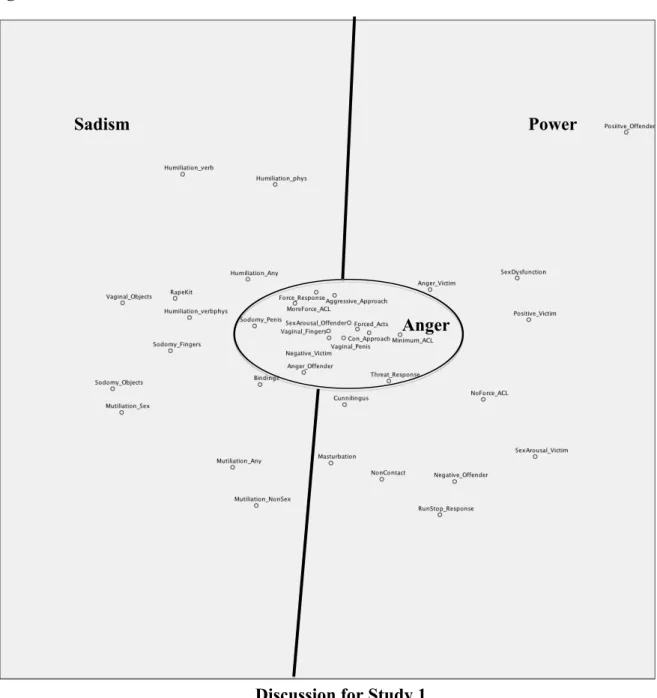
Interpretation of MDS plots is typically subjective and influenced by the theoretical framework driving the researcher’s hypotheses. Examining patterns of sexual violence that were potentially related to power, anger, and sadism drove the interpretation of this MDS, and all three constructs related to patterns in the output (see Figure 2). A circle drawn around the middle of the plot encompassed 13 variables. Variables in the center of the MDS output did not distinguish between any themes and could be interpreted as essential to the overall construct being studied:
in this case, sexual violence. These variables measured both the construct of “sexuality” (e.g., Vaginal Intercourse, Penis or Vaginal Intercourse, Fingers) and “violence” (e.g., Approach, Aggressive; Level Of Force, More Force than Necessary). The presence of multiple variables related to violence and the affect variable Offender, Anger resonated with Groth and Birnbaum’s (1979) anger construct. The remaining 23 variables were scattered evenly around the four
quadrants of the graph, suggesting distinct behavioural themes. Behaviours spread in the left quadrants were highly related to a theme of sadism. The top left quadrant contained all of the Humiliation variables (i.e., any, verbal, physical, and verbal and physical), whereas the lower left quadrant contained all of the mutilation variables (i.e., any, sexual, and nonsexual).
Impersonal deviant sexual behaviours (e.g., Vaginal intercourse, Objects; Sodomy, Objects;
Sodomy, Fingers; Rape Kit; Bindings) were located in the middle of the graph. The right quadrants were characterized by elements of Groth and Birnbaum’s power construct, including affect (e.g., Victim, Positive; Victim, Sexual Arousal; and Offender, Negative), sexual behaviours (e.g., Masturbation, Non-contact, Cunnilingus), Sexual Dysfunction, and Level Of Force, None.
Interpreting the two halves of the plot provided a basis to label the dimensions of the plot.
The x-axis arguably moved from higher sexual deviance (on the left hand side of the plot, sadism theme) to lower sexual deviance (on the right hand side, power theme). The y-axis arguably distinguished higher engagement on the bottom (e.g., Mutilation, Masturbation) from lower engagement at the top (e.g., Sexual Dysfunction). However, the y-axis was more problematic than the x-axis, as the lower half of the plot included Non-contact and Response, Stops/Run Away, which would likely be categorized as low engagement behaviours.
Figure 2: PROXSCAL Plot of all Crime Scene Behaviour Variables
Discussion for Study 1
MDS provides an appropriate type of analysis to begin processing behavioural data for BCSA. Before evaluating which variables are essential for modeling patterns of sexual violence, it first had to be determined whether any initial associations existed. Properly utilized, MDS provided for this initial conclusion. In Study 1, focusing on model fit criteria, a two-dimensional model accounted for almost all of the dispersion between variables. The 13 variables in the
Sadism Power
Anger
center of the MDS scatterplot evidenced potential core elements in the offending behaviour of the participants. Indeed, non-deviant sexual behaviours and extreme violence were core elements in the output. Moreover, these elements were strongly related to Groth and Birnbaum’s (1979) construct of anger. One potential interpretation of this finding is that anger, interpreted
dimensionally, represents the core feature of sexual violence. This interpretation is consistent with Groth and Birnbaum’s (1979) assertion that sexual assaults are “always first and foremost an aggressive act” (p. 13). On the other hand, variables further from this center cluster represent unique patterns of behaviour. The distinction between variables, using the x-axis, strongly indicates separate patterns of sadism (i.e., sexualized violence through humiliation and mutilation) and power (i.e., viewing the offence as a pseudo intimate act). Interestingly, the variable clusters provided strong evidence of themes of power, anger, and sadism despite there being no prior hypothesis or variable selection to focus the selection of variables. These
unexpected findings lend support for the importance of power, anger, and sadism in understanding serial, sexual offences.
Due to the exploratory nature of MDS, there were several limitations in Study 1. The lines drawn on Figure 2 represent the subjective interpretations of the author, rather than
empirically-based distinctions in the data. For instance, the behavioural variable Bindings, which is theoretically linked to sadism, existed in the half of the plot with other variables associated with sadism and was, therefore, included in that section. However, if the criterion for grouping was a sheer measure of distance, the closest variables to it were those in the middle of the plot.
This was true for several other variables, such as Cunnilingus, Response, Threat, and Sodomy, Penis. In summary, the demarcations between behavioural patterns in Study 1 were subjective.
Further, these borders were theoretically ambiguous as it was not objectively clear if the imposed
borders represented distinct objective phenomena. These limitations were addressed to some extent in Study 2 by using NPCA, which provided a more fine-grained analysis of model fit and variable contribution.